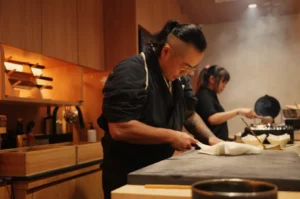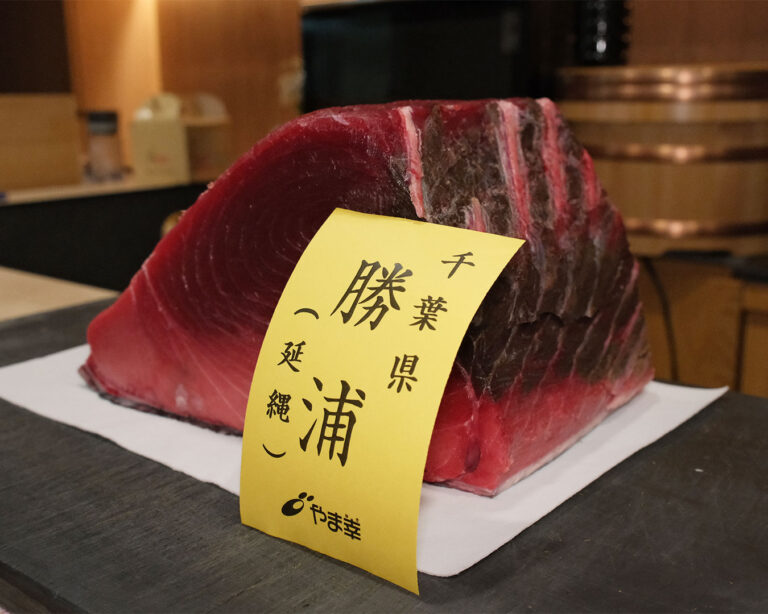
In the quiet hours of the afternoon, before the first guest takes their seat at our intimate eight-seat counter, a profound silence fills the air. This is the time for meticulous preparation: a ritual that defines our philosophy at Sushi Masa by Ki-Setsu. To many, sashimi is simply sliced raw fish, but to those of us who have dedicated our lives to the craft, it is a delicate balance of biology, rigorous safety standards, and the ancient Japanese art of preservation.
In a city like Singapore, where the appreciation for Japanese cuisine has reached a sophisticated peak, the term “sashimi grade” is often used. Yet, few understand the complex journey an ingredient takes from the morning auctions in Japan to the vibrant piece of maguro that melts in your mouth.
Defining Sashimi Grade: More Than Just a Label
There is a common misconception that “sashimi grade” is an official label given by a governing body. In reality, it is a standard of excellence and safety that we, alongside reputable suppliers, uphold to ensure that the seafood we serve is not just fresh, but pristine. This is not something that can simply be bought off a shelf; it is earned through rigorous vetting of every slab of fish that enters our kitchen.
The Role of SFA Regulations in Singapore
In Singapore, the Singapore Food Agency (SFA) maintains stringent regulations to ensure food safety. While many restaurants may offer raw options, the standards for sashimi Singapore diners expect are governed by a “ready-to-eat” (RTE) framework. These regulations mandate that only specific types of saltwater fish are suitable for raw consumption. This is why you will never find freshwater varieties on an authentic omakase menu.
For a piece of salmon or yellowtail to be deemed safe, it must be handled in a cold chain that never breaks. From the moment the fish is caught to the moment it reaches our doorstep in a chilled tray, the temperature must remain below 4°C to inhibit bacterial growth. We take no shortcuts in this process, as the safety of our guests is the foundation upon which our reputation is built.
The Science of Fresh Sashimi: Preservation and Ikejime
While the word “frozen” might seem antithetical to “freshness,” it is often a critical part of the safety journey. To neutralise potential parasites common in wild seafood, such as tuna or octopus, the fish is often subjected to “flash-freezing” at temperatures as low as -35°C. This process preserves the cellular structure, ensuring that the texture remains firm and the taste remains untainted once it is ready to be sliced in our kitchen.
At Sushi Masa by Ki-Setsu, we believe that the quality of fresh sashimi is determined at the moment of the catch. Chef Masa often speaks of ikejime, a traditional Japanese slaughter method that is as much about ethics as it is about science.
Minimising Stress, Maximising Umami
When a fish undergoes stress, it releases lactic acid and cortisol, which can lead to a “fishy” taste and a mushy texture. The ikejime method involves the rapid deactivation of the nervous system and thorough bleeding. By preventing the muscles from tensing, we preserve the Adenosine Triphosphate (ATP) levels within the fish. Over the next few days, as the fish rests in our house, this ATP breaks down into inosinic acid, the very essence of umami.
- Firmness: Ikejime delays rigor mortis, allowing for a more delicate and controlled preparation.
- Purity: Proper bleeding ensures the flesh remains vibrant and free of the metallic notes associated with oxidation.
- Longevity: This method allows us to age certain cuts, such as maguro (tuna), to deepen their flavour profile.
Beyond the Salmon Fish: A Diverse Seasonal Palette
While many guests first fall in love with the buttery richness of the salmon fish, the world of Japanese cuisine is vast. At Sushi Masa by Ki-Setsu, our omakase experience is a journey through the seasons of Japan, focusing on what is peak at the morning auctions. We do not offer an order system for individual dishes; instead, we invite you to choose to trust in the seasonal variety that Chef Masa selects.
The Distinction of Species
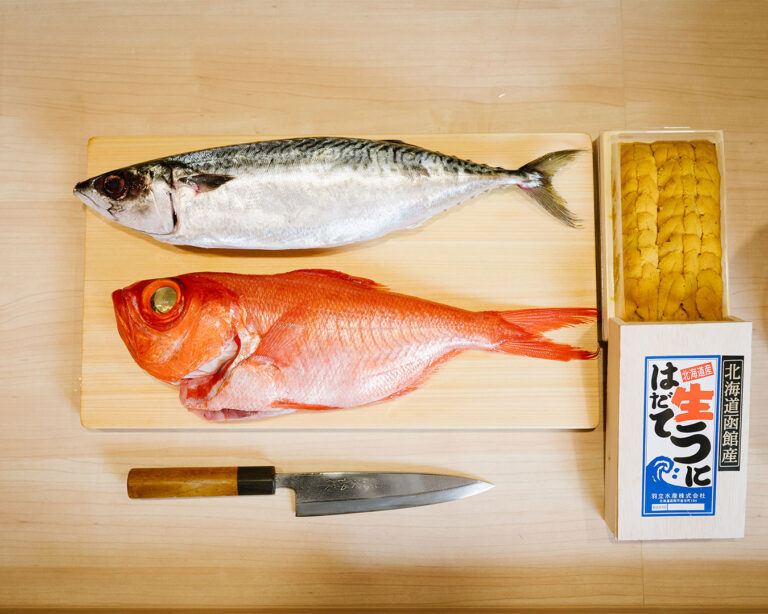
Many guests often compare different species, noting the nuances in fat content and minerality. While we honour the popularity of the salmon fish, we aim to introduce diners to the broader spectrum of the sea:
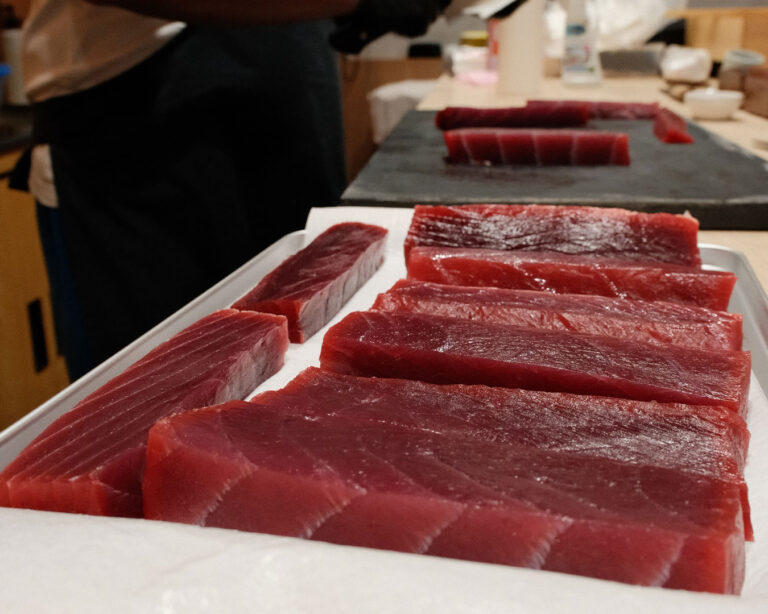
- Maguro (Tuna): From the lean Akami to the marbled Otoro, tuna is the stand-out star of any high-end sushi experience.
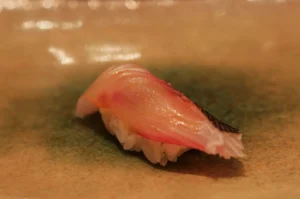
- Shiromi (White Fish): Varieties like Tai (Sea Bream) or Hirame (Flounder) offer a delicate sweetness that requires expert knife work to appreciate.
- Uni: Our uni (sea urchin) is sourced for its creamy, briny sweetness, providing a vibrant burst of flavour that lingers on the palate.
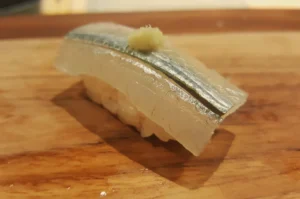
- Yellowtail & Swordfish: These offer a firm texture and a clean taste that pair beautifully with high-quality sake (soy sauce).
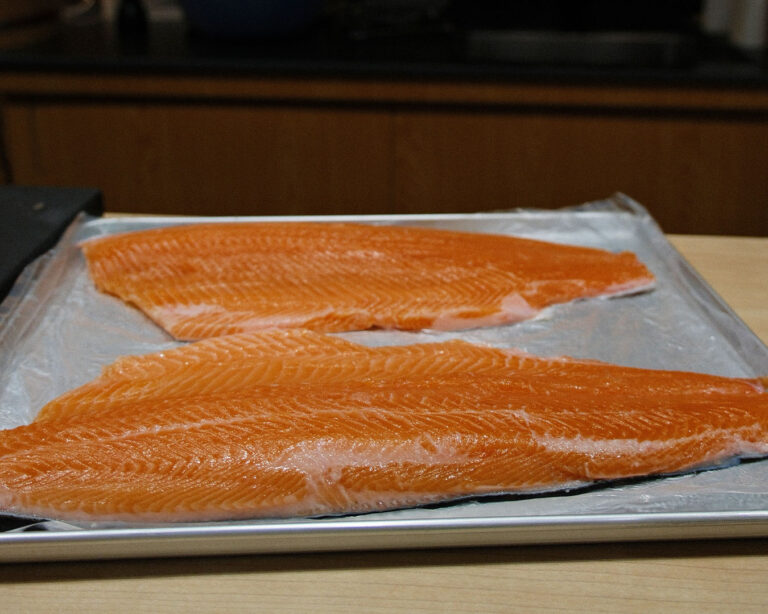
The Art of Salmon Sashimi and Traditional Preparation
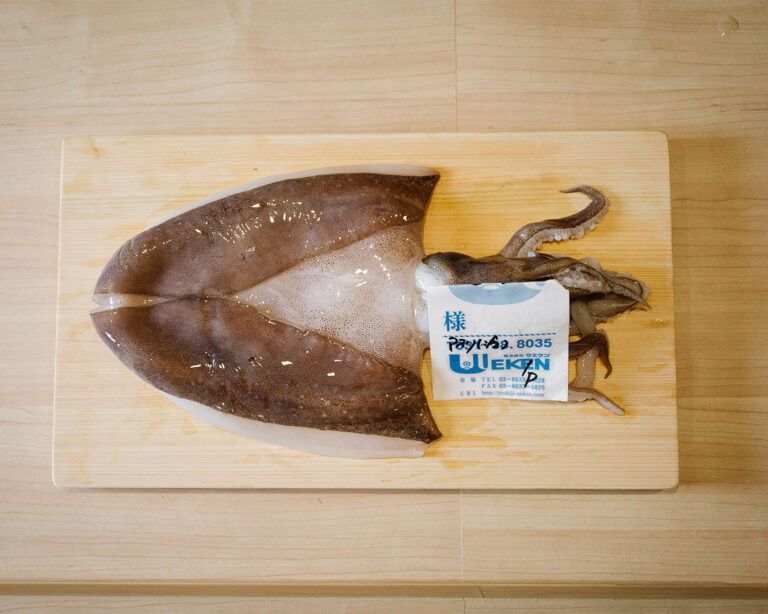
Even a staple like salmon sashimi requires mastery to truly shine. In our kitchen, the work does not end with sourcing. Chef Masa spends his day meticulously preparing each variety. This is why we are a Dinner Only establishment; the hours before sunset are required for the “unseen labour” of Edomae-style preparation.
The Precision of the Slice
The way a fish is sliced changes how it interacts with the palate. A piece of salmon sashimi might be cut to emphasise its creamy fat, while a scallop might be lightly scored to release its natural sugars. We do not use pre-cut slabs or frozen ready-to-eat options found in a typical delivery tray. Every piece is prepared only when the guest is seated, ensuring the freshness is absolute. This attention to detail is what makes our sushi stand out from the ones found in more casual places.
The Role of Condiments
Authentic sashimi is rarely eaten alone. We provide freshly grated wasabi and high-quality sake (soy sauce) to complement, not mask, the natural taste of the fish. The goal is to create a moment of good sushi harmony, where the condiments elevate the seafood to its highest potential. We often hear a positive comment from our guests regarding how these subtle additions change their perception of freshness.
Sourcing Excellence: From Toyosu to Your Plate
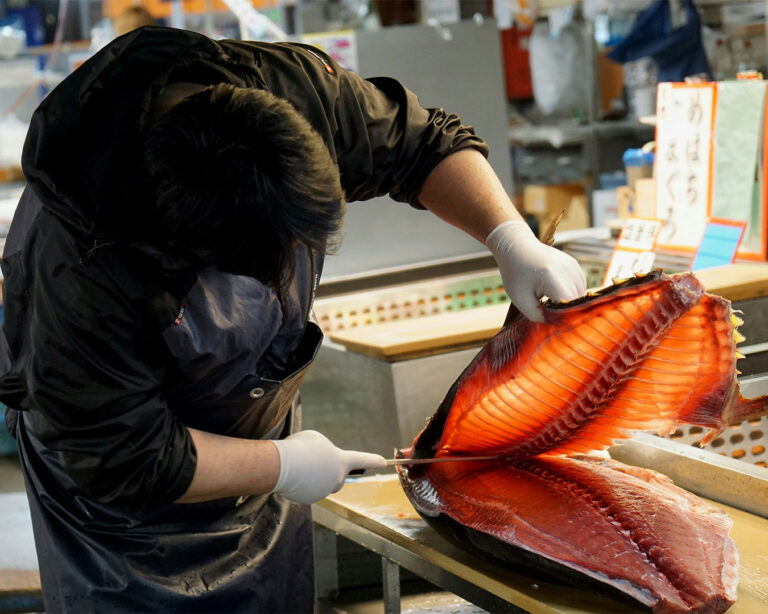
The logistics of sashimi Singapore enthusiasts enjoy are a feat of modern engineering. Every week, Chef Masa communicates directly with specialised middlemen at the world-renowned Toyosu Market in Japan. We do not simply order a generic variety of seafood; we specify the origin, the size, and the exact method of catch from the morning auctions.
Whether it is octopus from Hokkaido or yellowtail from Kanazawa, the journey is swift. The fish is delivered to the airport, flown to Singapore, and cleared through customs within hours. By the time it arrives at our doorstep, it has been handled with more care than most luxury goods. This ensures that the price you pay reflects the absolute peak of quality available globally.
Why We Forego Delivery
You will not find Sushi Masa by Ki-Setsu on a delivery app. The texture and taste of fresh sashimi are volatile; the heat and humidity of Singapore can degrade a delicate piece of tuna or salmon in minutes. To experience the true comfort and good sushi we provide, one must be present at the counter where Chef Masa can serve it at the precise moment it reaches its peak temperature.
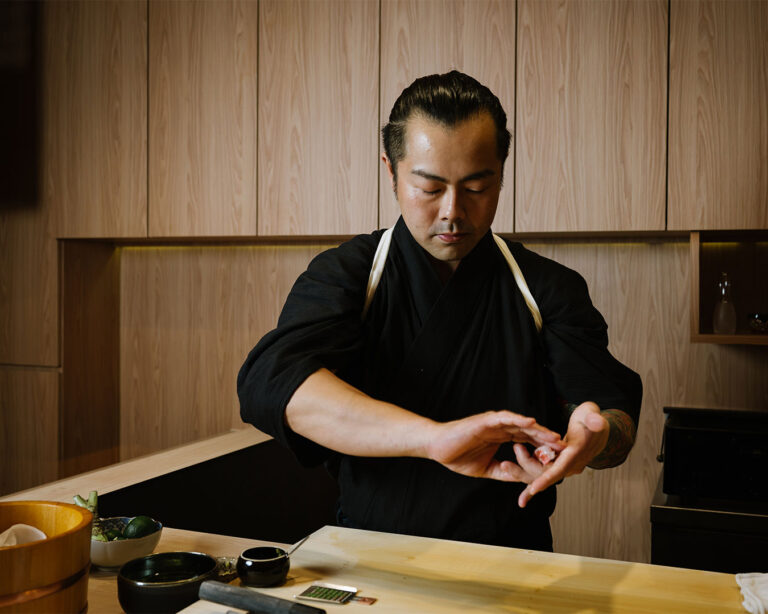
A Shared Experience at the Counter
We invite you to step away from the distractions of home and join us for an evening of singular focus. At Sushi Masa by Ki-Setsu, the experience is not just about the price or the variety of cuts on a plate. It is about the trust you place in Chef Masa. There is a certain comfort in knowing that every ingredient has been handled with the utmost care by a single pair of hands.
When you visit us with friends or loved ones, you are not just sitting at a place to eat; you are witnessing a team of one, Chef Masa, crafting a narrative of Japan’s finest offerings. We believe that sashimi is a living art form, one that requires patience, quality, and a deep respect for the sea. It is a journey we take together over the course of the evening, taking the time to appreciate the work that goes into every bite.
Excellence in Sashimi Singapore
The search for the best sashimi Singapore has to offer leads inevitably to a question of standards. Is it enough for a fish to be “fresh,” or should it be masterful? At Sushi Masa by Ki-Setsu, we strive for the latter every single day. Whether you are a connoisseur or a newcomer to Japanese cuisine, we aim to provide an experience that transcends the ordinary.
From the vibrant colours of the morning catch to the delicate texture that greets your mouth, we invite you to experience the difference that Ikejime and Toyosu sourcing make. Join us for a dinner where the ingredient is king, and the craftsmanship is our gift to you.