In Singapore, a city that measures its ambitions by the breadth of the world it consumes, few ingredients have captured collective imagination quite like uni: sea urchin roe. Its arrival at the table is often quiet: neat trays, a hush of anticipation, a spoon hovering. Yet the flavour that follows is thunderous. Creamy, saline, faintly sweet, and fleeting, uni collapses time and distance, transporting diners from equatorial humidity to cold northern waters in a single bite.
This article explores why Singapore is obsessed with uni, not as a trend, but as a convergence of history, science, market logistics, and taste. From the foundations of Japanese culinary philosophy to the technology that enables sashimi grade freshness to be flown to the doorstep, uni’s ascent reveals how balance, care, and research shape modern appetites.
What Is Uni? A Clarification Worth Making
Uni refers to the edible gonads of the sea urchin (accurately termed sea urchin roe) harvested from various species across the world. In Japan, uni is not a novelty but a category with rules, hierarchies, and rituals. The Japanese language alone distinguishes multiple grades and regional identities, reflecting a culture that values information and precision.

Sea Urchin Roe: Anatomy, Flavour, and Culinary Value
Uni’s texture is its calling card: custard-soft, yielding without resistance. High-quality uni should hold its shape in clean lobes, never watery or grainy. The flavour is oceanic yet restrained, offering umami depth without fishiness. Freshness is everything; time is its greatest enemy.

A Brief History: From Fishermen’s Food to Cultural Power
Early Japanese Context
Uni’s story begins along Japan’s rugged coasts, where fishing communities harvested sea urchins as a seasonal staple. During the Edo period, preservation techniques, most notably salting, enabled uni to travel inland, expanding its reach and embedding it into Edomae sushi tradition.
Modern Market Systems
The postwar development of centralised fish markets culminated in today’s Toyosu Market, a logistical marvel where uni is inspected, graded, and traded with almost academic rigor. Each tray carries data: origin, harvest date, colour, firmness. This system transformed uni from local sustenance into a globally traded luxury.
Why Singapore? Geography, Community, and Taste
Singapore’s relationship with uni is no accident. As a port city with a deep-rooted dining culture, it has long been receptive to ingredients that speak of elsewhere. Several factors explain the city’s particular devotion:
- Market Access: Proximity to air routes enables fresh uni to be flown from Japan within hours.
- Culinary Education: A population attuned to Japanese food culture values sashimi grade ingredients and understands seasonal nuance.
- Affluent Curiosity: Singapore diners are eager to explore, share, and compare, turning tasting into a communal act.
Uni’s rise parallels broader developments in leadership within the food scene, where chefs and restaurateurs champion single ingredients as narratives rather than mere toppings.


The Science of Freshness: What Makes Uni Exceptional
Harvesting and Handling
Uni quality begins underwater. Sea urchins feed on kelp and algae; their diet directly shapes flavour. Harvesters must time collection precisely, often pre-spawning, when roe is plump and sweet.
Once extracted, uni is delicately cleaned, never washed aggressively, and arranged in trays. Exposure to freshwater or air can collapse texture. This fragility explains why fresh uni commands reverence.
Indicators of Sashimi Grade Uni
A culinary student assessing uni should look for:
- Colour: Vibrant gold to amber, never dull brown
- Aroma: Clean, briny, with no iodine harshness
- Structure: Firm lobes that hold shape
- Taste: Balanced sweetness and salinity
Technology now plays a role, from temperature-controlled logistics to data-driven grading systems that enable secure transport across the world.
Regional Varieties: A World Within a Shell
Not all uni tastes the same. Regional waters, species, and care practices produce distinct profiles.
| Origin | Species | Flavour Profile | Typical Use |
|---|---|---|---|
| Hokkaido, Japan | Bafun | Deep umami, creamy | Nigiri, tasting menus |
| Aomori, Japan | Murasaki | Clean, sweet | Sashimi |
| California | Red Uni | Bold, oceanic | Uni bowls |
| Europe | Paracentrotus | Briny, firm | Pasta, spreads |
Singapore’s market favours Japanese uni for its balance and consistency, though chefs increasingly explore global expressions to inspire new recipes.
Fresh Uni Beyond Sushi: How Chefs Use It
While uni is iconic atop rice, its versatility extends further. In many restaurants, uni is used sparingly to add depth rather than dominance.

Common Preparations
- Raw: Served alone to highlight freshness
- Warm Pairings: Lightly tempered to soften texture
- Sauces: Blended into emulsions for pasta or rice
The rule is restraint. To add uni is to amplify, not overwhelm, a dish’s core flavour.
Transformative Education on Sustainability and the Environment
As demand grows, so does scrutiny. Overharvesting threatens ecosystems where sea urchins play a role in controlling algae growth. Japan and other producing regions invest in research and community-based management, setting quotas and nurturing kelp forests to maintain balance.
Singapore diners increasingly value sourced information: where uni comes from, how it is harvested, and whether its future is secure. This awareness reflects a broader shift in food politics, where environmental responsibility intersects with pleasure.

Uni at Home: From Doorstep to Table
The modern consumer can now order uni online with a click, receiving chilled trays at home. Yet working with uni requires care.
Tips for Home Handling
- Store at 0–2°C
- Consume within 24–48 hours
- Use non-metal utensils
- Serve close to room temperature for best flavour
Sharing uni at home has become a fulfilling ritual, turning private dining into an act of quiet celebration.
Why Uni Resonates Now
Uni’s popularity speaks to more than taste. It embodies a desire for authenticity in a world shaped by rapid development. Its fragility demands attention; its cost demands intention. In this sense, uni mirrors broader cultural values: patience, respect for craft, and the power of simplicity.
For many female leaders in Singapore’s culinary and hospitality sectors, uni represents a category where discernment and education matter more than volume. It is an ingredient that rewards knowledge, not excess.
An Invitation at the Counter
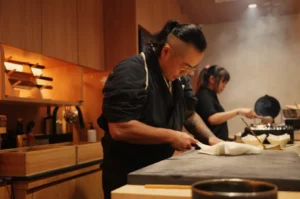
At Sushi Masa by Ki-setsu, we see uni not as indulgence but as expression. Each evening, under the guidance of Chef Masa, our dinner-only omakase follows Edomae tradition, allowing Toyosu-sourced uni to be served at its ideal moment: fresh, balanced, and unadorned.
We invite guests to experience how time, care, and technique converge in a single bite, and to explore why this golden roe continues to shape tastes, lives, and conversations in Singapore.