In the frost-kissed waters of the Japanese archipelago, a seasonal transformation occurs that dictates the rhythm of the nation’s culinary calendar. As the colder months arrive, a specific fish begins its epic migration, transforming from a lean traveler into a marbled masterpiece of umami. This is the Japanese amberjack, a species so revered that it is often heralded as the “winter monarch.” For Japanese people, the arrival of this winter delicacy is more than a menu change and signals a cultural moment where the fish’s natural maturity meets culinary mastery.
While global audiences might be familiar with salmon or tuna, the buri occupies a unique pedestal in Japan. It is a white fish that carries the weight and richness of a blue-backed fish, offering a fat content that rivals the finest o-toro. To understand the buri, one must look beyond the sushi counter and delve into a world of shifting names, regional pride, and the scientific alchemy of the sea.
Shusse Uo: The Cultural Legacy of the Promotional Fish
In the lexicon of Japanese cuisine, few terms carry as much weight as shusse uo, or “promotional fish.” This concept is rooted in the Edo period, where it was customary for samurai and scholars to change their names as they rose in rank and social status. The buri is the biological manifestation of this tradition. As the fish grows, it is given different names depending on its size and the region of the catch.
This naming convention is more than mere semantics and helps chefs and diners recognize the specific flavor profile of the fish at each life stage. A smaller fish offers a clean, snapping texture, while the fully matured winter buri provides a melt-on-the-tongue experience.
The Nomenclature of Success
The trajectory of the Japanese amberjack generally follows these stages:
- Called Inada: These are the young yellowtail (roughly 30 to 40 cm). Caught in autumn, they are lean and refreshing.
- Called Hamachi: The mid-sized stage (40 to 60 cm). While often used for farmed yellowtail available year round, it historically referred to the adolescent wild catch.
- Buri: The final, adult stage (over 80 cm). This is the version most prized by connoisseurs, especially when caught during the peak of winter.
The Biological Marvel of Kan Buri and the Highest Fat Content
While the same species can be found throughout the year, the kan buri (cold-season buri) is an entirely different culinary entity. As the sea temperature drops, the fish migrates from the northern waters of Hokkaido toward the Nagasaki prefecture and the Noto Peninsula. To survive the frigid depths and fuel this arduous journey, the fish accumulates a massive amount of internal fat.
This fat is not just caloric and is chemically complex. The meat becomes saturated with amino acids and healthy fats, providing a rich sweetness and a soft, buttery texture. Scientific analysis of kan buri caught during the best season reveals high levels of vitamin D and unsaturated fatty acids, making it as nutritionally dense as it is delicious. When served raw as sashimi, the slices of winter yellowtail possess a pearlescent sheen that signifies the highest fat content.

Geography of Flavor: From Toyama Prefecture to Nagasaki Prefecture
The quality of the winter catch is inextricably linked to the geography of Japan. Two regions stand out in the pursuit of the perfect fish:
Toyama Prefecture (Himi Buri)
Toyama is perhaps the most famous region for wild caught yellowtail. The local topography creates a natural trap; the fish entering the deep, cold waters of Toyama Bay are caught using traditional fixed-net methods (seto-ami). This method is remarkably sustainable and ensures the fresh fish are not stressed, preserving the delicate flavor and oil balance.
Nagasaki Prefecture
Further south, Nagasaki prefecture is a powerhouse for both wild and farmed varieties. While farmed yellowtail (often called hamachi) is available throughout the year, the wild harvest in this region is celebrated for a slightly firmer meat compared to its northern counterparts, offering a distinct taste that many traditional establishments favor for shabu shabu.

Young Yellowtail: The Early Stage Profile
Before the fish reaches its monarchical status, the young yellowtail or inada provides a different kind of joy. During the late autumn, these smaller species are far leaner. For a food journalist or a historian, the inada represents the “youth” of the season.
Because the fat content is lower, the flavor is more metallic and sharp, similar to other white fish. This makes them ideal for light curing with salt or quick searing. While they lack the decadent “melt” of hamachi buri, their muscularity is a testament to the vitality of the sea before the winter dormancy sets in.
Buri Teriyaki: Mastering the Interaction of Soy Sauce and Heat
When the fish is cooked, the most iconic preparation is undoubtedly buri teriyaki. Unlike the overly sweet versions of teriyaki found in Western fast food, traditional Japanese recipes focus on a sophisticated balance of savory and sweet.
The fat of the winter buri is the secret ingredient here. As the chef begins to fry or grill the steak, the internal oils render out, essentially confitting the fish in its own juices.
- The Glaze: A combination of high-quality soy sauce, mirin, sake, and sugar.
- The Reduction: The teriyaki sauce is reduced in the pan until it reaches a syrupy consistency, coating the rich oils of the fish.
- The Result: The salt from the soy sauce cuts through the fat, while the sugars in the mirin create a lacquered finish.
This dish demonstrates the ability of Japanese cuisine to handle rich ingredients with precision, ensuring the final product is tasty but never heavy.
Buri Daikon: A Study in Culinary Synergy and Daikon Radish
If sashimi highlights the raw power of the fish, buri daikon showcases its transformative potential. This dish is a winter staple in Japanese households and high-end cuisine. It uses the collar, head, and bones, which are the most flavor-dense parts of the winter yellowtail.
The daikon radish plays a critical role. Radishes are known for their ability to absorb flavors, acting as a textural sponge. In this slow-simmered preparation:
- The daikon radish is blanched to remove its bitterness.
- It is then simmered with the buri in a broth of ginger, soy sauce, and sugar.
- The radish soaks up the rendered fat and umami from the fish bones, becoming soft, translucent, and incredibly rich.
The interaction between the sharp, earthy radish and the oily meat of the fish is a masterclass in seasonal harmony.


Hamachi Buri: Navigating the Sushi Counter
For many diners, the distinction between hamachi and buri is blurred. In a modern sushi context, hamachi often refers to farmed fish, which are fed a specific diet to ensure a high fat content year round. However, the true hamachi buri experience is found in the transition.
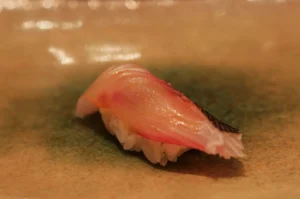
A skilled chef understands that fresh buri requires different handling than other fish. The oils can oxidize quickly, so the window for eating the fish at its peak is narrow. Some chefs choose to lightly age the meat for a few days to further concentrate the amino acids, while others prefer the snap of a more recent catch. Whether served as a thick slice of sashimi or draped over vinegared rice, the flavor of a true winter buri is unmistakable: a clean start, a creamy middle, and a long, savory finish.
Culinary Techniques: Shabu Shabu and Beyond
While sushi and cooked preparations like teriyaki are dominant, shabu shabu offers a unique way to appreciate the winter delicacy. In this method, paper-thin slices of raw buri are swished through a boiling kombu dashi for a mere two or three seconds.
This brief exposure to heat melts the surface fat, creating a “sauce” that coats the tongue, while the interior remains soft and raw. It is often accompanied by a ponzu dipping sauce, where the acidity of citrus provides a sharp contrast to the rich oils of the Japanese amberjack.
The Best Season: Why Timing is Everything
The window for the perfect kan buri is fleeting. It begins in earnest in December and usually fades by late February. Once the spring currents arrive, the fish begins its spawning cycle, and the legendary fat content is depleted.
For the Japanese, the “best” is defined by this transience. To eat buri in the autumn is to taste potential; to eat it in the winter is to taste the pinnacle of the species. It is a reminder that the best food is not just about the species, but about the intersection of time, temperature, and the deep sea.
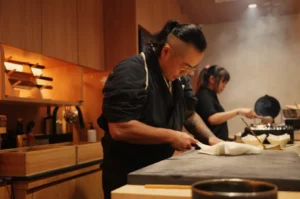
Experience the Winter Monarch at Sushi Masa by Ki-setsu
At Sushi Masa by Ki-setsu, winter arrives on the plate with kan buri, the prized yellowtail of the season. Our dinner experience focuses on the fish’s peak flavor, with Chef Masa choosing Toyosu-sourced buri known for its rich fat and delicate texture. Each piece is treated with care, using Edomae techniques to bring out its natural sweetness and umami. Through our omakase, diners encounter the story of Japan’s winter seas, the craft of sushi, and the refined taste of the season’s most celebrated fish.