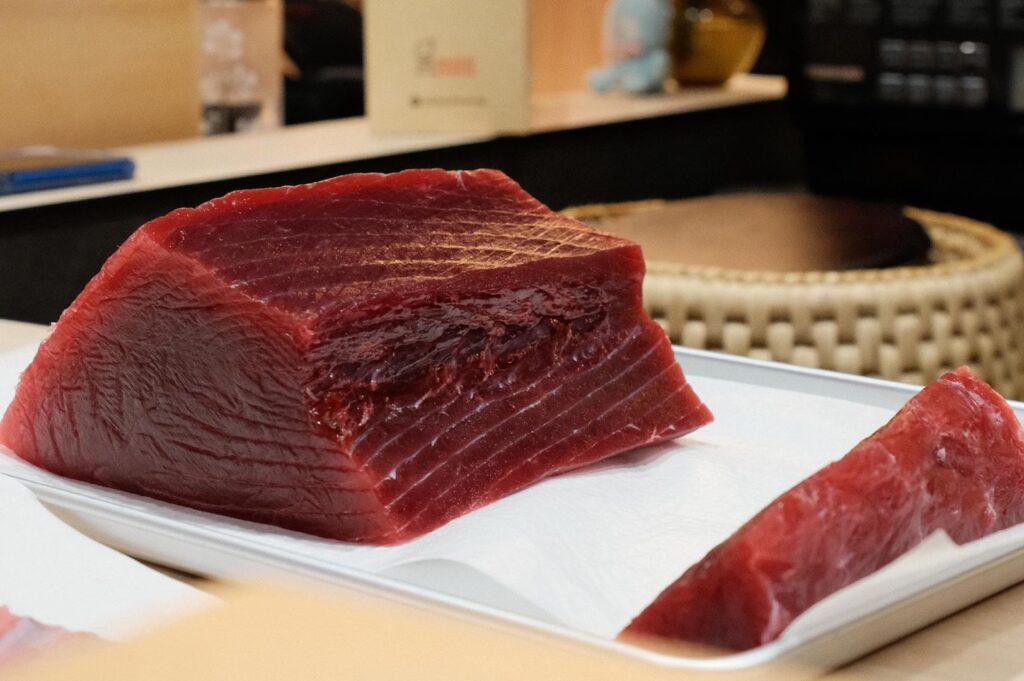
In the hierarchy of the bluefin tuna, chutoro occupies a subtle but decisive position. Nestled between the lean loin and the fattiest otoro, this medium fatty tuna offers a perfect blend of texture and flavor. For sushi enthusiasts, chutoro embodies balance: the melt of fat without overwhelming richness, and a meaty bite without dryness.
Its precise location along the back loin of the bluefin tuna makes it one of the most desirable parts of the fish. This specific cut has shaped the modern omakase, influencing how chefs sequence courses, handle sashimi grade tuna, and respect the natural interplay of fat and lean. Whether in Japan or Singapore, the chutoro is often the favorite piece of the night.
Chutoro Anatomy and the Medium Fatty Appeal
Chutoro comes from the back and upper belly of the bluefin, where moderate fat interweaves with the meat. This balance yields a medium fatty texture that delivers a rich taste while maintaining structure. Unlike the fattiest parts of the tuna fish, which can sometimes feel too oily, chutoro provides a perfect blend that satisfies the mouth.
Key Characteristics of Chutoro:
Marbling: Fine streaks of fat within the meat.
Mouth Texture: Soft yet meaty, melting delicately on the tongue.
Color: Light pink with subtle white striations (the colour is a key quality marker).
Portion Size: Such a small amount is available per fish, which increases the price and rarity.
The medium fatty composition positions chutoro as the bridge between lean akami and the fattiest otoro, creating a layered flavor journey in sashimi and sushi service.
Bluefin Tuna and the Tuna Fish Hierarchy
The bluefin represents the apex of sashimi grade fish. Varying cuts from different parts of the tuna directly influence the taste and bite:
Cut | Fat Content | Texture | Typical Use |
Akami | Lean | Firm, clean bite | Sashimi, nigiri |
Chutoro | Medium fatty | Soft, balanced | Sashimi, sushi |
Otoro | Fattiest | Melt-in-mouth | Luxury raw slices |
Chutoro sits at the center, offering sushi enthusiasts the best of both worlds: a subtle richness without the heaviness of the belly. This is why many saying it is the most desirable part.
Why Chutoro Is the Most Desirable Part of the Fish
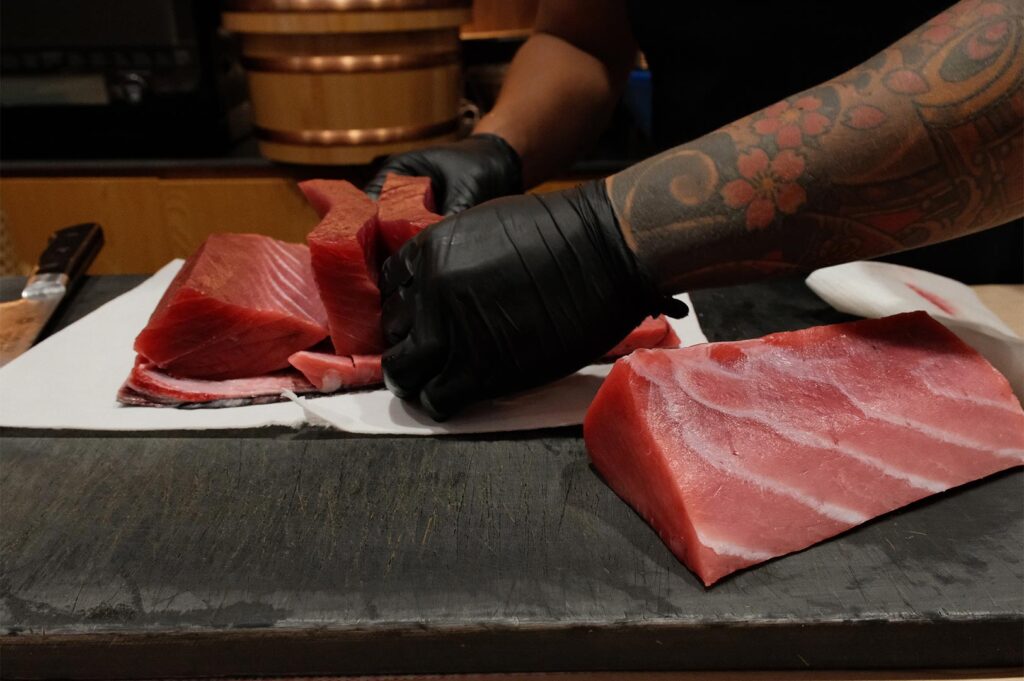
The appeal of chutoro stems from both science and perception. The fatty texture provides umami through evenly dispersed tissue, while the meat provides the structure. Sushi enthusiasts often note that encountering higher quality chutoro is a defining moment in raw fish appreciation.
Fat Integration: Provides umami without masking the fresh flavor.
Texture Contrast: Lean fibers interspersed with fat create a nuanced mouth feel.
Portion Scarcity: Because such a small amount is caught per bluefin, it remains expensive.
Chutoro Sashimi: Technique and Timing
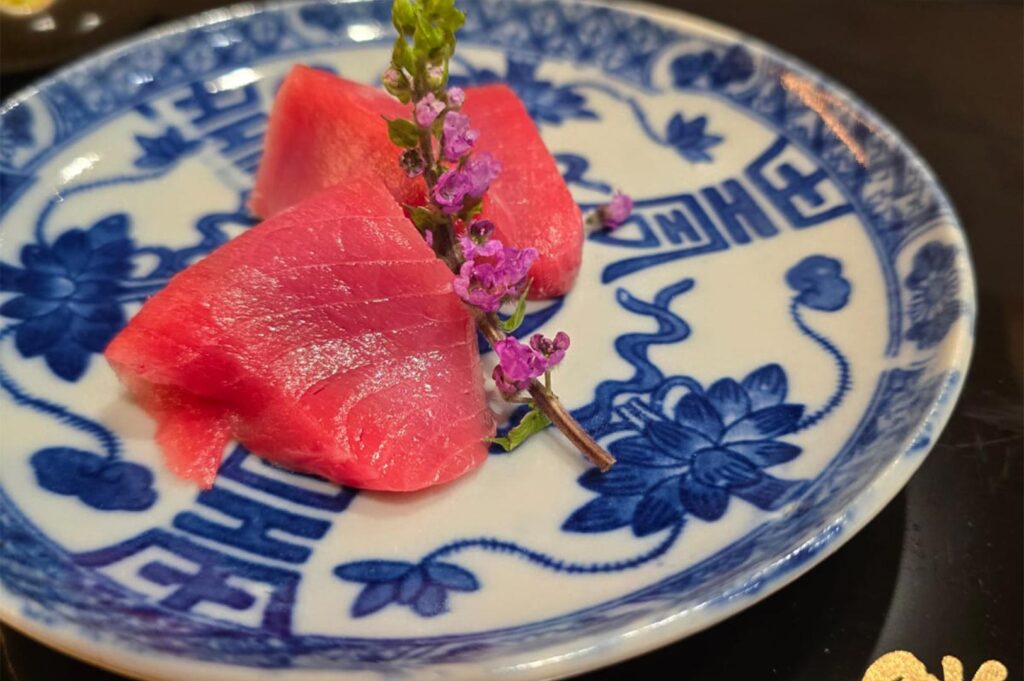
Serving chutoro sashimi emphasizes precision. In Japanese cuisine, the quality of the cut is everything. If the loin is processed poorly, the flavor is lost.
Slice Orientation: Follow the grain of the back loin to maintain the soft feel.
Knife Skill: Sharp blades prevent tearing the fatty texture.
Serving Temperature: Generally served slightly chilled to preserve the meat integrity.
Accompaniments: Light soy or subtle shoyu highlights the bluefin without overpowering it.
The Role of Medium Fatty Balance in Omakase
In the omakase model, balance matters. Chutoro’s medium fatty profile is critical for course sequencing. It provides a gentle transition between lean and fatty courses, preparing the palate for the next part of the meal.
Traditional establishments in Japan prioritize these medium fatty cuts because they maintain a consistent mouthfeel throughout the dinner. It allows the diner to expect a progression of richness rather than a sudden jump to the fattiest pieces.
Sourcing Freshness: Quality Assured Bluefin
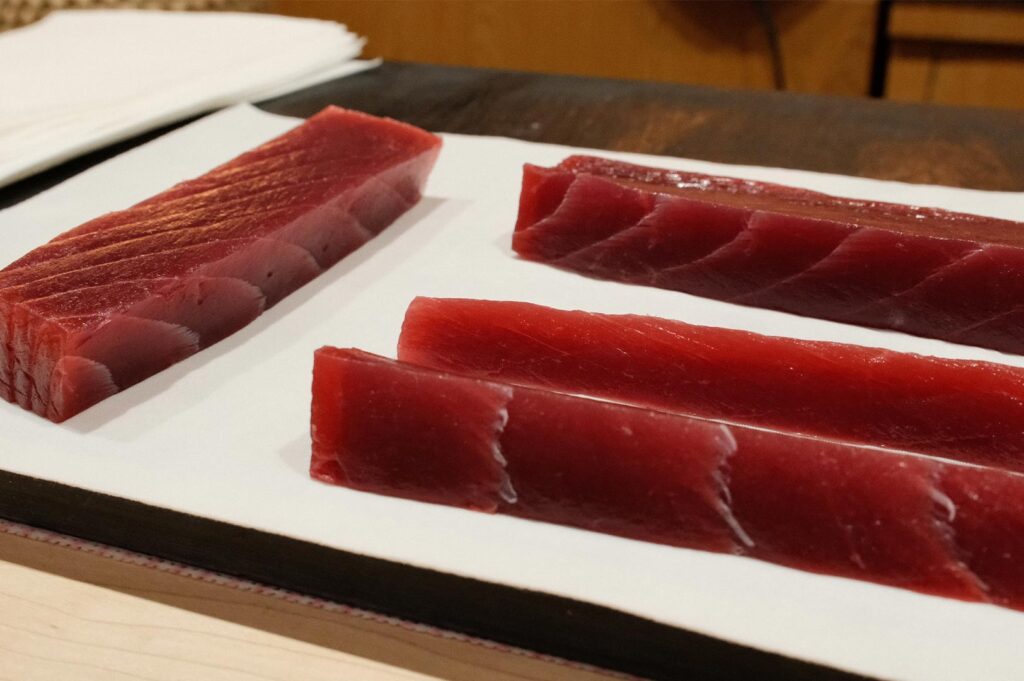
Higher quality chutoro requires careful sourcing. Only bluefin delivers the distinctive marbling. Many sushi diners discover that differences across species are vast.
Common Sourcing Challenges:
Bigeye Tuna vs. Blue Fin Tuna: While bigeye tuna can be fatty, it lacks the creamy flavor and soft texture of bluefin.
Yellowfin: Often processed and sold as toro, but it is generally too lean.
Frozen vs. Fresh: Frozen tuna can lose its fatty texture if the barcode or quality tracking isn’t perfect.
Common Misconceptions and Market Reality
It is false to assume all medium fatty tuna is the same. Sashimi grade labeling can be misleading. High quality cuts command a premium price, but they are worth the penny for those who expect the best.
Note the Weight: The weight and shape of the loin dictate the marbling.
Check the Color: Higher quality chu toro should not have null or greyish tones.
False Toro: Some options in the market are simply processed pieces of other fish.
Chutoro in Japanese Cuisine
Beyond sashimi, chutoro enriches multiple preparations in Japanese culture. It is the main attraction in high-end sushi bars from Tokyo to Singapore. Its versatility—being able to be served raw, lightly seared, or as part of a sushi roll—reinforces its status as the main part of the menu.
Discovering High Quality Chutoro at Home
For those looking to eat high-end tuna at home, discovering a reliable source is worth the effort.
Verify the sashimi grade certification.
Inspect the marbling and colour.
Ensure it is freshly caught and not frozen multiple times.
Even a small deviation in fat distribution can happen, affecting the final taste.
The Chutoro Standard: Why Bluefin Remains the Most Desirable Part
At Sushi Masa by Ki-setsu, we showcase chutoro within the omakase model. Chef Masa selects Toyosu-sourced bluefin tuna, emphasizing the perfect blend of marbling and medium fatty texture.
Each piece reflects Edomae precision and a respect for the fish. We believe that chutoro is the most desirable part because it represents the heart of Japanese culinary philosophy: quality over quantity. When you bite into our toro, you aren’t just eating meat and rice; you are experiencing the fattiest secrets of the ocean, delivered with raw perfection.