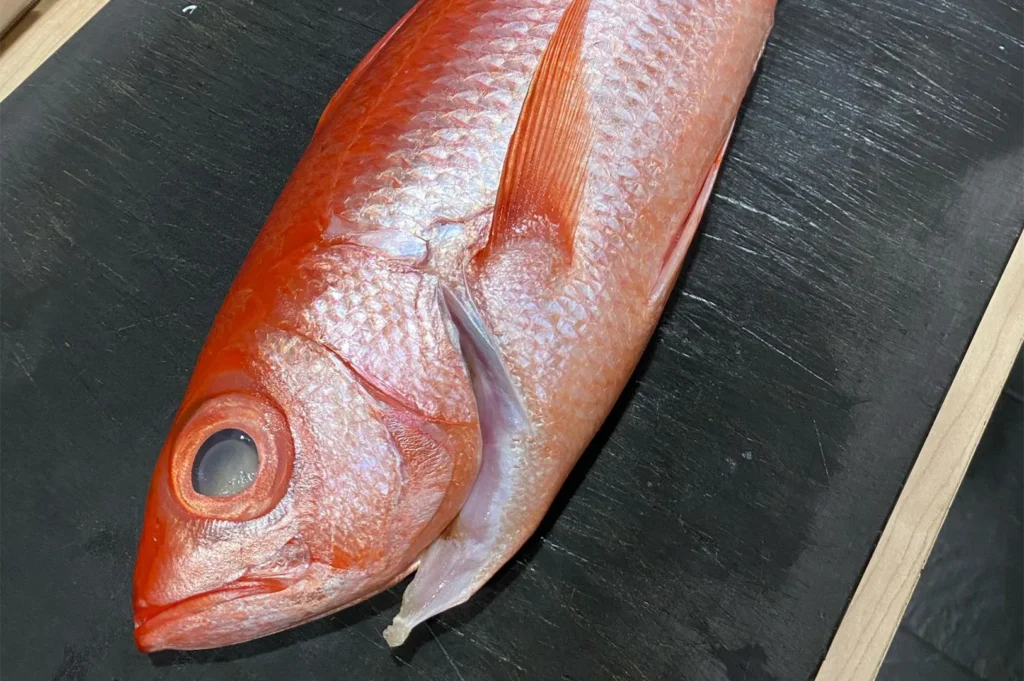
In the pressurized, obsidian depths of the Pacific, where sunlight dissolves into a spectral blue, dwells one of Japan’s most prized aquatic treasures. With scales the color of a crushed sunset and eyes that glow like polished doubloons, the Kinmedai (Beryx splendens), known in English as the Splendid Alfonsino or Golden Eye Snapper, is a masterclass in biological adaptation and culinary luxury.
While often categorized alongside the noble Sea Bream (Tai), the Kinmedai is not a true snapper. It is a denizen of the deep waters, a creature that has traded the frantic life of the shallows for a slow-burning, oil-rich existence in the abyss. For the culinary student or the seasoned gourmand, understanding Kinmedai is to understand the delicate balance between the primal element of fire and the sophisticated chemistry of deep-sea lipids.
The Biology of the Abyss: Why the Golden Eye Snapper Rules the Depths
To appreciate the mouth taste and texture of Kinmedai, one must first look at its habitat. Found at depths ranging from 200 to 800 meters, this species resides in a world of immense pressure and near-freezing temperatures.
The Visual Apparatus
The most striking feature of a typical adult specimen is its large eyes. These are not merely aesthetic; they are highly specialized organs designed to capture the faintest traces of bioluminescence. A layer of crystalline tissue behind the retina, called the tapetum lucidum, reflects light back through the eye, giving it a haunting gold glow. This biological necessity is the namesake of the fish, Kinme (Golden Eye) Dai (Bream).
Lipid Composition and Buoyancy
Unlike white fish found near the surface, deep-sea dwellers must manage buoyancy and insulation differently. The Kinmedai stores a significant percentage of its body mass as intramuscular fat. This high oil content provides a soft, tender mouthfeel that persists even after the flesh has been grilled or simmered. Because these fats are designed to remain fluid in the cold depths, they have a lower melting point than those of terrestrial animals, literally dissolving upon contact with the human tongue.
Seasonal Rhythms: Tracking the Splendid Alfonsino Through the Year
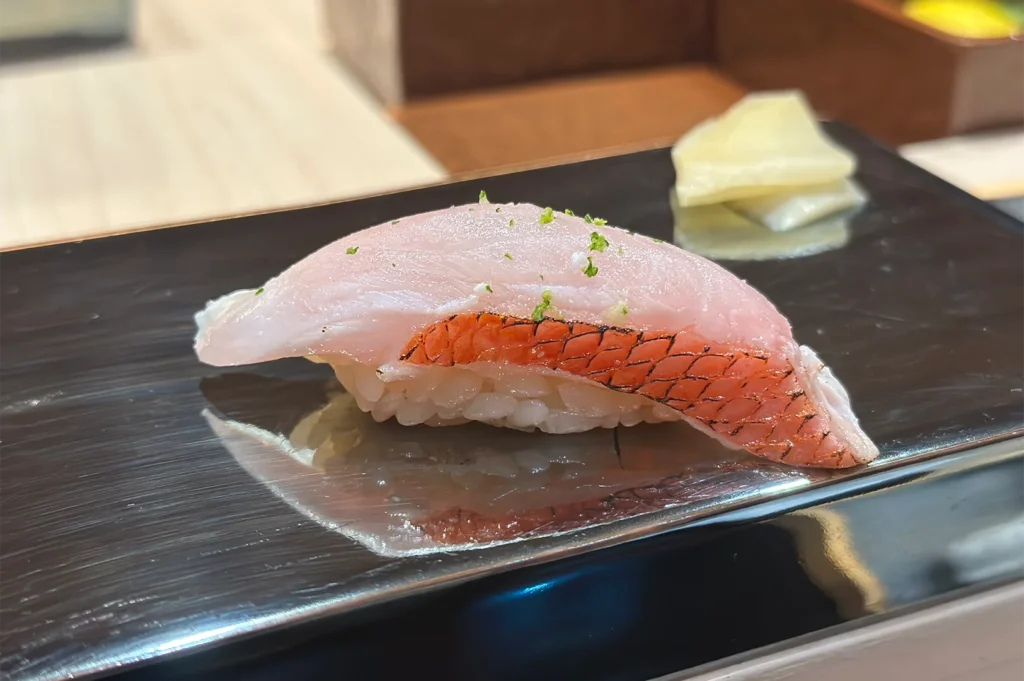
While Kinmedai is commonly fished and available year round, its quality fluctuates with the currents of the Japanese archipelago. The fish is primarily caught in the waters south of Honshu, particularly around the Izu Peninsula and the Ogasawara Islands. It is highly prized in Japanese cuisine and often served as sashimi, showcasing its delicate texture and rich umami flavors.
| Season | Profile | Culinary Application |
|---|---|---|
| Winter | Peak fat content; high caloric density. | Shabu-shabu, heavy simmering (Nitsuke). |
| Early Spring | Balanced umami; subtle sweetness. | Nigiri sushi, Sashimi. |
| Late Spring | Leaner, firmer texture. | Salt-grilling (Shioyaki). |
The winter months are traditionally considered the “prime” season, as the fish builds up reserves to navigate the colder waters. During this time, the flesh takes on a translucent, pinkish-white hue marbled with invisible layers of umami flavors.
The Art of the Skin: Techniques in Finesse
In Japanese cuisine, the skin of the Kinmedai is never discarded. It is, in many ways, the soul of the dish. The layer immediately beneath the skin contains the highest concentration of fats and flavorful oils. To strip the skin away is to lose the very essence of the species.
Matsukawa-zukuri (The Pine Bark Technique)
A hallmark of high-level sushi preparation, this technique involves placing the fillet skin-side up and dousing it with boiling water. This process, known as Yubiki, serves two purposes:
- It tenderizes the tough collagen in the skin.
- It kills any surface bacteria while leaving the flesh beneath raw.
The fillet is immediately plunged into ice water to stop the cooking process, resulting in a texture that is both snappy and tender.
Aburi: The Alchemy of Flame
When served as nigiri, Kinmedai is frequently subjected to Aburi, or torching. When the flame touches the skin, the oils undergo the Maillard reaction, releasing a smoky aroma that complements the natural sweetness of the white-fleshed fish. This flash-searing creates a contrast between the warm, charred exterior and the cool, buttery interior.
Beyond the Sea Bream: Comparative Gastronomy of the Deep Sea Fish
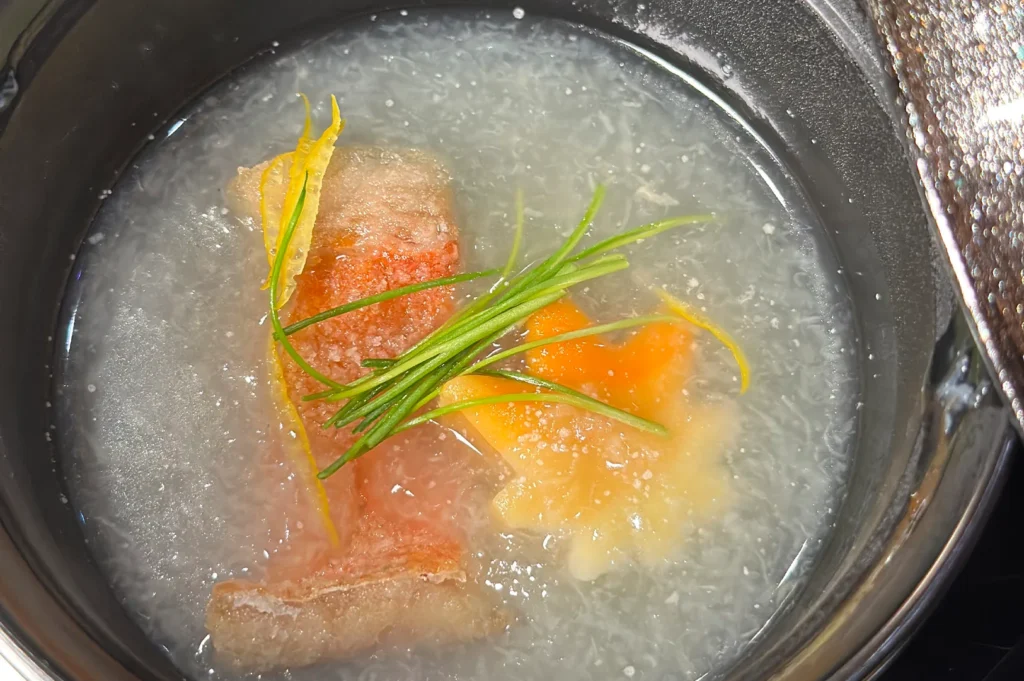
While the Sea Bream is the “King of Fish” in Japan for its clean, elegant profile, the deep sea fish category, led by Kinmedai, offers a more decadent alternative. The structural integrity of the Kinmedai allows it to excel in cooked preparations that would destroy more delicate white fish.
Kinmedai no Nitsuke (Simmered Golden Eye)
In this classic preparation, the fish, often the head and bones, is simmered in a potent broth of soy sauce, mirin, sake, and ginger. The collagen from the large head and eyes thickens the liquid into a rich glaze. The delicious result is a dish where the saltiness of the sauce cuts through the fatty richness of the fish.
Clear Broths and Suimono
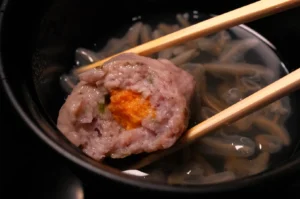
Because the bones are large and full of marrow-like oils, they produce an exceptional light stock. When the skeletal remains are used to bring out a dashi, the resulting broth carries a distinct golden sheen on the surface, a visual echo of the fish’s living form.
From Toyosu Market to the Table: Logistics of Freshness
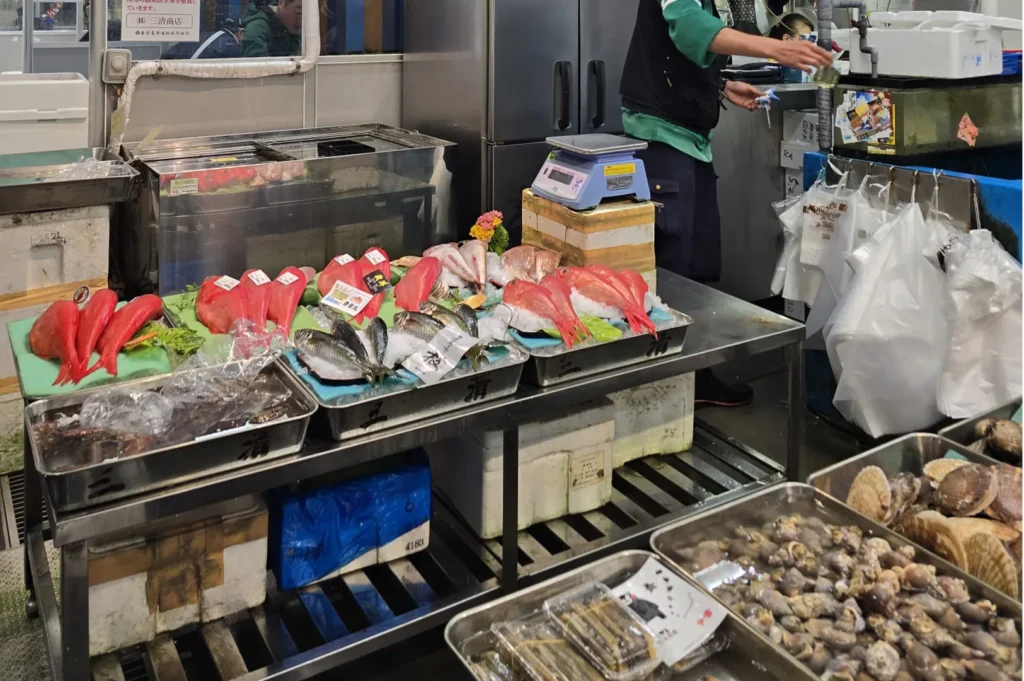
The journey of a Kinmedai from the deep sea to a Tokyo kitchen is a race against time. Because of its high oil content, the fish is prone to rapid oxidation. Freshness is monitored with clinical precision.
Catch Method: Most premium Kinmedai are caught via pole-and-line (Ippon-tsuri). This prevents the bruising and stress associated with large-scale netting, ensuring the flesh remains pristine.
Delivery Logistics: For top-tier Japanese establishments, the fish is often flown or sent via high-speed delivery shortly after being caught. It is not uncommon for a fish caught on a Tuesday or Friday to be served in a high-end sushi-ya within 24 hours.
Storage: To store Kinmedai correctly, it must be kept at a temperature just above freezing, wrapped in moisture-wicking paper to ensure the skin does not become waterlogged. A well-handled fish can be aged for a few days to break down complex proteins into amino acids, enhancing the umami, but this requires immense skill to avoid spoilage.
Mastery in Every Slice
The Kinmedai is a testament to the fact that Japanese gastronomy is as much about science as it is about spirit. From the way the flesh reacts to ice, to the precise length of time it spends under a flame, every variable is controlled to honor the quality of the gold-eyed hunter. It remains a popular choice for those who seek a bridge between the lean elegance of traditional sea bream and the decadent richness of fatty tuna.
Whether it is the early spring catch or the oil-heavy winter specimens, Kinmedai continues to be a cornerstone of the world of fine dining, a fish that requires both the chef’s finesse and the diner’s appreciation for the mysteries of the deep waters.
Experience the Deep Sea at Sushi Masa by Ki-setsu
At Sushi Masa by Ki-setsu, we invite you to experience the profound depth of Kinmedai through the lens of our rigorous Edomae tradition. Our chef meticulously selects each specimen, often sourced directly from the morning auctions at Toyosu, to ensure that only the most exceptional quality reaches your plate. During our intimate dinner service, our chef employs time-honored techniques, from precise skin-searing to delicate aging, to amplify the natural umami and buttery texture of this deep-sea treasure.
We welcome you to join us for an Omakase journey where the seasonal nuances of the Pacific are celebrated with unwavering focus and refined craftsmanship.