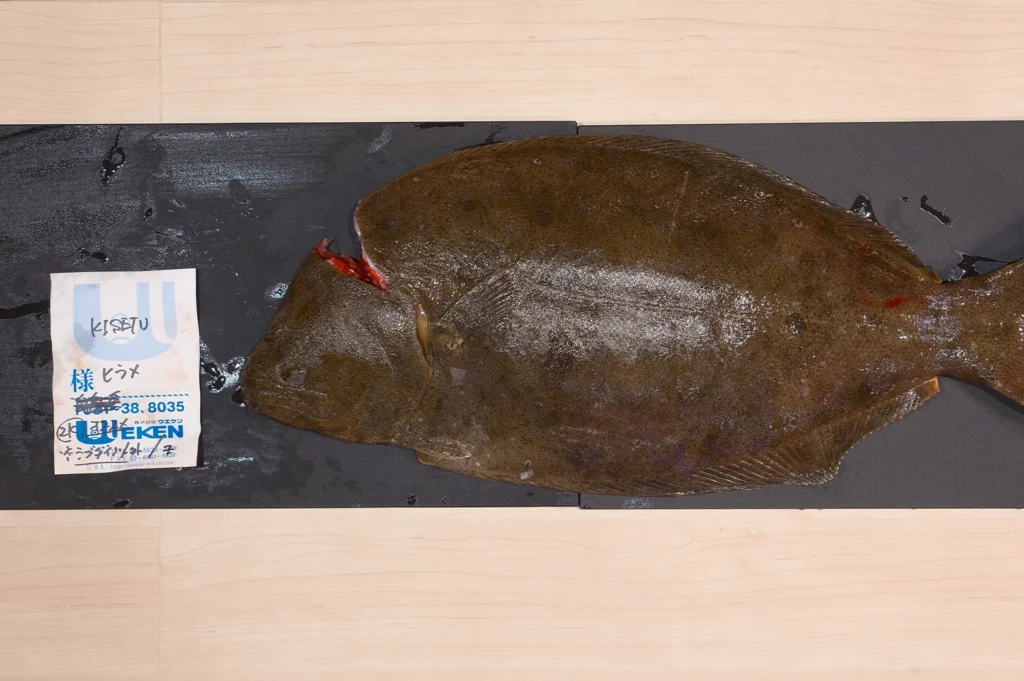
In the high-stakes theater of a master’s kitchen, the most profound statements are often whispered. While the crimson intensity of tuna commands the immediate gaze of the novice, the seasoned epicurean looks for the translucent, ethereal glow of hirame.
Often referred to as the “King of White Fish,” this flat fish represents the pinnacle of subtle sophistication in Japanese cuisine. It is a fish defined by its contradictions: a rugged, camouflaged exterior that gives way to a flesh so delicate, it seems to dissolve upon the palate. To understand this species is to understand the Japanese virtue of shun, the exact moment when an ingredient reaches its peak of flavor and texture.
The Biological Paradox: Understanding the Olive Flounder
Scientifically known as Paralichthys olivaceus, the hirame is a fascinating biological subject. Within the family of large tooth flounders, it is a predatory flatfish that inhabits the sandy floors of the coastal sea around Japan, Korea, and China. In the West, it is frequently called the bastard halibut or olive flounder, though in the context of high-end sushi restaurants, it is simply and respectfully called hirame.
The most striking characteristic of this species is its physical orientation. A common mnemonic in Japan to distinguish the hirame from its cousin, the karei (righteye flounder), is the phrase hidari hirame, migi karei (left hirame, right side karei). As the fish matures from a larva, its right eye migrates to the left side of its body, allowing it to lie flat on the bottom side while scanning the waters above for small fish and crustaceans. This unique physiology results in two distinct types of meat: the lean, firm body fillets and the fat-rich, muscular fin known as engawa.
Large Tooth Flounders and the Global Catch
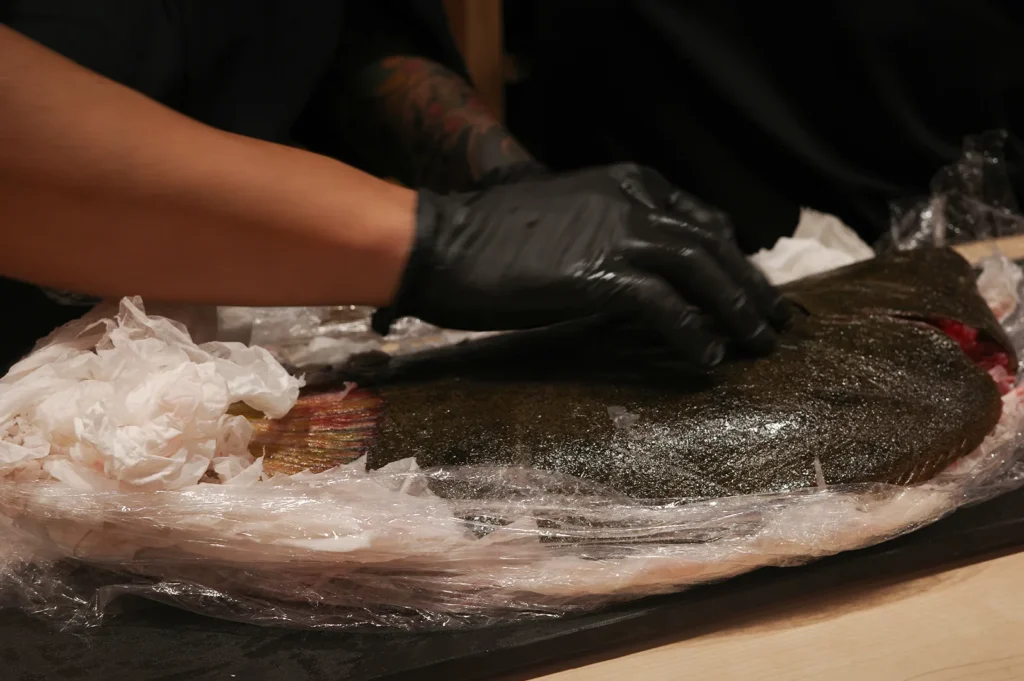
The Food and Agriculture Organization of the United Nations (FAO) monitors the global catch of large tooth flounders, noting that Japan remains the primary consumer of high-quality wild caught hirame. While aquaculture has expanded in recent decades, particularly in countries like South Korea where hirame are raised in land-based tanks, the wild specimens remain highly prized for their superior texture and clean taste.
Wild specimens feed on a natural diet of small fish, which contributes to a more complex flavor profile than those fed on pellet feed in aquaculture settings. The weight and size of the catch are critical; a specimen that is too small lacks the necessary fat development, while an overly large fish can become tough.
The Best Season for the Perfect Catch
Seasonality is the soul of Japanese cuisine. While hirame is available throughout the year, the best season is universally acknowledged to be winter, specifically from late autumn through early spring.
Winter Hirame (Kanchirame): During the cold months, the fish stores fat to survive the drop in sea temperature. This results in a flesh that is slightly pink, tasty, and exceptionally soft yet firm.
Summer Hirame: Conversely, in the summer, the fish becomes leaner and the flavor can turn “muddy,” making it less desirable for raw preparations in sushi restaurants.
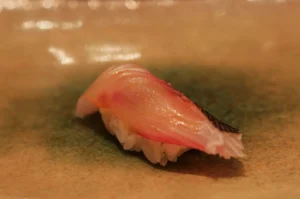
During the best season, the flesh takes on a translucent, glassy appearance. It is at this time that a chef can truly showcase the wild hirame as the centerpiece of an omakase menu.
The Art of Preparation: Hirame Sashimi and Nigiri
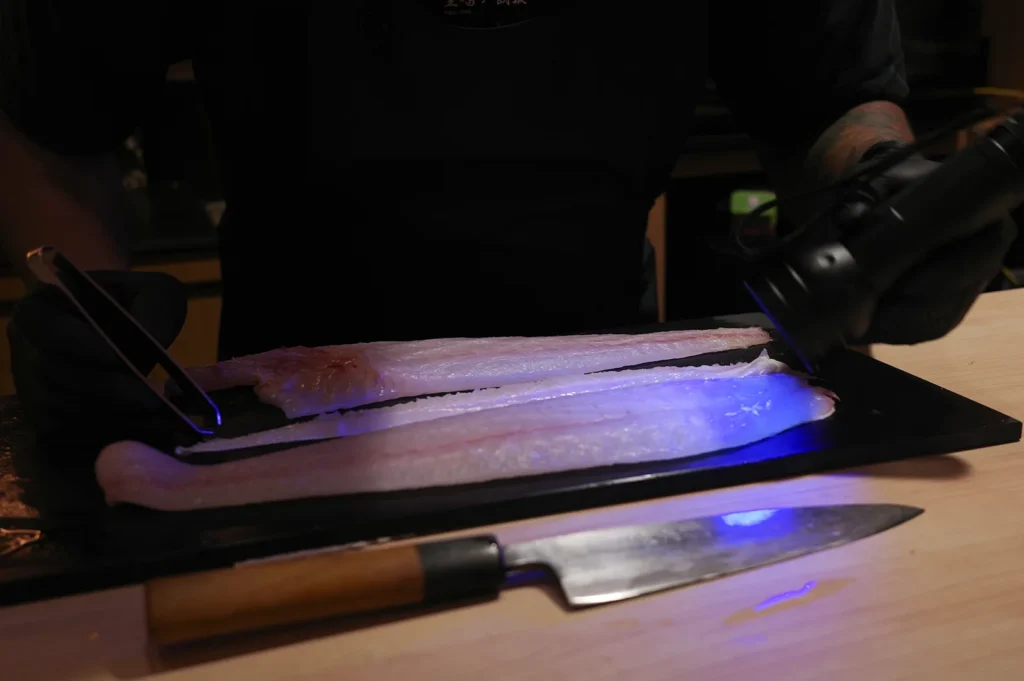
The preparation of hirame sashimi is an exercise in restraint. Because the flavor is so mild, it is easily overwhelmed. A master chef will rarely serve hirame immediately after the catch. Instead, the fish undergoes a process of kobujime or controlled aging, especially when featured in an omakase dining experience where every detail is meticulously crafted to highlight the fish’s delicate qualities.
The Kobujime Technique
In many traditional establishments, the fillets are cured between layers of kombu (dried kelp). This serves two purposes:
Moisture Extraction: The kelp draws out excess water, making the texture more firm.
Umami Infusion: The glutamates from the kelp seep into the white fish, enhancing the mild flavor with a savory depth.
Hirame Sushi and the Engawa
When served as hirame sushi, the nigiri is often topped with a small amount of momiji oroshi (grated radish with chili) and scallions to provide a sharp contrast to the tasty meat. However, the most sought-after part of the Japanese flounder is the engawa. This is the muscle that moves the fin, and because it is constantly in motion as the fish tries to swim or hide, it is exceptionally rich in collagen and fat. It has a crunchy texture and a strong flavor that stands in stark contrast to the soft body meat.
For those eager to explore further the meticulous care and artistry behind premium sashimi, we invite you to read The Pursuit of Purity: Sourcing, Science, and the Standards of Sashimi Singapore. This piece delves into the sourcing, scientific precision, and the exacting standards that define the ultimate sashimi experience.
Texture and Taste: A Comparative Analysis
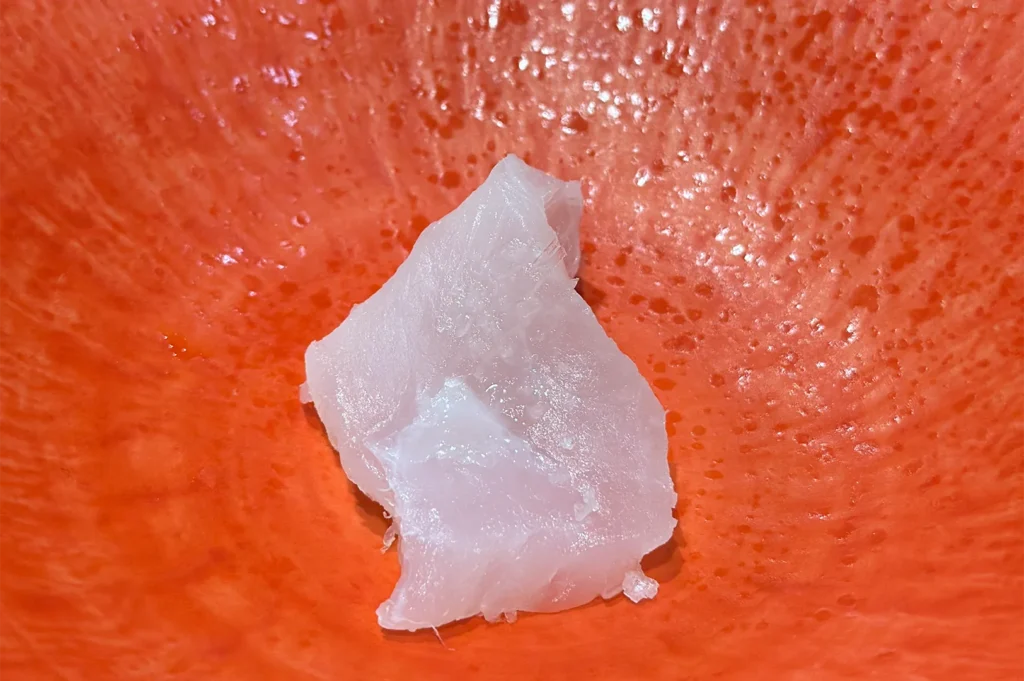
In the hierarchy of white fleshed fish, hirame occupies a unique position. While halibut is often compared to it in Western countries, the texture of Japanese flounder is significantly more refined.
| Attribute | Hirame (Olive Flounder) | Karei (Righteye Flounder) |
|---|---|---|
| Eye Placement | Left side (hidari hirame) | Right side (migi karei) |
| Best Season | Winter (late autumn to spring) | Summer (varies by species) |
| Flavor Profile | Delicate, sweet, clean | Earthier, often served cooked |
| Texture | Firm yet tender | Generally soft |
The flesh of the hirame should be fresh, never frozen, to maintain its cellular integrity. When served raw, the slices should be thin enough to see the pattern of the plate beneath, a technique known as usu-zukuri. This allows the diner to appreciate the delicate flavor without the meat feeling overly resilient or “rubbery.”
The Cultural Resonance of Japanese Flounder
Beyond the plate, the hirame is a symbol of the Japanese sea’s hidden treasures. It does not boast the flashiness of other fish; it spends its life blended into the sand. This humility is reflected in the way it is consumed. It requires the diner to slow down, to quiet their palate, and to listen to the “whisper” of the sea. In Japan, the act of eating hirame is an act of mindfulness.
The chef acts as a curator, selecting the wild catch at the perfect weight, aging it to the precise hour, and slicing it with a skin-thin accuracy that respects the body of the fish. It is this dedication that has made hirame a permanent fixture in the world’s finest sushi restaurants.
Hear the Whisper: Your Seat at Chef Masa’s Counter
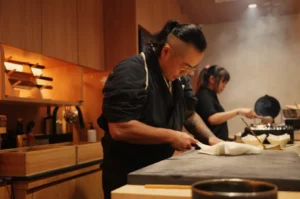
At Sushi Masa by Ki-setsu, we invite you to savor the quiet sophistication of Japanese flounder in its purest form. Under the skilled hands of Chef Masa, every wild caught hirame is honored with the meticulous care and respect of Edomae tradition. Freshly sourced every day from the renowned Toyosu Market auctions, our hirame is carefully selected and curated to achieve the perfect harmony of texture and flavor for our exclusive dinner omakase experience.
Whether it is the translucent grace of hirame sashimi or the decadent, fat-rich crunch of engawa nigiri, Chef Masa ensures that each piece is a testament to the purity of Japanese cuisine. Join us at the counter, where the finest seafood meets the steady hand of a master.