In the hierarchy of Japanese ichthyology, there exists a silent consensus among connoisseurs. While the Bluefin Tuna may be the undisputed king of the surface, the blackthroat seaperch reigns supreme in the lightless depths of the Pacific Ocean.
Known colloquially and affectionately in the culinary world as Nodoguro, this crimson-scaled treasure is the ultimate white fish paradox. It possesses a fatty meat profile so intense that it challenges the richness of otoro, yet it retains the delicate, nuanced elegance expected of high-end shiromi. To understand this fish is to understand the intersection of deep-sea biology and the exacting standards of Japanese gastronomy.
The Anatomy of the Blackthroat Seaperch: Form and Function
Scientifically classified as Doederleinia berycoides, the Nodoguro is often called akamutsu in the Kantō region, a term derived from its rosy hue and its oily nature (mutsu being an old dialect word for “greasy” or “oily”). However, the name Nodoguro, literally translated as “black throat”, is the most widely recognized term in the food industry.
The species is immediately characterized by its large eyes, designed to capture the faint light of the eastern coast depths, and its vibrant color. Upon opening the mouth of a wild specimen, one finds a starkly dark, charcoal-colored membrane. This blackthroat is not merely a visual quirk; it is a signature of authenticity for a fish that is highly valued for its tender meat and rich taste.
Found primarily in the Pacific Ocean and the Sea of Japan, particularly off the Shimane Prefecture and Niigata, the Nodoguro feeds on a lot of deep-sea crustaceans and smaller fish. This diet, combined with the cold, high-pressure environment, makes the fish accumulate a staggering amount of fat. Unlike many other species, Nodoguro maintains a high fat content year-round, though it is widely considered that the season peaks in the late autumn through winter when the body is at its most rich.
Premium specimens of Nodoguro are often sourced from the renowned Toyosu Market in Tokyo, where the highest quality catches are auctioned and distributed to top-tier restaurants.
The Science of Succulence: Why Nodoguro is the King of White Fish
In the world of white fish, texture is usually defined by a clean, firm bite. However, Nodoguro subverts this expectation. Its fatty meat is remarkably soft, with lipids interwoven through the muscle fibers rather than sitting in a distinct layer.
| Attribute | Nodoguro (Blackthroat Seaperch) | Standard White Fish (e.g., Tai) |
|---|---|---|
| Fat Content | Extremely High (up to 20%+) | Low to Moderate (approx. 2-5%) |
| Texture | Tender, buttery, melting | Firm, resilient, “snappy” |
| Primary Flavor | Sweet, umami-heavy, strong | Clean, subtle, mineral |
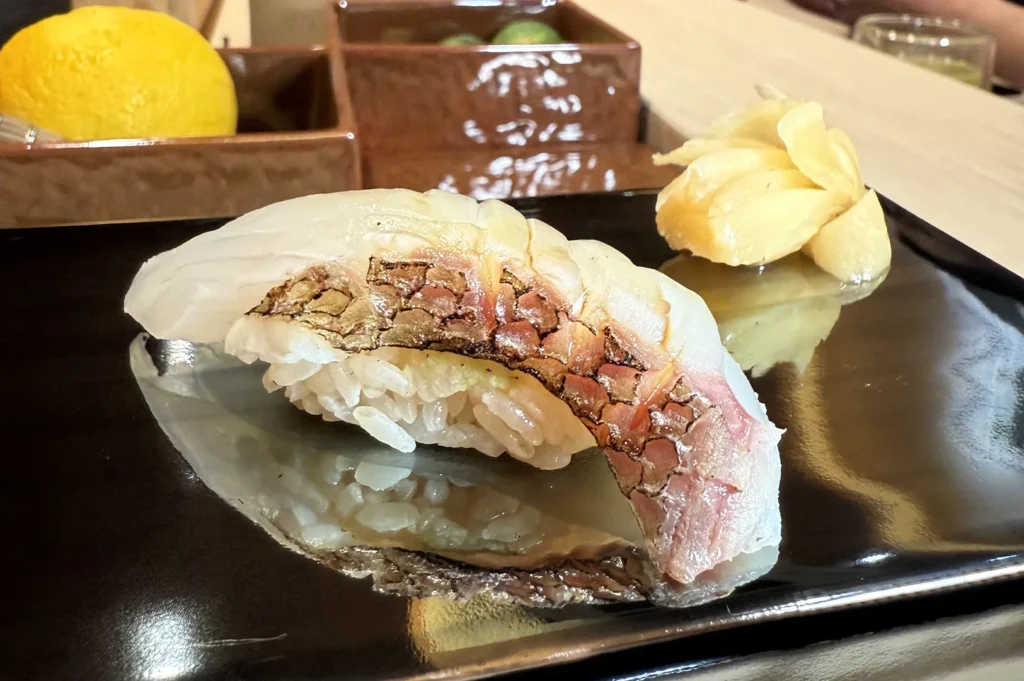
| Skin Quality | Thin, exceptionally flavorful when seared | Often tough, requires specific treatment |
Because it is caught at depths ranging from 100 to 400 meters, the Nodoguro does not experience the same muscular stressors as surface-dwelling species. This results in a meat that is inherently soft. When consumed as sashimi or sushi, the fat begins to melt at human body temperature, giving the diner a sensory experience more akin to a fine Wagyu than a traditional white fish.
From Shimane to Tokyo: The Journey of a Premium Catch
While the fish is found in various parts of the Sea of Japan, the specimens from the Shimane Prefecture and the San’in region are highly valued for their size and fat density. A large Nodoguro, measuring over 30 centimeters in length and weighing nearly a kilo, can command astronomical prices at the Tokyo wholesale markets.
The way Nodoguro is handled at the hand of the fisherman determines its ultimate taste. To preserve the tender body, many traditional establishments insist on line-caught (wild) specimens rather than those caught in nets, which can bruise the meat. While there has been research into aquaculture, the wild Nodoguro remains the gold standard due to its superior fat distribution and the complexity of its diet.
Culinary Techniques: The Art of Enhancing Fatty Meat

The preparation of Nodoguro is a study in heat management. While it is excellent as sashimi, many believe its true potential is unlocked through the application of fire.
Aburi: The Sear that Defines the Fish
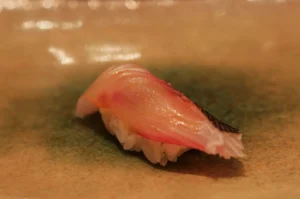
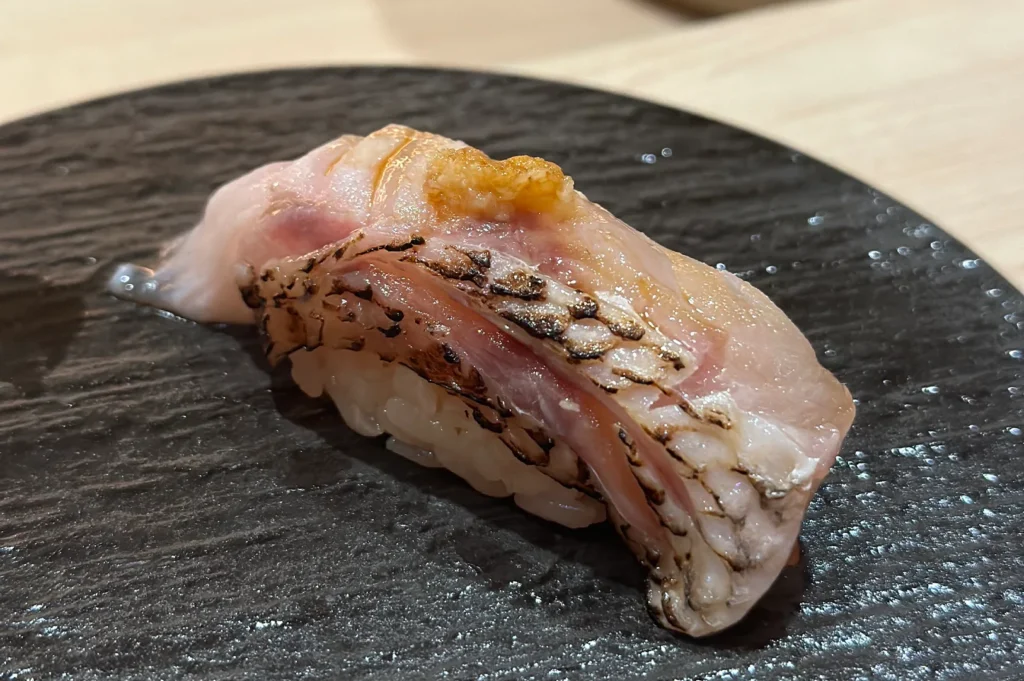
The most popular way to serve Nodoguro in high-end sushi settings is Aburi (torch-seared). Because the skin is thin and holds a significant portion of the fat, a brief encounter with a high-intensity flame causes the fat to liquefy and bubble, releasing a strong, nutty aroma. This technique transforms the texture, creating a contrast between the charred skin and the cool, soft meat beneath.
Shioyaki: The Purity of Salt and Flame
In traditional establishments, a whole Nodoguro grilled with salt (Shioyaki) is considered one of the most luxurious products of the sea. The fat acts as a self-basting agent, keeping the meat incredibly moist even under high heat. A simple bite of the belly meat reveals why it is called the “King of White Fish.”
The Cultural Significance of the “White Toro”
The rise of Nodoguro in Japan is a relatively modern phenomenon in terms of national popularity. For decades, it was a regional delicacy enjoyed primarily along the coastal areas where it was caught. However, as logistical chains to Tokyo improved and the global palate shifted toward richer, more decadent seafood, the blackthroat seaperch moved from a local secret to a global benchmark of quality.
It is a fish that demands respect. Whether it is a Saturday night omakase or a formal celebratory time, the appearance of Nodoguro on the menu signals a commitment to the highest tier of seafood. It represents a bridge between the lean, ascetic traditions of old Edomae sushi and the modern craving for rich, fatty profiles.
Technical Scrutiny: Grading and Selection

When experts evaluate a kilo of Nodoguro, they look for specific characterized markers:
Clear, Large Eyes: Indicates freshness and proper pressure decompression during the catch.
Firmness of the Belly: Despite being a soft fish, the belly should not feel hollow; it should feel “heavy” with fat.
Color Saturation: A vibrant, rosy red indicates a healthy specimen that has been handled with care.
In the English-speaking world, the fish is often listed as rosy seabass, though this name hardly captures the prestige it carries in Japan. As more international diners seek out wild and rich seafood, Nodoguro has become a primary driver of culinary tourism to coastal prefectures.
A Symphony of Fat and Fire at Sushi Masa by Ki-setsu
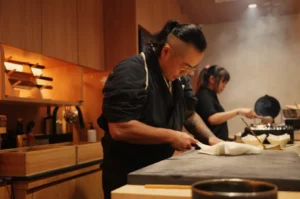
At Sushi Masa by Ki-setsu, we believe that the true essence of the blackthroat seaperch is only revealed through the meticulous application of Edomae tradition. Our chef, Chef Masa, personally oversees the selection of our Nodoguro, ensuring that every specimen is sourced directly from the premier auctions at Toyosu.
We honor the wild nature of this fish by focusing on its inherent richness, primarily showcasing it within our dinner omakase experience. By employing precise knife work and the delicate art of the sear, Chef Masa coaxes the deep-sea fat to the surface, creating a sushi piece that is both a technical marvel and a soulful expression of the Pacific.
We invite you to join us for an evening dedicated to the pursuit of seafood perfection, where the fire meets the frost of the deep.