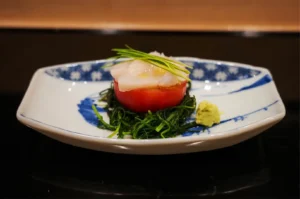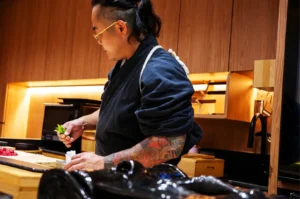
Exceptional sashimi begins with good fish, but its appeal goes well beyond freshness. A slice of seasonal white fish can be delicate and clean, while fatty tuna offers richness that almost melts in the mouth. The pleasure comes from recognising these differences—and experiencing seafood prepared to bring out its individual character.
At Sushi Masa by Ki-setsu, an intimate eight-seat omakase restaurant on Level 6 of Cuppage Plaza, Chef Masa lets Japan’s seasons guide each dinner. Premium ingredients flown in from Japan, including seafood sourced through Tokyo’s Toyosu Market, shape a changing menu of sashimi, cooked dishes and nigiri sushi. Rather than promising the same fish every evening, he chooses what is worth serving that day.
For anyone searching for a sashimi restaurant in Singapore, this guide explores how to recognise quality, understand different fish and choose a Japanese dining experience that suits the occasion.
Looking for the Best Sashimi Singapore Has to Offer?
The best sashimi in Singapore is not necessarily the most expensive platter or the one with the greatest variety. An exceptional sushi restaurant combines thoughtful sourcing, skilled preparation and a clear understanding of how each fish should taste and feel.
A lean fish may call for a different cut from richly marbled tuna. Temperature, timing and the choice of traditional condiments also change how a piece is experienced.
At Sushi Masa, these decisions are part of a complete omakase meal. Instead of presenting a large assortment all at once, Chef Masa introduces seafood through a considered progression, allowing guests to appreciate lighter flavours before moving towards richer ones.
Fresh Sashimi Begins with Fresh Seafood
Fresh sashimi depends on more than the date a fish was caught. Transport, temperature control, handling and preparation determine whether high quality seafood retains its intended character. Some fish are best served soon after appropriate preparation; others benefit from carefully controlled resting or maturation.
Diners can look for natural colour, a clean aroma and a texture appropriate to the species. A white fish may be firm and translucent, while fatty tuna looks more richly marbled. When evaluating whole fish, trained buyers may also examine its skin, eyes and gills. Visual cues alone cannot establish whether raw fish is safe; handling matters.
Sushi Masa receives ingredients from Japan for its dinner service. The restaurant’s focus is not simply on offering fish labelled fresh, but on selecting, storing and preparing each ingredient in a condition that lets its best qualities emerge.
The Craft Behind a Japanese Sushi Bar
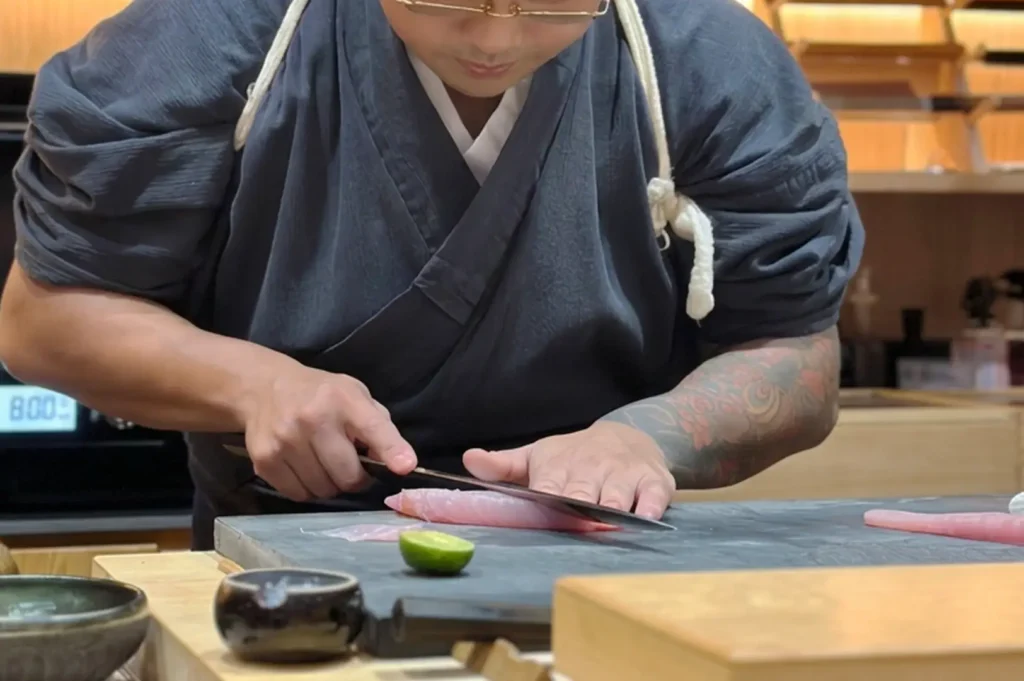
At a skilled sushi bar, the chef’s knife is as important as the seafood itself. The cutting direction and thickness of a slice influence tenderness, mouthfeel and how flavour is released. Even excellent fish can lose its appeal when poorly prepared.
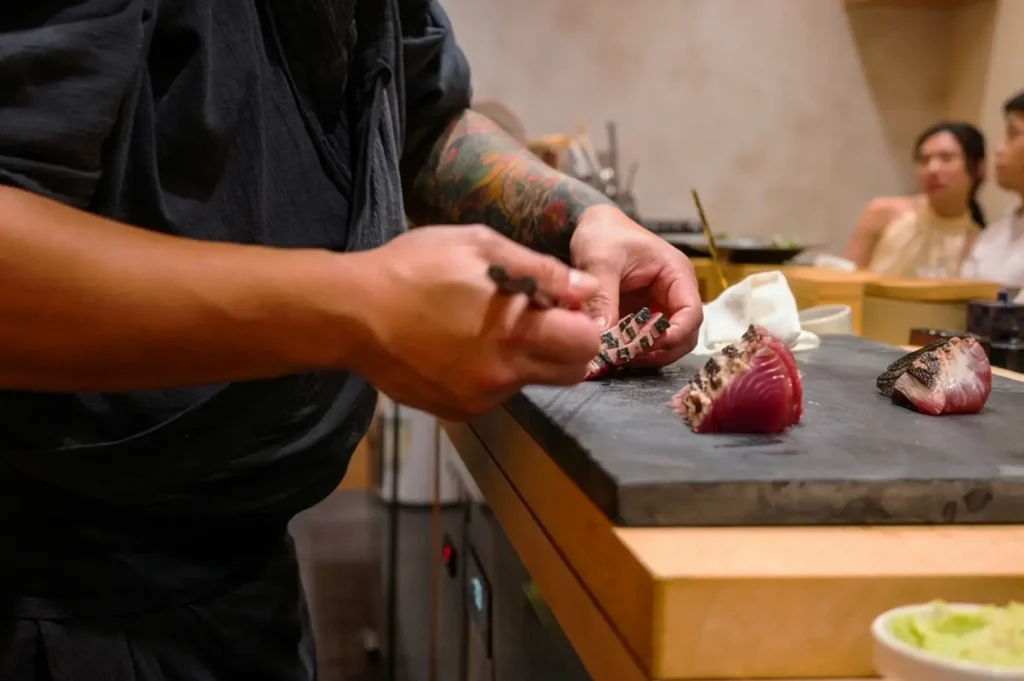
This craftsmanship is visible at Sushi Masa’s eight-seat counter. Guests can watch Chef Masa prepare each dish and hear about unfamiliar ingredients directly from him.
Premium Sashimi: Fish, Texture and Seasonality
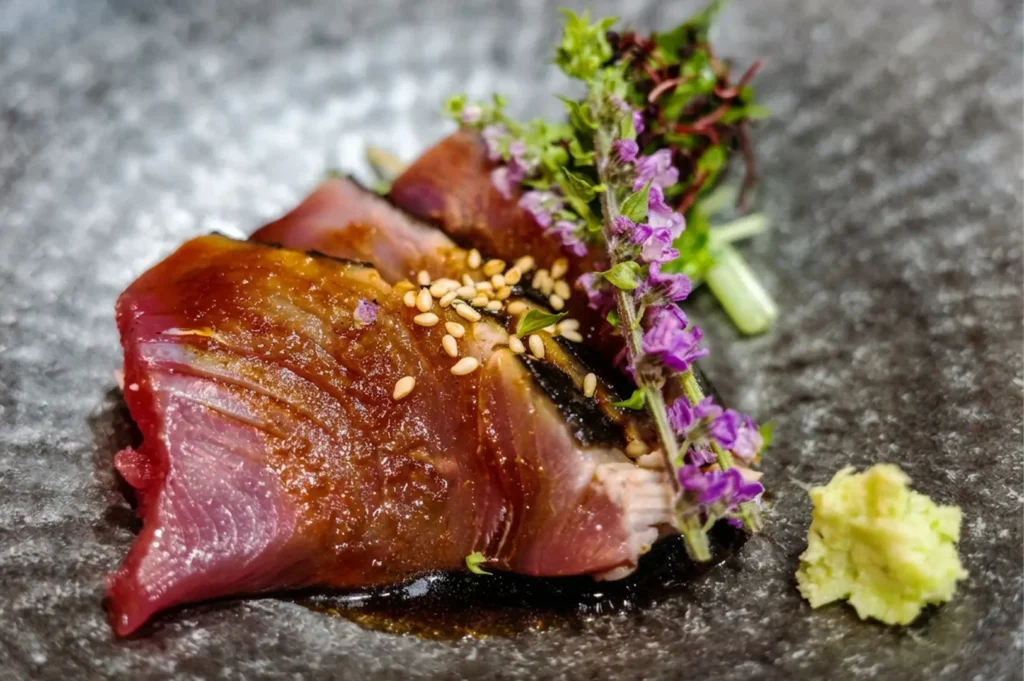
Premium sashimi is not one particular species. It can mean an exceptional cut of tuna, a carefully selected white fish, sweet shellfish or an ingredient available only briefly during the year.
Salmon Sashimi and Salmon Belly
Salmon sashimi remains a favourite among diners in Singapore. Its soft texture, recognisable colour and gentle richness make it an approachable introduction to Japanese food. Salmon belly usually contains more fat, giving it a silkier mouthfeel and fuller taste than leaner portions of the fish.
But familiar does not mean simple. The salmon must be suitable for raw consumption and handled correctly, while the cut influences its final texture.
At Sushi Masa, salmon is not a guaranteed fixture. Chef Masa works with seasonal ingredients rather than a fixed selection, so guests might encounter a delicate white fish or a particular tuna cut instead. For diners accustomed to ordering salmon sashimi, that discovery is part of the enjoyment.
Tuna Sashimi: From Akami to Fatty Tuna and Otoro
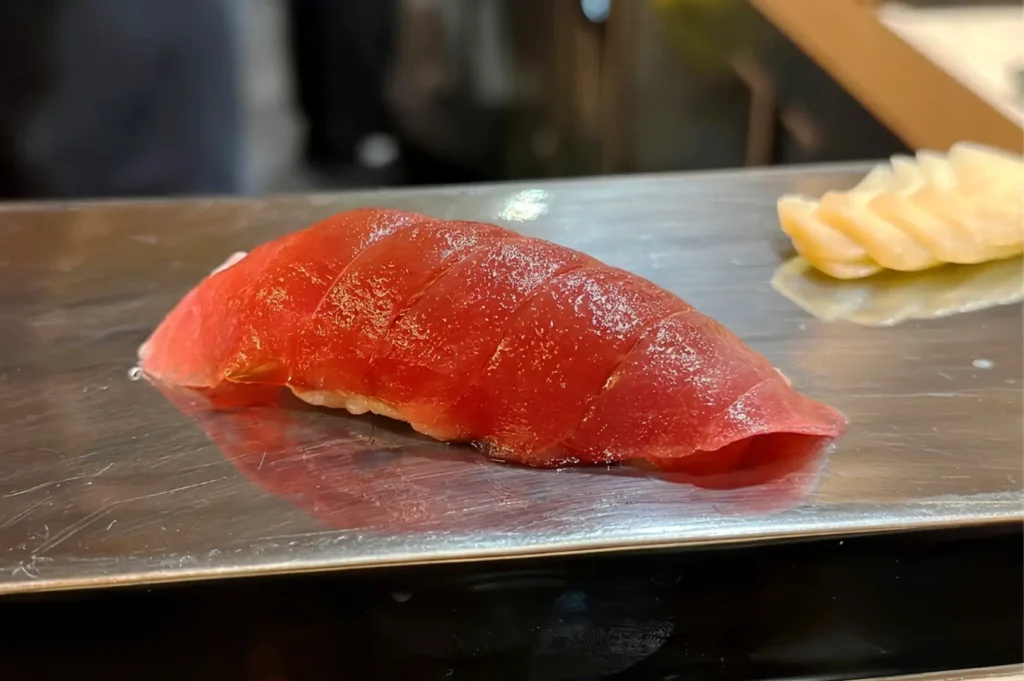
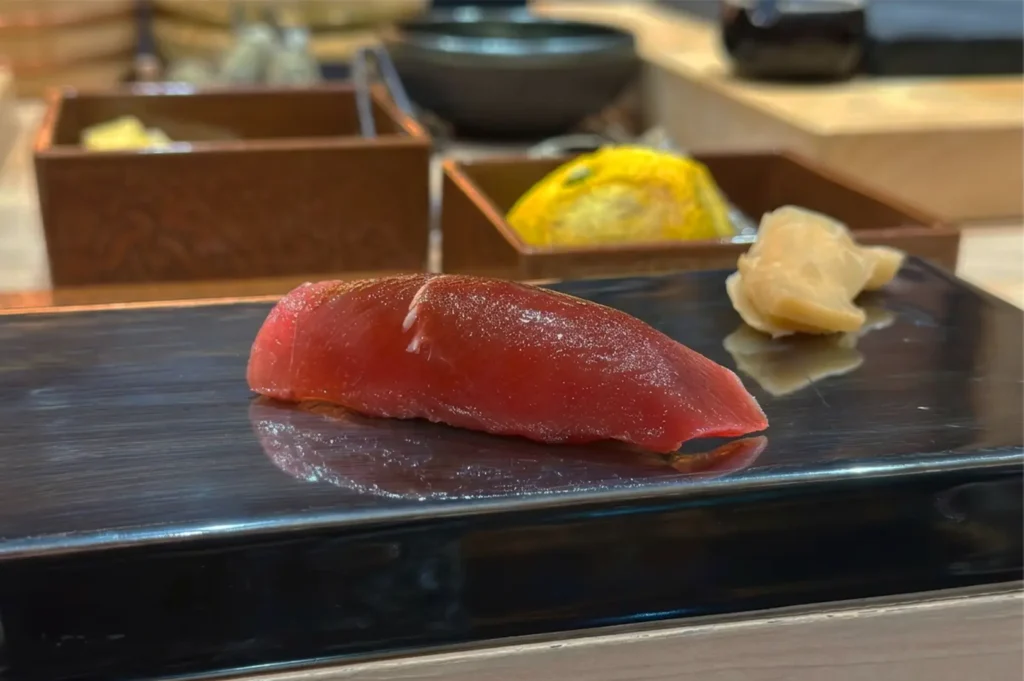
Tuna demonstrates how dramatically one fish can vary. Akami, the lean red portion, offers a clean, concentrated flavour and satisfying structure. Chutoro balances that character with moderate marbling. Otoro, the richly fatty belly, has a luxurious texture that seems to dissolve across the palate.
Each cut rewards a different preparation. A precisely sliced akami piece emphasises the taste of tuna itself; lightly flamed otoro can release aroma and alter the sensation of its natural fats. Previous Sushi Masa menus have featured aged akami, chutoro and flamed otoro nigiri, showing different expressions of the same fish.
Premium sashimi depends on more than price.
White Fish, Hamachi and the Pleasure of a Firmer Bite
Seasonal white fish can be just as memorable as tuna. Tai, or Japanese sea bream, offers subtle sweetness and a relatively firmer bite. Its delicate character can be especially rewarding near the beginning of a meal, before stronger flavours dominate the palate.
Hamachi, associated with Japanese yellowtail, provides another contrast: supple flesh, natural oils and balanced richness. Its characteristics change with age, season and origin. Nodoguro, a fish with white flesh and a rich taste, adds yet another dimension to Japan’s seafood repertoire.
Chef Masa has featured tai and nodoguro in past seasonal menus. The selection changes with what the chef considers worth serving.
Scallop, Uni and Other Seasonal Seafood
A sweet scallop offers a very different experience from finfish, with a tender bite and clean, lingering flavour. Uni, or sea urchin, brings a creamy texture and unmistakable savoury sweetness. Hokkaido is particularly celebrated for seasonal uni, though quality and flavour vary by origin and handling.
Uni has appeared on Sushi Masa’s previous menus, alongside other seafood selected according to availability. For guests whose usual choice is a salmon or swordfish sashimi platter, these ingredients reveal how broad the world of Japanese seafood can be.
Japanese Cuisine: Beyond a Plate of Raw Fish
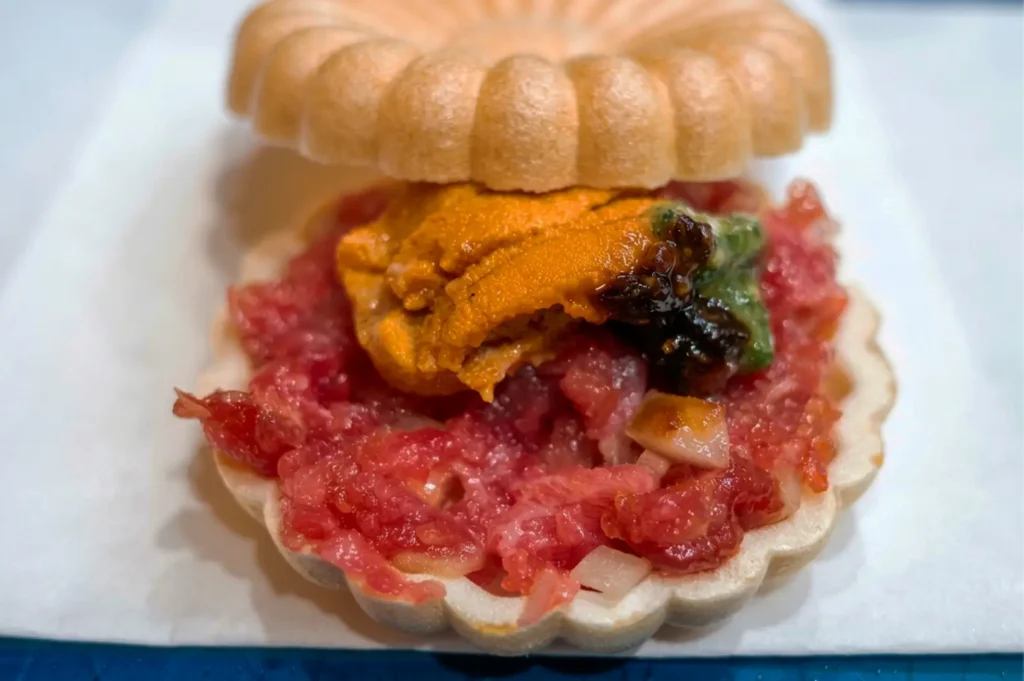
Japanese cuisine values balance across an entire meal. Fresh sashimi highlights seafood in its simplest form, while sushi rice, cooked dishes, soup and careful seasoning introduce new contrasts.
From Sashimi to Nigiri Sushi
Sashimi is sliced fish or seafood served without rice. Nigiri combines a topping with a small portion of seasoned rice, creating a relationship between the fish and the temperature, texture and acidity of the shari. Sushi rolls offer another format, combining rice and fillings in a rolled preparation.
At Sushi Masa, a sashimi course may establish the natural character of the day’s catch before the nigiri sequence begins. Chef Masa prepares sushi one piece at a time, so guests can eat it as intended rather than leaving it to rest on a platter. Fish that tasted delicate on its own can feel entirely different when paired with rice.
Soy Sauce, Wasabi and Traditional Condiments
Soy sauce, wasabi and pickled ginger can complement sashimi, but they should not overpower it. A lightly seasoned white fish may need very little accompaniment; a richer cut can respond differently to salt, acidity or the fragrance of wasabi.
At a chef-led counter, some pieces arrive already seasoned. Tasting each dish as served allows the ingredient—and the chef’s judgment—to remain at the centre of the experience.
Cooked Japanese Food Has Its Place Too
A complete Japanese dinner need not revolve exclusively around raw preparations. Grilling, simmering and frying reveal other sides of seafood. Previous Sushi Masa menus have included slow-cooked monkfish liver, seared bonito and fish grilled over binchotan charcoal.
A clear soup can refresh the palate. Guests who enjoy tempura or other cooked Japanese dishes may appreciate how a seafood-focused omakase uses heat without distracting from the fish itself.
Choosing Among Japanese Restaurants in Singapore
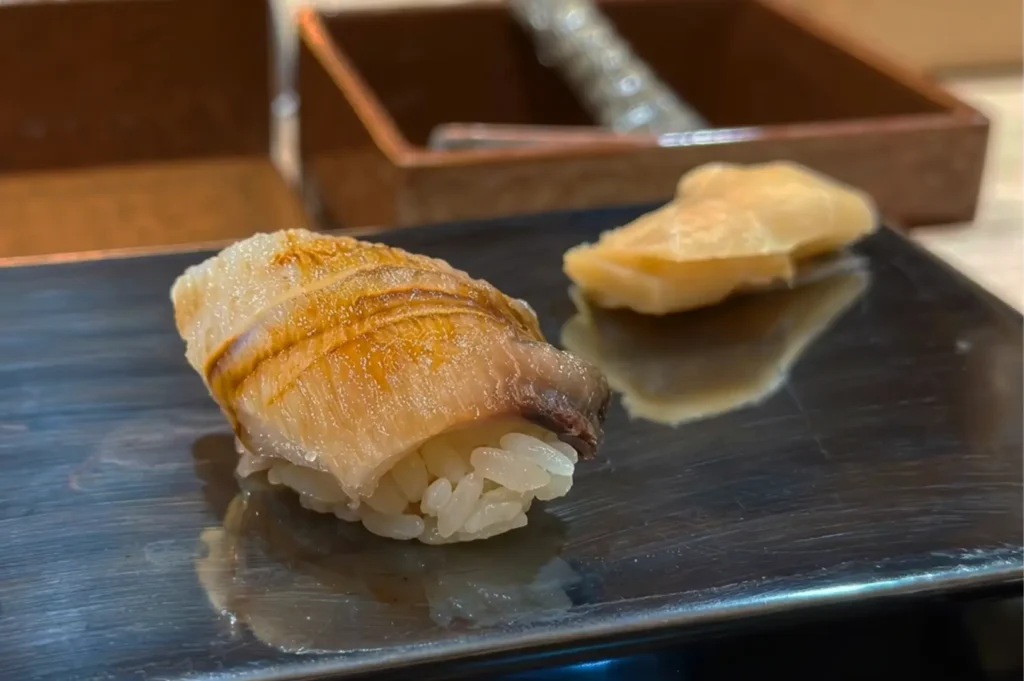
Different Japanese restaurants suit different occasions. One guest may want an affordable weekday lunch; another may be planning a leisurely dinner centred on premium sashimi.
Affordable Salmon Sashimi or a Seasonal Omakase Dinner?
For a casual craving, affordable salmon sashimi, assorted sashimi and sushi sets provide familiar flavours with flexibility. Many sushi restaurants offer à la carte dishes, making it easy to choose exactly what to eat and manage the price of a quick meal.
An omakase dinner is a different proposition. Rather than choosing individual portions, guests trust the chef to assemble a meal around seasonal seafood. At Sushi Masa, that includes appetisers, sashimi, cooked courses, nigiri, soup and dessert. The experience is intended for diners who want to explore beyond their usual favourites, not for those seeking a single takeaway platter.
Standing Sushi Bar or Seated Sushi Bar?
A traditional standing sushi bar often prioritises convenience and direct interaction, with guests enjoying selected pieces over a relatively short visit. A seated omakase sushi bar usually places greater emphasis on the progression of a complete meal.
Sushi Masa is not a standing sushi bar. Its eight counter seats face Chef Masa, creating an intimate setting where each course arrives within the rhythm of the evening. The distinction is worth understanding before booking: guests come for a chef-led dinner, rather than a quick stop for sushi.
Tomi Sushi and Other Sushi Restaurants
Diners comparing Japanese restaurants may encounter Tomi Sushi, casual sushi counters and specialist omakase establishments. These formats serve different needs. A broader Japanese menu can be convenient for groups who want familiar dishes, flexible portions or lunch options. A specialist counter may offer a narrower selection but more direct insight into the chef’s decisions.
For example, a diner looking for a quick meal around Millenia Walk may value convenience, while someone planning a special occasion may prefer the quieter intimacy of Sushi Masa.
Sushi Masa's Commitment to Seasonal Sashimi
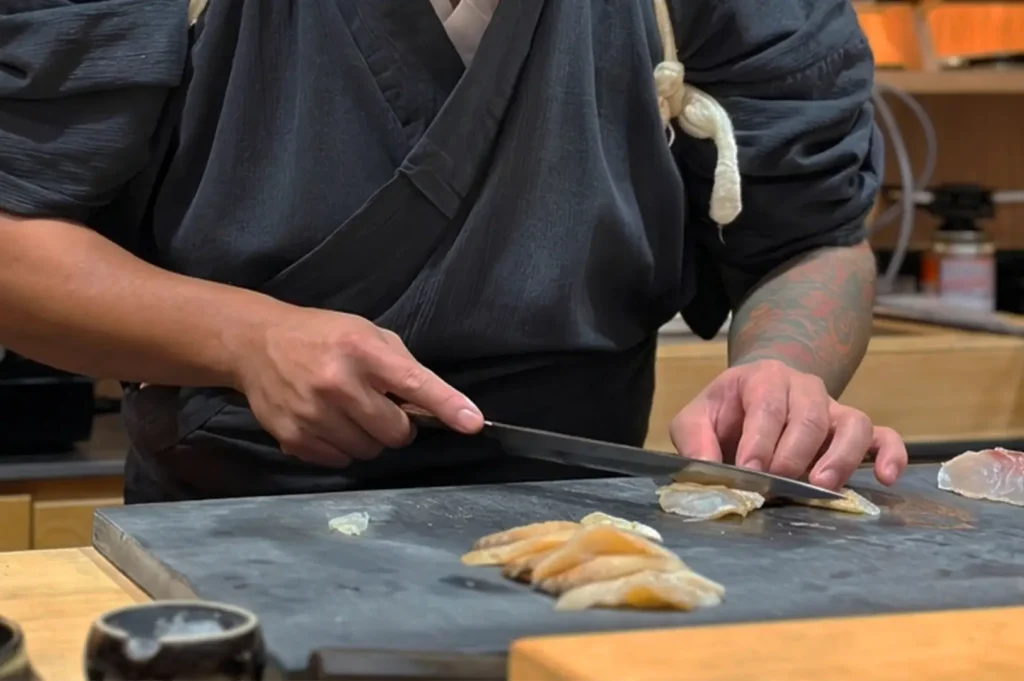
At Sushi Masa, the philosophy behind sashimi is simple: let the ingredient guide the preparation. The name Ki-setsu refers to the seasons, reflecting the way Japan’s changing catch shapes Chef Masa’s cooking.
Rather than building every menu around predictable luxury items, he considers the character of the seafood available. A clean, delicate fish might appear before richer tuna; a cooked course might provide warmth before the nigiri begins. Every dish has a place in the meal.
Seafood Air Flown from Japan’s Toyosu Market
Toyosu Market brings together seafood from different Japanese regions, giving chefs access to a wide range of seasonal varieties. Sushi Masa sources premium ingredients through Japan’s seafood supply network and receives deliveries that inform the evening’s menu.
A beautifully prepared white fish can leave just as strong an impression as fatty tuna when its condition and preparation are right. The emphasis is on choosing what will taste good that evening.
Chef Masa’s Approach to Fish Preparation
Behind the counter, attention to small details becomes visible. The angle of a cut, the thickness of a slice and the order of courses all influence the result. Chef Masa may showcase the clean texture of white fish before moving towards softer, more richly marbled seafood.
Previous menus have included shiro ika, kohada, aged akami, nodoguro, chutoro, otoro, uni and anago. These are examples of Sushi Masa’s repertoire, not a fixed promise for every visit. The menu changes with what arrives from Japan, which means returning guests may discover new dishes across the seasons.
A Personal Eight-Seat Dining Experience
The restaurant’s small size is part of its appeal. With just eight seats, guests can observe the preparation of their food, ask questions and follow the thinking behind the menu.
Sake and other drinks are available to accompany the courses. Whether visiting for a celebration or simply to savour Japanese seafood, guests are invited to experience the chef’s approach from only a few steps away.
Japanese Food Near Ngee Ann City: Discover Sushi Masa at Cuppage Plaza
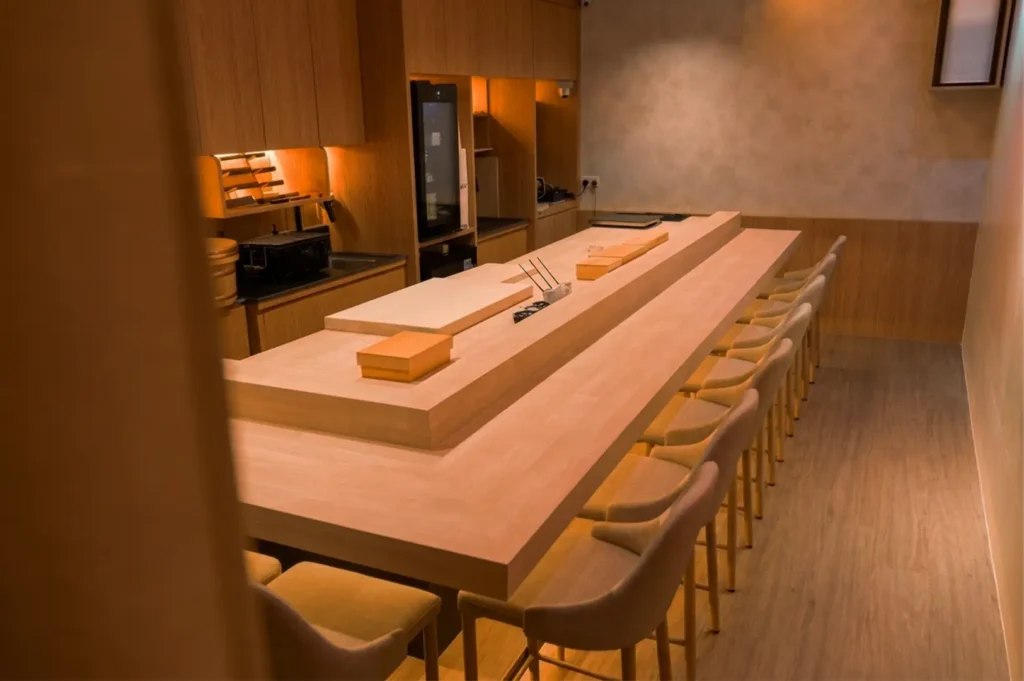
The Orchard area offers numerous Japanese dining choices, from shopping destinations such as Ngee Ann City to hotel restaurants and neighbourhood favourites. Sushi Masa offers something more discreet: an intimate counter on Level 6 of Cuppage Plaza, a short walk from Somerset MRT.
The restaurant serves dinner only, with one seating beginning at 7:15pm, Tuesday to Saturday. It is closed on Monday, with Sunday reserved for private bookings. There is no weekday lunch service, allowing the team to prepare the evening’s seasonal seafood carefully.
Frequently Asked Questions About Sashimi in Singapore
What Makes a Good Sashimi Restaurant?
A good sashimi restaurant combines seafood suited to raw preparation, careful handling, skilled knife work and serving methods appropriate to each fish.
Is Fresh Sashimi Always Better Than Aged Fish?
Not always. Certain fish benefit from expert, controlled maturation that develops flavour or texture. Safety and correct handling remain essential; ageing seafood at home is not the same as professional preparation.
Does Sushi Masa Serve Salmon Sashimi?
Sushi Masa’s menu changes with the seasonal catch. Salmon may not be available on a particular evening, so guests seeking a specific fish should enquire before booking rather than expecting a fixed sashimi selection.
Can I Order Sashimi À La Carte at Sushi Masa?
No. Sushi Masa serves a complete omakase dinner rather than an à la carte sashimi menu. Sashimi is enjoyed alongside the chef’s chosen cooked dishes and nigiri sushi.
Is Sushi Masa Suitable for Lunch?
No. Sushi Masa focuses on a single evening seating from Tuesday to Saturday. Guests looking for a weekday lunch or affordable salmon sashimi set should consider a casual restaurant instead.
Discover the Art of Seasonal Sashimi at Sushi Masa by Ki-setsu
An exceptional sashimi experience reveals more than the freshness of raw fish. It highlights the clean sweetness of white fish, the depth of lean tuna, the richness of otoro and the distinctive textures of seasonal shellfish.
At Sushi Masa by Ki-setsu, Chef Masa brings these details together through an intimate omakase dinner shaped by the changing seasons of Japan. The counter invites guests to discover seafood beyond the familiar platter.
Explore Sushi Masa’s seasonal omakase menu and reserve your seat for an evening dedicated to Japanese seafood craftsmanship.
Sushi Masa by Ki-setsu
5 Koek Road, #06-03, Cuppage Plaza, Singapore 228796
Dinner: Tuesday to Saturday, from 7:15pm
Advance reservations recommended.