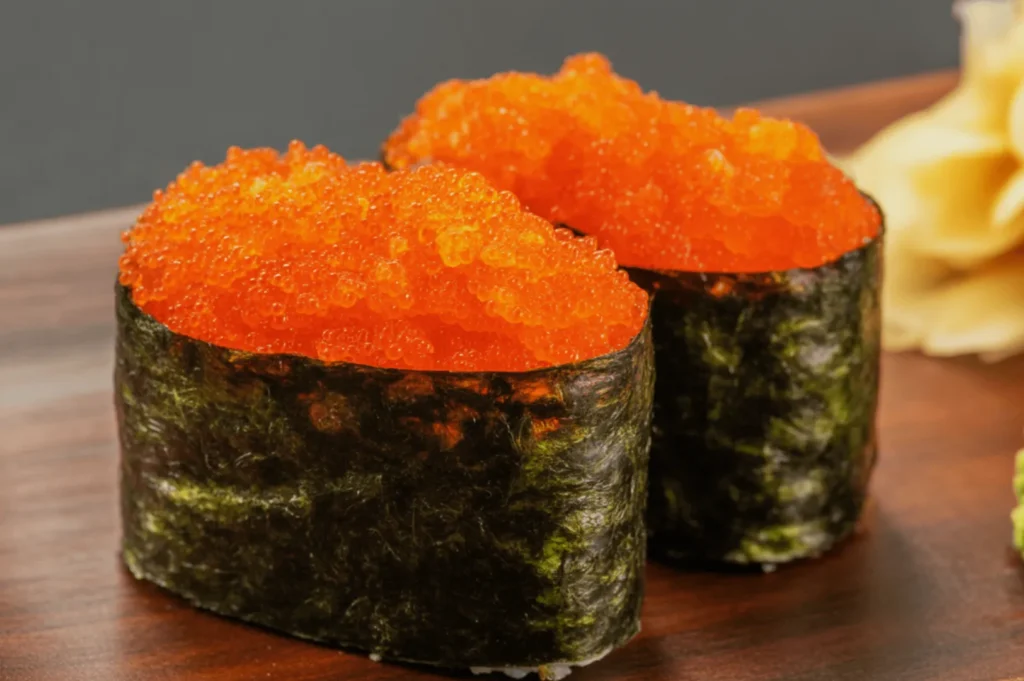
Walk into almost any casual Japanese restaurant and you will find tobiko scattered across sushi rolls, pressed onto nigiri, or mounded into small cups alongside a california roll. The tiny orange eggs are immediately recognisable: bright, glossy, and satisfying to eat. Yet step into a refined omakase counter and you will rarely encounter them. That absence is not an oversight. It is a considered statement about what fine Japanese omakase values most.
Understanding tobiko food means understanding both its character and its limitations. It is an ingredient with genuine charm, a place in Japanese culinary history, and real appeal for everyday sushi dishes. But it is also an ingredient that fine omakase dining tends to leave behind, in favour of something more honest to the season and the fish itself.
What Tobiko Actually Is (Flying Fish Roe)

Tobiko is the roe of the flying fish, a remarkable creature known for its ability to glide above the water’s surface using its elongated pectoral fins.
The female flying fish produces unfertilized eggs that are harvested, cured with salt, and seasoned, typically with sake vinegar, to create the tobiko food most diners recognize.
In its natural form, tobiko has a bright orange color, a firm and crunchy texture, and a flavor that is mildly salty with a slightly sweet taste and a gentle oceanic quality.
The fish eggs are small, considerably smaller than salmon roe, and they cluster densely together. When eaten, the crunchy roe pops lightly against the palate, which is a large part of their appeal in everyday sushi rolls. The flavour profile is mild enough that tobiko rarely overwhelms whatever it accompanies, making it versatile as both a topping and a garnish across many Japanese dishes.
Japanese flying fish, particularly species harvested around the waters of Japan and Taiwan, are the primary source of tobiko used in Japanese cuisine today. The roe is typically processed and seasoned before reaching restaurants, meaning what diners encounter is always a cured product rather than a raw one in the strictest sense.
The Different Colours of Tobiko and What They Mean
Natural tobiko in its unmodified state carries that recognisable red orange hue, but what many diners encounter across various sushi dishes is a range of colours that extends well beyond the original. These variations are almost always the result of food dye or natural flavouring agents used to alter the eggs after curing.
Green tobiko gets its colour from wasabi, which also introduces a sharper, more pungent character to the tobiko taste.
Yellow tobiko is typically coloured using yuzu, a Japanese citrus fruit whose fragrant, tart qualities are absorbed into the eggs during preparation. Some producers use other citrus fruits or a yellow food dye to achieve a similar result.
Black tobiko is produced using squid ink, which darkens the eggs dramatically and adds a slightly briny, mineral depth to the flavour.
Golden tobiko sits between natural orange and yellow, often produced through a combination of yuzu and milder citrus fruits.
Each variation shifts the tobiko taste somewhat, though the underlying texture and the crunchy quality of the roe remains consistent across all colours. In terms of visual appeal, the range is striking. Sushi rolls dressed with black tobiko, green tobiko, and yellow tobiko alongside natural orange create a vivid presentation that many casual sushi restaurants use to great effect.
Tobiko Versus Masago: A Comparison Worth Making
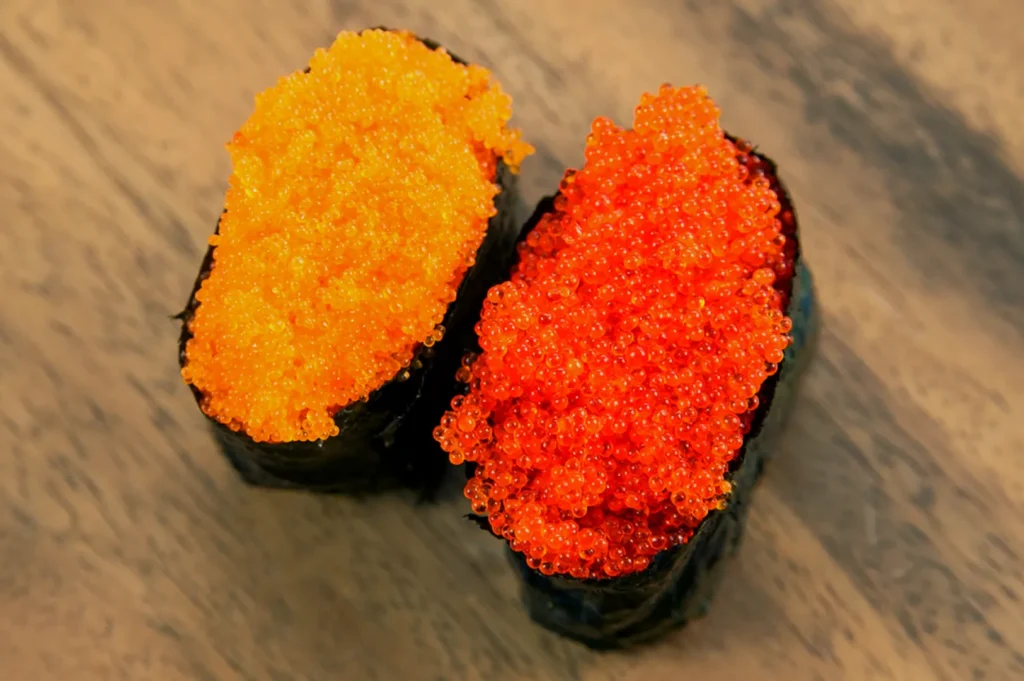
The tobiko vs masago question comes up frequently, and for good reason. Both are small fish eggs used commonly in Japanese cuisine, both appear in similar contexts, and both share a crunchy texture that distinguishes them from the larger, creamier eggs of salmon or the delicate texture of caviar. The differences, however, are meaningful.
| Aspect | Masago | Tobiko |
|---|---|---|
| Source | Roe of the capelin, a small fish from the smelt family | Roe of the flying fish |
| Size and Texture | Smaller, slightly less firm in texture | Slightly larger, firmer with a pronounced crunchy roe |
| Flavor | Milder in flavor | Slightly sweet taste with more complex flavor |
| Natural Color | Pale orange or yellow, less vivid | Bright orange, more vivid natural color |
| Usage | Affordable substitute, widely used as garnish in everyday sushi rolls | Preferred when roe contributes flavor and texture, used in sushi and other dishes |
| Position in Cuisine | Common in casual sushi | Higher quality, used when roe is intended to enhance the dish |
| Relation to Caviar | Not considered Japanese caviar | Not considered Japanese caviar, but a step above masago |
True Japanese caviar, particularly the roe of premium fish sourced with care for sustainability and quality, occupies an entirely different position in fine Japanese cuisine. It is this higher standard that informs the choices made at an omakase counter.
Why Fine Omakase Dining Steps Away From Tobiko
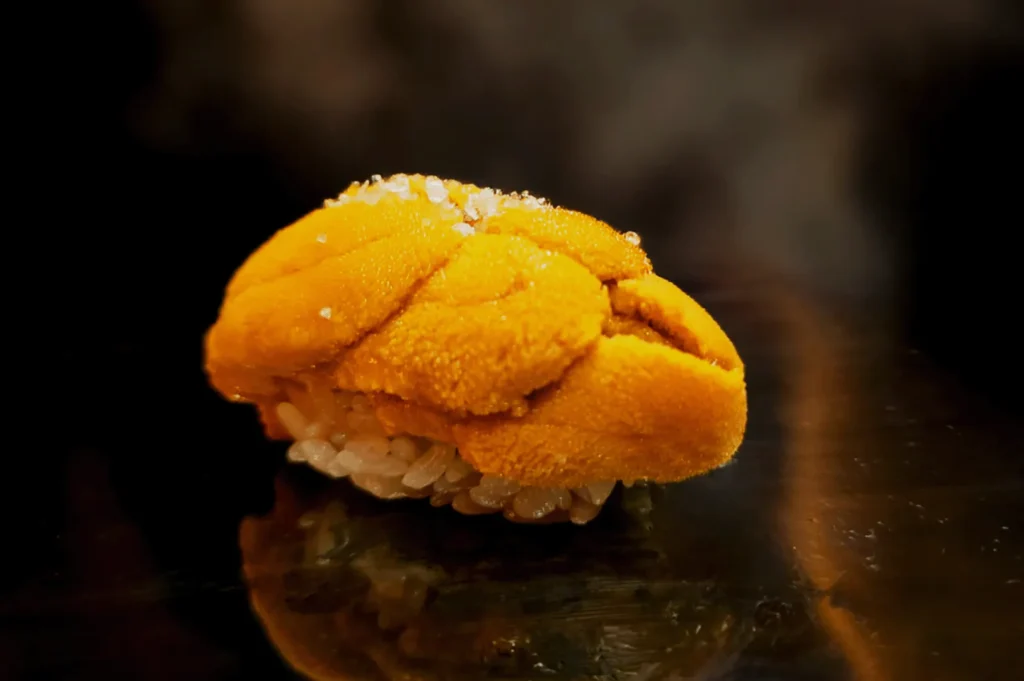
The relationship between fine omakase dining and tobiko food is largely one of intentional distance. This is not a dismissal of tobiko’s appeal. Rather, it reflects a philosophy about what the counter should communicate to guests.
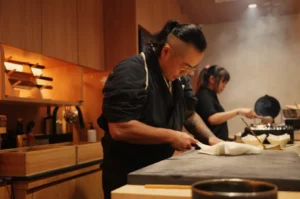
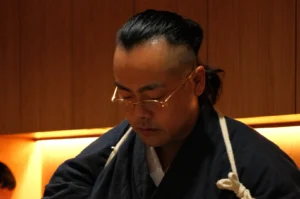
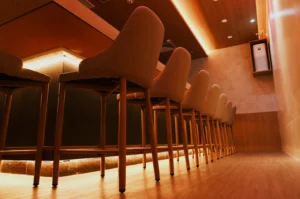
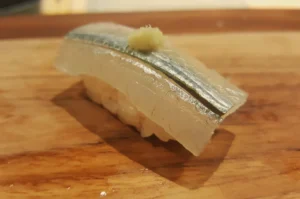
At Sushi Masa by Ki-Setsu, the omakase experience is built around the Edomae tradition: seasonal fish sourced daily from Japan’s Toyosu Market, handled with the precision and restraint that this style demands. Every element on the counter exists because Chef Masa has determined that it belongs there on that particular evening, reflecting the best that the season offers. Tobiko, as a processed and cured product, does not align with this standard of freshness and directness.
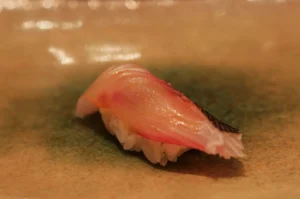
More broadly, tobiko gunkan maki and tobiko sushi, while enjoyable in their context, carry associations with casual sushi rolls, california roll presentations, and the kind of garnish-led decoration that fine omakase actively moves away from. Sushi dishes at this level are not about visual appeal achieved through scattered eggs or vibrant colour. They are about the fish, the sushi rice, and the interaction between the two.
There is also the matter of flavour. Tobiko taste, pleasant as it is, tends toward the uniform. The crunchy texture and salty taste are consistent across pieces and seasons. Fine omakase prizes the opposite: variation, specificity, and the particular character of a piece of sashimi or nigiri that could only have come from this fish, in this season, prepared in this way.
What Takes Its Place at the Omakase Counter
In place of tobiko, the omakase counter offers roe of a different kind and intention. Sea urchin, or uni, provides a creamy texture and oceanic depth that is entirely unlike the crunchy roe of tobiko. Premium fish roe, when it appears, is selected for its seasonal appropriateness and the quality of the fish it comes from, not its visual appeal or food dye-enhanced colour.
Nutritional benefits also factor into the conversation around roe more broadly. Fish eggs in general are a source of omega-3 fatty acids, essential vitamins, and protein. Those who are pregnant women or have seafood allergies are often advised to approach raw or undercooked seafood with caution, and tobiko, like other fish roe, falls into this category.
Undercooked seafood and raw fish carry a small risk of foodborne illness, and tobiko sushi, while generally safe for most diners, is not entirely without this consideration. At a fine omakase counter, ingredients are handled with the care that minimises such concerns, though guests with seafood allergies should always communicate these before dining.
The Honest Place of Tobiko in Japanese Cuisine
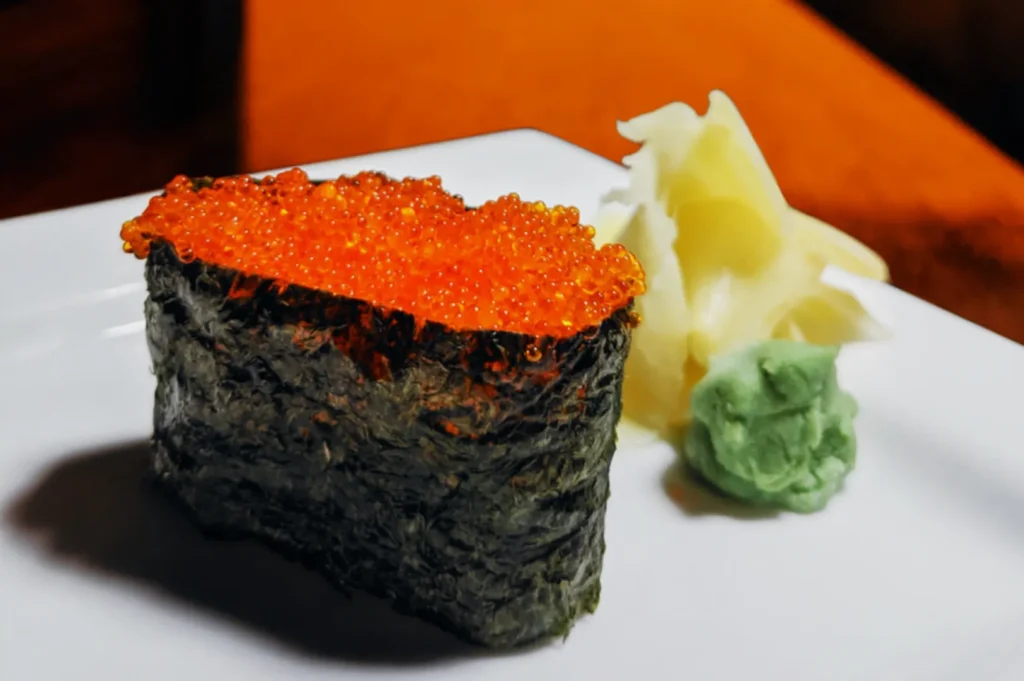
Tobiko food has earned its place in Japanese cuisine, and that place is real. It brings colour, texture, and a playful character to everyday sushi dishes that diners genuinely enjoy. The range of colours, from green tobiko to black tobiko to golden tobiko, adds visual dimension to rice-based dishes and salads. Used as a garnish, tobiko enhances the appeal of a dish without requiring much from the cook in terms of technique.
Whole foods retailers and Asian markets across Singapore and beyond stock tobiko in various forms, reflecting the broad appetite for this ingredient outside formal restaurant settings. It is accessible, approachable, and familiar, qualities that make it a staple of casual Japanese dining worldwide.
But approachability and familiarity are not the values that guide an omakase counter. The omakase model is, at its foundation, a commitment to trust: trust between the chef and the guest, and trust in what the season provides. When Chef Masa curates the evening at Sushi Masa by Ki-Setsu, the question is always what is finest today, not what is most recognisable or most visually striking. Tobiko, in that conversation, simply does not make the case.
What Omakase Teaches Us About Restraint
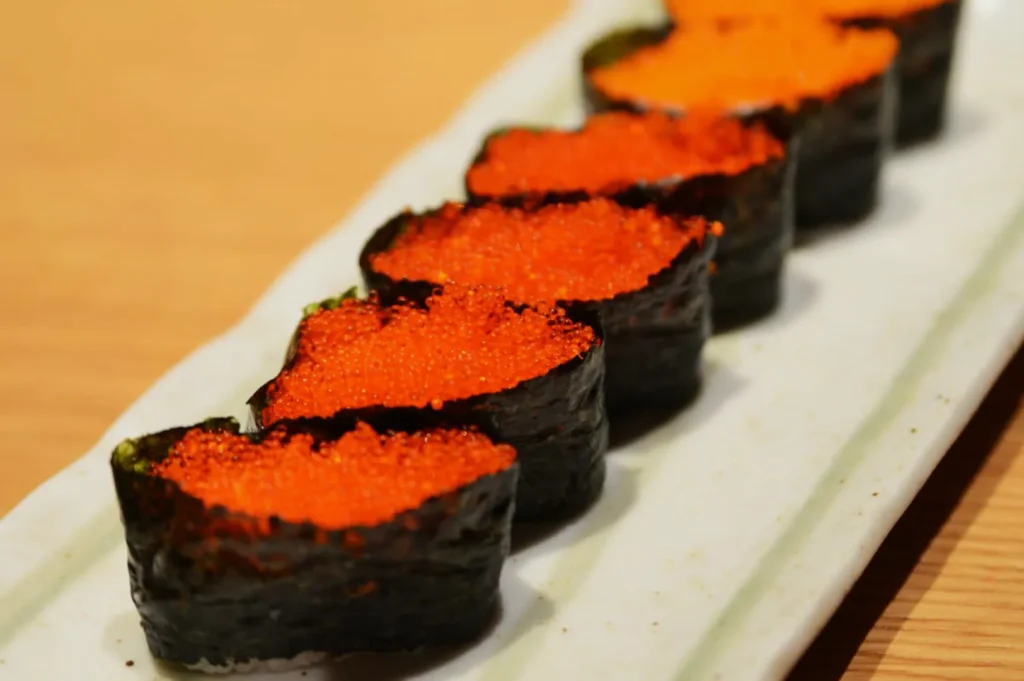
Understanding why tobiko is absent from fine omakase tells us something important about Japanese cuisine at its most considered. It teaches restraint: the discipline of not adding something simply because it is available, appealing, or expected. The best sushi dishes are not the most decorated ones. They are the most honest.
If you are curious about what that honesty tastes like, we welcome you to the eight-seat counter at Sushi Masa by Ki-Setsu at Cuppage Plaza. Dinner begins at 7:15pm, Tuesday through Saturday. Every evening, Chef Masa brings the season to the counter, without flourish and without distraction, exactly as it should be.