Singapore has always been a city that eats with its whole heart, but something has shifted in recent years. Dining out in Singapore used to mean deciding on a whim where to grab a bite. Today, if you want a table at some of the best Singapore restaurants, you may need to plan months ahead. From hawker centres to fine dining rooms, Singapore’s food scene has become one of the most competitive dining landscapes in the world, and reservations have become the new currency of a good meal.
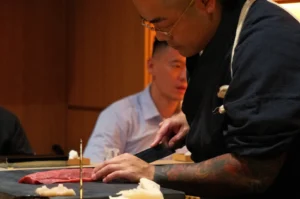
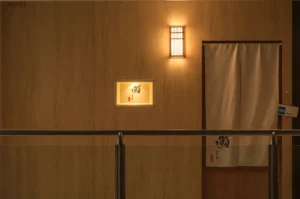
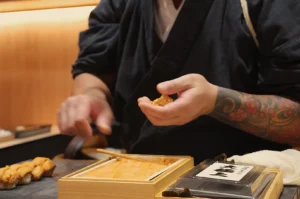
At Sushi Masa by Ki-Setsu, we understand this shift intimately. Every evening, our best omakase Singapore experience welcomes only a handful of guests, each seated at the counter to watch Chef Masa work. It is a small, deliberate way of dining, and it mirrors something larger happening across the island: Singaporeans, and visitors alike, are willing to wait, plan, and book ahead for delicious food that is made with care.
A City Obsessed with Good Food
Ask anyone who has spent time in Singapore and they will tell you the same thing: this is a nation that talks about food the way other places talk about the weather. Every conversation eventually circles back to where to eat, what famous dish is worth queuing for, and whether the chilli crab at a particular stall is better than the one down the road.
This obsession is not new. Singapore’s multicultural roots, drawing from Chinese, Malay, Indian, and Peranakan traditions, have created a food scene that is remarkably diverse for such a small country. Hainanese chicken rice sits comfortably alongside spicy noodle soup, banana leaf rice, and roast meats, each dish carrying its own history and community of devoted fans. It is this variety that makes eating in Singapore feel less like a single cuisine and more like a constantly unfolding story, and it is that same devotion to a single craft, refined over years, that we try to bring to every seating of our omakase.
A Nation United by Chicken Rice
If there is one dish that best represents the local identity, it is chicken rice. Fragrant rice cooked in chicken fat and stock, tender poached chicken, and a bright chilli sauce come together in a dish so simple yet so difficult to perfect. Debates over the best version of chicken rice have practically become a national pastime, and the loyalty locals show towards their favourite stall borders on devotion, not unlike the loyalty many of our guests show towards a particular seat at our counter.
The Rise of Hawker Centres as National Treasures

Hawker centres remain the beating heart of Singapore’s food culture. These open air food centres, often no more than a collection of humble stalls under one roof, produce some of the most celebrated dishes in the country. Maxwell Food Centre, in particular, has become something of a pilgrimage site, drawing both locals and travellers eager to sample everything from oyster omelette to char kway teow.
What makes hawker centres so remarkable is the sheer concentration of skill in one place. A single stall might spend decades perfecting bak kut teh, a peppery pork rib soup, while a neighbouring stall focuses entirely on curry laksa, its broth rich with coconut milk and fragrant with spice, often finished with a thick sauce that clings to every strand of noodle. Elsewhere, you will find carrot cake fried until golden, fish cake sliced thin, minced pork tossed through noodles, and soft boiled eggs served the traditional way with a splash of soy sauce and white pepper. Crispy fried chicken stalls, their batter deep fried to a perfect crunch, draw their own devoted queues, often best enjoyed with a cold beer or a glass of chilled lime juice on the side.
Many of these stalls started small and grew into destinations purely through consistency, proving that recognition in Singapore’s food scene is rarely about scale and always about mastery of a single dish. Char siu, glazed and slightly charred at the edges, remains a signature dish found across the island’s coffee shops, a reminder that some of the most memorable meals come from cooks who have spent a lifetime perfecting one thing. It is this same principle, one dish, one craftsman, one standard, that shapes how Chef Masa approaches every course at our counter.
Malay and Peranakan Flavours Add Depth
Beyond the well known dishes, Singapore’s food centre culture owes much of its richness to Malay food. Nasi lemak, with its fragrant coconut rice, sambal, and accompaniments, remains a favourite across the island, while curries built around young jackfruit offer a softer, subtly sweet alternative to meat based versions for those seeking something different. Roti prata, served hot with a side of curry, continues to be one of the most comforting forms of street food available at any hour, and its bold flavours have made it a firm favourite well beyond the Malay community.
Long standing Malay eateries across the island have built their reputations on generous, rotating spreads of home style dishes rather than spectacle, offering a different kind of comfort to the precision found in a curated tasting menu. Peranakan food, born from the blending of Chinese and Malay culinary traditions, brings its own distinct character, often layering coconut milk, pandan leaf, and spice in ways that feel both familiar and new. In neighbourhoods like Kampong Glam and Little India, this diversity is on full display, with each street offering its own version of local delights.
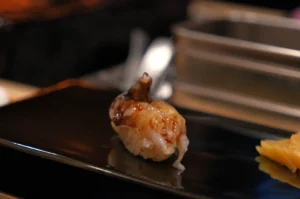
Whether it is a home style curry or a single, considered piece of seafood, we believe the same thing holds true, that bold flavours and quiet restraint both have their place at the table, and both deserve a guest’s full attention.
From Kopitiams to Cocktail Bars
Singapore’s dining identity is not built on hawker food alone. Traditional kopitiams, the local coffee shops, remain beloved for their kaya toast, that comforting slice of bread layered with coconut jam and butter, best enjoyed with soft boiled eggs and a cup of strong coffee, condensed milk swirled into every cup that follows.
At the other end of the spectrum, Singapore has developed a serious cocktail culture. Singapore bars, particularly around Marina Bay and Orchard Road, have earned international recognition, with several ranking among the world’s best. The Singapore Sling, invented in the city and now imitated across the globe, remains a point of pride, while newer cocktail bars continue pushing boundaries with inventive drinks that draw on local ingredients and flavours. From an unhurried breakfast ritual to a late night cocktail, Singapore’s food and drink culture moves at whatever pace the moment calls for, and at our counter, that pace is set deliberately slow, course by course, for the length of an entire evening.
The Age of the Reservation

It is against this backdrop that booking ahead has become essential. As Singapore’s food scene has matured, more restaurants in Singapore have earned recognition from the Michelin Guide, and the number of Michelin starred restaurants on the island continues to grow each year. With that recognition comes demand, and with demand comes the need to plan.
Guests now save a restaurant’s location on a Google map weeks before their trip, mark reservation dates on calendars, and treat securing a table at the right restaurant as part of the joy of visiting Singapore. Some of the best restaurants that once accepted walk ins now require booking months in advance, particularly for anything offering a curated dining experience rather than an à la carte menu. It is not unusual for someone to plan an entire itinerary in Singapore around a single dinner reservation, treating the meal itself as the highlight of their next visit, and an omakase seating is very often that reservation.
Why We Believe in Booking Ahead, Too

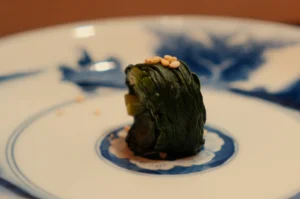
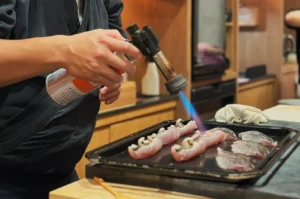
At Sushi Masa by Ki-Setsu, we have always believed that good food deserves patience, both in its preparation and in the experience of enjoying it. Our omakase format means Chef Masa curates each course personally, working with seafood sourced from Toyosu Market to bring the freshest possible ingredients to our counter. This is the essence of Edomae style sushi: precision, restraint, and deep respect for the ingredient itself.
Because Chef Masa prepares each course individually, our seating each evening is deliberately limited. There is no large team behind the counter, only one chef, focused entirely on the guests in front of him. This is why reservations at Sushi Masa by Ki-Setsu often need to be made well ahead of time, much like the growing number of Michelin starred establishments across the island. We see this not as an inconvenience, but as part of what makes the dining experience meaningful.
Before the main courses begin, guests are served a light dashi based soup, a quiet introduction that sets the tone for the courses that follow. Nothing about the experience is loud or hurried. It reflects a philosophy we hold closely, that good food, whether from a modest food centre or a quiet sushi counter, is worth waiting for, and worth booking ahead to enjoy properly.
A Reason to Eat in Singapore

Whether it is a queue outside a beloved hawker stall or a reservation booked months in advance for an omakase seat, Singapore’s dining culture is united by one simple truth: people here care deeply about what they eat. From chicken rice to Edomae sushi, from kopitiam kaya toast to inventive cocktail bars, this small island continues to offer one of the richest food scenes anywhere in the world.
We invite you to experience this same philosophy at Sushi Masa by Ki-Setsu, where Chef Masa’s omakase offers a quiet, considered counterpoint to the city’s bustling food centres. Booking ahead has become the new normal for dining out in Singapore, and we would be glad to welcome you to our counter for an evening built entirely around the season’s best seafood.