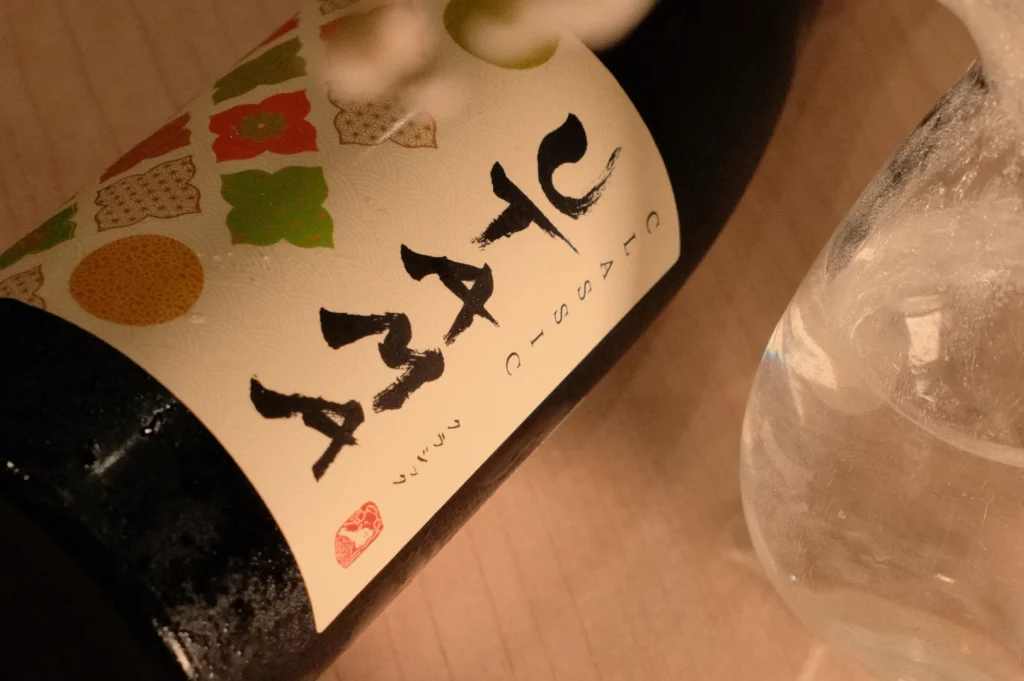
Sweet or dry. Two small words, yet they shape so much of how sake meets food.
At an omakase counter, where each course arrives in its own time, the balance between sweetness and dryness is never fixed. The same bottle can feel crisp beside one dish and gently sweet beside the next. Understanding why begins with a number many drinkers meet first: the Sake Meter Value.
Reading the SMV, and Its Limits
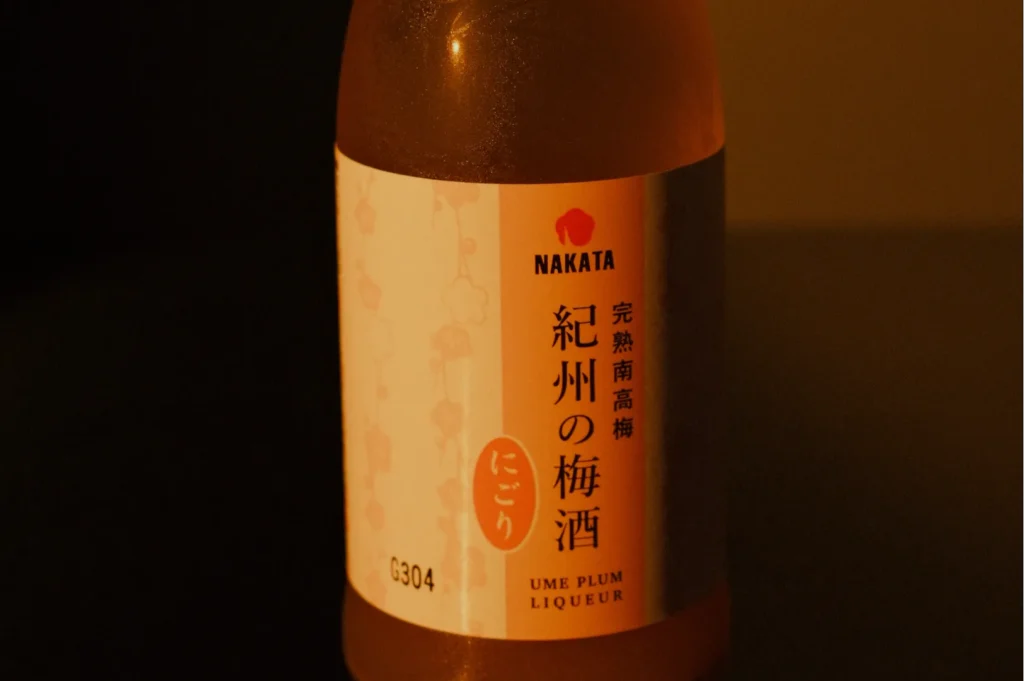
The Sake Meter Value (SMV), or Nihonshu-do, is a measure of specific gravity. A brewer floats a hydrometer in sake at 15°C and reads how the liquid sits against water.
A positive SMV means the sake is lighter than water. Less residual sugar remains, and the tendency leans dry. A negative SMV means the sake is heavier than water, carrying more residual sugar, with a tendency toward sweet.
Here is the quiet catch. SMV was never designed to describe taste. It began as a production tool, a way for brewers to monitor fermentation as it progressed. Its use as a sweetness guide came later, and it remains imperfect. Two sakes may share the same SMV and taste worlds apart. Even within a single category, the numbers and the impressions vary widely.
So the figure is a starting point. Nothing more.
Four Things That Shift How Sweet a Sake Feels
Perceived sweetness is not sugar alone. Four factors interact, each pulling the impression one way or another.
Acidity (San-do). Acidity sharpens the palate. A sake with higher acidity tastes drier, even when its SMV sits low and its sugar sits high. Acid and sugar hold each other in balance, and the reading on the meter cannot capture that tension.
Amino acid content. Higher amino acid levels add body and richness. A fuller sake feels rounder, weightier, more present on the tongue. This depth changes how the sweetness registers, softening edges that a leaner sake would leave exposed.
Serving temperature. Warmth draws sweetness forward. Sweetness perception tends to peak near body temperature, around 35°C, a gentle warmth the Japanese call Hitohada-kan, or “skin temperature.” The same sake served cool can taste noticeably drier. For more on how warmth reshapes the palate through a meal, see our guide to **sake serving temperature for sushi.**
The food itself. This is where pairing turns fascinating. Salt suppresses our perception of sweetness. Soy sauce and briny seafood can make a slightly sweet sake taste drier than expected. What arrives on the plate quietly rewrites what arrives in the glass.
How Pairing Works, Course by Course
Because food changes perception, the same sake behaves differently as an omakase progresses.
Salt-heavy dishes make a sake taste less dry. They lift its underlying sweetness and fruit to the surface. A dry sake, set beside salty soy sauce or a briny oyster, may suddenly reveal a sweetness you would not have noticed on its own.
Umami-laden foods work the other way. A miso-glazed fish, rich and savoury, tends to increase perceived dryness. Here a slightly sweeter style holds its ground, meeting the depth of the dish rather than being flattened by it.
Early in a meal, delicate white fish asks for restraint. A drier sake, somewhere around SMV +5 to +10, works as a neutral canvas. It steps back and lets subtle flavours register, clean and unhurried.
As courses grow richer and more intensely seasoned, the balance shifts. A sake closer to neutral, or gently into negative SMV, offers weight to match. It sits alongside the food rather than beneath it.
None of this is a rulebook. Preparation, seasoning, temperature, and personal preference all shape the outcome. Two guests at the same counter may read the same pairing differently, and both readings are honest.
A More Refined Measure: The Amakara Value
For those who want a closer read than SMV allows, there is the Amakara value. It calculates glucose content minus acidity, folding sugar and acid into a single figure.
The scale runs roughly like this:
- Dry: below 0.3
- Medium dry: 0.3 to 1.0
- Medium sweet: 1.1 to 1.8
- Sweet: above 1.8
Because it accounts for acidity, the Amakara value tracks perceived sweetness more faithfully than SMV alone. A sake with high sugar and high acid may sit lower on this scale than its SMV suggests, matching what the tongue actually reports.
Still, no number tells the whole story. The food, the warmth, the moment: all remain part of the equation.
The Counter as a Guide

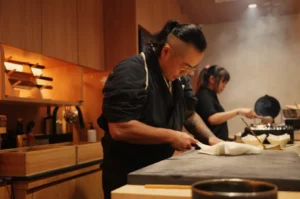
At Sushi Masa by Ki-Setsu, an intimate eight-seat counter at 5 Koek Road, #06-03 Cuppage Plaza, Singapore 228796, near Orchard Road, the meal moves from lighter courses to richer ones.
That progression does much of the work.
Delicate openings sit easily with drier, cleaner styles. Later, deeper courses invite sake with more body and a softer edge. The sequence itself guides the balance between sweetness and dryness, course by quiet course. For those exploring the wider world of sake in Singapore within an omakase setting, this natural arc is a good place to begin.
Sweetness as a Moving Target
There is no final word on whether a sake is sweet or dry.
The meter gives a tendency. Acidity, body, and warmth adjust it. The food on the plate rewrites it again. A bottle that reads dry can taste sweet beside salt, and a sweeter sake can feel restrained against umami.
That shifting quality is not a flaw to solve. It is part of what makes pairing at the counter so engaging. Each course invites the same sake to show a different face, and paying attention to that change is a pleasure in itself.
Sweet or dry. Two small words. And a conversation that never quite settles.