Few ingredients in Japanese cuisine are as misunderstood as wasabi. The bright green paste sitting beside your sashimi is often assumed to be the real deal, yet in most parts of the world, it is not. Understanding the difference between authentic wasabi and its imitators is not a matter of pedantry. It changes how a dish tastes, how it feels on the palate, and how it honours the traditions it comes from.
At Sushi Masa by Ki-Setsu, this distinction matters deeply, because every element on the counter, down to the smallest condiment, is chosen to reflect the precision and integrity of Edomae craftsmanship, which is at the heart of the Japanese omakase dining experience.
What Real Wasabi Actually Is

Genuine wasabi comes from the plant Wasabia japonica, also classified botanically as Eutrema japonicum. It is a rhizome, not a root in the strict sense, though most people refer to it as wasabi root out of habit. This is genuine Japanese horseradish’s more refined, more elusive cousin, and the two should never be confused, despite how often they are treated as interchangeable.
Wasabi plants are notoriously fussy. They require very specific conditions to thrive: cool running water, filtered light rather than direct sunlight, and carefully regulated humidity. Japan’s wasabi is traditionally cultivated in mountain streambeds, with Shizuoka Prefecture regarded as one of the most celebrated regions for its cultivation. It can take up to two years for a single plant to mature enough for harvest, which is part of why authentic wasabi carries such a premium price outside of Japan.
This scarcity is the heart of the issue. True wasabi simply cannot be grown at the scale needed to supply the volume of wasabi consumed globally. As a result, most wasabi served outside Japan, and even within it, is not wasabi at all.
A Plant Worth Protecting
Because wasabi grown under ideal conditions is so limited, many small Japanese producers guard their fields closely, passing down cultivation knowledge through generations. A respected wasabi company will often harvest only its finest rhizomes for discerning restaurants, leaving the rest for powdered or paste production. Wasabi leaves and stems are sometimes lightly pickled with salt, while the rhizome itself is reserved for grating fresh. Traditionally, very little of the plant goes to waste, a respect for using an ingredient fully that echoes a principle Chef Masa applies to every element of an omakase course, where each seasonal ingredient is treated with the same quiet reverence.
The Fake Stuff: What You’re Likely Eating

If you have ever eaten at a sushi counter and been served a vivid green paste with a sharp, almost aggressive heat that lingers in the nose rather than settling on the tongue, there is a strong chance you were eating imitation wasabi. This is not a criticism of the establishments serving it. Genuine wasabi is difficult to source, expensive, and highly perishable, so many restaurants understandably rely on prepared substitutes.
Most commercial wasabi paste is made primarily from horseradish, mixed with mustard powder for extra sharpness, and dyed with green food colouring to mimic the appearance of the real thing. Some formulations include green pea fibre or even sweet potato syrup as a binding agent, along with a small amount of vegetable oil or rice oil to help the texture hold together.
Wasabi powder, sold in small tins and reconstituted with water, is one of the most common versions found outside Japan, while prepared wasabi sold ready made in tubes offers convenience at the cost of authenticity.
Bottled wasabi sauce, often blended with soy sauce or mayonnaise style bases, has become popular too, though it bears little resemblance to the fresh, grated original.
It is worth noting for allergy sensitive diners that certain powdered blends can contain peanuts as a filler, so anyone with sensitivities should always ask about ingredients when dining out.
None of these substitute ingredients are inherently bad. Mustard, horseradish, and food colouring are common, safe additives used across many cuisines. The issue is one of authenticity rather than safety. Western wasabi, as it is sometimes called, delivers a similar sensation of heat, but it lacks the layered complexity that defines the genuine article. It is, in essence, a convincing impersonation rather than the real thing.
How to Tell the Difference
| Feature | Authentic Japanese Wasabi | Imitation Wasabi (Horseradish-based) |
|---|---|---|
| Source Plant | Wasabi japonica (Eutrema japonicum) | European horseradish mixed with mustard powder |
| Appearance | Paler, natural green hue with slightly fibrous texture | Flatter, uniform bright green paste |
| Flavor Profile | Fresh, grassy sweetness with gentle, rounded heat that fades quickly | Aggressive, sharp heat that overwhelms sinuses |
| Cultivation | Grown in cool running water, filtered light, specific humidity; mainly in Shizuoka Prefecture | Mass-produced, easy to grow, inexpensive |
| Preparation | Traditionally grated fresh on sharkskin grater using circular motions | Pre-made paste or powder, often mixed with food coloring and binders |
| Shelf Life | Loses flavor quickly within 15 minutes after grating | Longer shelf life due to preservatives |
| Price | Premium, expensive due to scarcity and cultivation difficulty | Much cheaper, widely available |
| Health Benefits | Contains isothiocyanates with antimicrobial properties; boosts immune system; detoxifies body | Lacks significant health benefits of real wasabi |
| Use in Cuisine | Used sparingly to complement seafood flavors, placed between fish and rice | Often mixed into soy sauce or used as a bold condiment |
| Texture | Fine, fluffy paste with visible micro-fibers | Smooth, uniform paste without fibrous texture |
| Authenticity Names | Hon-wasabi (real wasabi) | Seiyo-wasabi (Western horseradish-based wasabi) |
Why Genuine Wasabi Tastes Completely Different

The heat in wasabi comes from a compound called allyl isothiocyanate, which is released when the plant’s cells are broken down through grating. This is why freshly grated wasabi has such a distinctive, fleeting intensity. Once exposed to air, the compound begins to dissipate, which is why wasabi paste loses its vibrancy within minutes of preparation. This is also why pure wasabi should always be prepared close to the moment it is eaten rather than sitting out for extended periods.
Traditionally, wasabi root is grated using a sharkskin grater, known as an oroshi, rather than a standard metal one. The fine, rough texture of shark skin breaks down the fibres gently, producing a smoother, creamier paste and releasing the aromatic oils evenly. This method is considered essential to unlocking the ingredient’s full character, and it is a small but telling example of how much attention Japanese culinary traditions place on process, not just outcome.
Unlike horseradish, which is almost always sold in prepared or pickled form, real wasabi is best eaten raw and freshly ground, never fried or cooked, as heat destroys much of its delicate aroma. A tiny amount goes a long way. Because the flavour is so nuanced, more is rarely better, and a skilled hand knows to use restraint rather than excess.
Wasabi’s Place in Japanese Cuisine

Wasabi has never been intended as a bold, standalone spice. Across Japan, sushi chefs have long treated it the same way, as a quiet enhancer rather than a dominant seasoning. Its purpose in Japanese cuisine is far more subtle: to bring out the seafood’s unique flavour rather than mask it.
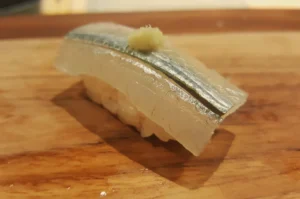
Traditionally, wasabi was valued not only for its taste but for its natural properties, which were believed to complement raw seafood in a way that few other condiments could. A skilled hand at the sushi counter uses wasabi sparingly, placing a precise amount between the fish and the rice rather than serving it as a separate dipping condiment to be mixed into soy sauce.
This is a point of quiet pride in traditional practice. Diners are often encouraged to trust the preparation rather than adjust it, allowing the wasabi to do its work as intended, brightening the seafood without masking its natural sweetness. At Sushi Masa by Ki-Setsu, this same philosophy guides how each piece of nigiri and sashimi is composed. Chef Masa incorporates wasabi with a light, deliberate touch, ensuring it complements rather than competes with the day’s selection sourced fresh from Toyosu Market.
A Matter of Trust
Sourcing genuine wasabi consistently is one of the quieter challenges of running an omakase counter. It requires reliable relationships with growers and constant attention to freshness, since pure wasabi begins to lose its character not long after grating. This is part of why an omakase experience, built around trust between guest and chef, suits an ingredient like wasabi so well. There is no menu to browse, no substitution to request. Instead, guests place their confidence in the chef’s judgement, course by course, much as generations of diners in Japan have done at intimate sushi counters for decades.
Tasting Authentic Wasabi

There is a reason wasabi has earned such a devoted following among those who understand it properly. Its flavour is genuinely rare: zesty, faintly sweet, gently spicy, and layered with a freshness that no imitation has managed to replicate. Ginger, often served alongside sushi as a palate cleanser, plays a different role entirely, resetting the palate between courses rather than seasoning the fish itself. Wasabi’s job is different again: it is there to elevate, not distract.
For anyone who has only ever experienced the fake stuff, tasting genuine, freshly grated wasabi for the first time can be a small revelation. The absence of harshness, replaced by a clean, rounded warmth, is often described as delicious in a way that feels entirely new. It is a reminder that authenticity in Japanese cuisine is rarely about intensity. It is about balance, precision and respect for the ingredient’s natural character.
Experience the Difference at Sushi Masa by Ki-Setsu

Understanding real wasabi is, in many ways, a small window into the values that shape fine Japanese dining as a whole. It reflects a broader philosophy: that quality cannot be rushed, that authenticity requires patience, and that even the smallest element of a dish deserves the same care as its centrepiece. This is the spirit that Chef Masa brings to every seating at Sushi Masa by Ki-Setsu, where seasonal seafood, sourced fresh and prepared with Edomae precision, is presented in its most honest form.
Set within an intimate eight seat counter, each omakase course at Sushi Masa by Ki-Setsu is guided entirely by the day’s finest offerings, with wasabi and every other detail considered thoughtfully rather than left to convention. For those curious to taste the distinction between authentic Japanese wasabi and the imitations found elsewhere, an evening at the counter offers more than a meal. It offers a closer understanding of the craftsmanship behind every course. We warmly invite you to join us for dinner and experience it for yourself.