Flavour tells only part of the story. When sake meets fish, weight decides whether the pairing holds or falls away. A sake can taste beautiful on its own, yet feel wrong beside a slice of sea bream: too heavy, or barely there at all.
This is the quiet work of body and texture. Understanding it changes how you taste.
What “Body” Means in Sake
Body describes how a sake feels in the mouth, not how it tastes. Think of it as weight, the difference between water and cream resting on the tongue.
Light-bodied tanrei sake carries low sugar and amino acid content. The finish is crisp and clean, what the Japanese call kire. It leaves little behind. There is a brightness to it, a sense of the sake stepping back rather than lingering.
Full-bodied nojun sake sits at the other end. Higher sugar and amino acid content give it a coating mouthfeel, a palate-coating sake that clings gently and holds its flavour longer. It fills the mouth rather than passing through.
Three things shape this weight:
- Rice polishing ratio. More polishing removes protein and fat from the grain, which, perhaps unexpectedly, yields a lighter body.
- Amino acid levels. Higher amino acids build richness and a fuller feel.
- Brewing alcohol. When added, it tends to lighten the body and smooth the texture.
These are the mechanics. What matters is how they meet the fish.
Matching Weight to Fish
The principle is simple. The sake should meet the fish as an equal, neither drowning it nor disappearing beneath it. This is the heart of good sake pairing with seafood.
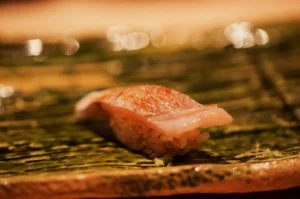
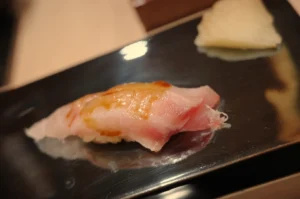
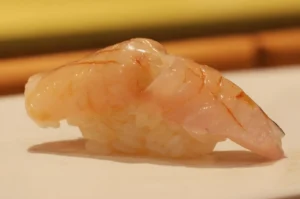
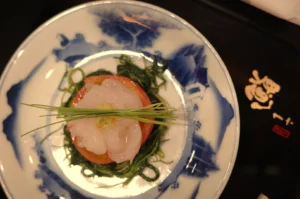
Delicate white-fleshed fish ask for a light hand. Hirame (flounder), tai (sea bream), and kanpachi carry subtle, clean flavours. Pair them with a light-bodied, dry sake, a Ginjo, Daiginjo, or a lighter Honjozo, and the sake tends to draw the fish forward rather than cover it. The two share space.
Pour a heavy sake over these same fish, and the pairing often feels heavy. The delicate flavour gets buried.
Rich, fatty fish need weight to answer weight. Otoro, chutoro, and salmon carry oil and depth. A fuller Junmai, Junmai Ginjo, or a Genshu can offer a textural counterbalance, the fuller body of the full-bodied nojun sake meeting the richness of the fish rather than being overwhelmed by it.
Reach for a light sake here, and the pairing often feels hollow. The sake vanishes against the fat.
These are guides, not rules. A fish’s preparation, its seasoning, and the temperature at which the sake is served all shift the result. What follows is one way of understanding sake pairing, a starting point, not a verdict.
Texture Beyond Weight
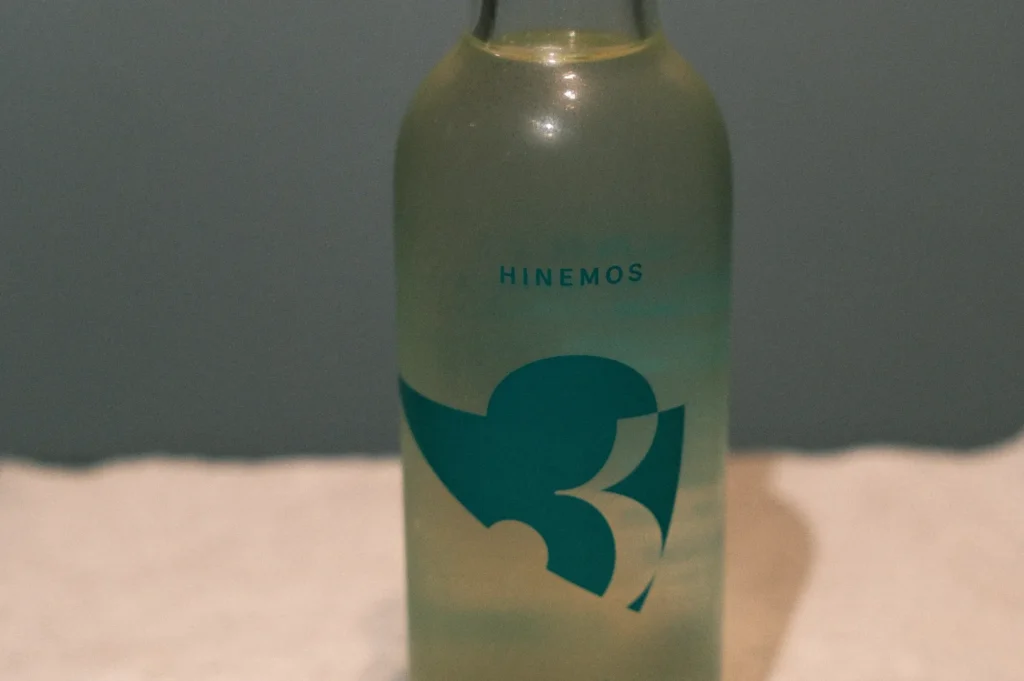
Body is only the beginning. Some sakes bring texture that goes past simple weight.
Nigori, or cloudy sake, holds suspended rice solids. These give it a creamy, sometimes viscous body, a nigori creamy texture that feels almost like silk on the palate. It can echo the softness of a creamy preparation like uni, or play against a crisp, clean bite for contrast. Two paths, both worth exploring.
Sparkling sake works differently. Its carbonation acts as a mechanical palate cleanser. The bubbles physically dislodge fat and protein residues from the tongue, trigger saliva, and the dissolved CO2 forms carbonic acid that adds a bright edge. After a rich course, it can reset the mouth.
Genshu is undiluted sake, sitting between 18 and 21% ABV. Its genshu concentrated body feels dense and weighty, it can stand beside the richest preparations without flinching. But that same weight can overwhelm a delicate dish. Placed well, it holds firm. Placed wrong, it dominates.
The Logic of Progression
An omakase meal moves with intention. It often opens with lighter, cleaner courses and builds towards richer ones. The sake should generally move in step, a gentle omakase weight progression, body increasing in parallel with the fish.
Begin light, with something crisp beside the white fish. As the courses deepen towards fattier cuts, the sake can grow fuller, meeting each dish where it stands. The meal keeps its shape this way. Each pairing feels balanced, and the whole holds together from first course to last.
At Sushi Masa by Ki-Setsu, an eight-seat counter at 5 Koek Road, #06-03 Cuppage Plaza, near Orchard Road, this weight progression sits within the structure of the experience. The meal unfolds in sequence. Each course arrives when it is meant to.
Sake texture matching, understood this way, becomes less about a single perfect pour and more about how each glass relates to the one before and the one after.
Texture Is Subjective
Here is the quiet truth beneath all of it.
Texture lives partly in the person tasting. What one guest calls “silky,” another calls “thin.” Where one finds a sake full and generous, another finds it heavy. Sake mouthfeel weight is measurable to a point, yet the experience of it belongs to you.
Personal preference shapes the match. So does the season, the same fish carries different fat and firmness across the year. So does preparation: a light sear, a touch of salt, a brief ageing, each shifts what the fish asks for.
There is no single answer that holds for everyone. There is only attention, to the fish, to the sake, and to what you notice as the two meet.
Sit. Taste slowly. Let the pairing tell you what it is.