Tucked away on the upper levels of a quiet Orchard Road building, Cuppage Plaza omakase dining has quietly become a destination for those who know where to look. Behind an unassuming door sits Sushi Masa, where Chef Masa welcomes guests one evening at a time to a counter built for eight. This is not a restaurant designed for crowds or spectacle. It is a space built around trust, patience and the quiet artistry of Japanese cuisine, and we would like to take you inside. For those seeking the best omakase Singapore has to offer, it stands out as a refined and intimate choice that exemplifies the true spirit of Japanese culinary tradition.
A Hidden Gem Along Orchard Road

Cuppage Plaza, Singapore, sits just a short stroll from Somerset MRT station, nestled within the Orchard Road belt yet worlds away from its bustle. Many guests describe Sushi Masa by Ki-Setsu as a hidden gem precisely because of this contrast: a discreet Japanese restaurant in the heart of Singapore’s shopping district, holding within it a deeply traditional omakase experience.
We chose Cuppage Plaza not for visibility but for privacy. Our chef believes that a proper omakase restaurant should feel like a retreat, somewhere guests can leave the noise of the city behind the moment they step through the door. For those searching for a Cuppage Plaza food guide, our recommendation is simple: come with curiosity, and let the evening unfold course by course.
Finding Us with Ease
Despite its tucked away feel, Sushi Masa by Ki-Setsu remains easy to reach. Its proximity to Somerset MRT station makes it a convenient stop for both Singaporean diners and visitors exploring the Orchard Road area, without sacrificing the sense of seclusion that defines the dining room itself. Ki Setsu stands quietly among the many establishments of Cuppage Plaza, marked more by its atmosphere than by any bold signage, which is exactly how our chef prefers it.
For guests searching online, a Cuppage Plaza food guide will often mention us in passing as somewhere to eat quietly and well, yet the description rarely captures what it feels like to actually sit at the counter. That experience, we believe, is best discovered in person.
The Philosophy Behind an Eight-Seat Counter

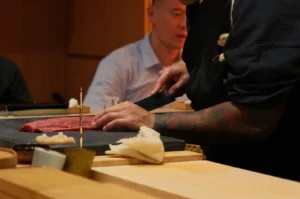
Intimate omakase counters are built on a simple idea: fewer seats mean more attention, more precision and a far closer relationship between chef and guest. At Sushi Masa by Ki-Setsu, counter seating is limited to eight, allowing Chef Masa to prepare each piece of nigiri and sashimi for a diner who is, quite literally, watching it happen.
This is the essence of what many call the omakase experience. Rather than selecting dishes from a printed list, guests place their trust in the chef, who reads the day’s ingredients, the season and even the mood of the room to shape the meal. It is a dialogue as much as a dinner. Our chef has long held the belief that a wide selection of options is far less meaningful than a handful of dishes prepared with complete sincerity, and our eight-seat format was designed around that conviction.
There is a gentle word in Japanese, hanashizuku, sometimes used to describe the way a single drop can carry the essence of something much larger. We like to think of our omakase menus in a similar way. Each course is small, deliberate and complete in itself, yet together they form a fuller picture of Japanese cuisine than a lengthy menu ever could. This philosophy of hanashizuku, of finding depth within restraint, quietly runs through everything served at our counter.
Guests who have dined at larger establishments sometimes arrive expecting an overwhelming spread. What they find instead is a considered rhythm: a handful of seasonal appetisers to begin, followed by sashimi, nigiri and a cooked dish or two, each arriving only once the last has been fully appreciated.
Sourcing from Japan’s Toyosu Market, Daily

No conversation about authentic Japanese dining is complete without discussing where the fish comes from. At Sushi Masa by Ki-Setsu, ingredients are flown in from Japan’s Toyosu Market daily, ensuring that what reaches the counter each evening reflects the freshest catches available that morning in Tokyo.
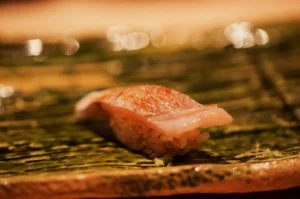
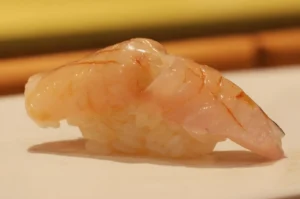
This daily rhythm shapes everything about how our menu is built. Some evenings might bring exceptional fatty tuna or medium fatty tuna prized for its marbling, its richness melting in the mouth almost the instant it is served, while others may showcase sweet shrimp, scallop, sea urchin, known in Japan as uni, or seasonal treasures like matsutake mushroom when autumn arrives.
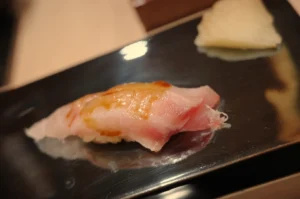
Gizzard shad, a fish deeply associated with traditional Edomae preparation, also finds its way to the counter when the season is right. Because the offering shifts with what Toyosu Market provides, no two visits to Sushi Masa by Ki-Setsu are quite the same, which is part of why so many guests become repeat visits rather than one time diners.
Why Freshness Cannot Be Rushed
Sourcing daily rather than in bulk requires discipline. It would be simpler to order in advance and store larger quantities, but our chef has always maintained that premium seafood loses its character the moment convenience takes priority over freshness. Every fillet of fish that arrives is inspected personally before it is deemed worthy of the counter.
This attention extends to the rice as well, seasoned and cooked at a temperature that allows each grain to complement the seafood resting above it.
Traditional Edomae Techniques at the Heart of Every Dish

Edomae is more than a style of sushi. It is a set of techniques developed in old Tokyo, when fishermen needed ways to preserve and enhance fish before refrigeration existed. Curing with salt, marinating in vinegar, light smoking and careful ageing all fall under this umbrella, and each technique draws out flavour in a way that raw fish alone cannot achieve. We do not serve tempura. Our focus stays narrow, built around raw and grilled seafood rather than fried preparations.
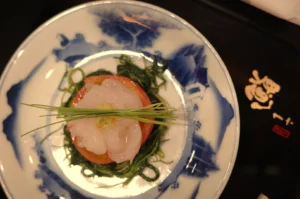
At Sushi Masa by Ki-Setsu, Chef Masa applies these traditional Edomae techniques with meticulous preparation, treating each fish according to its own character rather than a single fixed method. A sashimi moriawase presented early in the meal might showcase several cuts side by side, each treated differently to highlight its natural flavour, while nigiri sushi served later in the evening reflects hours of quiet, unseen preparation behind a single bite. Cooked dishes appear as well, offering warmth and contrast between the cooler courses of fresh sashimi and sushi.
A Craft Built on Repetition
Mastery of Edomae technique is not learned quickly. Chef Masa’s approach reflects years spent refining the smallest details, from the temperature of the rice to the precise angle of a blade against a fillet of fish. It is this dedication to repetition and refinement that separates a considered omakase restaurant from one that simply plates raw seafood attractively.
Cooked dishes at Sushi Masa by Ki-Setsu often arrive lightly grilled, allowing certain fish to develop a gentle char that raw preparation alone cannot offer.
An Evening Built Entirely Around Dinner Service

Sushi Masa by Ki-Setsu operates as a dinner only establishment, and this is by design rather than limitation. We do not offer a lunch service, and the reasoning ties directly back to our sourcing philosophy. Ingredients arriving from Toyosu Market require careful handling throughout the day, and lunch hours are instead used by our chef to prepare, portion and study each piece before evening guests arrive.
This means that when the doors open for dinner, everything on the counter has had a full day of unhurried preparation behind it. Our opening hours are structured to protect this process, with seating reserved exclusively for the evening. Guests planning a visit should keep this in mind: the omakase dining experience at Sushi Masa by Ki-Setsu is, and will remain, an evening affair.
We understand that some guests are accustomed to restaurants offering both lunch service and dinner service, and may wonder why Sushi Masa by Ki-Setsu has chosen not to follow this pattern. The answer comes back, once again, to freshness. Splitting attention across lunch hours and dinner service would mean asking our chef to prepare twice in a single day, at the expense of the quality either seating enjoys.
Read: Omakase Lunch SG: The Reason Sushi Masa by Ki-setsu Only Does Dinner
Dessert and Green Tea to Close the Experience

An omakase meal does not simply end with the final piece of nigiri. At Sushi Masa by Ki-Setsu, the evening winds down gently with a light dessert, offering a quiet contrast to the umami rich courses that came before. A cup of green tea often accompanies this final stretch of the meal, cleansing the palate and giving guests a moment to reflect on the courses they have just experienced.
This closing ritual matters as much as the opening one. In Japanese cuisine, a meal is often thought of as a complete arc rather than a series of disconnected dishes, and we take care to ensure that the final impression is just as considered as the first.
Private Bookings for Special Occasions

Beyond regular dinner service, Sushi Masa by Ki-Setsu also welcomes private bookings for those celebrating special occasions or seeking a more personal setting. Given the intimacy of an eight-seat counter, a private booking allows guests to enjoy the full attention of Chef Masa without sharing the room with other diners.
Whether it is a milestone celebration, a quiet anniversary or simply a gathering among those who appreciate exceptional value in their dining experiences, private bookings offer flexibility within the omakase format. Guests with particular preferences or special requests are welcome to discuss these in advance, allowing our chef to plan accordingly.
Exceptional value, in our view, is not measured only by price but by what a guest receives in return for their evening. A private booking at Sushi Masa by Ki-Setsu offers uninterrupted access to Chef Masa, a rare arrangement in a city where dining out often means sharing attention with a full room of diners.
A Meal Shaped by Trust

What makes an omakase restaurant memorable is rarely a single standout dish. It is the accumulation of small decisions: a fish chosen because it was exceptional that morning, a technique applied because it suited that particular cut, a pace set to let guests savour rather than rush. This is the spirit we try to honour at Sushi Masa by Ki-Setsu, one dinner service at a time.
For those who have not yet experienced this style of Japanese dining, or for regulars searching for a Cuppage Plaza food guide worth returning to, we would be glad to welcome you to our counter. Reserve a seat, place your trust in the evening, and let Chef Masa guide you through a menu shaped entirely by the season and the sea.