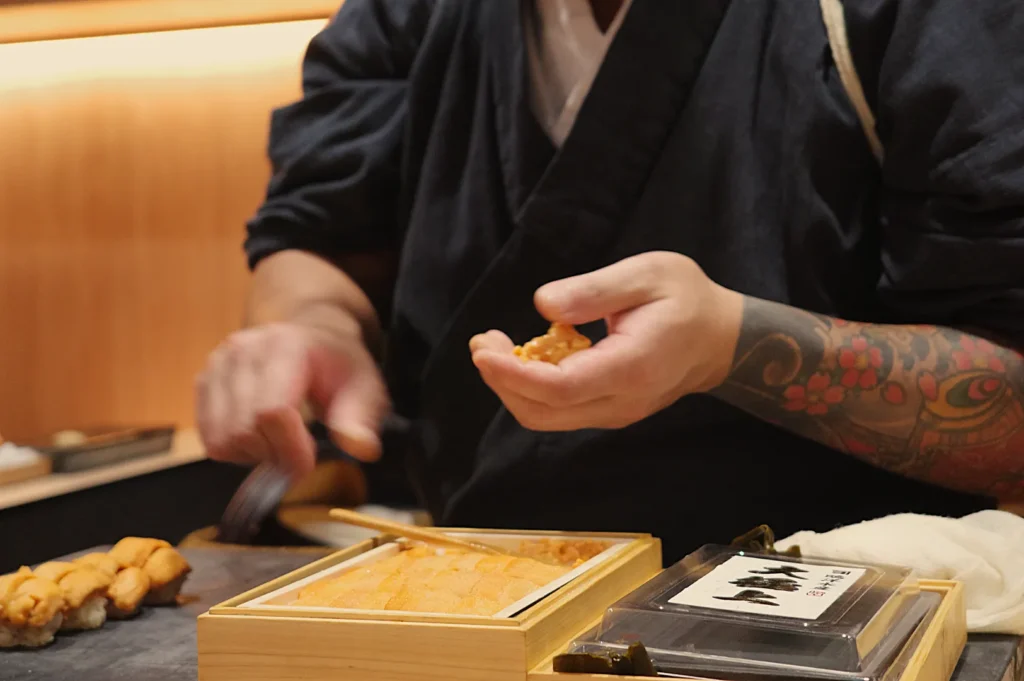
There is a moment, just before a piece of nigiri sushi reaches your lips, when two temperatures meet. The rice, gently warmed by the chef’s hands, and the fish, kept cool and composed, come together in a single bite. This contrast is not an accident. It is one of the most deliberate techniques in traditional Edomae sushi, shaped by meticulous attention to timing, and it is precisely why Edomae sushi temperature changes everything about how a piece is meant to be enjoyed.
At Sushi Masa by Ki-Setsu, we believe that understanding this small but crucial detail brings guests closer to appreciating sushi not simply as a dish, but as a culinary art form shaped by centuries of discipline. Our commitment to this tradition helps us offer one of the best omakase Singapore experiences, where every piece is crafted with precision and served at the perfect temperature.
Understanding the Edomae Tradition
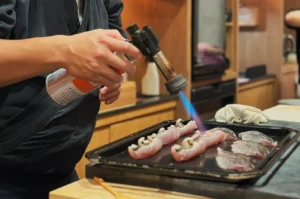
Edomae sushi takes its name from Edo, the historical name for Tokyo, and specifically from Tokyo Bay, where fishermen once supplied the city with fresh seafood. During the Edo period, sushi was served as a quick, satisfying meal rather than a leisurely affair, and the techniques developed then, curing, marinating, and lightly cooking certain fish, were as much about preservation as they were about flavour. What began as necessity became refinement, and today the Edomae style is recognised as one of the most meticulous expressions of Japanese cuisine.
At Sushi Masa by Ki-Setsu, Chef Masa draws directly from these traditional Edomae sushi techniques, applying them with the same attention to detail that shaped the practice generations ago. This is not simply about raw fish placed on rice. It is about preparation, timing, and an understanding of how every ingredient behaves, including how it responds to temperature.
A Living Craft, Not a Fixed Recipe
Edomae tradition has never stood still. While the fundamentals remain unchanged, each chef brings a personal interpretation shaped by experience and the ingredients available on a given day. Chef Masa’s approach reflects this same spirit, adjusting technique to the season while remaining rooted in the practices that define authentic Edomae sushi.
The Role of Sushi Rice and Vinegar
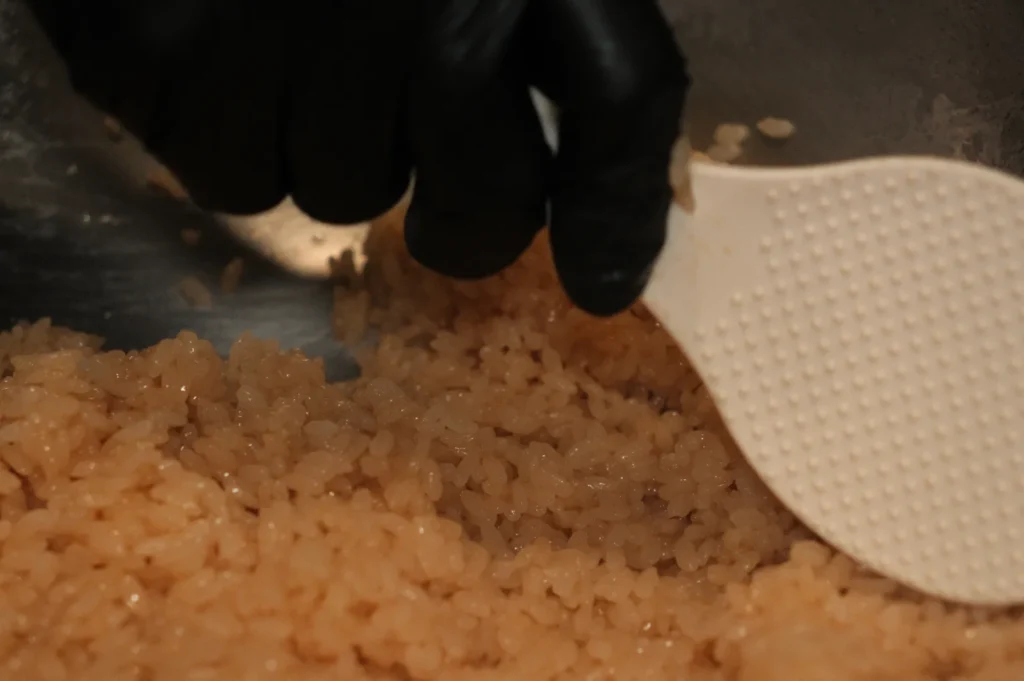
Sushi rice, or shari, is the foundation of every piece of nigiri sushi and the base upon which every one of our sushi toppings rests, yet it rarely receives the attention it deserves. Historically, aka shari, rice seasoned with red vinegar made from sake lees, was the standard across Edo period sushi counters. Red vinegar brings a deeper, more complex profile with a subtle sweetness that pairs beautifully with fattier cuts of fish. Over time, white vinegar became more common, offering a lighter and more delicate finish that many sushi restaurants favour today.
The main distinction between red vinegar and white vinegar is never arbitrary. Each interacts differently with the natural sweetness of the fish it accompanies, and a skilled sushi chef selects the seasoning that will enhance flavour rather than compete with it. This is one of the many small decisions that separate an ordinary plate from a truly deeply satisfying Edomae sushi experience.
Why Body Temperature Matters When Eating Sushi
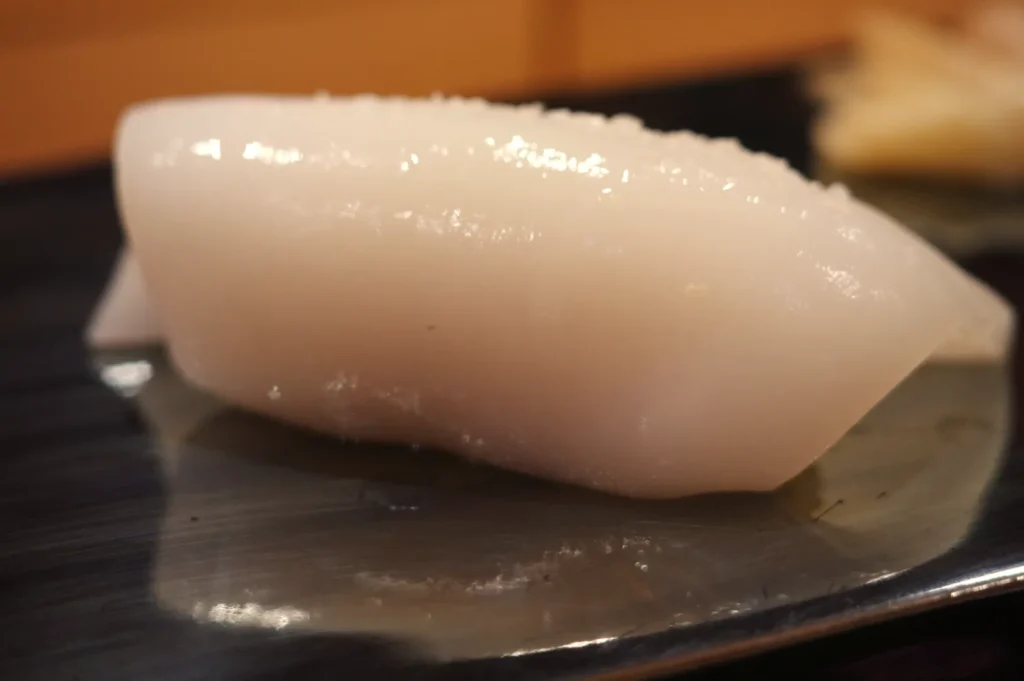
This brings us to the heart of the matter. Sushi rice is traditionally served warm, close to body temperature, while the fish resting on top is kept cool. When the two meet in the mouth, the warmth of the rice gently releases the aroma and oils of the fish, while the coolness of the fish keeps its texture firm and clean. Serve the rice too cold, and the grains lose their character. Serve it too warm, and it can overpower delicate white fish or rich uni.
This is why eating sushi immediately after it is served, rather than letting it sit, is considered proper sushi etiquette. A piece of nigiri sushi is a fleeting moment, crafted to be enjoyed within seconds of leaving the chef’s hands. At Sushi Masa by Ki-Setsu, each piece is served with this timing in mind, so that our chef’s choice of pairing reaches you exactly as intended.
Temperature Across Different Fish
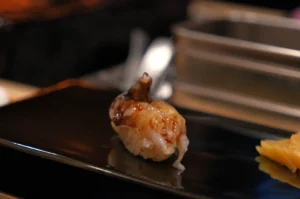
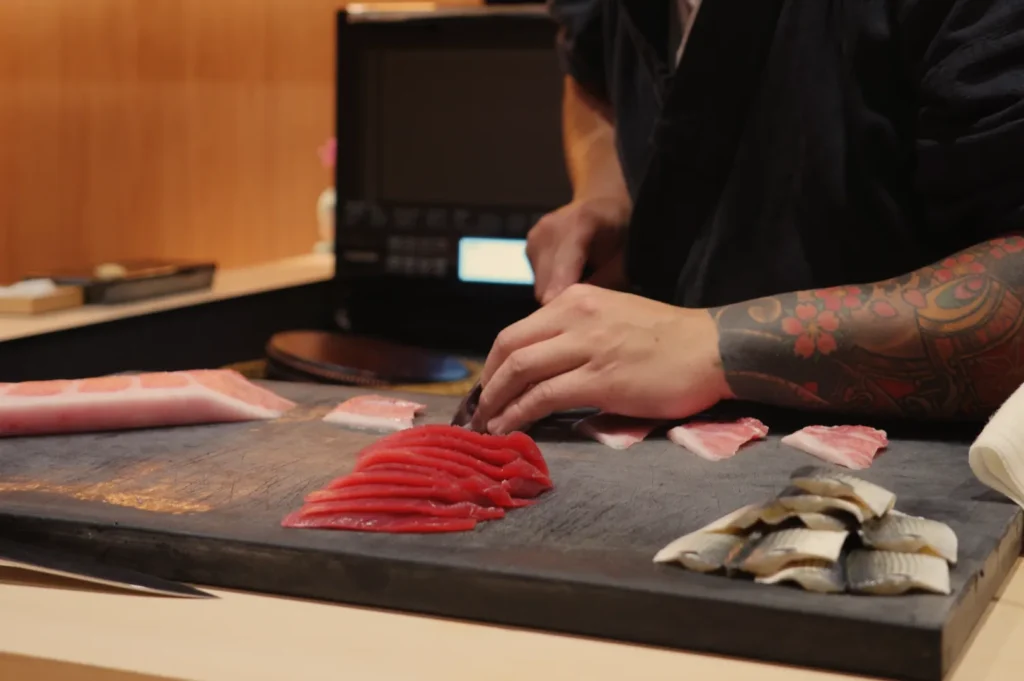
Not every fish is treated the same way. Silver-skinned fish such as horse mackerel and gizzard shad are often lightly cured or marinated, techniques that soften their character while preserving a clean, oceanic taste. Tuna, particularly the fattier cuts, is typically served at a slightly cooler temperature to maintain its texture, while conger eel is gently simmered and served warm, offering a completely different sensation on the fish side of the counter. Salmon roe and rich uni, taken from sea urchin, are best kept cold to preserve their natural sweetness and delicate texture.
Understanding these distinctions is part of what makes Edomae sushi such a rewarding culinary art form. It is not simply about freshness, though fresh fish and fresh ingredients are essential. It is about honouring what each ingredient needs to reach its peak flavour.
Sourcing Fresh Seafood and Premium Ingredients
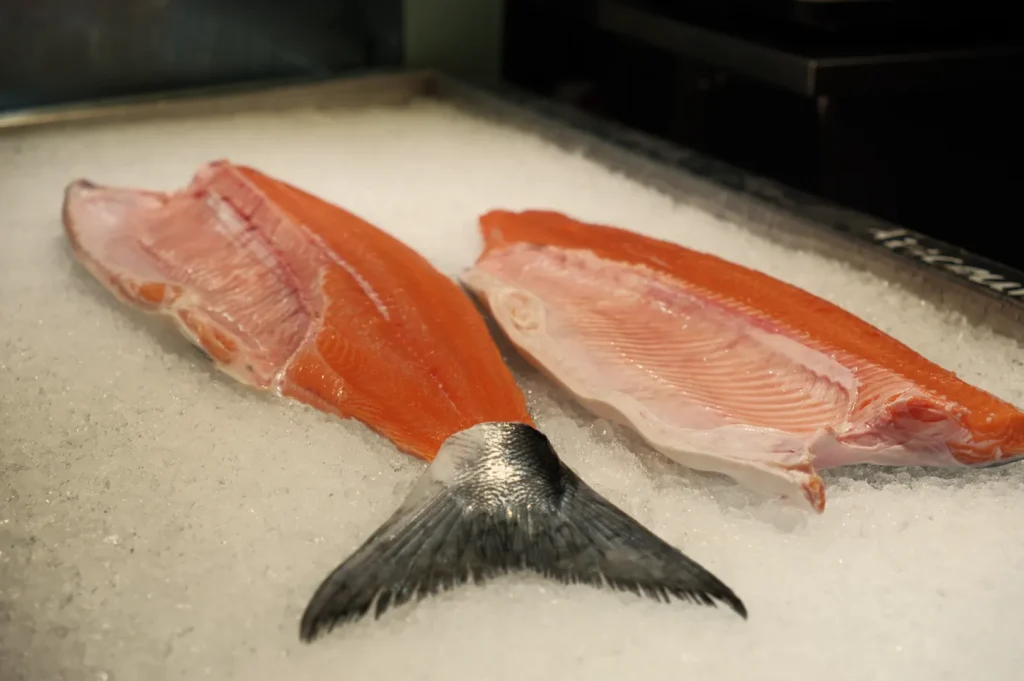
None of this matters without exceptional raw materials. Sushi Masa by Ki-Setsu sources premium ingredients daily, with much of our seafood arriving from Toyosu Market in Japan. This dedication to fresh seafood is central to our philosophy, because no amount of technique can compensate for fish that has lost its peak condition.
Seasonal ingredients guide much of what appears at the counter. As the seasons shift, so too does the selection of fish, ensuring that guests experience the natural rhythm of Japanese cuisine rather than a fixed, unchanging menu. This seasonal approach is part of what many establishments recognised in the Michelin Guide often highlight when discussing what separates the best sushi experiences from the rest, a genuine respect for what nature provides at any given moment.
The Omakase Experience at Sushi Masa by Ki-Setsu
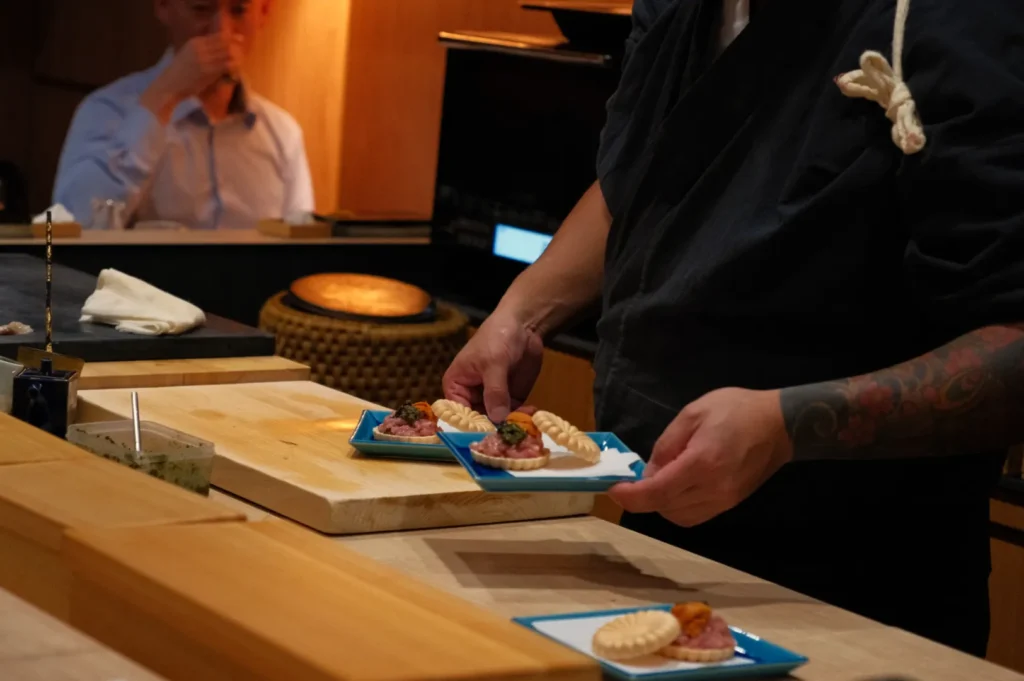
Since the restaurant opened, Sushi Masa by Ki-Setsu’s omakase experience has been built around a single principle, trust in the head chef. Omakase, which translates loosely to “I leave it up to you,” allows Chef Masa to guide each guest through a sequence of courses using multiple ingredients selected specifically for that day. There is no fixed script. Instead, the meal unfolds course by course, with each nigiri, sashimi, and warm dish prepared and served at precisely the right moment.
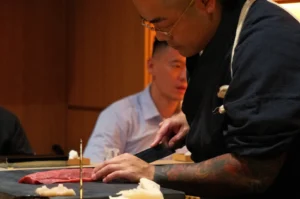
This format is intentionally intimate. As the chef serves each course directly, there is no gap between preparation and presentation, no waiting for temperature to shift before the piece reaches the table. It is, in many ways, the truest way to experience traditional Edomae sushi as it was originally intended, unhurried yet immediate, simple in presentation yet complex in thought.
Towards the latter part of the course, guests are served a light soup stock without shellfish to gently cleanse the palate. Later still, a warming bowl of miso soup, cooked with clams, is presented, a comforting note that closes the meal with natural depth rather than opening it as a mere appetiser.
Sushi Etiquette for a Deeper Experience
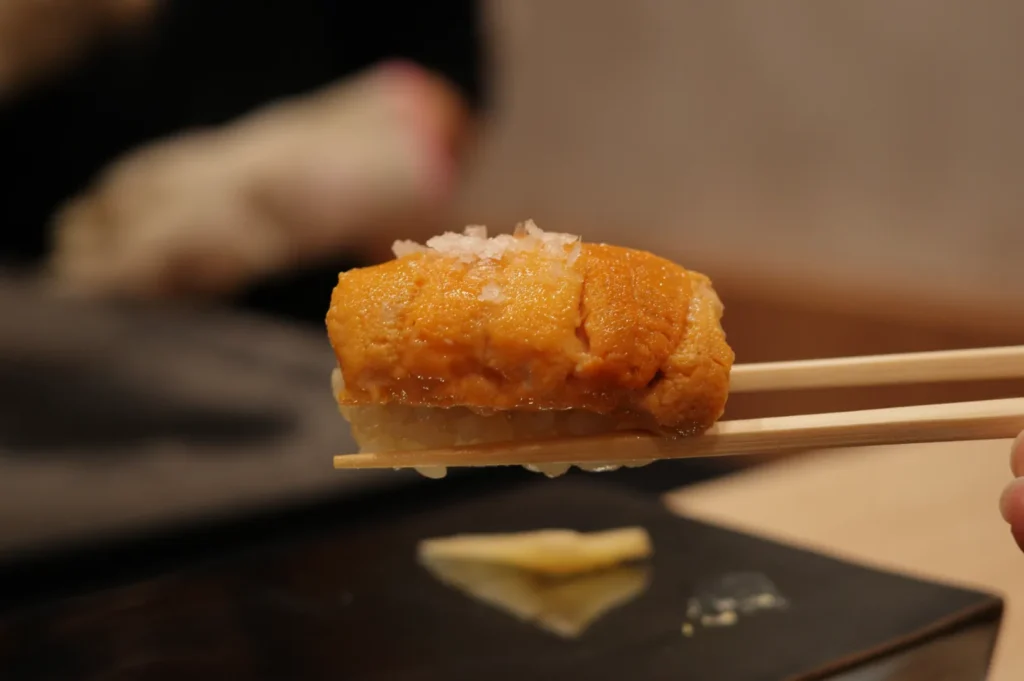
For those newer to omakase, a few simple words of guidance can enhance the experience considerably. Nigiri sushi is generally meant to be eaten in one bite, allowing the rice and fish to be experienced together as the chef intended. A light touch of soy sauce, applied to the fish side rather than the rice, prevents the delicate shari from absorbing too much liquid and losing its structure. Pickled ginger, meanwhile, is best eaten between different pieces rather than alongside them, cleansing the palate so that each new flavour can be appreciated on its own terms.
These details might seem minor, yet they reflect the same philosophy that governs Edomae sushi temperature. Every small choice exists to enhance flavour and preserve the integrity of the ingredient.
A Reflection of Japanese Aesthetic
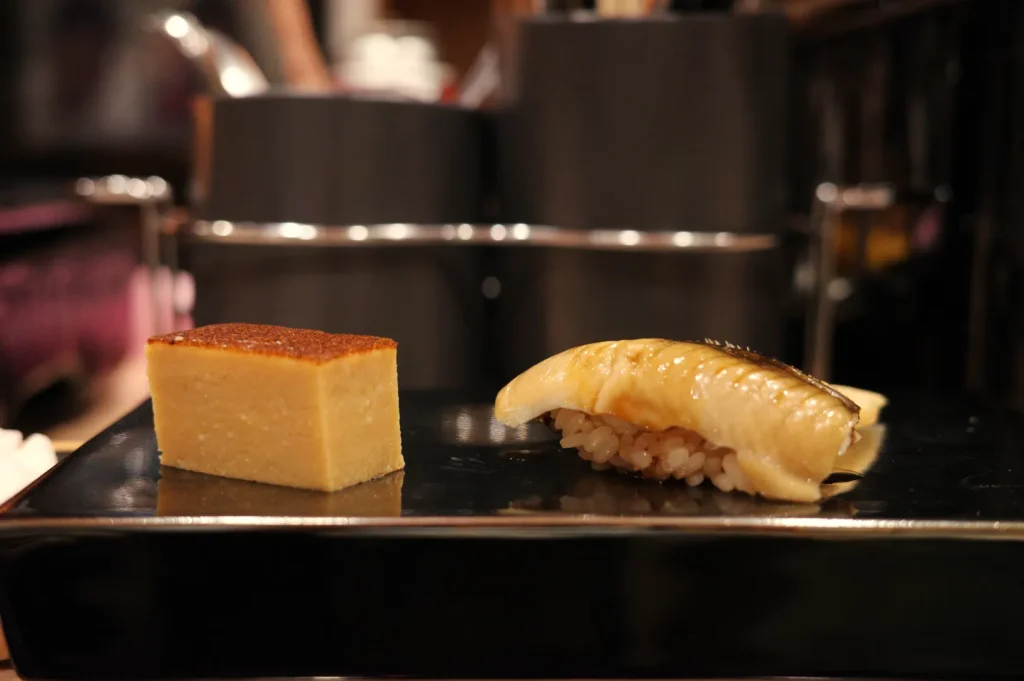
Beyond taste, Edomae sushi carries a distinct Japanese aesthetic, one rooted in restraint, precision, and respect for natural ingredients. There is little decoration, little excess. What remains is the fish, the rice, and the moment they are meant to be enjoyed together. This is what makes the Edomae experience so distinctive among the wider landscape of sushi restaurants, a quiet confidence built entirely on craftsmanship rather than spectacle. It is, ultimately, a considered way to enjoy sushi rather than simply consume it.
The Fleeting Nature of a Perfect Bite
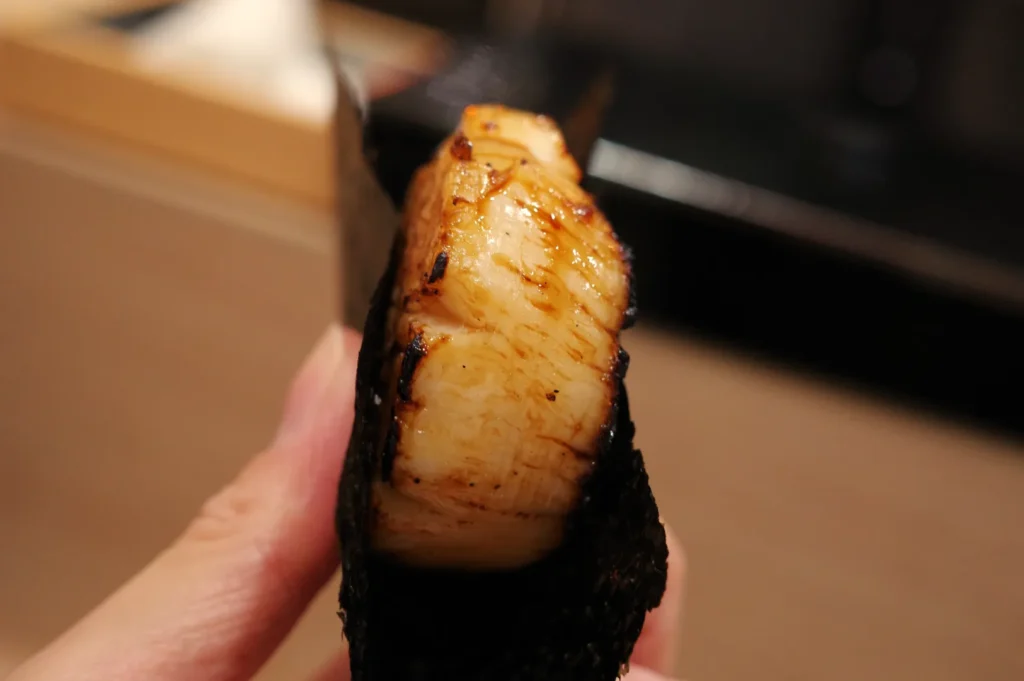
There is a reason sushi chefs speak of each piece as a fleeting moment rather than a lasting one. Unlike many dishes in Japanese cuisine, nigiri sushi is not designed to be admired slowly. Its texture, its temperature, and its balance are all calibrated for the instant it leaves the counter, and that instant does not last. A piece of white fish left standing for even a minute or two begins to lose the crispness that defines its texture, while the rice, once warm and cohesive, gradually cools and loosens.
This is part of why omakase remains such a compelling format. Rather than a large platter arriving all at once, each piece is served individually, allowing guests to eat sushi at precisely the moment it is meant to be experienced. At Sushi Masa by Ki-Setsu, Chef Masa paces each course with this in mind, ensuring that the deeply satisfying balance between rice and fish is never left to chance. It is a small act of hospitality, yet one that speaks volumes about the respect given to every ingredient that reaches the counter.
Guests often remark that this pacing changes how they think about eating sushi altogether. Rather than a meal to be rushed through, it becomes a sequence of individual moments, each with its own taste, temperature, and story. This, in many ways, is the essence of the Edomae sushi experience, a reminder that great food is not only about what is on the plate, but about when and how it is enjoyed.
Join Us at the Counter
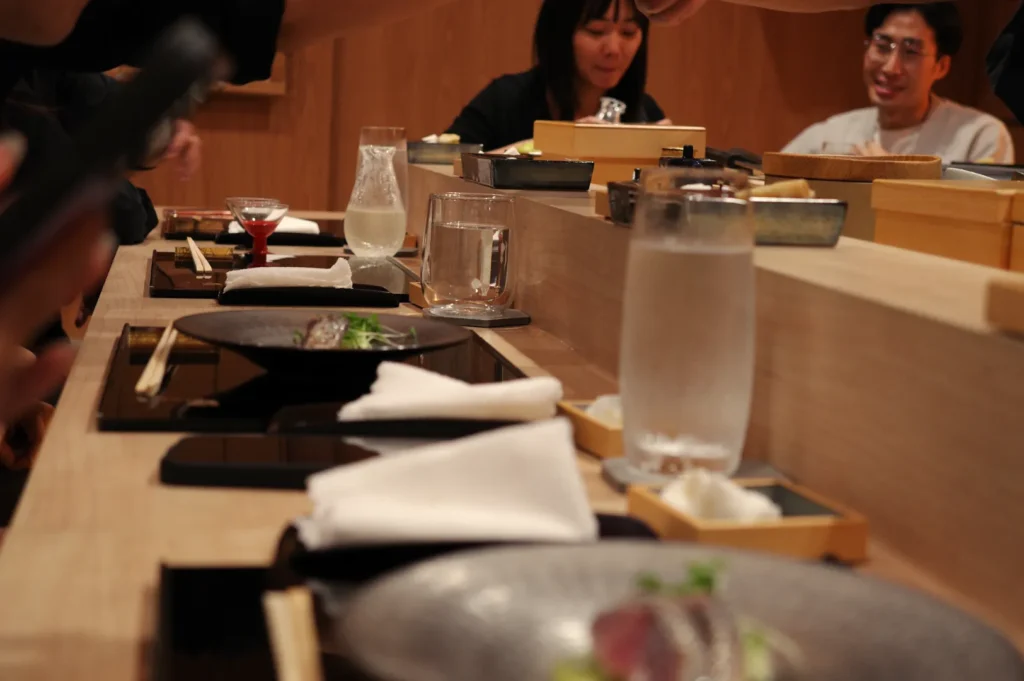
Understanding Edomae sushi temperature is only the beginning of appreciating what makes this tradition so enduring. From the warmth of the rice to the composed coolness of fresh fish, every detail is designed with intention.
At Sushi Masa by Ki-Setsu, we invite you to experience this philosophy firsthand, seated at our intimate counter in Cuppage Plaza, where Chef Masa prepares each course with the same care that has defined Edomae sushi since the Edo period. Reserve your place with us and discover how a single, thoughtfully served piece of nigiri can capture an entire tradition in one deeply satisfying bite.