Isaki and shima aji are two of summer’s most prized white fish offerings, each bringing distinct textural personality and flavour nuance that calls for thoughtful sake selection. Both belong to the shiromi, or white fish, family, yet they arrive at the counter with very different characters.
One is soft and quietly sweet. The other is firm, springy, almost alive under the knife. Understanding the right sake pairing isaki and shima aji brings to the table means listening to each fish on its own terms.
Isaki (Parapristipoma trilineatum) and shima aji (Pseudocaranx dentex) share a season and a category. They do not share a mood. This is where the pleasure begins.
Isaki: The Quiet Sweetness of Summer
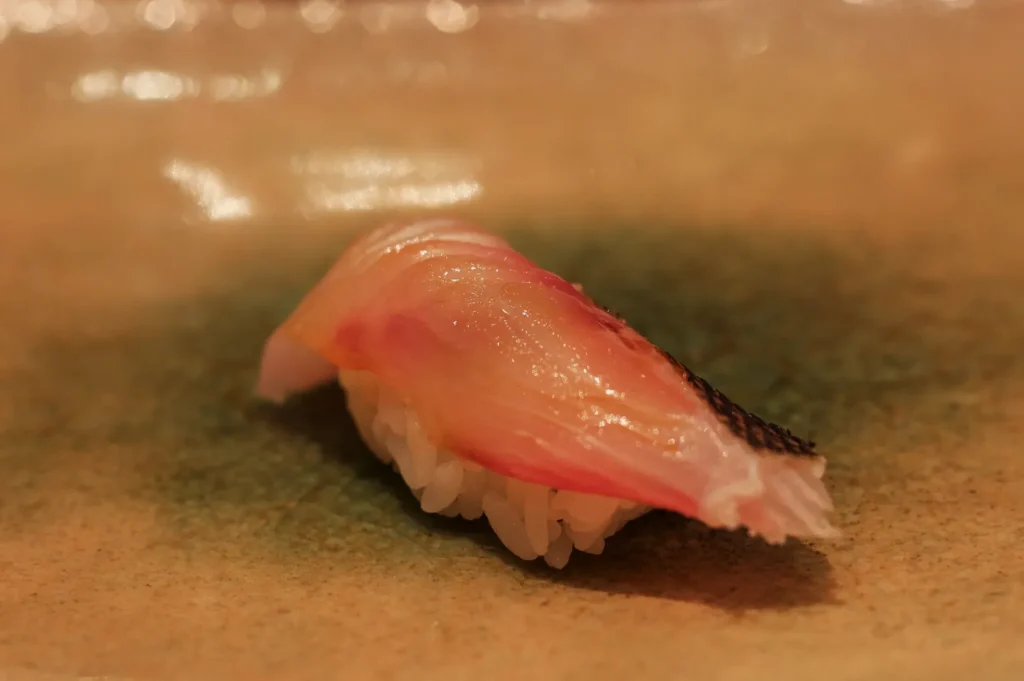
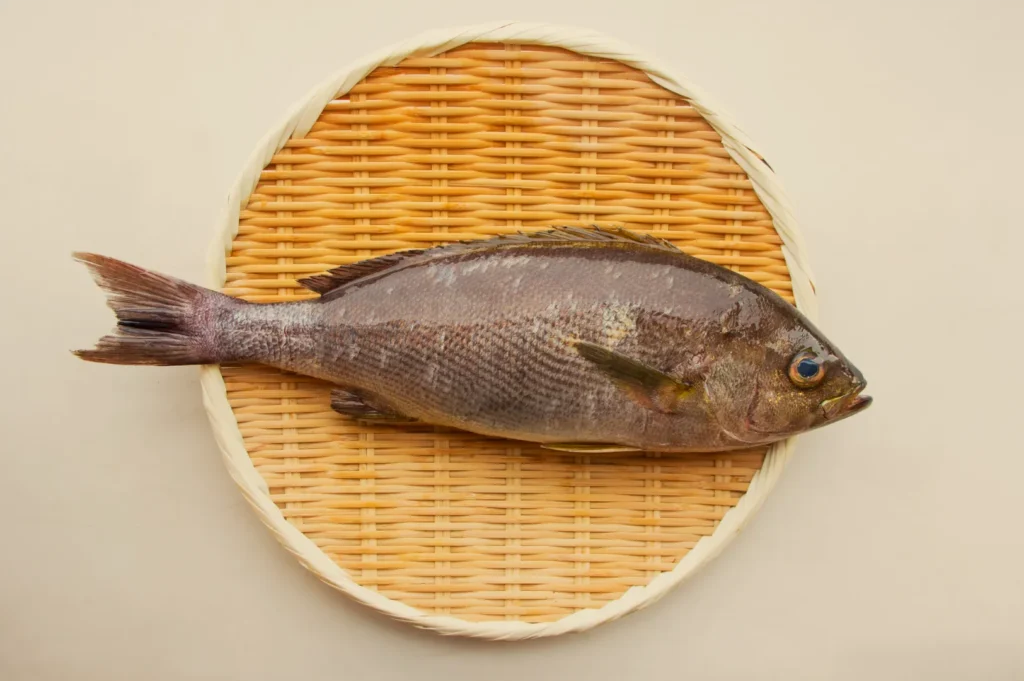
Isaki, known in English as chicken grunt, is a low to moderate fat white fish with a delicate, lean texture. Its flesh carries a clean sweetness that never overwhelms. Look closely and you will see its signature: a distinctive red band running directly under the skin, with translucent white layers resting beneath.
Its finest moment is early summer, around May and June. During the rainy season, it earns a special name: Tsuyu Isaki, the rainy season chicken grunt. This is when the fish reaches its fullest expression.
Freshness matters, though so does patience. Isaki’s umami often deepens with one to two days of gentle ageing, drawing out flavour that a same-day cut may hold back. As nigiri, it may be served skin-on or skin-off, depending on the chef and the region. A light touch of seasoning is usually enough. The fish speaks softly, and heavy dressing would only drown it out.
For a chicken grunt sake match, think restraint. A clean, light junmai lets isaki’s delicate sweetness stay in focus. Nothing loud. Nothing that pushes past the fish.
Shima Aji: Firmness You Can Feel
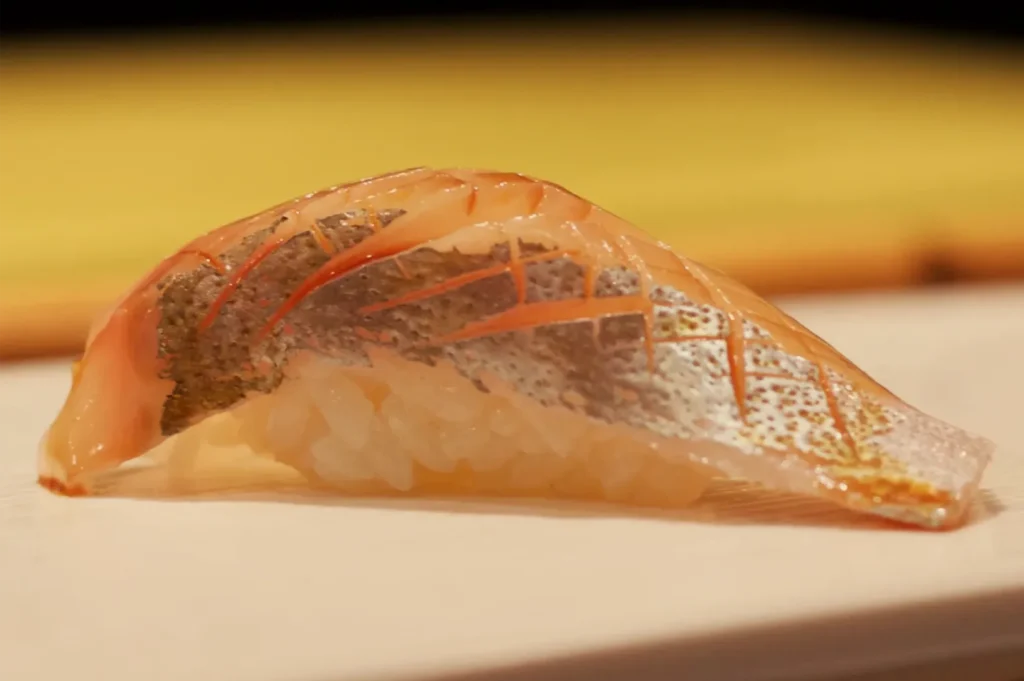
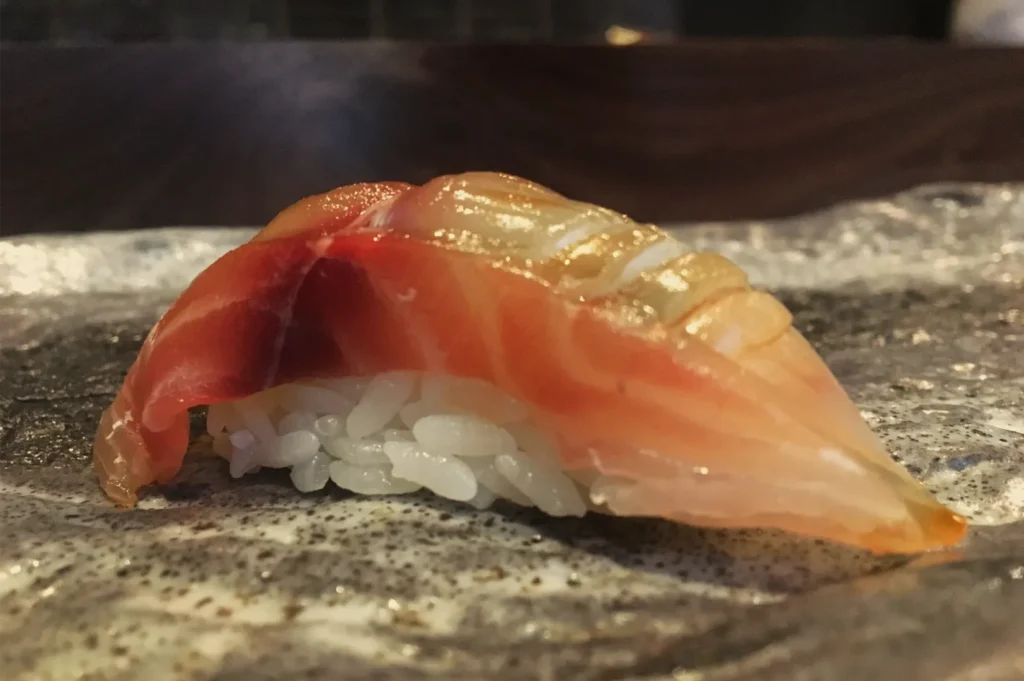
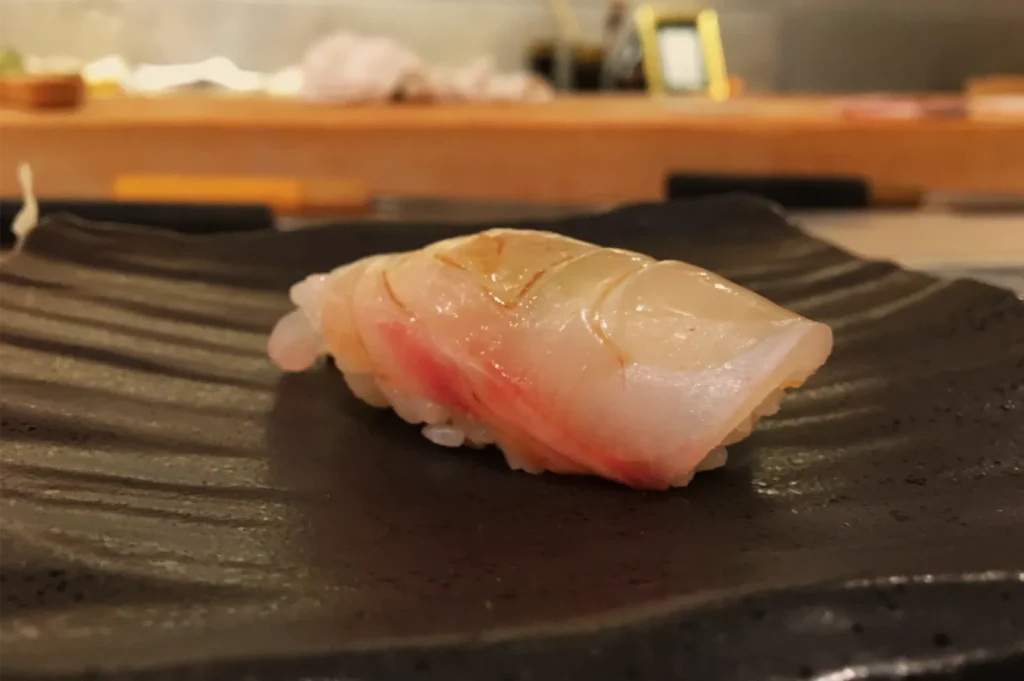
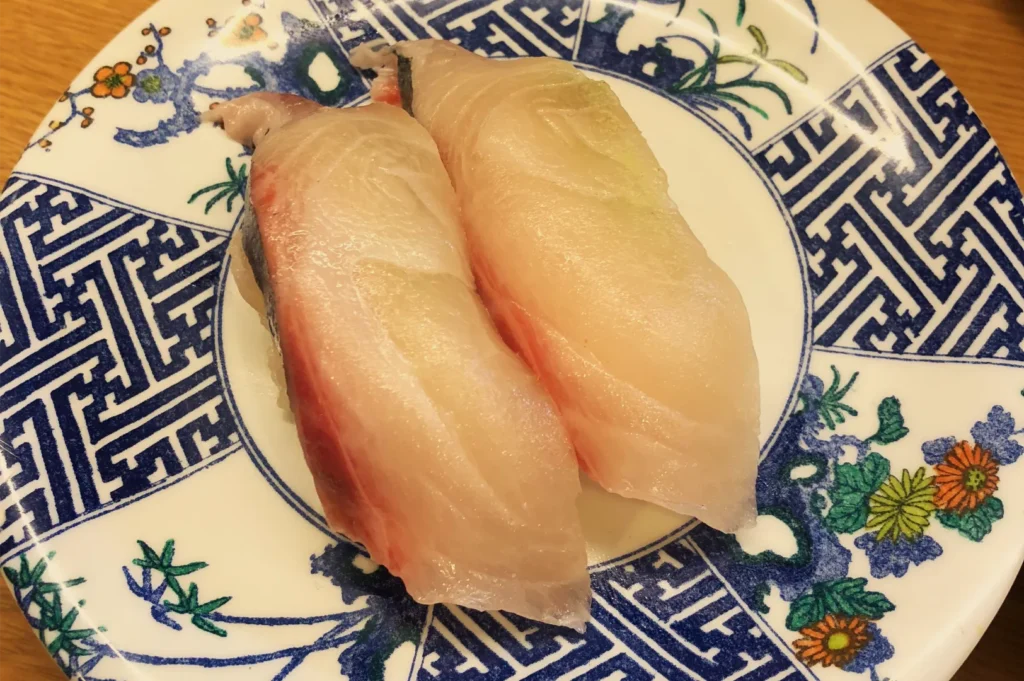
Shima aji, or striped jack, tells a different story. Its texture is firm, springy, with a slight crunch that sets it apart from most white fish. The sweetness is clean, the umami moderate but present. Where isaki whispers, shima aji holds its shape and answers back.
It belongs to the Carangidae family, sitting alongside relatives such as kanpachi, hamachi, and aji. Young specimens wear a distinctive yellow stripe along the body, a marker of their age and lineage. Note that kanpachi (Seriola dumerili) is its own species and should not be confused with hamachi or buri (Seriola quinqueradiata), even within the same broad family.
Here is a detail worth knowing when you consider wild vs farmed shima aji. Around 99% of the market supply is farm-raised, while wild specimens are rare and can command roughly five times the price. The two eat differently. Farmed shima aji tends to be fattier and oilier, giving a richer mouthfeel. Wild shima aji offers a more refined, restrained flavour that rewards a careful palate. Neither is simply better. They are different experiences, and both belong to summer.
For a striped jack pairing, the firmer texture opens more doors. A shima aji sashimi sake can carry a touch more weight without losing balance, because the fish itself has more presence to meet it.
Comparing the Two: Delicacy Meets Structure
Set side by side, the contrast sharpens. Isaki brings softer delicacy, a gentle sweetness that fades kindly. Shima aji brings firmer, more pronounced character, with that springy bite and a lingering clean finish.
Both fish suit light, clean sakes. Both find good company in junmai or ginjo styles. Yet the details differ. Isaki asks for something lighter and more transparent, a sake that steps back and lets the fish lead. A soft junmai with clean sweetness junmai drinkers favour works beautifully here.
Shima aji can stand up to sakes with more structure. Its firmer texture and moderate umami do not shatter under a fuller ginjo. A little more body, a little more weight, and the pairing still holds. This is the heart of good Carangidae fish pairing: matching the sake to the fish’s backbone, not just its flavour.
If you are still finding your footing, exploring the fundamentals of sake pairing for Japanese food gives you a framework you can carry from one fish to the next. The principles stay the same. Only the nuance shifts.
Think of it this way. With isaki, you protect the delicacy. With shima aji, you meet its strength. The same summer white fish sake philosophy guides both, but the dial moves.
Serving in Season: Chilled, and Sometimes Warm
Both isaki and shima aji are summer fish, and summer suggests chilled service. Reishu, sake served cold, keeps the palate clean and refreshed. It suits the season, and it flatters the clean sweetness both fish carry. For most summer pairings, a well-chilled junmai or ginjo is a natural choice.
Isaki adds a small twist. Its peak falls during the rainy season, when the air turns damp and cool evenings creep in. This timing opens the door to a gently warmed sake as an option, particularly on those grey, drizzly nights. A softly warmed junmai can bring out isaki’s deepening umami in a way that cold service sometimes holds back. It is not a rule, only a possibility. A rainy season fish sake ritual worth trying when the weather calls for it.
Shima aji, with its brighter, crisper character, tends to stay best served alongside chilled sake through the warmer months. Let the season and the room guide you.
A Full Picture of Summer Shiromi
To truly understand summer shiromi, you need both. Isaki teaches you patience and restraint. Shima aji teaches you structure and bite. One is soft, one is firm, and the space between them is where a good sake pairing isaki shima aji reveals its craft.
Taste them side by side, ideally within a single sitting, and let the contrast do its quiet work. This is a journey best taken slowly, course by course, under the calm attention of a skilled hand. If you would like to experience both fish thoughtfully paired, Japanese omakase at Sushi Masa offers a seasonal path through summer’s finest white fish, guided with intention.
Two fish. One season. A pairing worth returning to.
Frequently Asked Questions
What is the Difference Between Isaki and Shima Aji?
Isaki, or chicken grunt, is a low to moderate fat white fish with a delicate, lean texture and clean sweetness. Shima aji, or striped jack, is firmer, springier, with a slight crunch and moderate umami. Isaki is softer and more subtle, while shima aji has more structure and bite.
Should Sake Be Served Warm or Chilled with These Fish?
For most summer pairings, chilled sake, known as reishu, suits both fish and keeps the palate clean. Isaki peaks during the rainy season, so on cooler, damp evenings a gently warmed sake can be a pleasant option that draws out its deepening umami.
Is Wild or Farmed Shima Aji Better?
Neither is simply better. Around 99% of shima aji is farm-raised, which tends to be fattier and oilier with a richer mouthfeel. Wild shima aji is rare, costs around five times more, and offers a more refined, restrained flavour. Each suits a different preference and moment.