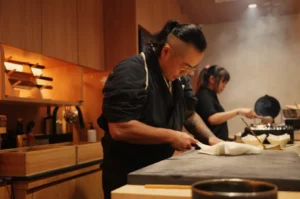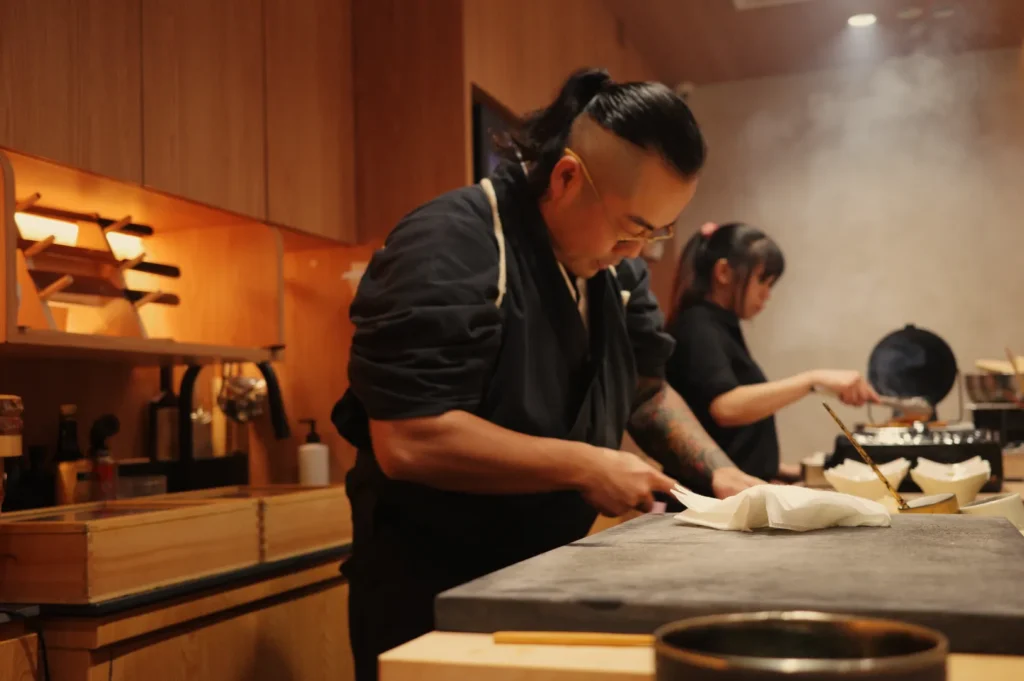
Step into a traditional sushi bar and you will notice something before the first piece arrives: where people sit matters. The wood, the light and the distance between guest and chef all shape the evening. At Sushi Masa by Ki-Setsu, our Edomae omakase Singapore experience is built around this closeness, with Chef Masa preparing every course in front of you. Understanding counter seat hierarchy helps you relax into the experience, and the furniture beneath you plays a bigger part than most people expect.
What Counter Seat Hierarchy Really Means Beyond the Best View
In the old sushi-ya of Tokyo, seats were never sold by rank. Hierarchy grew from habit and courtesy. Long-standing regulars tended to take the seats directly in front of the Itamae, while newer guests sat towards the ends or near the door. Over time, people began to speak of a “best seat,” though the idea says more about familiarity than status.
Today, the meaning is gentler and more practical. Each position offers a different view of the craft, and a thoughtful chef serves every guest with equal care.
Seat position | What you experience | Suits |
|---|---|---|
Centre of the counter | Direct view of knife work and rice | Guests who love to watch every step |
Beside the centre | Balanced view with easy conversation | Couples and first-time guests |
Ends of the counter | Quieter pace and a wider view of the room | Guests who prefer a calmer evening |
Etiquette follows the same spirit. Arrive on time, keep strong fragrance away from the counter, and let us know of any allergies when you book. These small courtesies protect the delicate aroma of the fish and the rhythm of the evening for everyone seated beside you.
At Sushi Masa by Ki-Setsu, we treat the whole counter as one shared table. Chef Masa paces each course so that every guest receives their nigiri at its best moment, whichever seat they take.
The Bar Counter as a Stage for Edomae Craft
A sushi counter is more than a place to rest your plate. It is a stage, a workbench and a dining surface at once. The bar counter is usually crafted from solid wood, chosen for its natural grain, its warmth and its ability to stay clean and quiet under a knife and a hand-pressed piece of sushi.
Depth matters too. A surface that is too shallow crowds the chef, while one that is too deep pushes guests away from the action. The best counters are well proportioned, close enough for conversation and generous enough to keep a respectful distance.
Lighting plays its part as well. Soft, even light over the counter lets the colour of the fish speak for itself, from the pale sheen of white fish to the deep ruby of lean tuna. Nothing should distract from the piece in front of you.
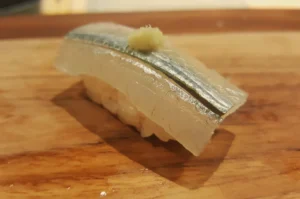
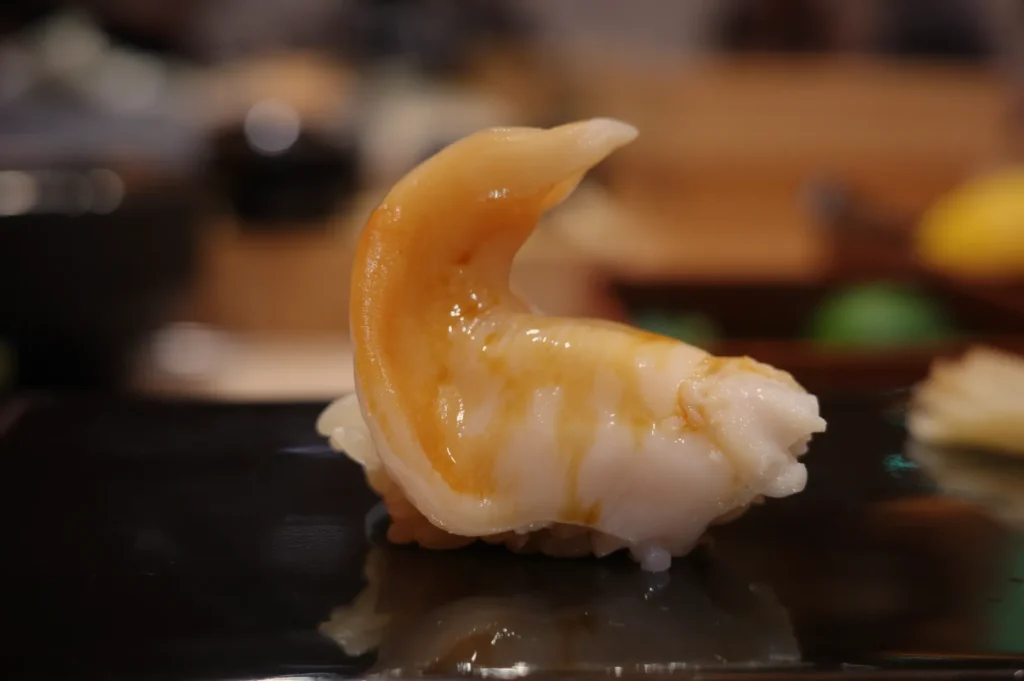
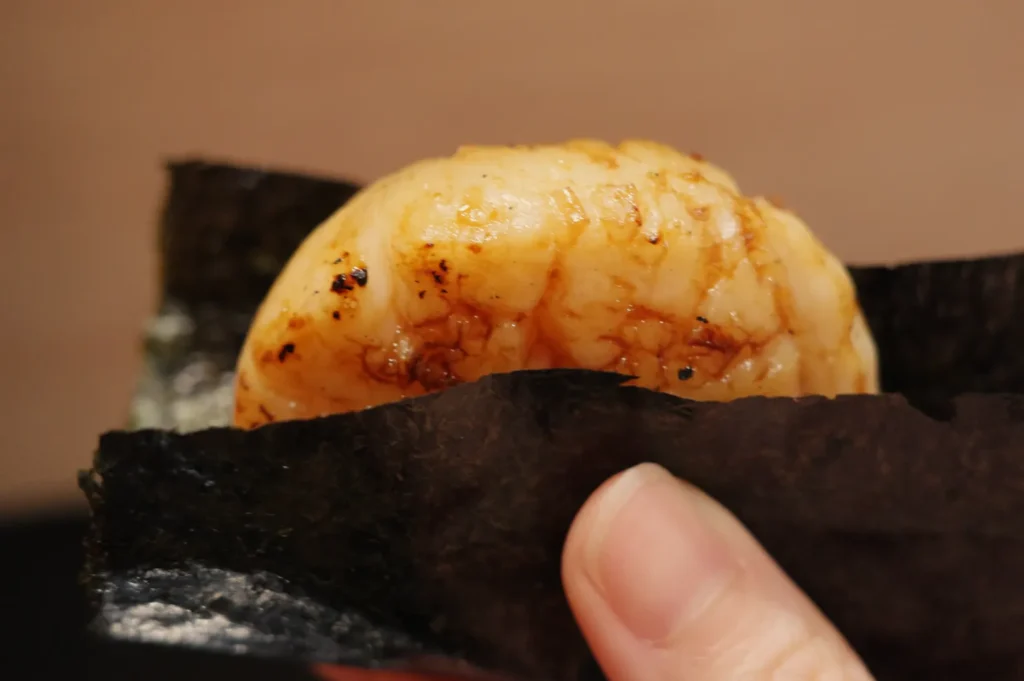
Edomae sushi rewards that closeness. Our seafood arrives from Toyosu, and each fish is aged, cured or lightly marinated according to its character. When the piece is placed in front of you, it should be eaten within moments. Sitting comfortably and close to the counter makes that simple rule easy to follow.
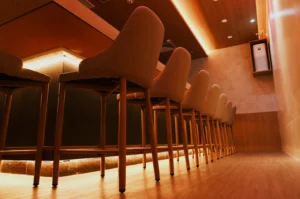
Bar Stools and Counter Stools: Why the Difference Matters
Many people use “bar stools” and “counter stools” interchangeably, yet the two are made for different surfaces. Choosing the wrong one is the fastest way to turn a lovely meal into a stiff, awkward evening.
Surface | Typical surface height | Matching seat height |
|---|---|---|
Dining table | 74 to 76 cm | 45 to 48 cm (chairs) |
Counter or kitchen island | 90 to 92 cm | 61 to 66 cm (counter stools) |
Bar | 105 to 110 cm | 71 to 76 cm (bar stools) |
A traditional sushi counter often sits somewhere between a standard counter and a full bar, because it must suit the chef’s working posture as much as the guest’s comfort. That is why the difference between seat and surface matters more than any single number.
Read: Counter Versus Table Seating: Which Actually Gives You the Better Omakase?
Finding the Right Stool Height for a Long Meal
An omakase is a slow, unhurried experience, so comfortable seating becomes part of the meal. The right stool height leaves about 25 to 30 cm between the seat and the underside of the counter. That gap gives your thighs enough clearance without lifting your arms awkwardly.
If the stool is too high, your shoulders rise and your forearms hover. If it is too low, you end up reaching up to the plate. Either way, the dining experience suffers.
Elbow space is the other quiet detail. Aim for about 60 to 65 cm per seat, so neighbours do not knock shoulders when they reach for a piece. Extra room here is always welcome, and it is one reason we keep our counter uncrowded.
Comfort also helps with pacing. When your posture is relaxed, you eat at a natural rhythm, and each piece is enjoyed at the temperature Chef Masa intends: rice just warm, fish gently cool.
Legroom and Footrest Support
Good stools often include a footrest set roughly 20 to 25 cm below the seat. It supports the feet, relieves the lower back and keeps posture steady over a long evening. Without it, legs dangle and tire quickly.
Swivel Stools and the Quiet Discipline of Sitting
Swivel stools are popular at home because they make it easy to turn towards conversation. At a traditional sushi bar, however, stillness is part of the etiquette. Guests face the counter, watch the work and avoid twisting around during service.
A light swivel can still be useful, especially when guests arrive or leave. The trick is balance: a stool that turns smoothly but does not spin freely. Look for a controlled, low-friction mechanism, or a fixed seat if you prefer a more disciplined feel.
For guests at Sushi Masa by Ki-Setsu, this stillness is a small gift. When you are settled and facing forward, you notice more: the sheen on a slice of fish, the gentle press of the rice, the timing of each course.
Bar Height, Kitchen Island and Bringing the Counter Home
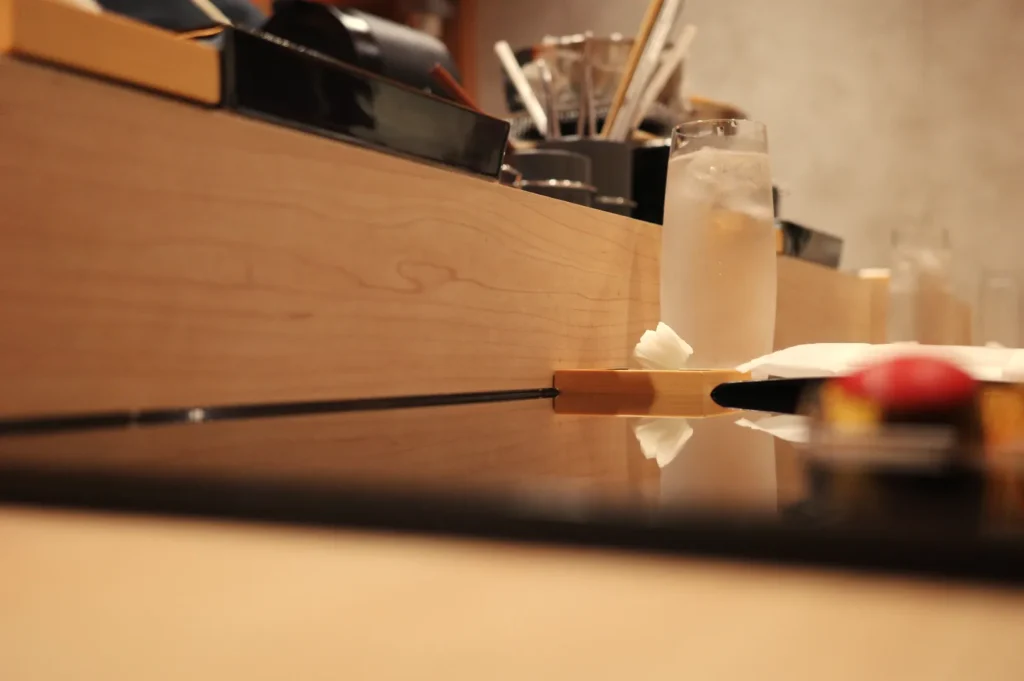
Many of our guests ask how to recreate the counter feeling at home. The good news is that a kitchen island can work beautifully, provided you match the surface to the stool.
Start by measuring your island or bar height from the floor to the top of the surface. Then subtract roughly 25 to 30 cm to find your ideal seat height. Standard islands often suit counter stools, while taller bar-style surfaces need higher seating.
A few points are worth checking before you buy:
Overhang: allow at least 25 to 30 cm so knees can tuck under comfortably.
Width per seat: plan on 60 to 65 cm to avoid crowding.
Floor clearance: check that stools slide out easily without scraping.
Traffic flow: leave enough room behind the stools for people to pass.
Choosing the Right Bar Stool for Your Own Space
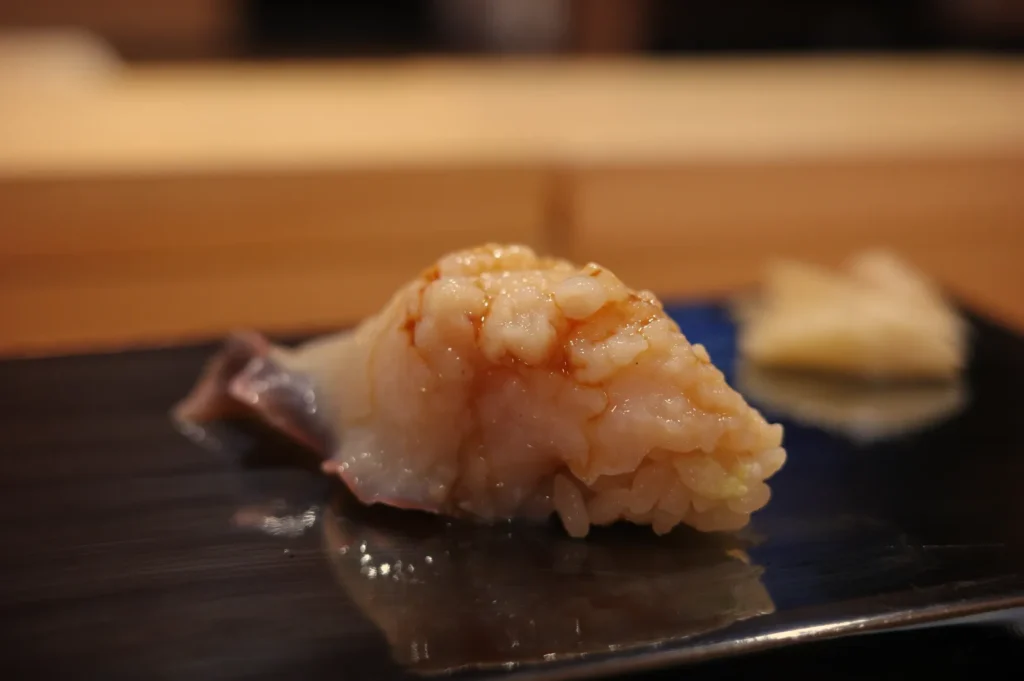
Once the measurements are settled, style and materials come next. Wood is a natural choice for warmth, while metal adds a clean, industrial edge. Many sushi counters lean towards minimal, timeless designs that complement the food rather than compete with it.
When selecting a right bar stool, consider how you will use it. If you plan to sit for long dinners, comfort should come before fashion. A gently contoured seat, a supportive back and a proper footrest can make a real difference.
It also helps to sit on a stool before committing. Test it for a few minutes, lean forward as though eating, and check that your feet rest naturally. A stool that feels fine for thirty seconds can feel very different after ninety minutes.
Colour deserves a thought too. Blue, green, grey or yellow upholstery can lift a neutral kitchen, while natural wood tones keep things calm. Match the finish to your floor and cabinetry so the stools complement the room rather than dominate it.
In Singapore, where homes are often compact, smart planning of layouts also matters. Slim, well proportioned stools that tuck neatly under an island save space without sacrificing comfort. Choose pieces that are functional first and beautiful second, and they will serve you for years.
Settling In: The Right Height for Every Guest at Sushi Masa by Ki-Setsu
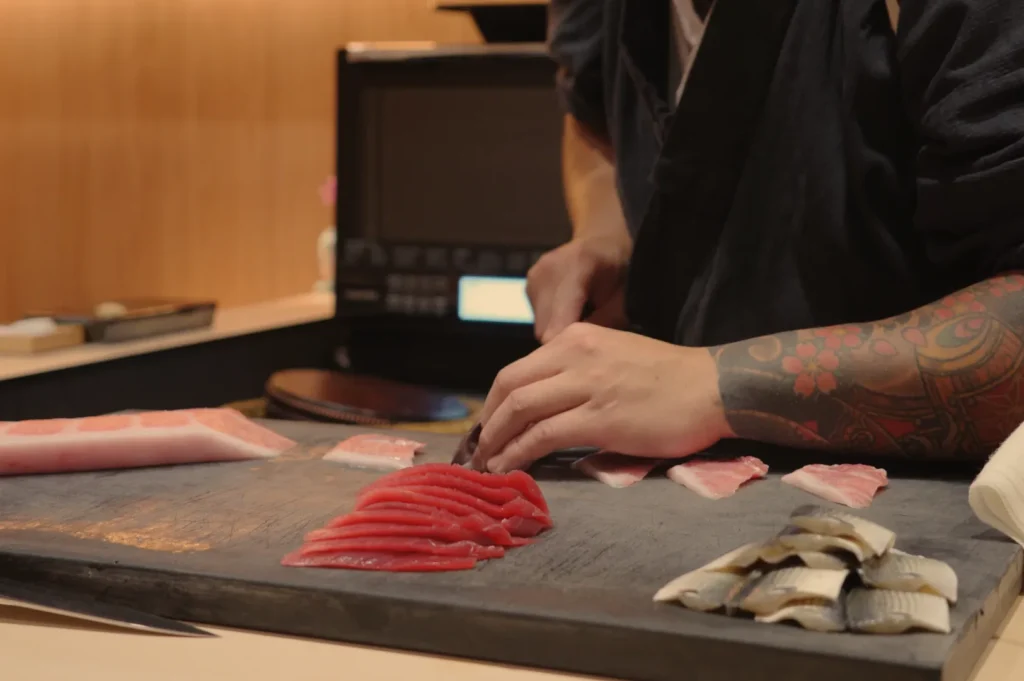
At our counter, we pay quiet attention to how each guest sits. A taller guest may need a little more room to stretch, while someone smaller may prefer a footrest. These small touches are part of omakase, where the experience is shaped around you rather than the other way around.
We also keep the counter uncluttered so guests have enough room for their plate, a small cup of tea and the occasional pause. There is no rush at an omakase, and the space is designed to reflect that.
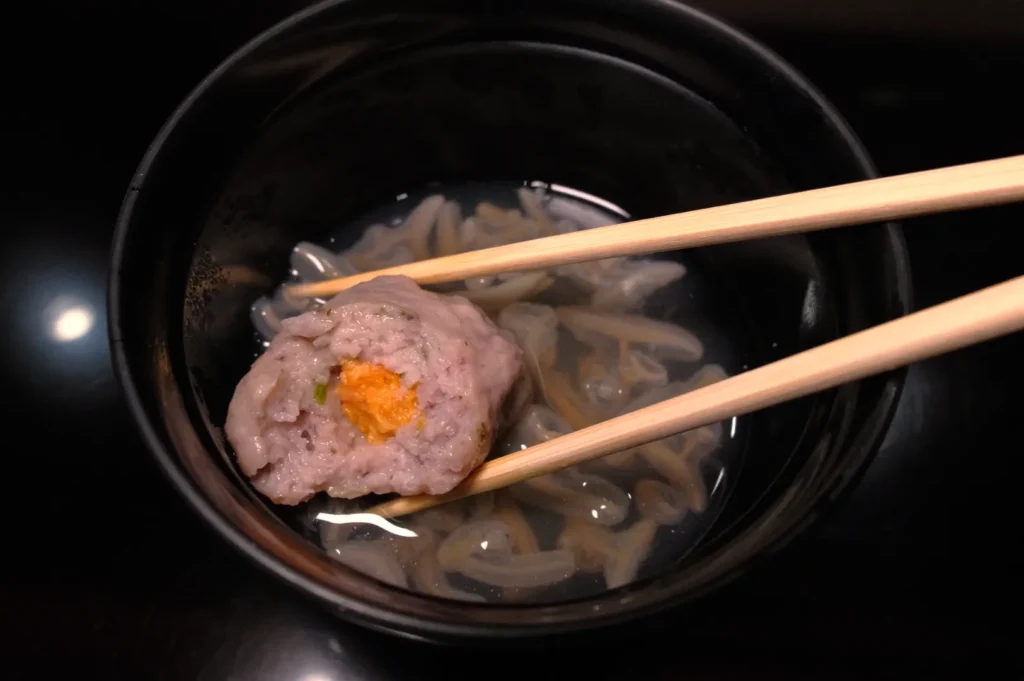
Our menu is purely seafood, and every course reflects the season and the best of what Toyosu offers. From the light dashi soup at the start to the final piece of the evening, Chef Masa sets the rhythm. Your role is simply to be comfortable, attentive and ready to enjoy each course while it is at its peak.
The right height, the right distance and the right company all help. When those elements align, the meal feels effortless, and the counter feels like a place you have always belonged.
Take Your Seat at the Counter
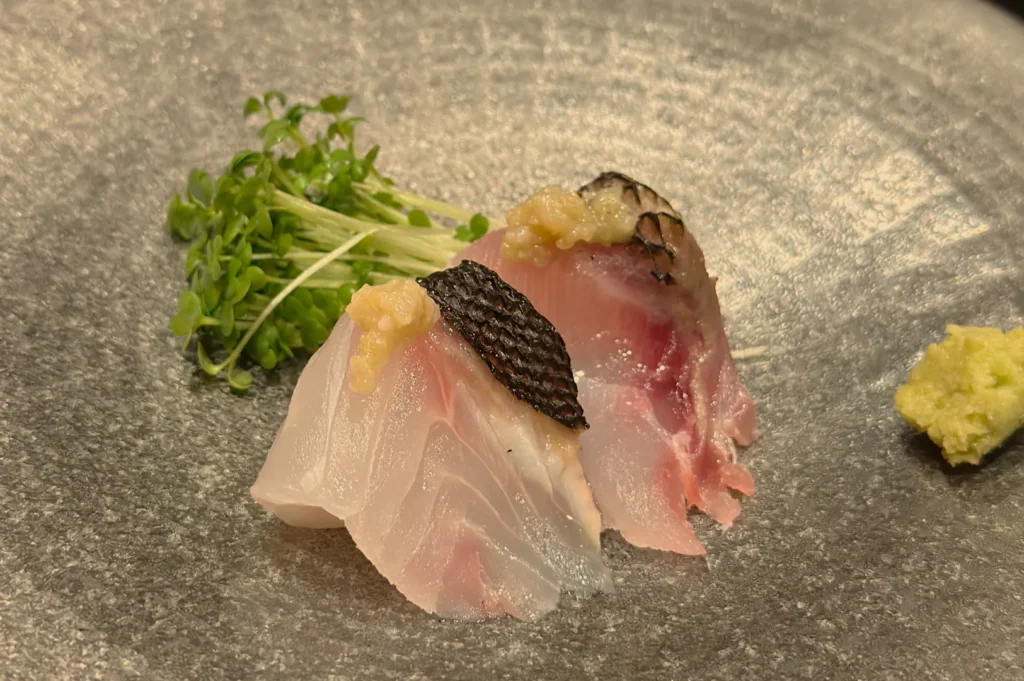
Counter seat hierarchy, in the end, is less about rank and more about respect: for the craft, for the chef and for fellow guests. Comfort is part of that respect, from stool height and elbow space to the simple pleasure of sitting where you can see the work unfold.
If you would like to experience a traditional Edomae omakase in a setting designed for comfort and connection, we would be delighted to welcome you to Sushi Masa by Ki-Setsu. Take a seat, settle in and let Chef Masa guide the evening, one piece at a time.