Sake Pairing with Kohada: Cured and Seasoned
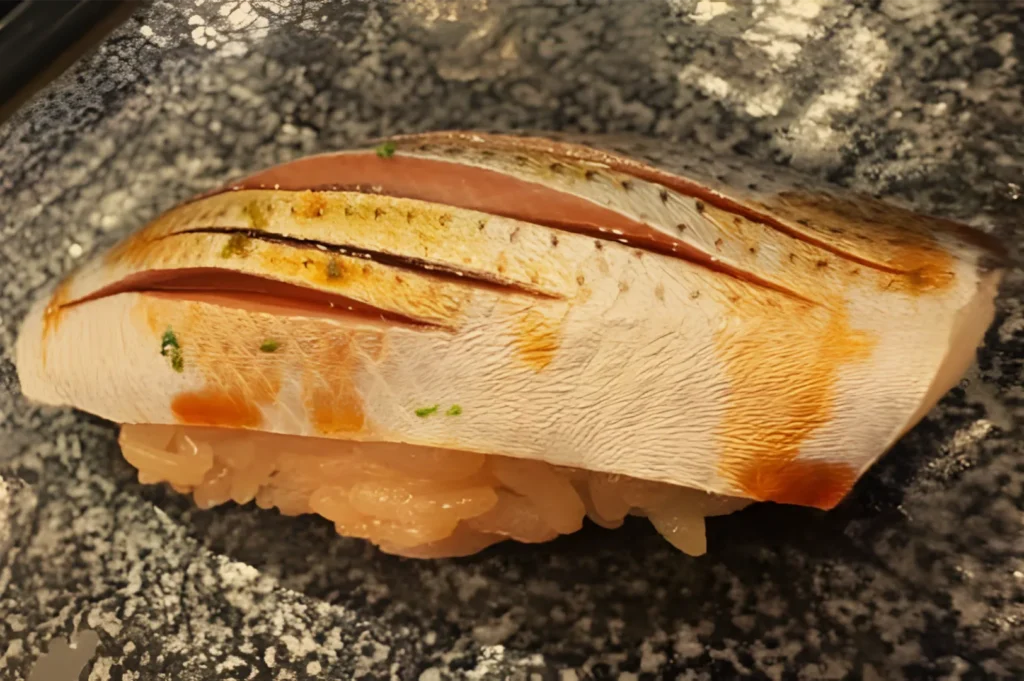
Kohada is the ultimate benchmark of Edomae sushi craftsmanship, and its complex, technique-dependent preparation creates one of the most distinctive sake pairing experiences in Japanese cuisine. To pour the right cup beside this small, silver-skinned fish is to honour hours of quiet, careful work.
In this guide, you will learn what makes kohada so revered, how it is cured in the Edomae way, and how to approach sake pairing kohada with confidence and calm.
A Small Fish, a Great Measure of Skill
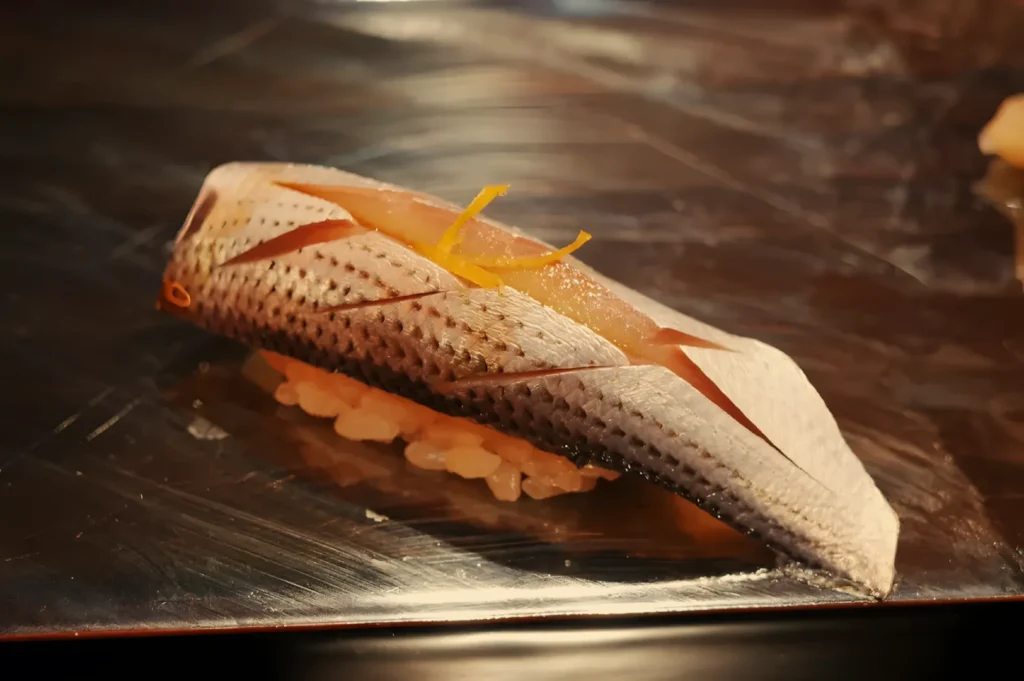
Kohada is a member of the herring family, Clupeidae, known to science as Konosirus punctatus. It is often called gizzard shad in English. It is not a mackerel, and the distinction matters. Mackerel belongs to a separate family entirely. Kohada belongs among the silver-skinned fish, the hikarimono, prized for their shine and their honesty on the counter.
Among these fish, kohada holds a particular place. Chefs judge one another by it. Its slim body offers little room for error, and its flavour demands balance rather than force. When a chef prepares it well, the salt, the vinegar, and the natural sweetness settle into quiet agreement. This is why kohada is treated as the true measure of Edomae skill. It rewards patience. It punishes haste.
The Many Names of One Fish
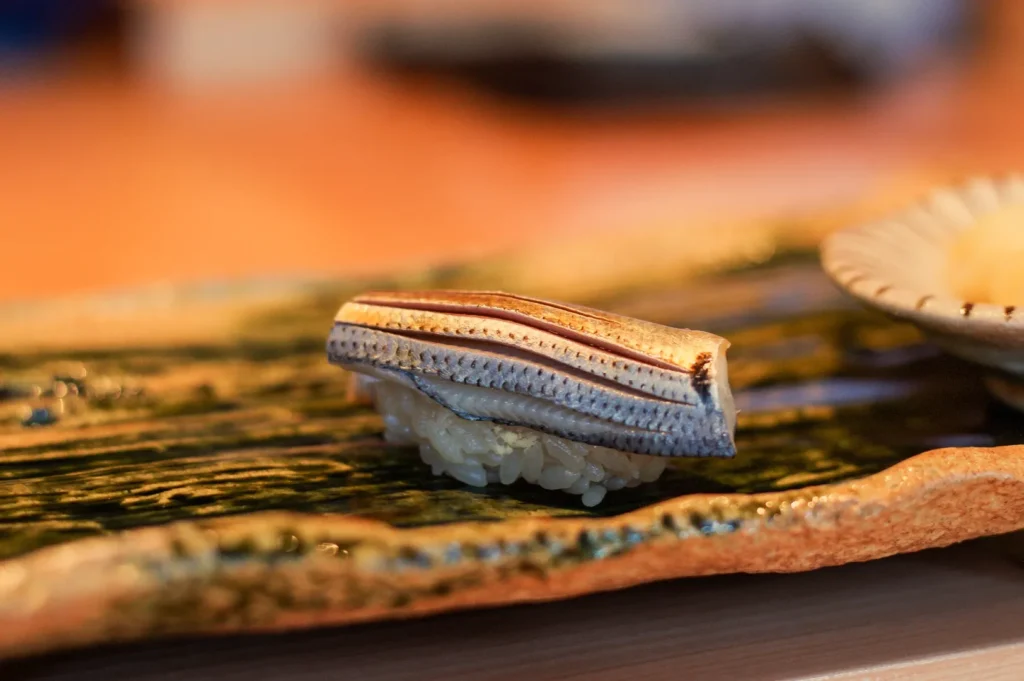
Kohada is a shusse-uo, a fish that changes its name as it grows. Each stage carries its own character, and each invites a slightly different approach at the counter.
- Shinko (3 to 5 cm): The infant fish, available roughly from June to August after spawning. It is a rare early-summer delicacy, so small that a single piece of nigiri may need several fillets.
- Kohada (7 to 10 cm): The juvenile stage and the gold standard. This is the fish most guests picture when they think of the name.
- Nakazumi (around 13 cm): The sub-adult, larger and richer, with a bolder presence.
- Konoshiro (15 cm and above): The adult, usually grilled or pickled rather than served as nigiri. This is the konoshiro of the Clupeidae family in its fullest form.
Shinko asks for a gentler hand. Its tiny body needs far shorter salting and marinating than the mature kohada, and a moment too long can undo it. Many follow the fish through its stages across the seasons, a quiet way to read the calendar through a single species.
The Taste Beneath the Vinegar
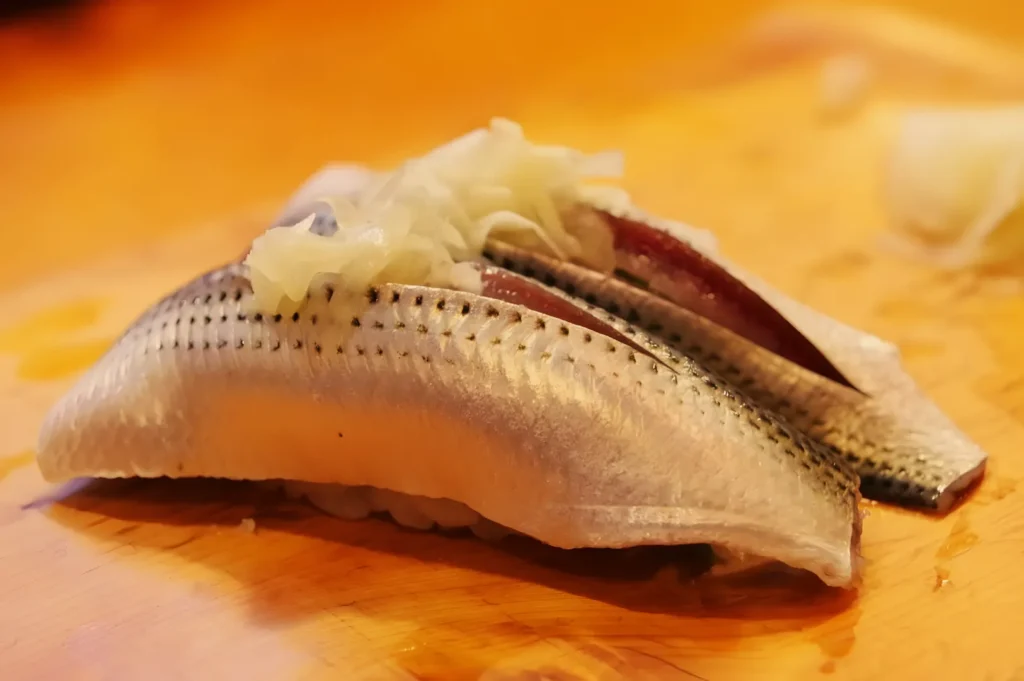
Kohada is an oily fish, moderate to high in fat and rich in omega-3. That fat is the source of its deep, lingering umami. Beneath the salt and vinegar sits a soft sweetness, the fish's own voice, never fully hidden.
Curing changes its texture. Raw, the flesh is delicate. After proper salting and vinegar treatment, it turns firm and clean, yet still yields softly. The vinegar denatures the proteins, drawing out the umami and lending brightness to the fat. The result is layered: salt, acidity, oil, and sweetness, held in balance. This complexity is exactly what makes vinegar-cured fish sake pairing so rewarding, and it sits at the heart of any Edomae kohada pairing.
Season shapes the fish too. Winter kohada carries the highest fat, its flavour fullest and roundest. Shinko, by contrast, is a fleeting summer pleasure, prized for its tenderness rather than its richness.
The Edomae Curing Process
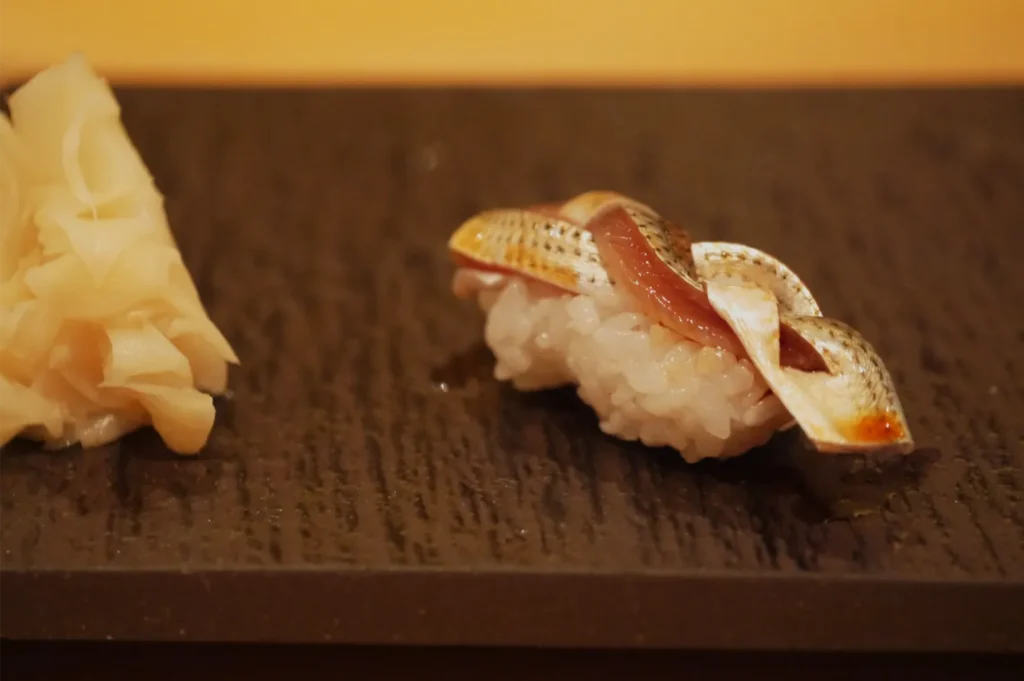
Curing kohada is slow, attentive work. Methods vary between chefs and regions, and no single approach is the only correct one. Still, the shape of the process is shared.
- Filleting and deboning: The small fish is opened, cleaned, and its fine bones removed with care.
- Salting: The fillets rest under salt, anywhere from ten minutes to over an hour. Fatter fish and more humid days call for longer. This step firms the flesh and draws out moisture.
- Vinegar rinse: The salt is washed away with vinegar, often vinegar saved from the previous day for added strength and depth.
- Vinegar marinade: The fillets sit in vinegar, which gently "cooks" them through protein denaturation. You can watch the flesh turn from translucent to white.
- Overnight rest: The fish rests overnight, letting the vinegar settle evenly through every layer.
Judgement guides each stage. The chef reads the fat, the size, the weather, and adjusts. This is why two pieces of kohada from two counters can taste worlds apart, and why the fish reveals so much about the hands that made it.
Presentation and the Accompaniments
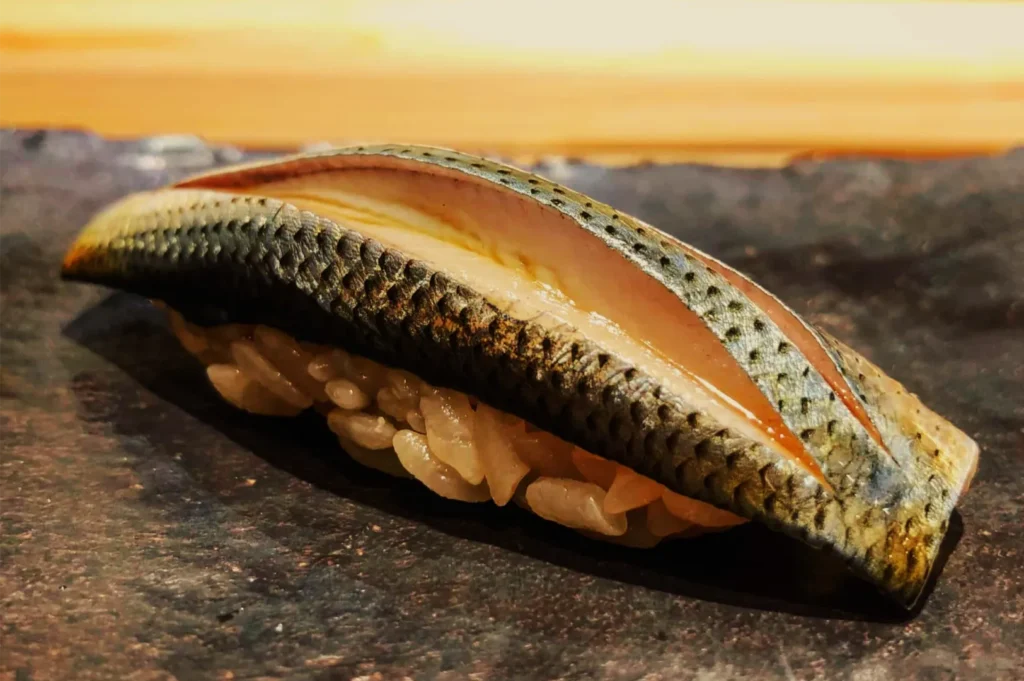
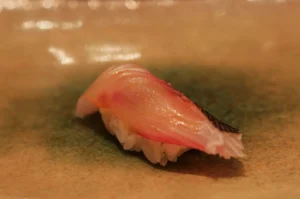
At the counter, kohada nigiri carries a small, telling flourish. The tail end of the fillet is twisted to the side, a gesture meant to express liveliness, as though the fish were still moving. It is a quiet piece of theatre, understated and precise.
Beneath the fish sits the shari. In the Edomae tradition, this rice is often seasoned with aka-su, a red vinegar made from sake lees, which brings a deeper, mellower tang than clear rice vinegar. Some chefs tuck oboro, sweet shrimp flakes, between the fish and rice, adding a soft sweetness that lifts the cure. These pairings are not fixed rules but living choices, shaped by each chef's style. When you turn to sake, the same thinking applies, and it echoes the broader art of sake pairing with seafood across the counter.
Finding the Right Sake
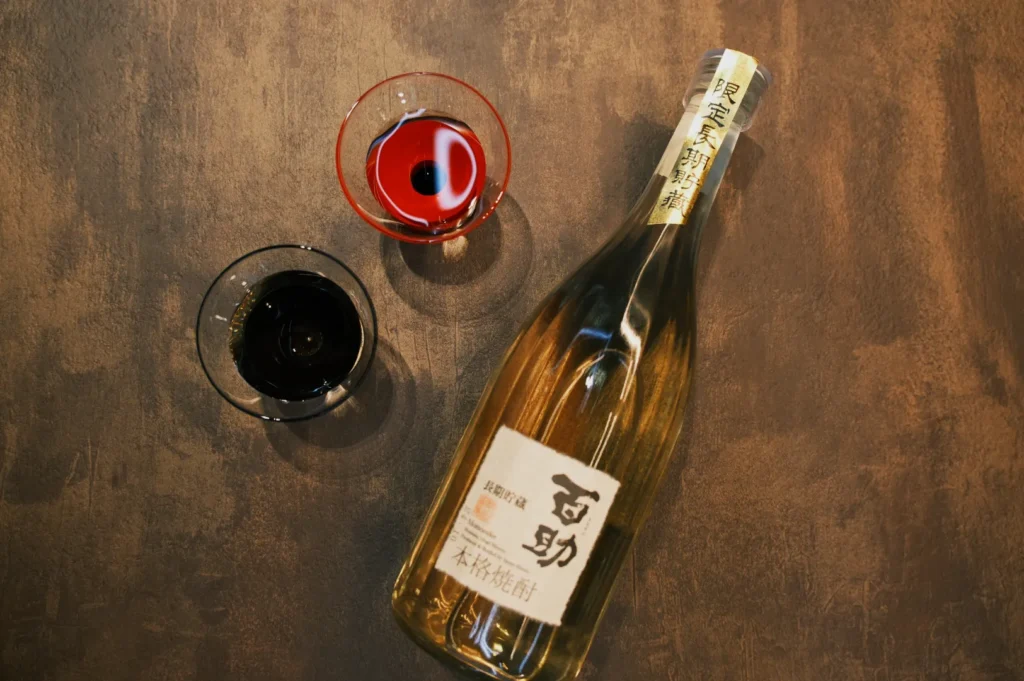
The joy of sake pairing kohada lies in its many pathways. The fish offers salt, vinegar, oil, and sweetness all at once, so there is more than one way in.
- For the acidity: The vinegar cure calls for a clean, crisp sake. A dry, bright pour meets the tang and refreshes the palate between pieces, letting the fish speak clearly. This is the natural home of hikarimono sake, where sharp fish meets a sharp cup.
- For the umami: The richness of the fat pairs beautifully with kimoto or yamahai styles. These traditional brewing methods yield a fuller, more savoury sake with gentle acidity, and a yamahai kohada pairing can echo the fish's depth without overwhelming it.
- For the Edomae character: A junmai with moderate acidity suits the whole picture. It carries enough body to hold the oil, enough brightness to answer the vinegar, and enough restraint to let the sweetness through.
The interplay of salt, vinegar, and fish oil opens several doors at once. A crisp sake cleans; a richer sake matches; a balanced junmai bridges. Shinko sushi sake pairings often lean lighter still, to honour the delicacy of the young fish. If you would like to understand these styles more deeply, this guide to Japanese sake is a useful place to begin. There is no single answer, only the pour that suits the piece, the season, and the moment.
Conclusion
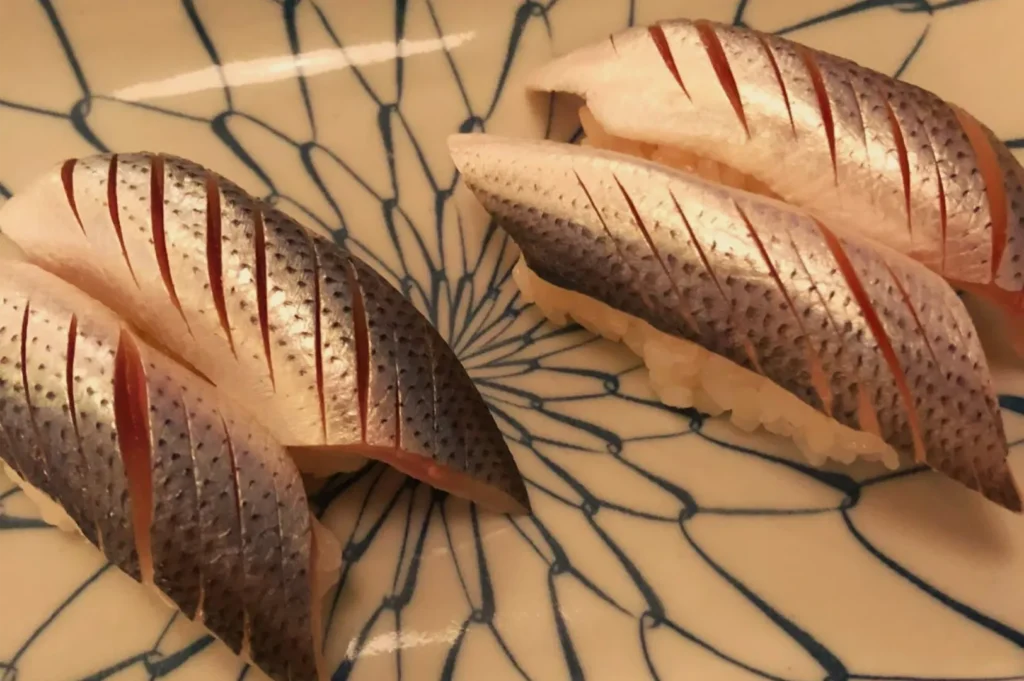
Kohada rewards attention. It carries the season in its fat, the chef's patience in its cure, and a quiet sweetness beneath its brightness. This is why sake pairing kohada remains one of the most telling experiences in traditional sushi, a small piece that holds so much. Whether you reach for a crisp, clean cup or a fuller yamahai, the fish will meet you halfway. To taste it prepared with true care, sit with Chef Masa at Sushi Masa, and let the fish and the cup find their balance in stillness.
Frequently Asked Questions
Is Kohada a Type of Mackerel?
No. Kohada is Konosirus punctatus, a member of the herring family, Clupeidae. It is often called gizzard shad in English. It is a silver-skinned fish, not a mackerel.
What Sake Pairs Best with Kohada?
There is no single answer. A crisp, dry sake suits the vinegar cure, while kimoto or yamahai styles match the fish's richer umami. A junmai with moderate acidity bridges both and suits the Edomae character well.
Why Is Kohada Considered a Test of a Sushi Chef?
Its small size, oily flesh, and vinegar cure leave little margin for error. Balancing salt, vinegar, and natural sweetness takes fine judgement, so a well-made kohada reveals a chef's true skill.