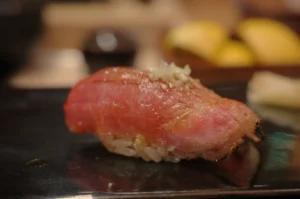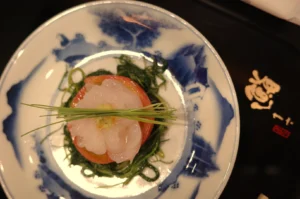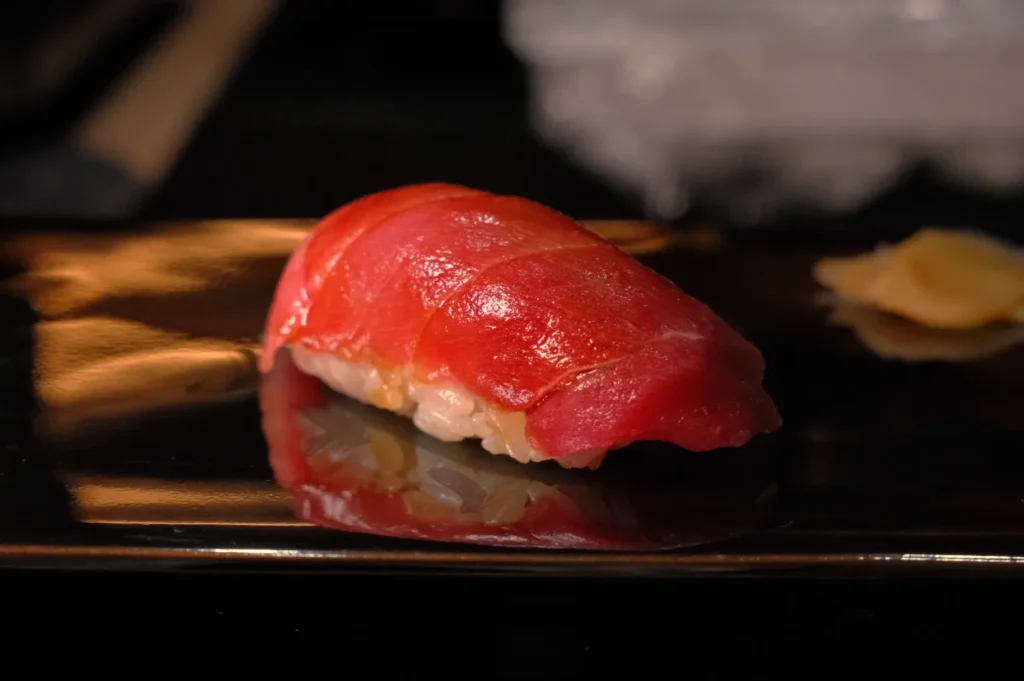
Akami is the lean, deep-red loin of the Pacific bluefin tuna (Thunnus orientalis). It is the leanest of the three principal tuna cuts, holding only around 2 to 5% fat. Where chutoro and otoro draw you in with marbling, akami speaks differently. Its quiet strength is umami, carried by abundant inosinic acid (IMP) at 250 to 360mg per 100g.
Many diners reach first for the fatty cuts. Yet akami offers the purest expression of tuna’s natural character, unclouded by fat.
If richer cuts call to you, our guide to sake pairing with fatty tuna follows that path. And to understand the sake itself, begin with Best Japanese Sake, our foundation for choosing well.
Here, we turn to the lean cut, and the crisp sake that meets it.
What Is Akami? Understanding the Cut
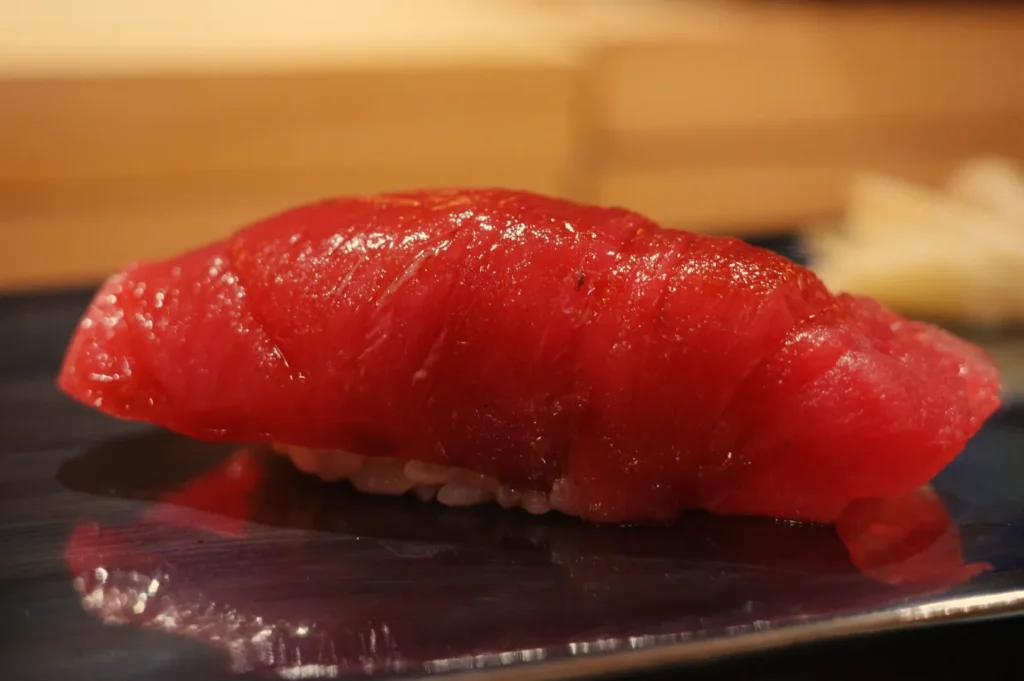
Akami is a specific cut, not a general word for tuna. It comes from the dorsal loin, the sections that run along the top of the fish, close to the back.
Colour and Texture
The colour is unmistakable. A deep crimson, sometimes ruby-red, drawn from high myoglobin in the muscle. The texture is fine and smooth, firm in structure, giving a clean, meaty bite. Not all akami is equal. The back-side portion tends to be softer and more flavourful than the belly-side.
Ageing
Akami is often aged 3 to 14 days under controlled refrigeration. Time allows the natural enzymes to work, developing inosinic acid and concentrating the flavour. The result is depth without richness.
Common Preparations
You will meet akami in several forms.
- Nigiri: the standard tuna presentation, a single slice over warm rice.
- Sashimi: cut thick or thin, served plain.
- Zuke: marinated in soy, a traditional Edomae method born of preservation.
- Aburi: lightly seared at the surface.
Because akami holds so little fat, no fatty coating lingers on the palate. The flavour arrives direct. Mineral, clean, and driven by umami. This is what makes lean tuna sashimi such a compelling subject for pairing.
The Science: Why Akami Pairs Exceptionally with Sake
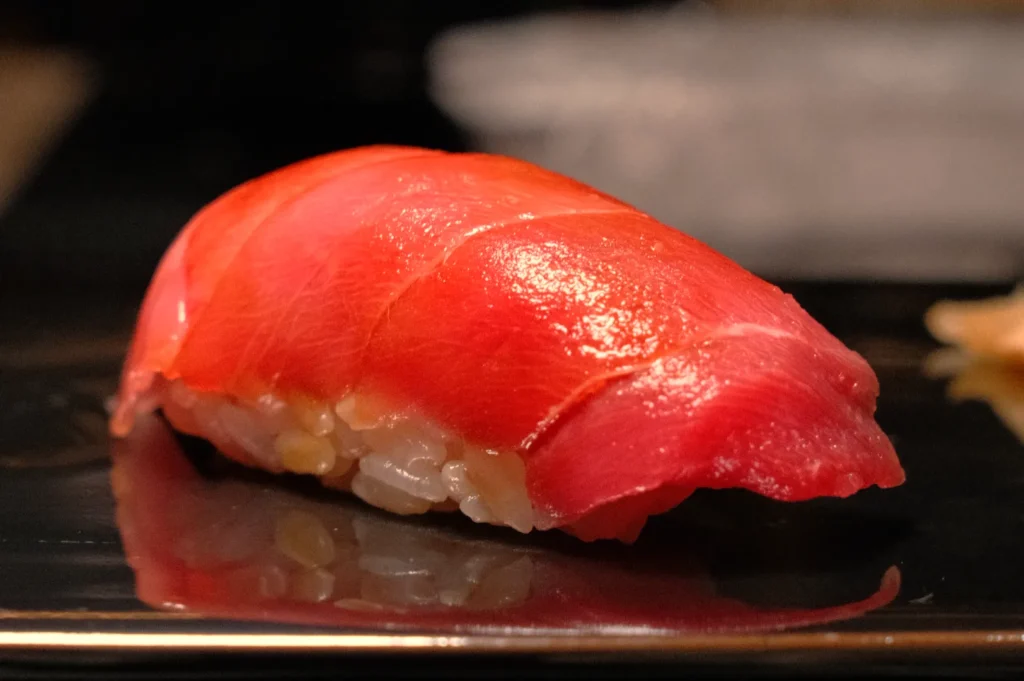
The bond between akami and sake is not poetry alone. It is molecular.
The Umami Synergy
Sake is rich in free glutamate, carrying between 100 and 250mg per 100mL in junmai styles. Akami is rich in inosinic acid (IMP), at 250 to 360mg per 100g. These are two different families of umami compound, and the difference matters. Sake brings the glutamate. Akami brings the inosinate.
When the two meet in roughly equal measure, something remarkable happens. The perceived umami intensity is amplified seven to eight times beyond what either could produce alone. This is the synergistic umami effect, understood through research into the T1R1/T1R3 taste receptors on the tongue.
Because akami carries so little fat, this inosinic acid sake synergy is never masked or diluted. There is no buttery layer to soften the effect. You taste the tuna umami sake pairing in its purest form, glutamate from the glass, inosinate from the fish, working as one.
Why Not Wine?
There is a further reason sake suits lean tuna so well. Unlike wine, sake contains virtually no iron (Fe²⁺) and no sulfites (SO₂). These are the two compounds most often blamed for the metallic, fishy off-flavours that can spoil a seafood pairing.
With those absent, nothing stands between the sake and the clean, mineral character of the red tuna. The pairing stays true from first sip to last.
Recommended Sake Styles for Akami
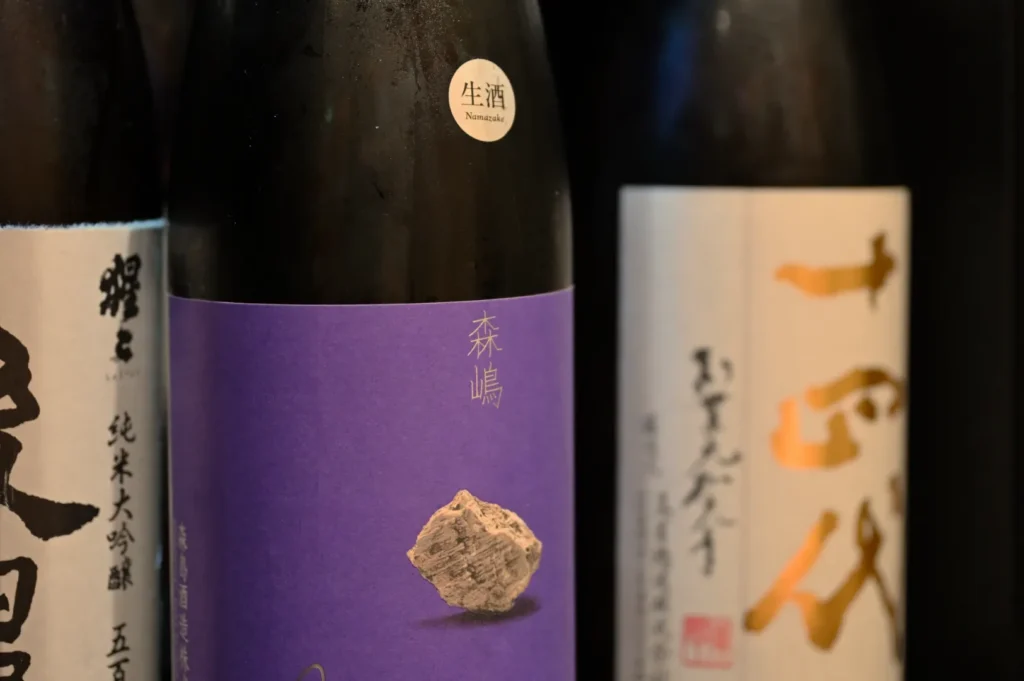
The guiding principle is simple. Match umami intensity with umami intensity. Akami is meaty and mineral, so it asks for a sake with weight and presence. This is why akami should never be paired the same way as otoro. The fat difference changes everything.
Kimoto and Yamahai Junmai
These traditional brewing methods take the slow road, cultivating natural lactic acid. They produce higher amino acid content and greater acidity, a robust match for akami’s meaty character. The lactic notes and earthy complexity meet the mineral, almost beef-like quality of the fish.
Serve these warmed to 40 to 45°C. Gentle heat draws out the amino acids and deepens the dialogue between glass and plate. For those drawn to junmai kimoto yamahai styles, this is where they shine.
Standard Junmai
A well-made junmai, with an amino acid value around 1.5 to 1.8, brings enough umami weight without overwhelming the tuna. Look to breweries working with soft water, which lends a smoother, more integrated feel. This is an honest partner for the akami tuna sake pairing when the fish is served as nigiri or plain sashimi.
Dry Junmai Ginjo
When akami is served as zuke, marinated in soy, the balance shifts. The added salt and soy intensity call for a drier ginjo with a thread of acidity to keep things fresh. Its light fruit aromatics offer a pleasant contrast to the meaty tuna, without competing.
What to Avoid
Delicate daiginjo styles are best left aside here. Their subtle aromatics are easily lost against akami’s mineral intensity. Sweet or fruity sakes tend to clash with the iron-rich, meaty profile of the fish. Save those bottles for gentler cuts. This lean fish sake pairing rewards structure, not sweetness.
Practical Pairing Tips for Diners
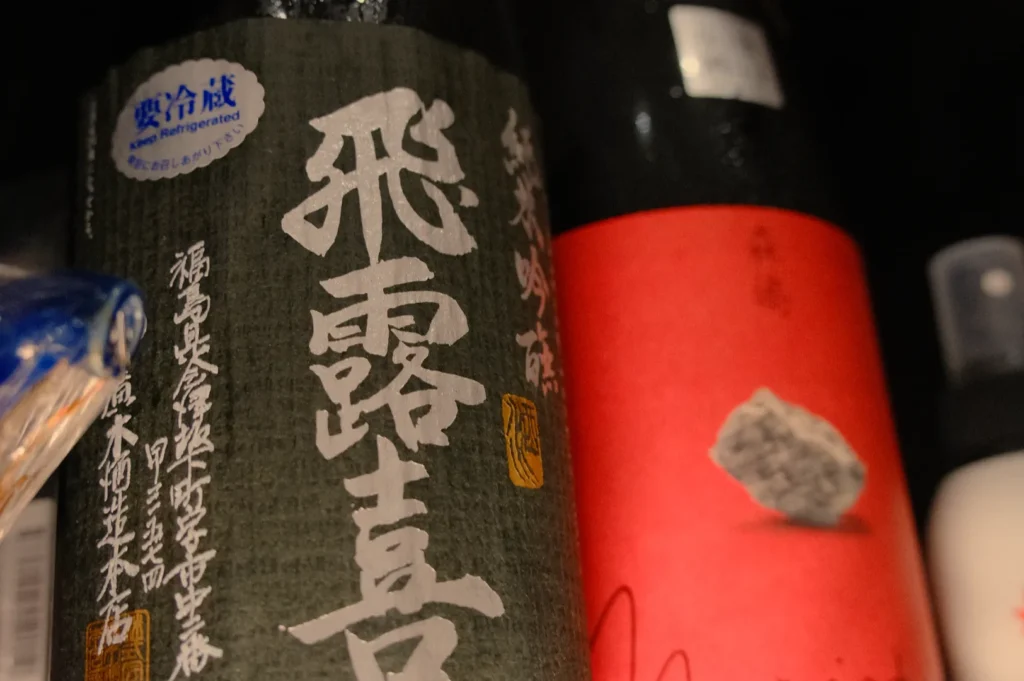
A few small choices can sharpen the experience.
- Taste the akami first. Let the tuna settle on the palate, then follow with sake. You will feel the umami lift as the two combine.
- Consider temperature. For kimoto or yamahai junmai, ask whether it can be served warm. Heat opens the umami. For zuke, keep the ginjo cool and crisp.
- Use soy with care. Akami needs only a light touch. Too much salt will pull focus from the maguro akami pairing and the synergy behind it.
- Cleanse between bites. A sip of water or a slice of ginger resets the palate, so each pairing reads clearly.
- Give akami space in the meal. Rather than folding it into a run of richer cuts, let it stand alone. Its quiet character shows best when it is not chasing otoro.
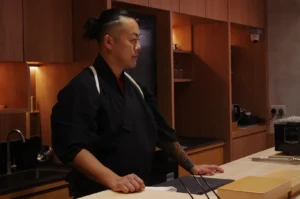
- Ask your chef. Behind the counter, the sake list is chosen with the day’s fish in mind. A simple question often opens the finest match.
Trust the pairing to reveal itself. There is no rush.
Conclusion
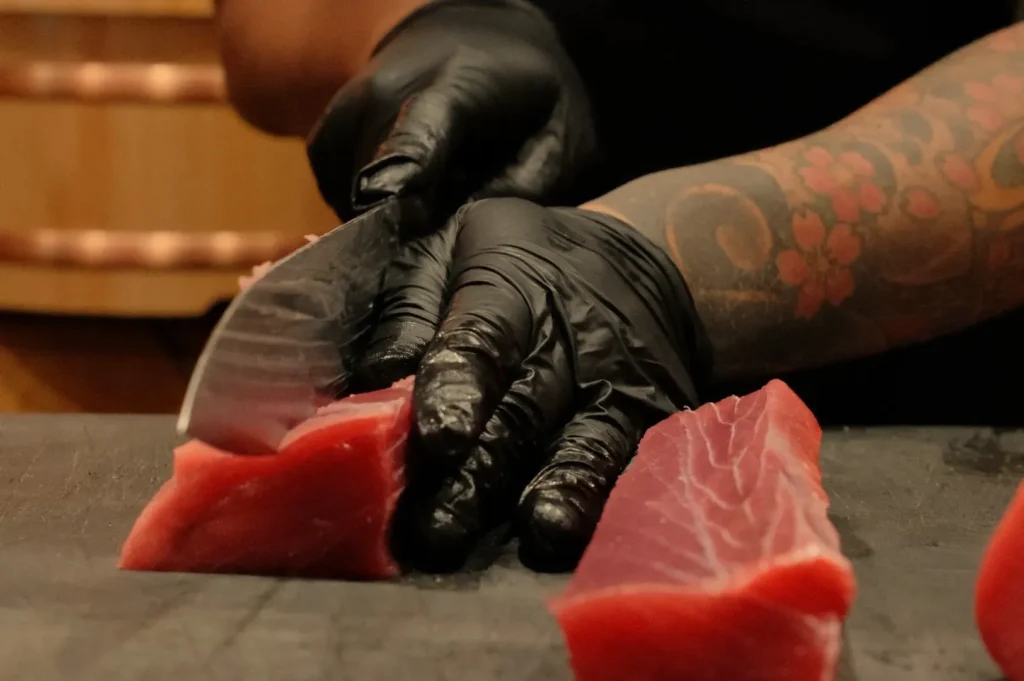
Akami is the leanest tuna cut, yet it offers one of the most compelling sake pairings in all of omakase. Precisely because its umami is unobscured by fat, the glutamate-inosinate synergy translates directly from glass to plate. A textbook example of why sake and tuna belong together. Next time you dine, request akami by name, and let a crisp junmai meet it.
Discover these pairings at Sushi Masa by Ki-Setsu, Cuppage Plaza.
Eight seats. One counter. A quiet conversation between sake and sea.