Walk along a quiet Japanese shoreline in the cold months and you will see rows of nets stretched across the shallows, catching the winter light. This is where nori begins, long before it is wrapped around a piece of rice or handed across a counter. At Sushi Masa by Ki-Setsu, our Singapore omakase begins from a simple belief: the seaweed deserves as much respect as the fish. A single thin sheet can lift a hand roll or flatten it, and the difference is rarely accidental.
In this article, we follow the journey of nori from the sea to your plate. We look at how it is grown, how processing turns it into a finished product, how it is graded and how it is finally eaten, and why every step shapes the flavour you remember.
What Makes Premium Nori Sushi Different
Many people think of nori as simple packaging, a wrapper that keeps rice and fish together. In Japanese cuisine, it is far more than that. Good nori carries its own taste: a gentle sweetness, a clean scent of the sea and a savoury depth that rounds out the rice and the seafood. When it is poor, it turns chewy, bitter or fishy, and the whole piece suffers.
That is why premium nori sushi begins with the seaweed itself. The wrapper should snap lightly, melt on the tongue and never fight the filling. It should add contrast rather than compete. We think of it as the quiet third partner in every bite, working alongside the rice and the fish to create a perfect balance.
When all three are in balance, you begin to understand what traditional Edomae sushi is trying to achieve. Nothing is there for show. Each element has a purpose, and the nori is no exception. A sheet that is too thick, too soft or too strongly flavoured can overwhelm a delicate slice of seafood, however fine that seafood may be.
Where Nori Begins: The Tide and the First Harvest
Nori is a red alga, cultivated in the cool, nutrient-rich coastal waters of Japan. Farmers seed nets in autumn and suspend them in the sea, where the young seaweed grows slowly through winter. The cold slows its growth, which concentrates flavour and produces finer, softer leaves.
The first harvest of the season is the most prized. These earliest leaves are tender, deeply aromatic and naturally sweet. Later harvests are still useful, but the leaves become coarser and the taste less delicate. Origin matters too. Water temperature, tides and the minerals in each bay change the character of the crop from one region of Japan to another, much as they do for fine wine or tea.
This respect for source is something we share. Just as we rely on Toyosu for our seafood, producers choose their nori according to place, season and variety. Quality is decided long before anything reaches the kitchen, and the people who work the nets understand this better than anyone.
How Raw Seaweed Becomes Nori Sheets
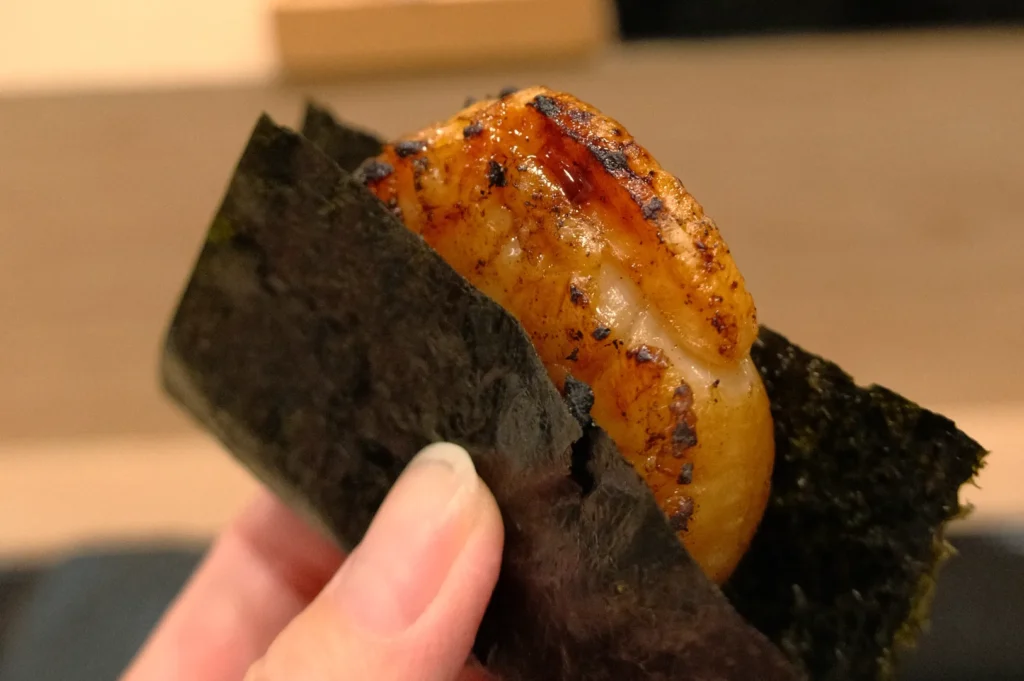
Once harvested, the seaweed is washed in fresh water, chopped finely and mixed into a slurry. This is poured onto fine mesh frames, in a process that echoes traditional paper making. The thin layer is then dried, producing the flat nori sheets we recognise today.
Modern production relies on machines, but quality still depends on careful judgement: the water used, the speed of drying and the evenness of the layer. A uniform sheet means consistent texture, and consistency is what allows a sushi chef to work with confidence, whether in a home kitchen or a restaurant. If one sheet is brittle and the next is leathery, the experience changes from one piece to another.
Why Thin Sheets Matter
A thin sheet is not a weak one. The best nori is thin yet dense, so it holds together around moist rice without becoming tough. Weight and thickness vary by variety, but generally a lighter, finer sheet tears cleanly when you bite into it. Thick sheets feel chewy, particularly in hand rolls, where the nori is the first thing your teeth meet. A fine sheet, by contrast, disappears gracefully and leaves only flavour behind.
Yaki Nori and the Art of Roasting
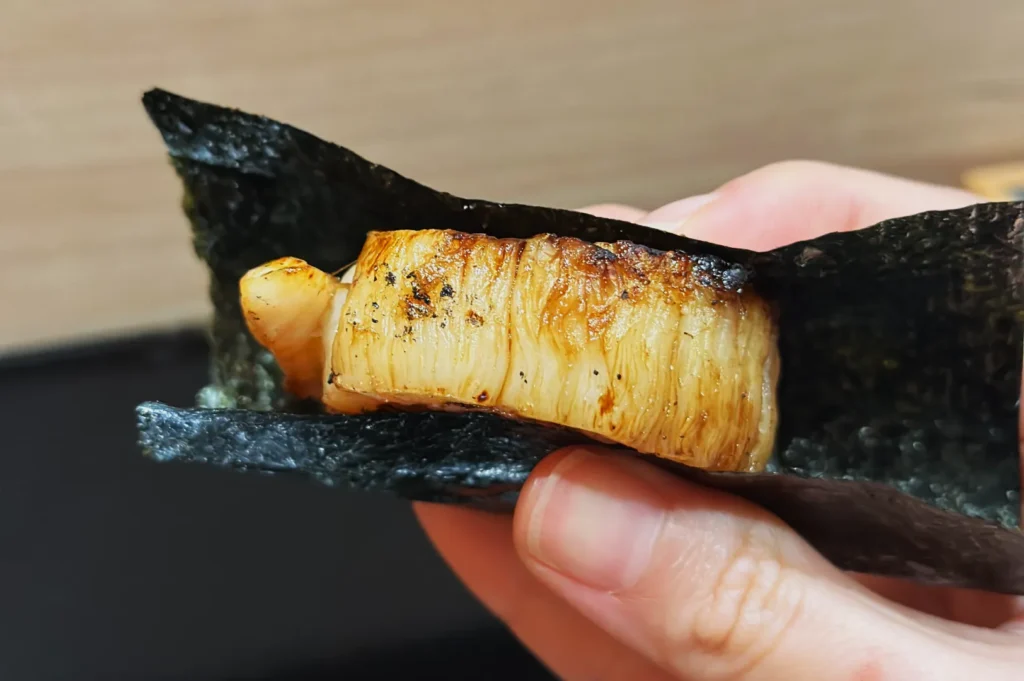
Most nori used for sushi is yaki nori, which simply means roasted nori. Dried sheets are toasted briefly over heat, and the change is striking. The colour deepens, the aroma intensifies and the texture turns crisp. Roasting also drives off moisture, which helps with storage and gives that satisfying snap.
There is real skill in it. Under-roasted sheets taste grassy and chew heavily. Over-roasted sheets become brittle and bitter. The aim is a sheet that crackles lightly yet softens as it meets the warmth of the rice. Chef Masa pays close attention to this balance, because nori is at its best for only a short time after it meets moist rice.
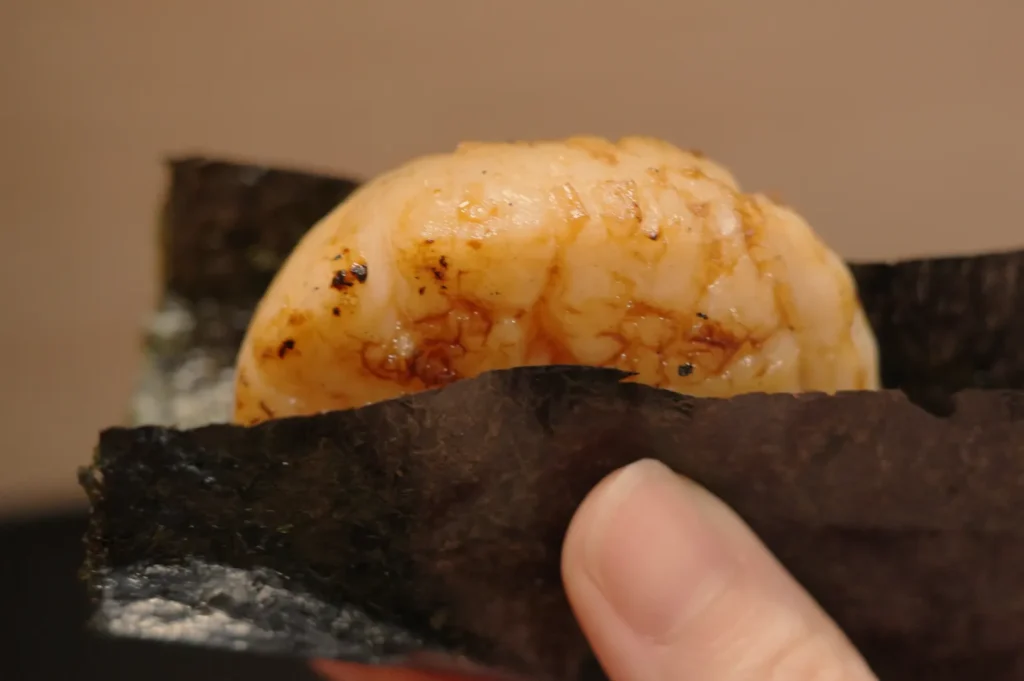
This is also why we believe a hand roll should be eaten the moment it is handed to you. Leave it on the plate and the wrapper begins to soften, losing the contrast that makes it so enjoyable. It is a small piece of etiquette, but we think most diners agree it makes a great difference to the taste.
Reading Grades, Colour and Texture
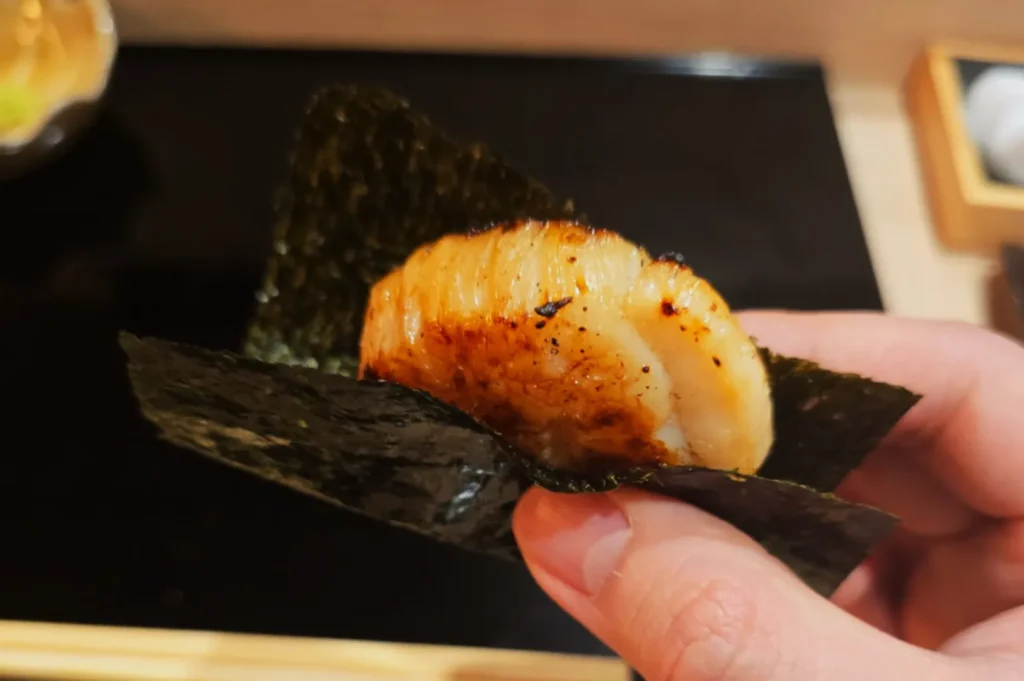
Nori is sorted into grades, and the differences are visible once you know what to look for. The finest sheets are an even, dark green, sometimes so deep they look nearly black. They have a subtle sheen and no holes. Lower grades can look brown, reddish or patchy, with uneven thickness and visible gaps when held up to the light.
Colour, texture and aroma tell most of the story:
Colour: a deep, uniform dark green to black, with a gentle gloss
Texture: crisp, thin and even, with a clean snap
Aroma: a fresh sea scent, never stale or fishy
Taste: sweet and savoury, with no bitterness
Different brands and producers label their grades in their own ways, so it helps to trust your eyes and nose rather than the packaging alone. The contrast between dark nori and pale rice is also part of the beauty of sushi, and it is on full display in every hand roll at our counter. It is one reason we are so particular about what we use.
Choosing Sushi Nori for Home
Customers often ask us how to choose nori for home use. If you wish to buy sushi nori for your own kitchen, look for sheets sealed in airtight packaging, ideally with a desiccant inside. Nori absorbs moisture quickly, and once it softens it is difficult to rescue.
After opening, keep the sheets in a sealed container in a cool, dry place, away from sunlight, heat and humidity, and use them within a few weeks. A sheet that has gone slightly limp can be passed briefly over a low flame to bring back some crispness, though proper storage is always the better answer.
Nori Across Japanese Cuisine
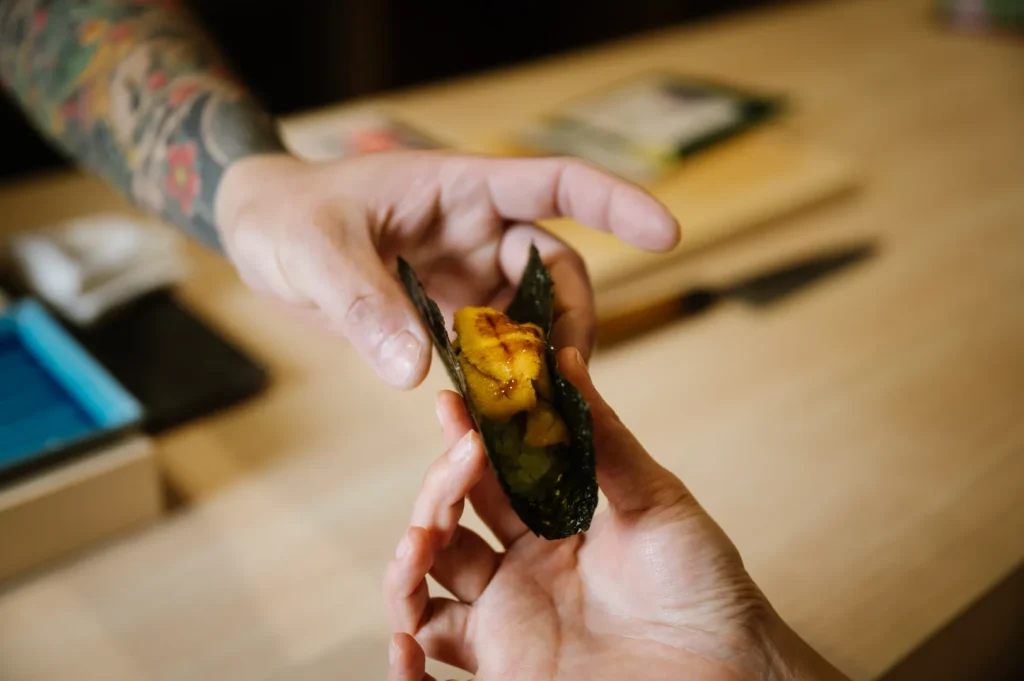
Nori reaches far beyond the sushi counter. It is wrapped around onigiri, the humble rice balls that families across Japan pack for school, work and travel. Torn pieces are scattered over rice or added to home-style soups, where they soften and release a gentle taste of the sea. Many people grow up eating strips of nori dipped lightly in soy sauce and laid over warm rice, a simple comfort that needs nothing else.
Soy sauce deserves a note of its own. With sushi, less is more. A light touch on the fish side, never the rice, protects the crispness of the nori and lets the seafood speak. Soaking a hand roll in soy sauce turns the wrapper limp and hides everything the kitchen has worked to preserve.
Nori is one of the most widely used ingredients in Japan, popular precisely because it is so versatile. It can be seasoned, salted, toasted or served plain. Japanese restaurants that take sushi seriously choose it with as much thought as they give the fish. Yet the best expressions remain the simplest ones, where a good sheet is allowed to speak for itself.
How We Treat Nori at Sushi Masa by Ki-Setsu
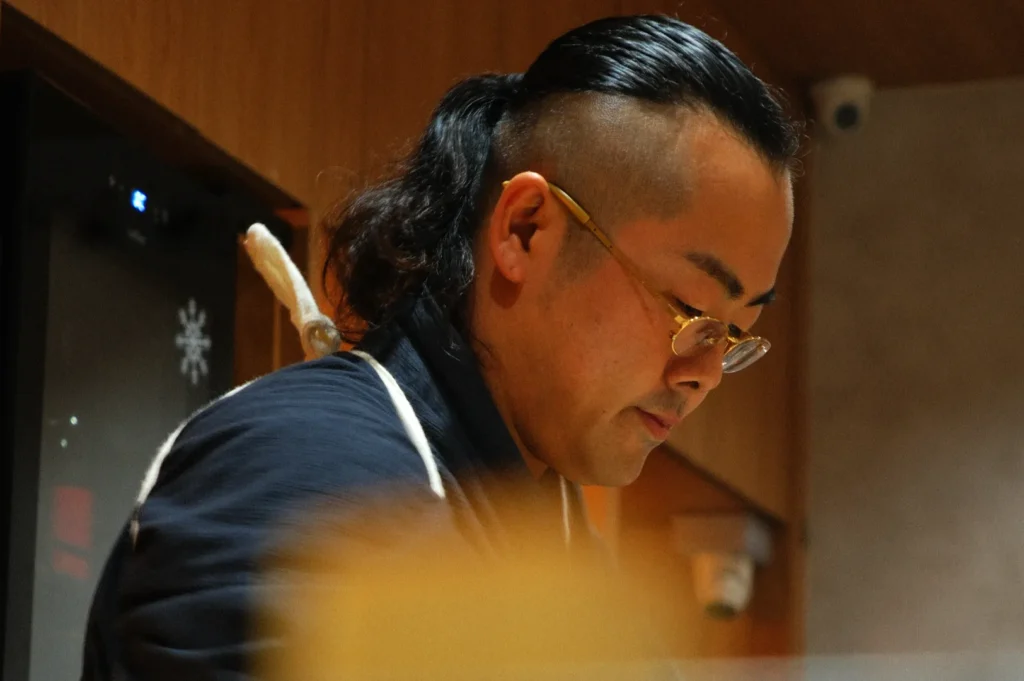
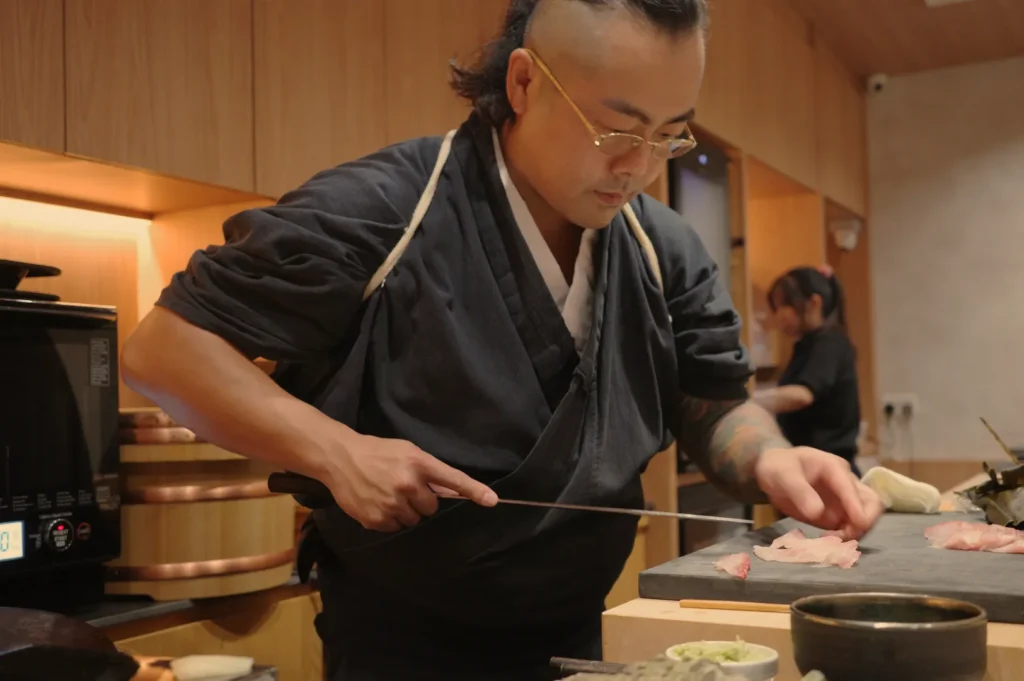
At Sushi Masa by Ki-Setsu, dining is a single omakase experience, served for dinner only and rooted in the Edomae tradition. Chef Masa prepares each course before you, and our menu is purely seafood, sourced from Toyosu for its freshness and character. Nori receives the same care as everything else on the counter. It is chosen to complement the seafood, providing a crisp, savoury counterpoint to the richness of fatty fish or the sweetness of shellfish.
The meal begins gently, with a dashi or a light stock, before the sushi courses unfold one by one, in an order that is set by Chef Masa, depending on what the market offers that day. Nori appears where it can add something real: a crisp hand roll that brings texture and a savoury finish. Because we serve only seafood, the clean, mineral taste of good nori sits naturally alongside it and is never overpowered.
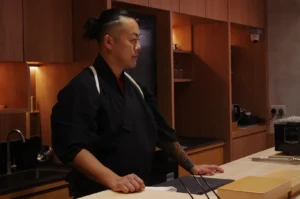
Service at our counter is personal, and guests are always welcome to ask Chef Masa about what they are eating. Many tell us that a short conversation about nori changes how they taste their next hand roll. We find that very rewarding. Craftsmanship is easier to appreciate when it is explained with warmth, and we would rather our guests leave knowing a little more than when they arrived.
Bringing the Sea to Your Table

A sheet of nori travels a long way. It starts in cold coastal nets, passes through a drying frame, is roasted, graded and packaged, and only then arrives at the table. Every stage affects the colour, texture and flavour you experience in a single bite. Once you understand that journey, you taste differently.
We invite you to experience it for yourself at Sushi Masa by Ki-Setsu. Reserve a seat for dinner, tell us about your preferences by email or through our website, and let Chef Masa guide you through an Edomae omakase that celebrates the craft of sushi from the first piece to the last. We look forward to welcoming you.