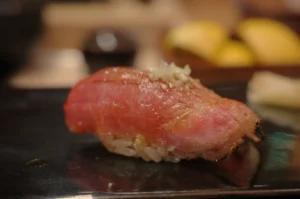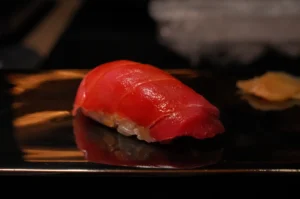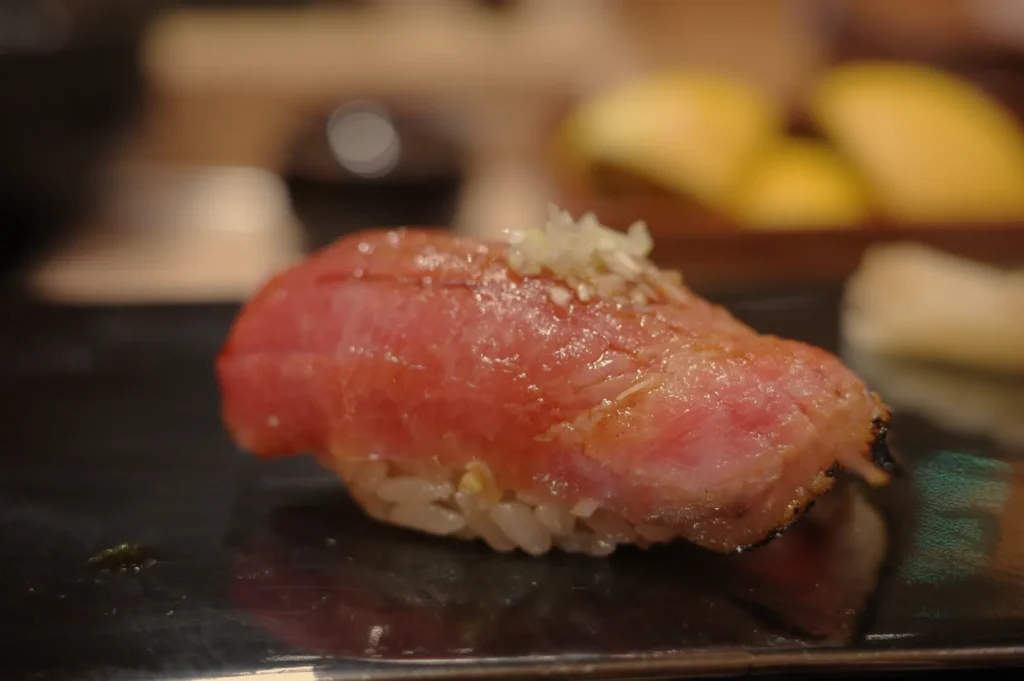
Otoro is the fattiest and most coveted section of Pacific bluefin tuna (Thunnus orientalis). It is cut from the lower belly, the harakami, close to the head. Its fat content sits at roughly 25-30%, rising to nearly 40% in the depths of winter.
The marbling is so fine that the fat begins to dissolve at body temperature. Place a slice on the tongue and it softens almost at once.
Such richness asks something of the cup. When it comes to sake pairing, otoro asks more than any other cut. The sake must bring enough structure, acidity and body to balance the fat rather than disappear beneath it.
This is the ultimate test of Japanese sake pairing for omakase: the moment when sake must stand beside the richest fish in the sushi repertoire.
For a wider view, our guide to Japanese sake in Singapore explores the broader landscape.
Some pairings are best understood in person, through omakase at Sushi Masa, where seasonal otoro is served at its finest.
What Is Otoro? Understanding the Fattiest Tuna Cut
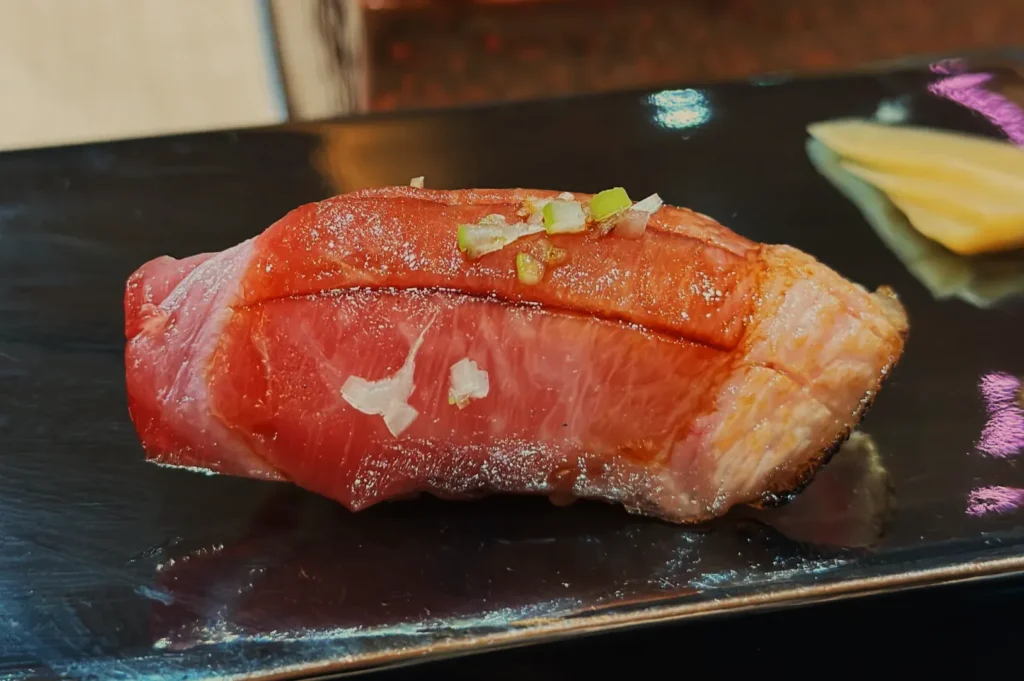
Otoro comes from the ventral belly of the tuna, specifically the harakami region near the head. It is the most heavily marbled part of the fatty tuna belly, and it is noticeably richer than chutoro. Otoro carries 25-40% fat, while chutoro holds around 15-20%.
The flesh ranges from light pink to pale rose. It is laced with fine white marbling known as shimofuri, a word that evokes frost on a winter field. The fat is so evenly woven through the muscle that the surface takes on a uniform, creamy appearance. The fattiest portions may look almost white when sliced thinly.
The texture is exceptionally soft. This comes from the way triacylglycerol, the fish’s stored fat, is distributed through the white muscle. That fat architecture creates the gentle melt that defines otoro.
Kamatoro
Kamatoro is cut from the collar, or kama, just behind the head. It is the single fattiest part of the entire fish, with a silky, almost spreadable texture. Each tuna has only two collars, so kamatoro is rare. It is a distinct sub-cut, never simply another name for otoro.
Jabara
Jabara is the accordion belly flap: the outermost layer of the ventral belly, marked by wave-like folds of fat. Jabara tuna carries more structure from its sinews than the refined inner otoro. It offers a gentle chew before the fat yields, a texture quite different from kamatoro.
Sunazuri
Sunazuri is the bellows meat, recognisable by fine white lines of connective tissue. With careful aging, these lines soften and add a further layer of melt.
The Winter Peak
Otoro reaches its peak between December and February. Triacylglycerol levels in Pacific bluefin tuna white muscle reach their annual maximum just before the spring spawning season. Winter is when the belly is at its fullest.
Why Otoro Demands a Different Sake Strategy
The central challenge is simple. Otoro’s fat coats the palate with a rich, lingering film. That film can overwhelm delicate drinks and dull the perception of subtler flavours.
To meet it, an otoro tuna sake needs three qualities.
Higher Acidity (San-do 1.4-1.8+)
San-do is the measure of acidity in sake. The organic acids in sake, mainly succinic, malic and lactic, help break up the fatty film on the tongue. Each sip refreshes the palate before the next bite.
Without enough acidity, the pairing turns heavy and cloying.
Body and Structure
Otoro needs a sake of comparable weight. A thin, watery sake vanishes against this much fat. Full-bodied junmai, yamahai and kimoto styles bring the presence required. This is the logic behind any full-bodied sake for rich fish: weight must meet weight.
Dryness (SMV +3 to +10)
The Sake Meter Value, or SMV, indicates sweetness or dryness. Positive numbers lean dry. Sweetness layered on fat creates a heavy, unbalanced mouthfeel. Dry sakes offer contrast and a clean finish.
A Shift in Purpose
There is a quieter detail here. Of the three tuna cuts, otoro has the lowest concentration of inosinic acid, the compound behind much of tuna’s savoury depth. Fat displaces the red muscle tissue where it resides.
So the umami synergy is less intense than with lean akami. The pleasure arrives by another path: richness, texture, warmth on the tongue.
The pairing goal changes accordingly. It moves from umami amplification to richness management.
Recommended Sake Styles for Otoro
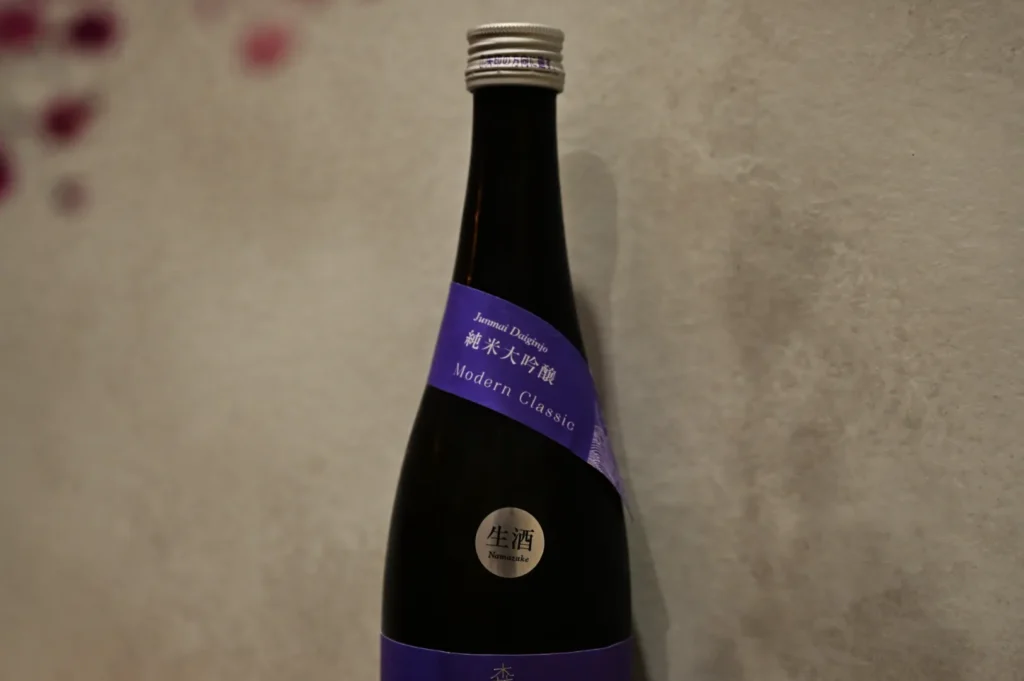
Here is what to look for in the glass. Temperature is part of the strategy, so each style is matched to its ideal warmth.
Dry Junmai
A dry, full-bodied junmai with an SMV of +5 to +10 and a San-do of 1.5 or higher is the classic match. Its rice-forward umami has enough body to register against the fat. The dryness and acidity keep the pairing from becoming heavy.
Serve at room temperature or slightly warmed, around 35-40°C. Gentle warmth opens the umami and sharpens the contrast with cool otoro nigiri.
Honjozo, Warmed
Honjozo includes a small addition of brewing alcohol. The result is clean and crisp, with a lighter texture that slices through fat exceptionally well.
Warmed to 40-45°C, honjozo offers a textbook pairing. Warm sake. Cool fish. The contrast in temperature adds another dimension to each bite.
Yamahai Junmai
Yamahai relies on a slower, wilder fermentation starter. It brings higher acidity, lactic notes and an earthy complexity. That structure gives a bold counterpoint to otoro’s buttery richness.
This is the natural kamatoro pairing. Even the fattiest collar meets its match here. Best served at 40-50°C.
Kimoto Junmai
Kimoto shares yamahai’s roots but follows the traditional pole-mashing method. The result is a more refined structure, robust body and elevated umami.
It suits jabara and sunazuri especially well. Their connective tissue and gentle chew welcome a sake with firm shape.
Styles to Avoid
Some sakes, however beautiful, are not built for this moment:
- Daiginjo: too delicate; its fragrance is lost beneath the fat.
- Nigori: too sweet, and its cloudy texture competes with the fish.
- Sweet or fruity ginjo: aromatic sweetness clashes with otoro’s richness.
- Nama-zake: its fresh brightness fades against the fat.
Practical Pairing Tips for Diners
A few gentle principles will help when otoro arrives at the counter.
- Let temperature lead. Ask whether your sake can be warmed. Warm sake with cool otoro is one of the most rewarding contrasts in sushi.
- Taste the fish first. Let the otoro soften on the tongue, then take a small sip. The acidity lifts the fat, and the palate resets.
- Follow the sequence. In omakase, tuna usually moves from lean akami to chutoro, then otoro. A lighter sake for akami, followed by something fuller and warmer for otoro, mirrors this progression.
- Match the sub-cut. For kamatoro, lean towards yamahai. For jabara or sunazuri, kimoto offers the right structure.
- Consider sashimi. For an otoro sashimi pairing, without rice to absorb the fat, a drier, more acidic sake works hardest.
- Trust the counter. Your chef knows the day’s fish: its origin, its fat, its condition. A simple question about what suits tonight’s otoro often leads to the most fitting glass.
There is no rush. Each piece is served at its moment. The sake simply waits beside it.
Conclusion
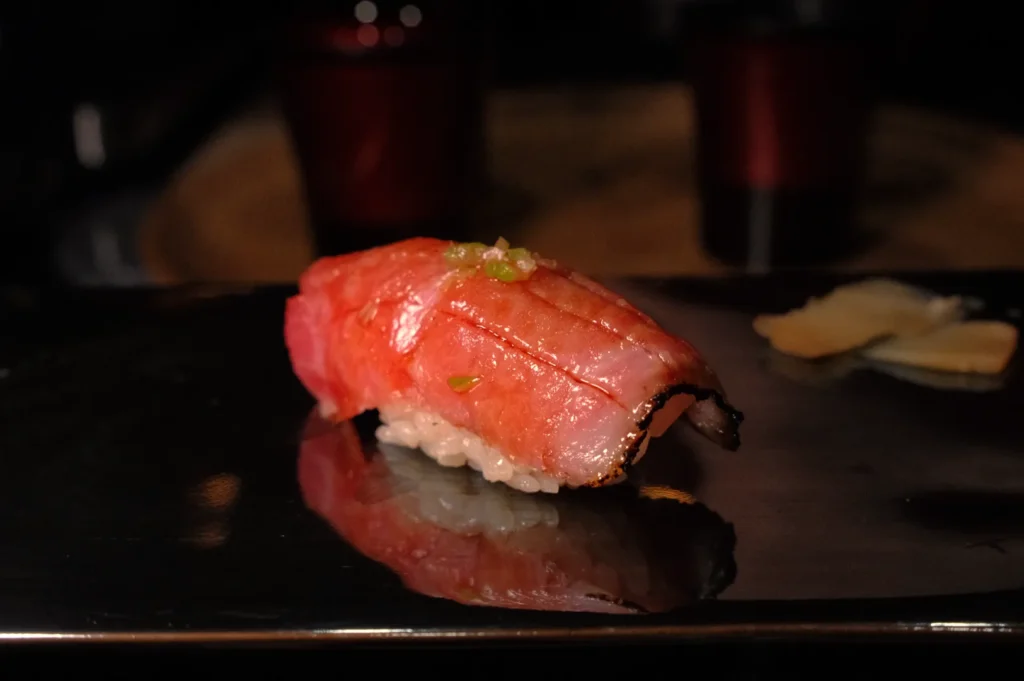
Otoro marks the pinnacle of richness in sushi. It is so fatty that it turns sake pairing from a simple umami match into a careful balance of body, acidity and dryness.
The right sake does not merely accompany otoro. It completes it. Acidity lifts the fat. Body meets weight. Dryness clears the way. Together, they prevent palate fatigue, so each bite tastes as remarkable as the first.
At Sushi Masa by Ki-Setsu, this is the defining moment of tuna and sake pairing.
Winter otoro, a warmed cup, and a quiet seat await.
Join us at Sushi Masa by Ki-Setsu in Cuppage Plaza, and let the pairing unfold.