Ask most diners what freshness means, and they will point to the clock. How fast did the fish arrive? How recently was it caught?
For Chef Masa, freshness begins there, but it does not end there.
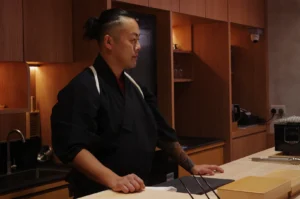
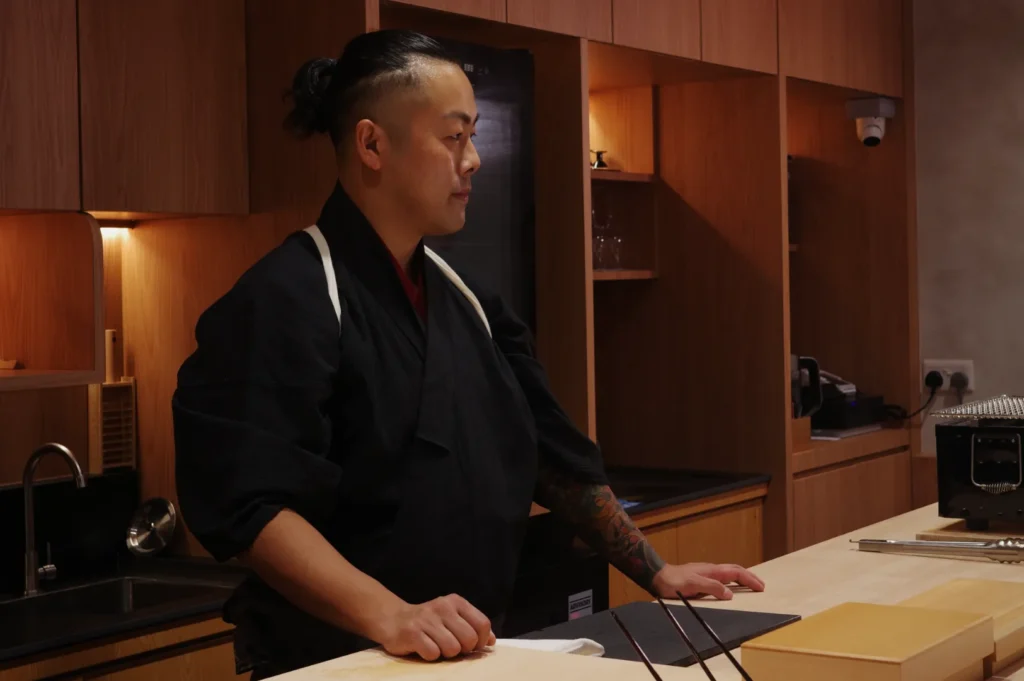
At Sushi Masa by Ki-setsu, a dinner-only omakase restaurant at Cuppage Plaza, freshness is not a single moment. It is a discipline that runs from selection to the second a piece reaches your hands across the eight-seat counter.
Here is how he sees it.
Freshness Is Not Only Speed
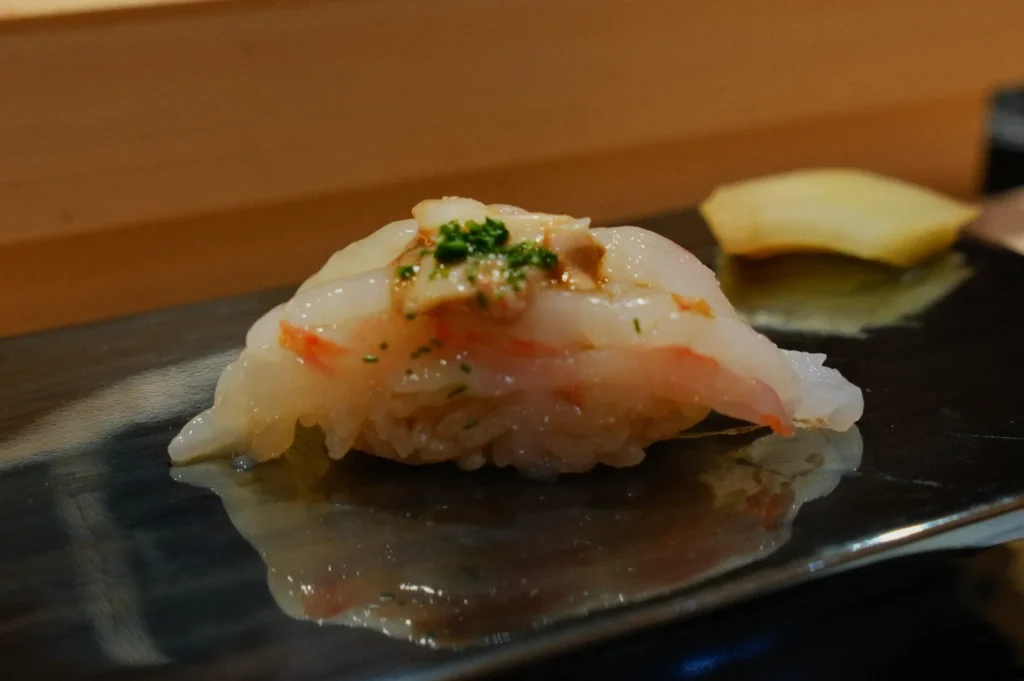
Speed matters. Seafood flown from Japan carries the character of its waters, and time is part of that story.
But a fish that arrives quickly is not automatically at its best. Some seafood is finest the moment it lands. Others reward patience, resting a short while so their flavour deepens and settles.
Chef Masa treats timing as one thread among many. The real question is not “how fast,” but “when is this ingredient truly ready to be served?”
That shift in thinking changes everything that follows.
It Starts With Selection
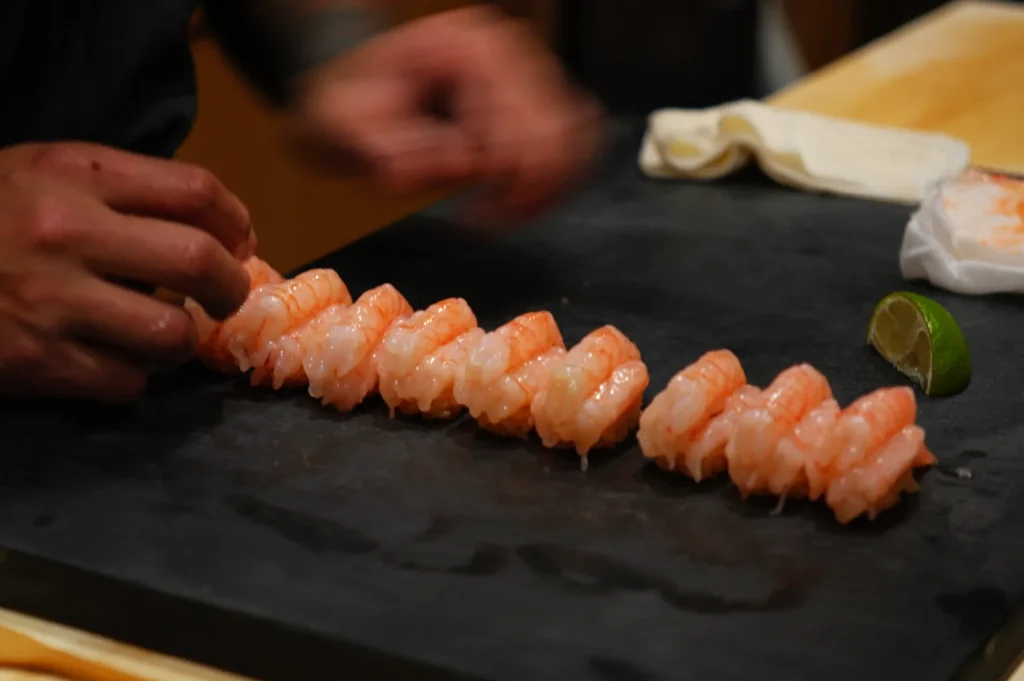
Freshness is decided before an ingredient ever reaches the counter.
Much of Sushi Masa’s seafood is linked to Toyosu, Tokyo’s central market, where seasonal Japanese catch is assessed with care. Selection here is not about grabbing the newest arrival. It is about reading condition.
A trained eye looks for:
- Clarity and brightness in the eyes
- Firmness in the flesh
- A clean, oceanic scent rather than a strong one
- Natural lustre across the skin and scales
An ingredient chosen well at the source protects freshness through every step afterwards. Choose poorly, and no amount of skill later can recover it.
This is why seasonality guides the menu. What is at its peak in early summer differs from the deep, fatty richness of winter. Freshness and season move together.
Read: How Ingredient Sourcing Defines the Best Japanese Restaurant in Singapore
Condition and Storage: The Quiet Work
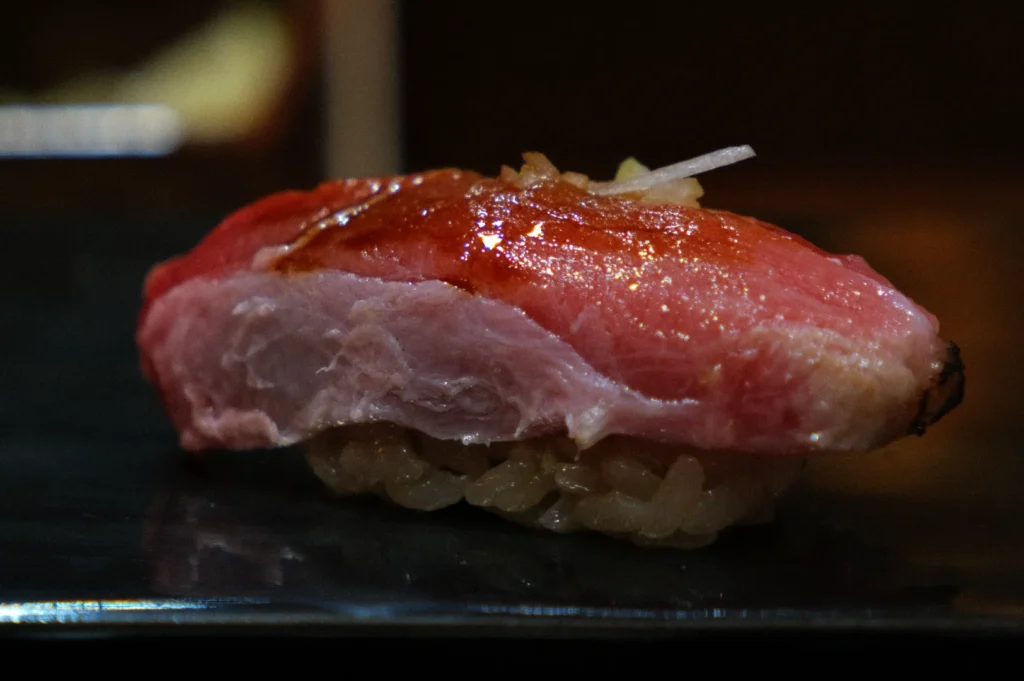
Once seafood arrives, the work becomes quiet and constant.
Different fish want different conditions. Some prefer to be kept cool and still. Others need a little time to relax after the journey. Lean fish and rich, fatty fish are not treated the same way.
Chef Masa at Cuppage Plaza respects those differences. Storage is not one setting for everything. It is attention paid to each ingredient’s needs, so texture stays true and flavour holds its shape.
This is the part diners rarely see. Yet it is where freshness is either preserved or quietly lost.
In practice: the goal is simple. Keep each ingredient close to the state that shows it at its best, right up to the moment of serving.
Temperature Shapes Flavour
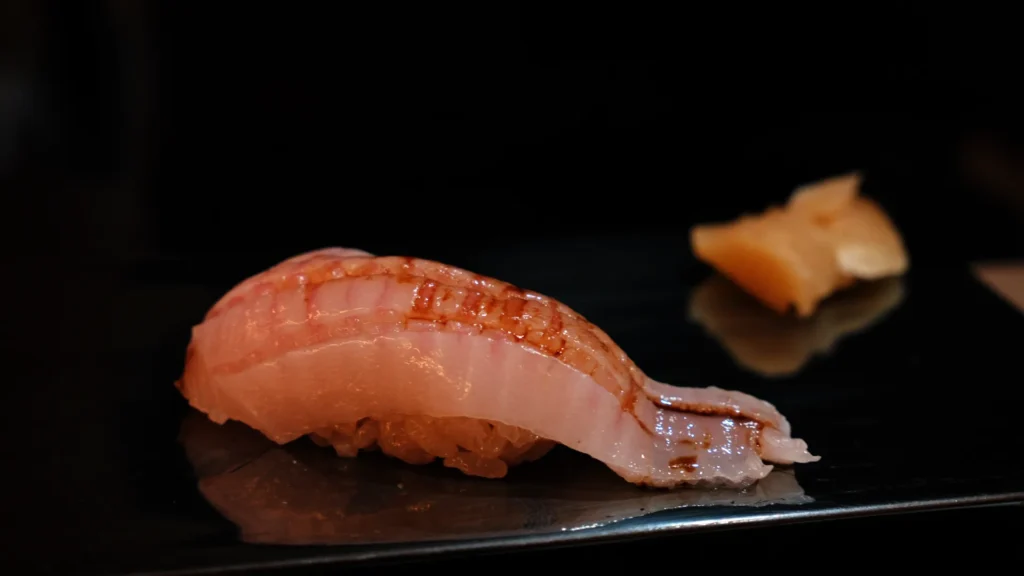
Temperature is often overlooked, but Chef Masa treats it as essential.
Serve a rich slice of fish too cold, and its fat stays firm and mute. Let it come to the right temperature, and the same piece opens up: softer, rounder, fuller in flavour.
The sushi rice matters just as much. Warm rice against cool fish creates a contrast you feel in a single bite. That balance is deliberate, never accidental.
Freshness, then, is not only about the fish. It is about the meeting of temperatures at the exact right moment.
The Knife Tells the Truth
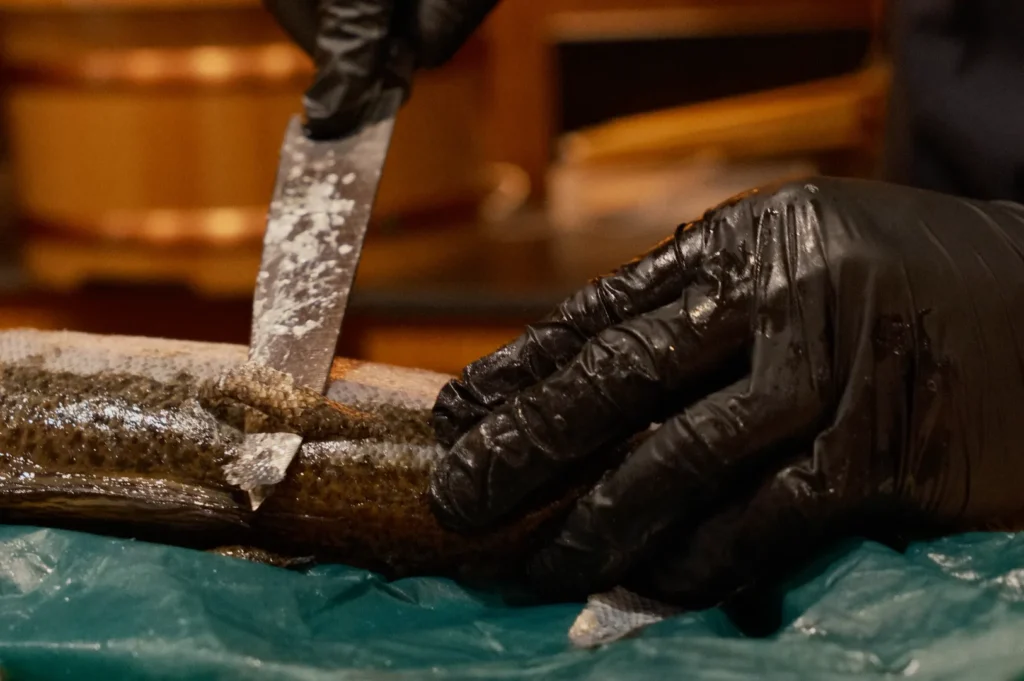
Slicing is where a chef’s understanding becomes visible.
The angle of the cut, its thickness, the direction against the grain: each choice changes how a piece feels in the mouth. A firm white fish may be sliced thin to soften its bite. A tender, fatty cut may be left thicker to hold its richness.
A clean, confident cut also protects the flesh. Rough handling bruises it and dulls what freshness remains.
This is why the knife is not decoration. It is part of how freshness is delivered.
Seasoning With Restraint
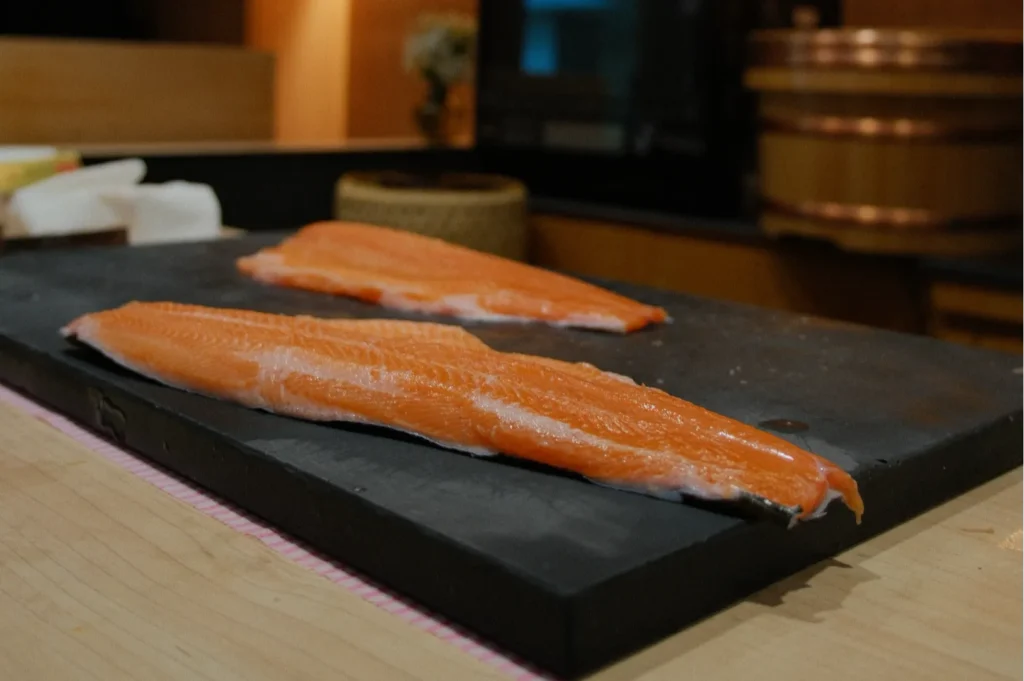
Freshness needs support, not disguise.
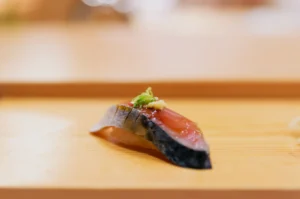
At Sushi Masa, seasoning is measured. A brush of soy. A touch of freshly grated wasabi. A whisper of salt or citrus, applied only where it serves the fish.
The aim is never to cover flavour. It is to draw out what the ingredient already holds. When seafood is this good, restraint is the greatest respect you can show it.
The Final Moment: When It Is Served
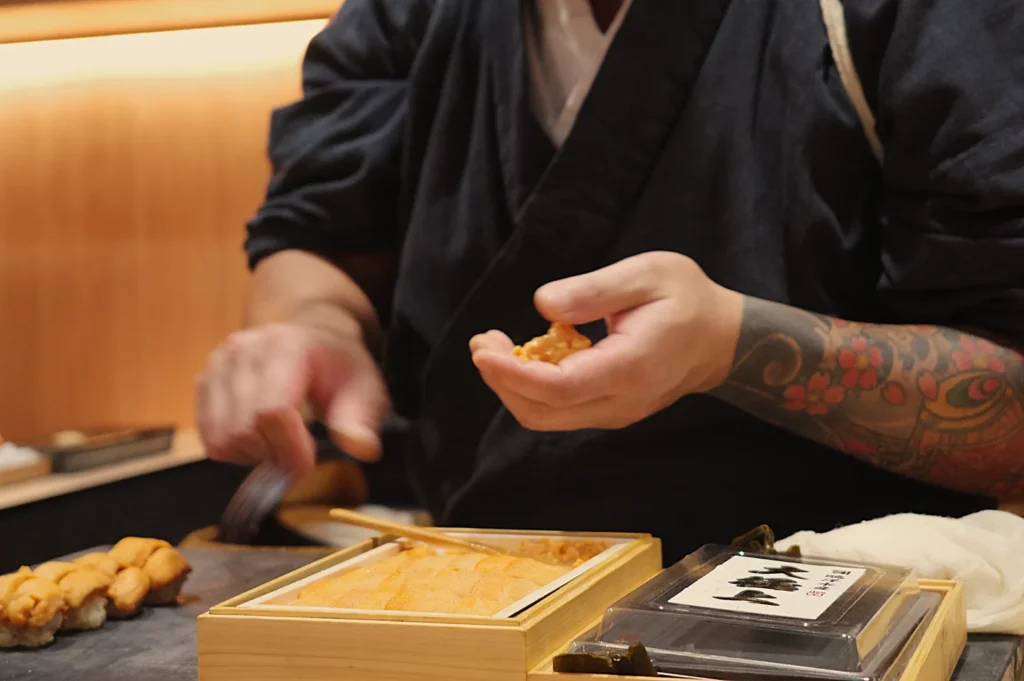
Everything gathers into one instant, the moment a piece is placed before you.
This is why omakase at Sushi Masa unfolds course by course, one piece at a time. Nothing waits on a plate. Nothing sits and softens while you talk.
Each piece is shaped and served at its peak, then eaten within moments. The counter’s rhythm exists for this reason. Freshness has a short window, and Chef Masa builds the entire experience around honouring it.
Freshness as a Complete Discipline
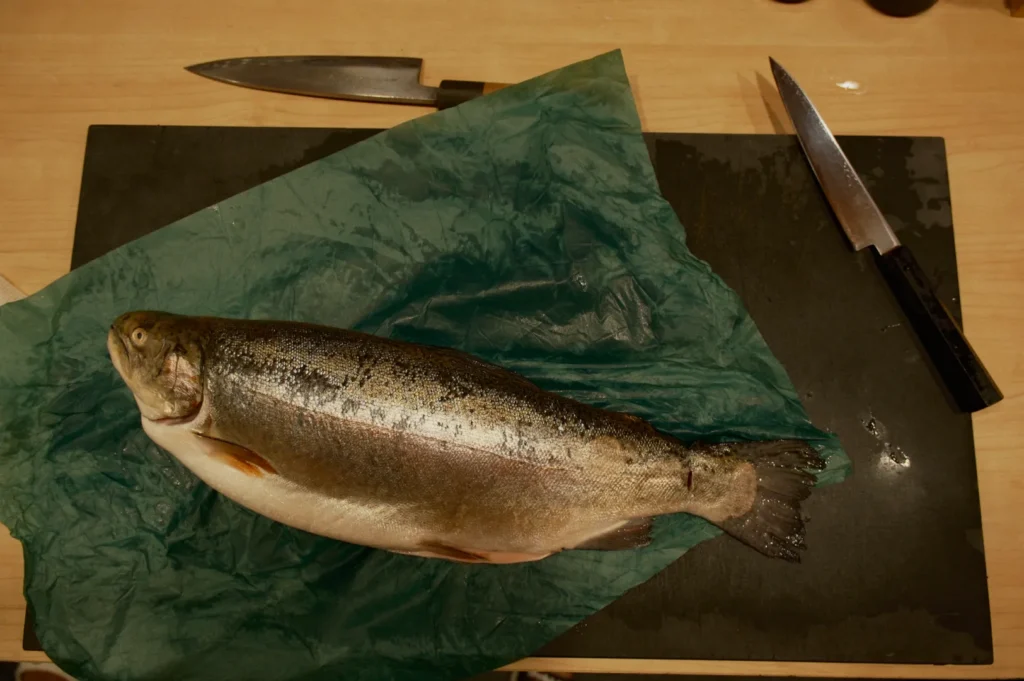
For Chef Masa, freshness is not a claim. It is a practice that touches every stage: selection, condition, storage, temperature, slicing, seasoning, and timing.
Miss one, and the whole suffers. Honour all of them, and something quiet and complete arrives on your plate.
That is the thinking behind every seat at Cuppage Plaza. Not speed alone, but care, from the sea to your hands.