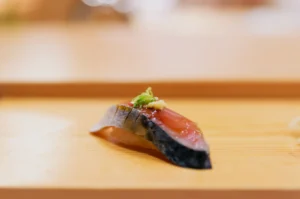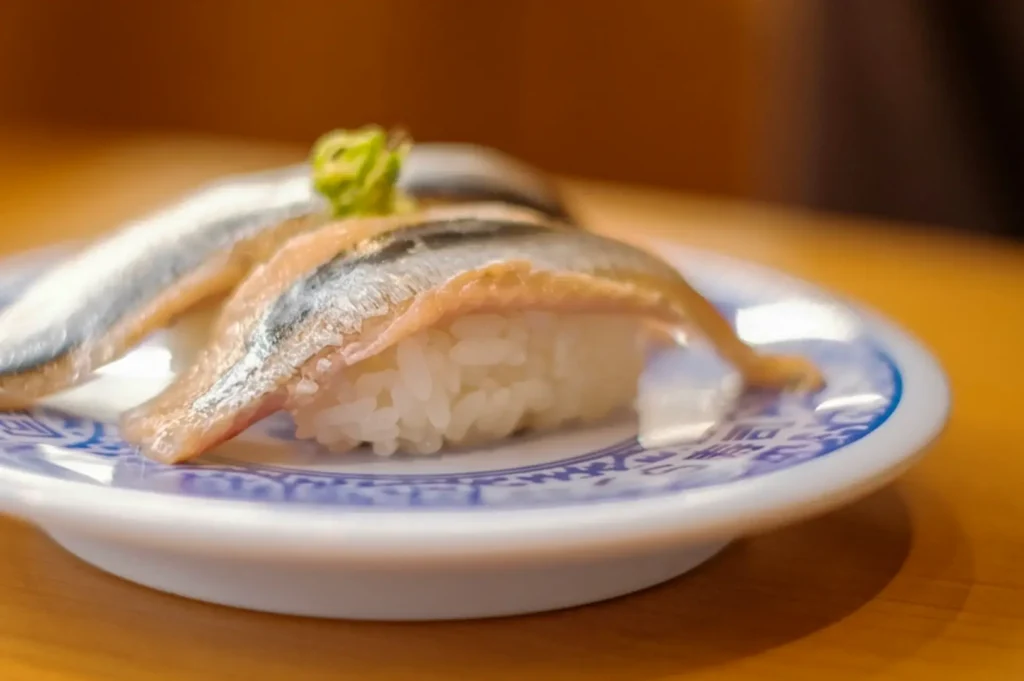
Some fish carry a season in their name.
Sanma, the Pacific saury (Cololabis saira), is written 秋刀魚: “autumn sword fish.” It is perhaps the clearest example of how closely Japanese cuisine ties food to time. The fish arrives in Japanese waters in September, rich with fat from a summer of feeding, and it remains at the centre of autumn cooking until November.
Its oil content is moderate to high. Its flavour is deep and distinctive. Most often, it is grilled whole with nothing more than salt. These qualities make sanma one of the most seasonally evocative fish in the Japanese repertoire, and they make sake pairing with sanma a quiet study in balance.
This guide forms part of our wider exploration of sake and sushi pairing. If you would like to know which seasonal bottles are available locally, our guide to sake Singapore covers autumn sakes that suit fish like sanma.
What Is Sanma? The Fish That Represents Autumn
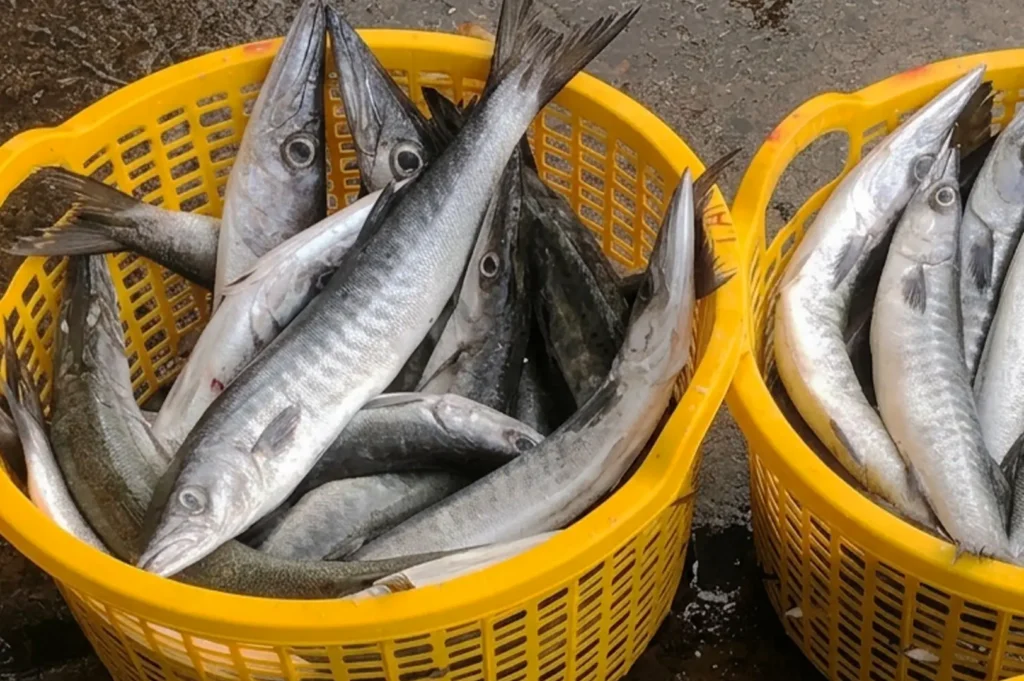
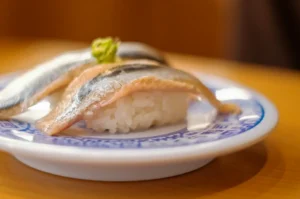
Sanma is a slender, migratory fish that travels south through Japanese waters each autumn. Its body is long and narrow, with a pointed, beak-like jaw. The upper surface shimmers blue-green and fades to bright silver below.
In sushi terms, sanma is hikarimono: a silver-skinned, oily fish. It is not a white-fleshed fish, and its character is far bolder than that of delicate whitefish.
Why Sanma Tastes Cleaner Than Other Oily Fish
Sanma digests food remarkably quickly. A meal passes through its system in roughly 30 minutes. As a result, the fish tastes cleaner and less “fishy” than many oily species, even at its fattiest.
This is also why the guts are often left intact. Their slight bitterness is not a flaw. For many Japanese diners, it is part of the pleasure: a gentle, savoury edge set against the richness of the flesh.
When Sanma Is at Its Best
Peak season runs from September to November, when the fish carries the most fat. Spring sanma are leaner, with far less flavour. Autumn is the season that matters.
Traditional Preparations
- Sanma no shioyaki: salt-grilled whole and served with grated daikon, plus soy sauce or citrus. This is the classic form.
- Sashimi: offered only when the fish is exceptionally fresh.
- Sanma-zushi: a regional speciality of the Kii Peninsula in Mie Prefecture, where the fish is cured in salt and vinegar and pressed onto rice.
- Surimi-jiru: a comforting soup of sanma fish balls.
Shioyaki is so closely tied to the fish that, in Japan, saying “sanma” almost implies it. Smoke, salt, and silver skin are part of the name.
Sanma's Seasonal Flavour and Pairing Chemistry
Understanding the flavour of sanma explains why some sakes flatter it and others fade beside it. Several layers sit on the plate at once.
Rich Oil and Deep Umami
Autumn fat gives sanma rich, oily flesh with strong umami. A sake needs enough brightness and acidity to lift that richness so the palate does not tire.
Smoke, Char, and Caramelisation
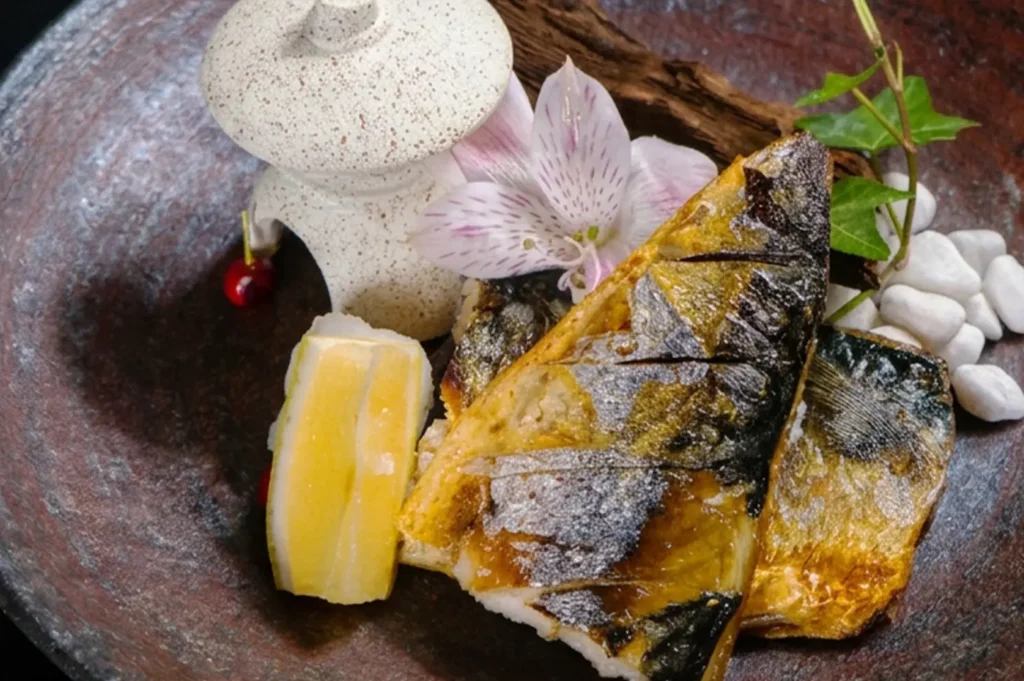
Salt-grilling adds a smoky, charred dimension. The heat renders some of the fat, leaving crisp skin and juicy flesh beneath. High heat also triggers Maillard reactions on the skin, creating caramelised, savoury complexity. These darker notes ask for a sake with body and depth.
The Bitter Note
The guts bring a gentle bitterness that few other sushi fish possess. This needs careful handling. A sweet sake can clash with it. The better answer is roundness: the softened, mellow texture of a sake that has rested through the warmer months. Maturity, not sugar, settles the bitterness.
A Seasonal Alignment
Here, nature and the brewery calendar meet. Sanma reaches its peak just as hiyaoroshi and akiagari sakes are released. These autumn-matured sakes rest through the summer and emerge with mellowed, rounded profiles. The fish and the sake arrive together, both shaped by the same months.
Recommended Sake Styles for Sanma
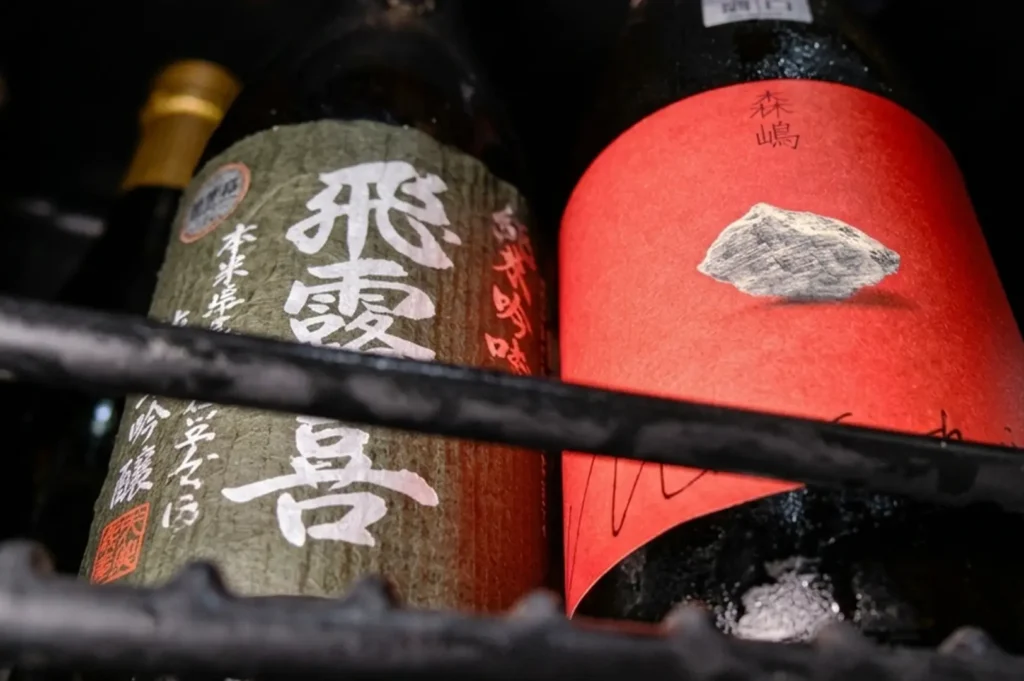
Not every sake suits a fish this expressive. The styles below have the structure, warmth, or maturity that sanma asks for.
Hiyaoroshi (Autumn-Release Sake)
This is the most seasonally fitting pairing. Hiyaoroshi is pasteurised once before summer storage, then released in autumn after several months of maturation. It is not namazake. It is not raw sake, but a once-pasteurised sake that has rested and settled.
The result is mellow and rounded, with developed umami and relaxed acidity. Its harmony with autumn dishes feels almost deliberate. If hiyaoroshi is available, request it first.
Akiagari (Autumn-Shipped Sake)
Akiagari is close in spirit to hiyaoroshi but is pasteurised twice before being shipped in autumn. It is slightly more stable, with a similarly mellow character. It is a graceful alternative when hiyaoroshi is not on offer.
Dry Junmai, Warmed to 45-50°C
For salt-grilled sanma, warm dry junmai is the traditional companion. The warmth meets the heat of the fish. The dryness cuts through the rendered oil. The fuller body stands alongside the smoke and char.
The grated daikon served with shioyaki adds a cool, refreshing note that works with the sake’s acidity. Together they reset the palate between bites.
Kimoto Junmai
Kimoto sakes are earthy and structured, with lactic complexity and higher acidity. That acidity manages the oil well. Their savoury depth also stands comfortably beside sanma’s bold flavour and its bitter edge.
Junmai Ginjo, Lightly Chilled
For sanma sashimi, served only when the fish is exceptionally fresh, a lightly chilled junmai ginjo is the better choice. It has enough structure for the raw oil, and the cooler temperature respects the fish’s delicate texture.
Styles to Avoid
- Delicate daiginjo: its fine, fragrant profile is overwhelmed by sanma’s intensity.
- Nigori: too sweet and too heavy beside an oily fish.
- Sweet or overly fruity ginjo: these clash with both the bitterness and the oil.
Practical Pairing Tips for Diners

A few simple habits can bring the pairing into focus at the counter.
Ask what is new for the season. Hiyaoroshi is released for a short window each autumn. A simple question about seasonal bottles often leads to the most rewarding glass of the evening.
Match temperature to preparation. Grilled sanma welcomes warm sake. Raw or lightly cured sanma calls for a cooler glass. Let the dish guide the temperature, not habit.
Taste the bitter note on purpose. If the guts are served, try a small piece with them, then sip. A rounded, mature sake softens the bitterness and draws out the sweetness of the flesh.
Use the daikon and citrus. Grated daikon and a squeeze of citrus lighten each bite. Between them and the sake’s acidity, the palate stays fresh through a rich course.
Mind the order. Sanma is bold. In an omakase, it tends to follow lighter fish. Keep delicate sakes for earlier pieces and move to fuller, warmer styles as the courses deepen.
Trust the counter. If you are unsure, ask the chef or sake team for guidance. They know how the fish was handled that day and which bottle will meet it best.
Conclusion
Sanma embodies shun, the Japanese idea of a food at its seasonal peak, more completely than almost any other fish. Its arrival marks autumn as surely as the turning leaves.
Paired with hiyaoroshi or a warm, dry junmai, it offers one of the most seasonally resonant experiences in Japanese cuisine. Fat and umami. Smoke and salt. Time, held in both the fish and the glass.
This is the harmony that shapes the autumn omakase at Sushi Masa by Ki-Setsu.
Autumn has arrived at the counter, carried by sanma and the first hiyaoroshi of the year.
Join us at Sushi Masa by Ki-Setsu in Cuppage Plaza, and let the season be poured.