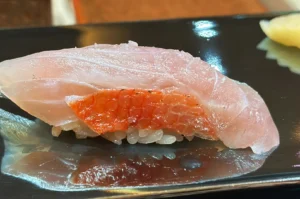
Few fish change as completely with the calendar as katsuo.
Known in English as skipjack tuna or bonito, Katsuwonus pelamis is a single species that offers two distinct eating experiences, depending on when it is caught. In spring it arrives as hatsu-gatsuo, the first bonito: lean, firm and bright. In autumn it returns as modori-gatsuo, the returning bonito: rich, buttery and deep in umami.
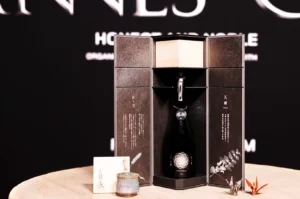
This dual season bonito makes sake pairing with katsuo unusually rewarding, and unusually demanding. The fish is the same. The sake cannot be.
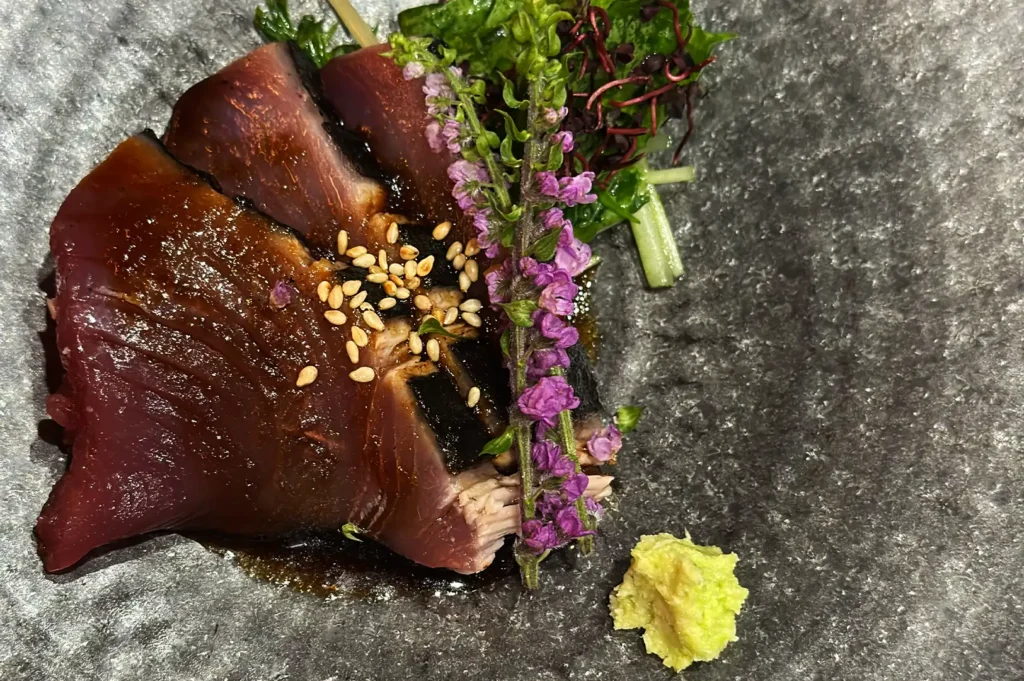
Then there is katsuo no tataki, seared on the outside and raw within, which brings smoke, char and sharp aromatics to the table.
This guide sits within our wider look at sake pairing for Japanese food. If you would like a grounding in the styles mentioned here, our guide to Japanese sake is a good place to begin.
What Is Katsuo? The Fish with Two Souls
Katsuo belongs to the Scombridae family, alongside tuna and mackerel. It is closely related to maguro, but it is a different species. Bluefin tuna is Thunnus orientalis. Katsuo is Katsuwonus pelamis, smaller and faster, and with a character all its own.
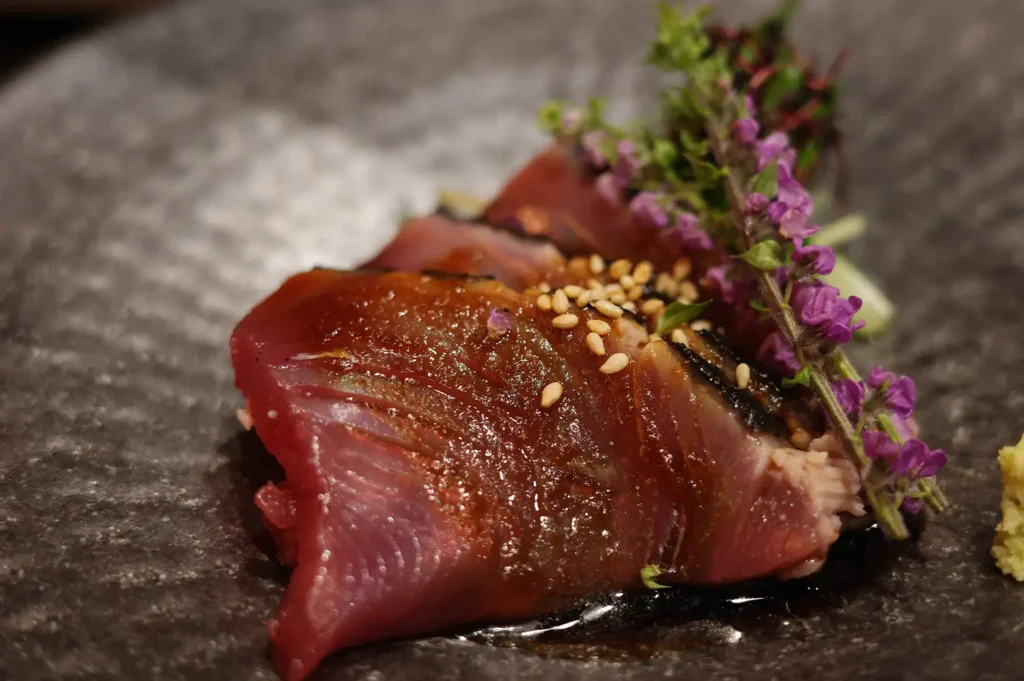
The body is streamlined and built for long journeys. A dark blue back gives way to a silvery belly marked with long, dark stripes. Cut it open and the flesh is a deep crimson red, firm and meaty. On the board, it looks closer to beef than to most fish.
Katsuo also lives a second life far from the sushi counter. Dried, smoked and fermented, it becomes katsuobushi, the bonito flakes that form the umami base of dashi. Katsuobushi and fresh katsuo come from the same fish, but they are entirely different foods. One is a pantry staple, shaped over months. The other is fleeting.
Fresh katsuo carries remarkable levels of inosinic acid, roughly 130 to 270mg per 100g. That places it among the most umami-intense fish you can pair with sake.
It is also delicate in a less obvious way. Rich in blood and quick to lose its freshness, katsuo degrades rapidly once landed. Its colour dulls and its aroma turns within a short time. This is why truly fresh katsuo is prized, and why it is handled with such care and speed.
Hatsu-gatsuo (初鰹): The First Bonito
From around March to July, katsuo travels north on the warm Kuroshio Current, moving from the waters off Kyushu towards Hokkaido. These fish are smaller and lean from constant swimming.
The texture is firm. The flavour is clean, brisk and mineral, with the taste of open sea. In Edo times, the first bonito was so treasured that people paid extravagant sums simply to eat it early. Its appeal is clarity.
Modori-gatsuo (戻り鰹): The Returning Bonito
From September to November, the same fish swim south again, after a summer of feeding in cold, nutrient-rich northern waters. They return heavier and noticeably fatter.
The flesh softens. The bite yields. The umami deepens and the finish turns buttery. In every practical sense, it is a different fish from the spring version.
Mayoi-gatsuo: The Lost Bonito
In recent years, shifting currents have produced a rare winter find: mayoi-gatsuo, or “lost” bonito. These fish stray into unexpectedly cold waters and build exceptional layers of fat. They are uncommon, unpredictable and quietly sought after.
Katsuo no Tataki: The Signature Preparation
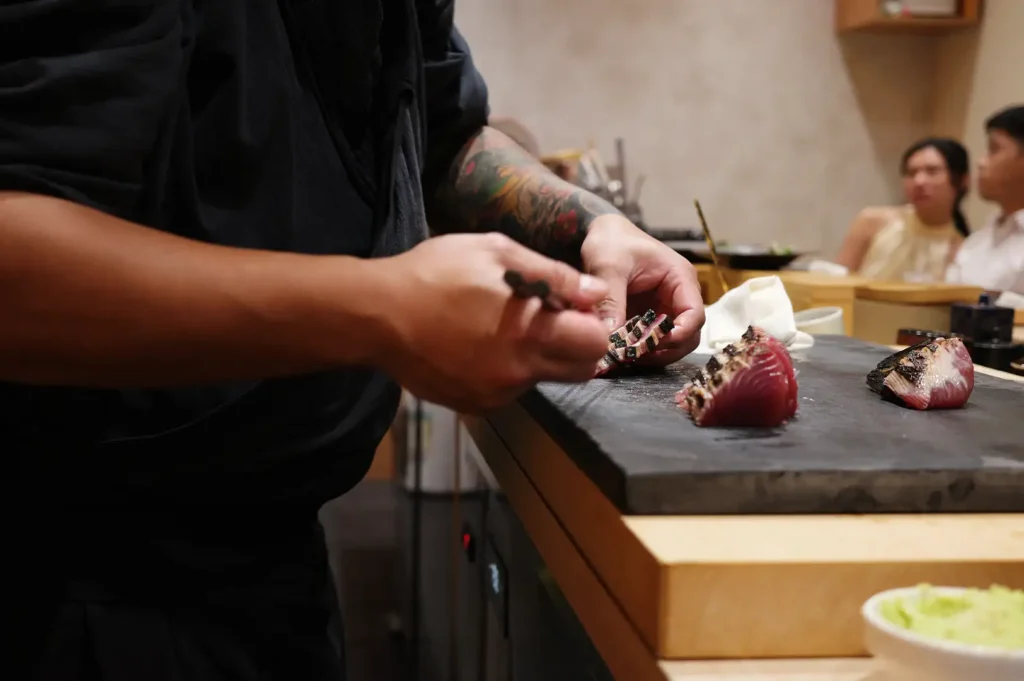
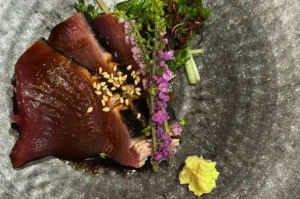
Katsuo no tataki is the defining way to serve this fish. It comes from Tosa, the old name for Kochi Prefecture.
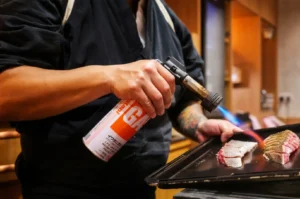
The exterior is seared over a straw fire, or with a blowtorch in many modern kitchens. The fish is then chilled at once in ice water and sliced thick. It arrives with ponzu, the citrus and soy sauce, along with raw onion, ginger, garlic and shiso leaf.
The sear does several things at once:
- Adds smoke and caramelisation to the outer layer
- Firms the skin, giving a pleasing contrast in texture
- Treats the surface while leaving the interior raw, cool and deep red
The accompaniments matter just as much. Ponzu brings acidity. Garlic and onion bring pungency and heat. Together, they reshape the whole pairing picture.
At the sushi counter, katsuo often appears as nigiri with its skin seared, known as aburi. It may be finished with scallion, grated ginger, or a touch of karashi mustard or yuzu kosho.
For pairing, this means one piece carries two personalities: a smoky, charred edge and a raw, umami-rich centre. A good seared bonito sake must speak to both.
Seasonal Sake Pairing Strategies
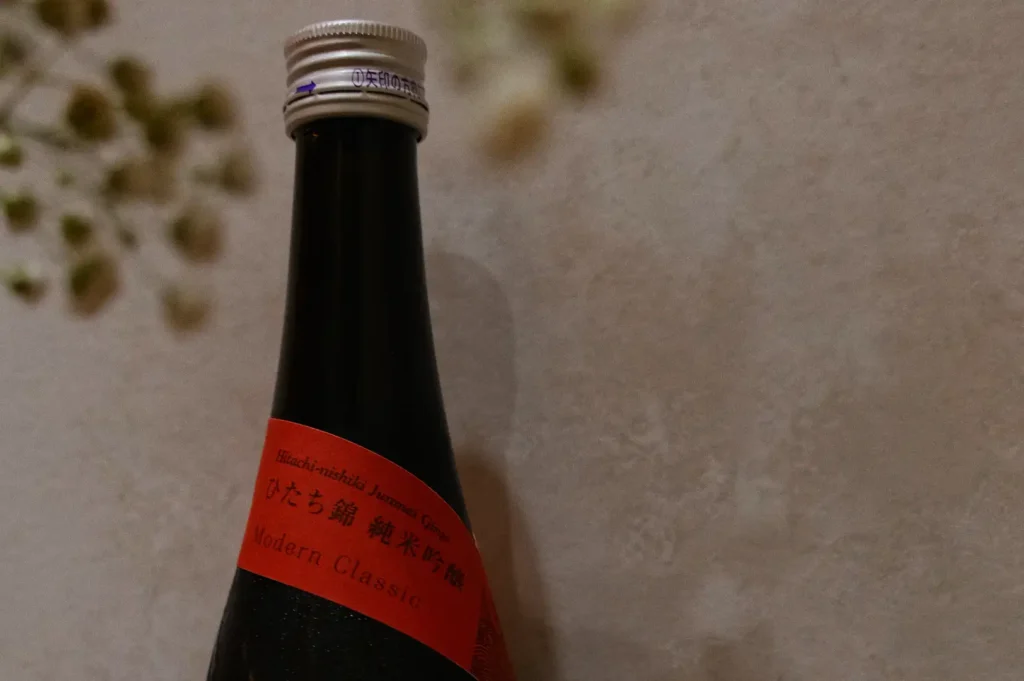
The guiding principle is simple. Spring katsuo asks for brightness. Autumn katsuo asks for structure. The same bottle should not serve both.
For Hatsu-gatsuo (Spring)
Dry junmai ginjo, chilled to 8 to 12°C. Crisp and dry, with gentle fruit and floral aromatics, it offers contrast to the meaty flesh. The chill echoes the fish’s brisk freshness. Moderate acidity (San-do, or acidity level, around 1.2 to 1.4) is enough for leaner flesh.
Nama-zake (unpasteurised sake). Fresh, lively and slightly green, nama carries the same “first of the season” energy as hatsu-gatsuo. Serve it well chilled.
Shinshu (new sake). Brewed through winter and released fresh, shinshu marks a beginning, just as spring bonito does. The two belong to the same moment in the year.
For Modori-gatsuo (Autumn)
Yamahai junmai, at room temperature or lightly warmed. Richer autumn bonito needs a sake with backbone. Yamahai’s traditional, wild-leaning fermentation brings higher acidity (San-do around 1.5 to 1.8) and an earthy depth that meets the fish’s umami directly.
Full-bodied junmai (SMV +3 to +6). SMV, the sake meter value, indicates dryness. A rich junmai in this range has the body to stand beside the fat of modori-gatsuo, with enough dryness to keep the palate clean. Room temperature suits it best.
Hiyaoroshi. Rested over summer and released in early autumn, hiyaoroshi is rounded and mellow. Its maturity mirrors the developed richness of the returning fish.
For Katsuo no Tataki (Either Season)
Dry ginjo or dry junmai ginjo with citrus or herbal notes. Look for sakes brewed with yeast strains that give apple, pear or grapefruit aromatics. These meet the ponzu halfway and stand up to garlic and onion.
Slightly warmed junmai. Gentle warmth draws out caramel and nutty notes that echo the char of the straw fire. The smoke and the sake begin to speak to each other.
What to Avoid
- Nigori. Too sweet and heavy for the fish’s meaty clarity.
- Hot sake with hatsu-gatsuo. Strong warmth overwhelms lean spring flesh.
- Sweet or overtly fruity styles. They clash with katsuo’s savoury, iron-rich depth.
Practical Pairing Tips for Diners
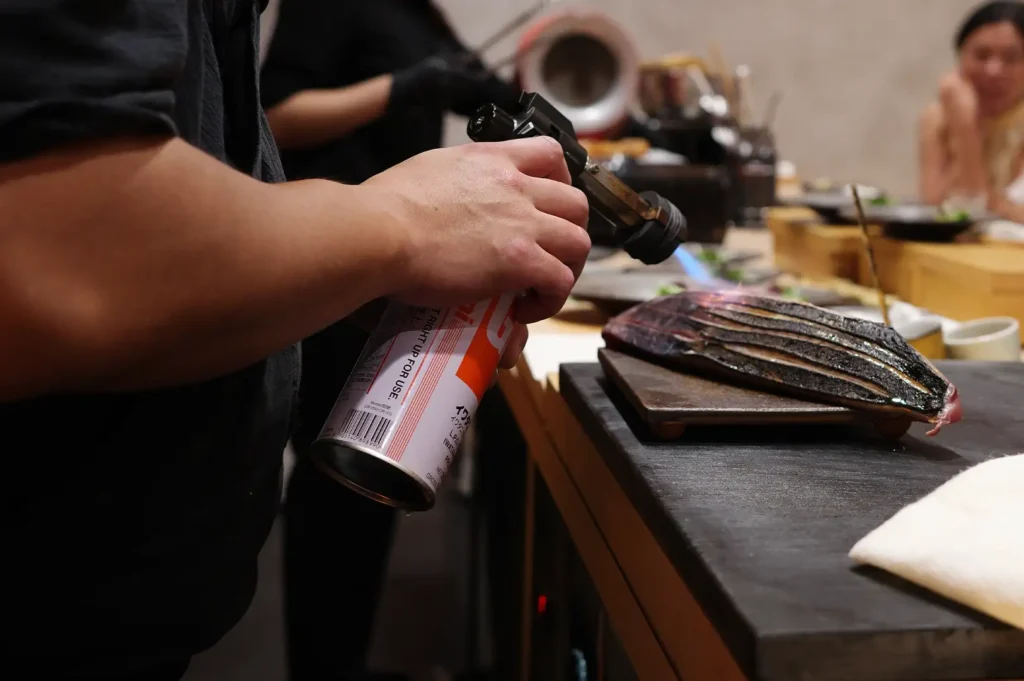
A few quiet habits will help you get the most from each katsuo bonito sake pairing.
Ask which katsuo it is. Spring or autumn changes everything. At the counter, the chef will usually tell you where the fish came from and when it arrived.
Let the season guide the temperature. Cooler sake for spring bonito. Room temperature or a gentle warmth for autumn.
Taste the fish before the garnish. Take a small bite of the plain flesh first, then try it with ponzu or ginger. You will notice how the sake shifts with each change.
Sip between pieces, not over them. A small sip after each piece resets the palate. Pour too much and you lose the fish.
Watch the colour. Fresh katsuo is a clear, deep red with a gentle sheen. Because it fades so quickly, that colour tells you a great deal about its care.
Trust the counter. In an omakase setting, the sake is often chosen with the fish in mind. If you are unsure, ask. A short conversation with the chef or server often leads to the most memorable pairing of the evening.
Note what you enjoy. Write down the sake style and the season. Over time, you will build your own map of katsuo no tataki pairing.
Conclusion
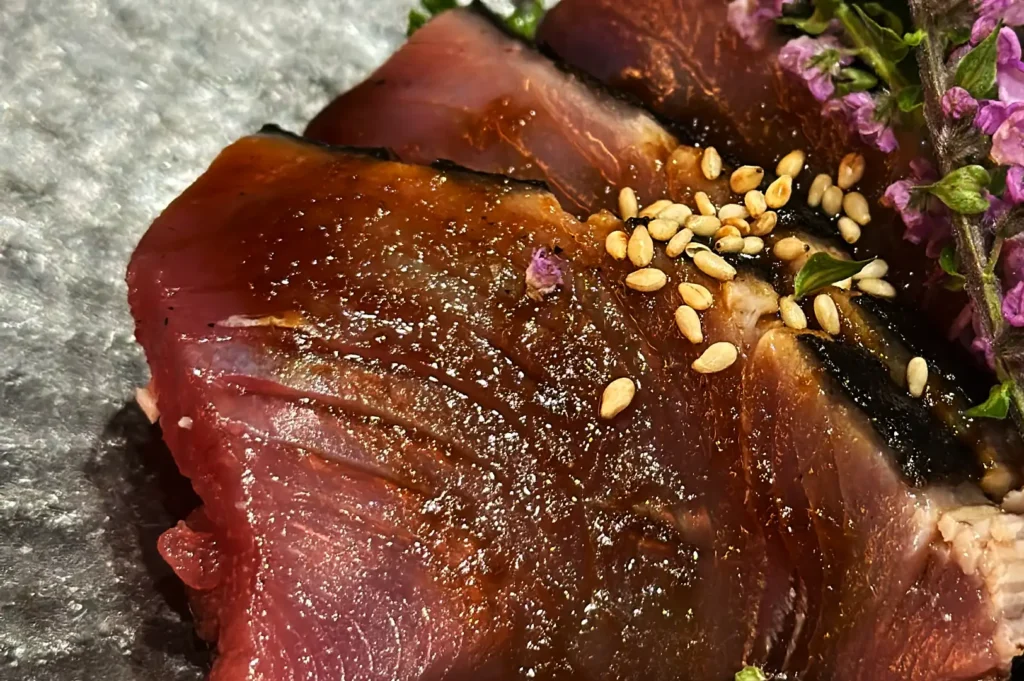
Katsuo stands apart among sushi fish. Across a single year, it offers two complete flavour profiles: the lean clarity of spring and the rich depth of autumn.
The tataki preparation adds smoke, char and aromatic intensity to an already layered picture. Each season, and each preparation, asks something different of the sake in your glass.
That is what makes katsuo one of the most rewarding fish to pair. It invites attention. It rewards patience. And it remains a quiet highlight of the omakase journey at Sushi Masa by Ki-Setsu.
When katsuo comes into season, there is a seat waiting for you at Sushi Masa by Ki-Setsu in Cuppage Plaza.
Come, sit at the counter, and let the fish and the sake show you the time of year.