The Architecture of Ika: Why Texture Is the Secret Ingredient
Across the archipelago, squid holds a quiet, translucent authority within Japanese cuisine. A clear slice resting atop vinegared rice appears deceptively simple, yet every incision records a library of decisions regarding season, species, salt, and time.
While many people speak of sweetness or fresh qualities, seasoned sushi restaurants judge the caliber of ika through its resistance, its snap, and its lingering weight on the tongue. This study examines ika through the lenses of structural biology, history, and the relentless work at the hand of the master shokunin. In this arena, texture is the true secret ingredient.
The Biological Blueprint: Defining Ika
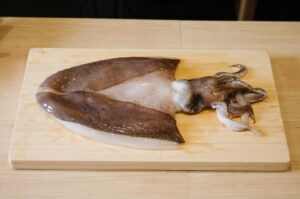
In Japanese food culture, the word ika refers to a vast array of cephalopods across many species found in coastal waters. Fishermen harvest these creatures year round, though the quality shifts dramatically based on the season and shifting ocean conditions. Unlike finfish, which possess a layered muscle structure, squid flesh is composed of dense, long fibers runs from the head to the tentacles.
These fibers explain both the potential for extreme delicate tenderness and the risk of failure. Mishandling or incorrect cutting turns the flesh rubbery within a short time. Historical records from Japan Times archives describe the massive drying runs of the Edo period, where salt preservation was used to protect the catch during long transport. Today, modern production facilities control temperature from the moment of harvest to the sushi counter, yet the importance of respecting the animal’s biology remains unchanged.
The Technical Benchmark: The Artistry of Ika Sushi
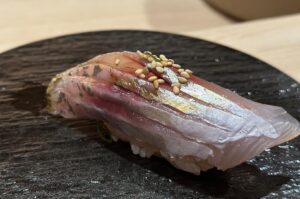
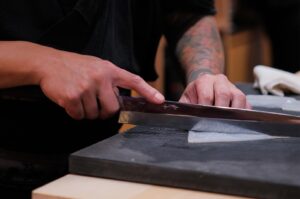
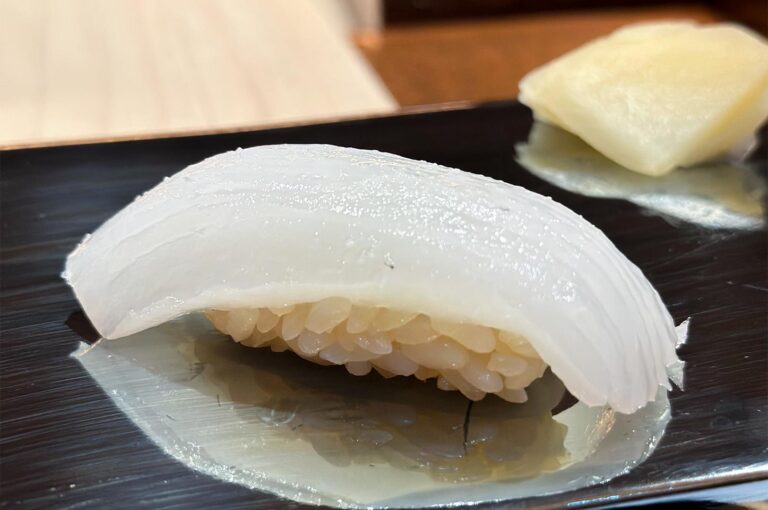
For a chef, ika sushi reveals technical precision more than any other piece. A plain, white slice exposes every error in judgment. The angle of the knife, the pressure of the hand, and the timing of the serve shape the final texture. Within the Edomae tradition, mastering ika is an important part of a professional education. Apprentices often spend years practicing on squid before they are permitted to handle more expensive species.
Key Textural Pillars in Professional Preparation
The Clean Bite: Achieving a break without “drag” or chewiness.
Refined Resistance: Providing a structural snap before the flesh yields.
Moisture Control: Ensuring no water “bleeds” onto the rice, which preserves the delicious vinegar balance.
Inherent Sweetness: Unlocking sugars without the addition of heavy sauces.
Structural Integrity and Muscle Science
Squid muscle lacks the flake-like lamellae found in fish. Instead, fibers run parallel along the mantle. Making a successful piece of sushi requires the chef to decide whether to cut across those fibers to shorten the chew or with them to raise the resistance.
As soon as the ika leaves the ocean, enzymatic activity begins to rise. Without rapid chilling and the professional removal of viscera, the muscle contracts and expels its essential moisture. Food safety protocols in modern Japan require that the fresh ink sacs remain intact during the cleaning process to protect both the pearlescent color and the clean taste of the mantle.
The Prime Specimen: Mastery of Aori Ika
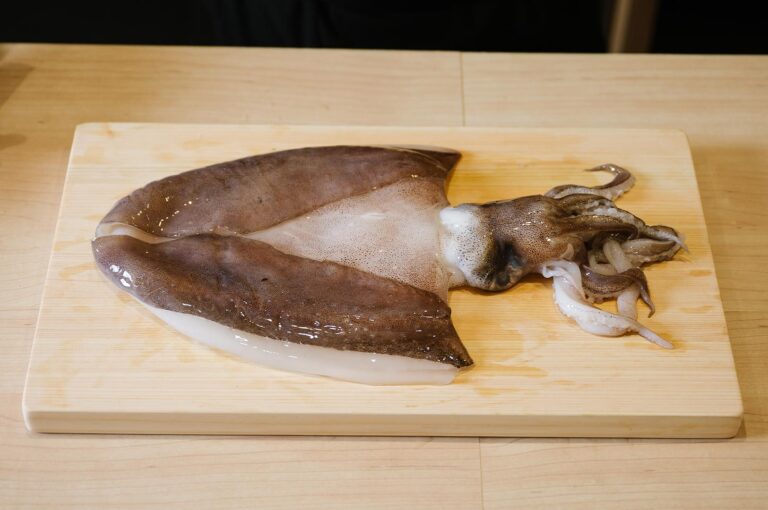
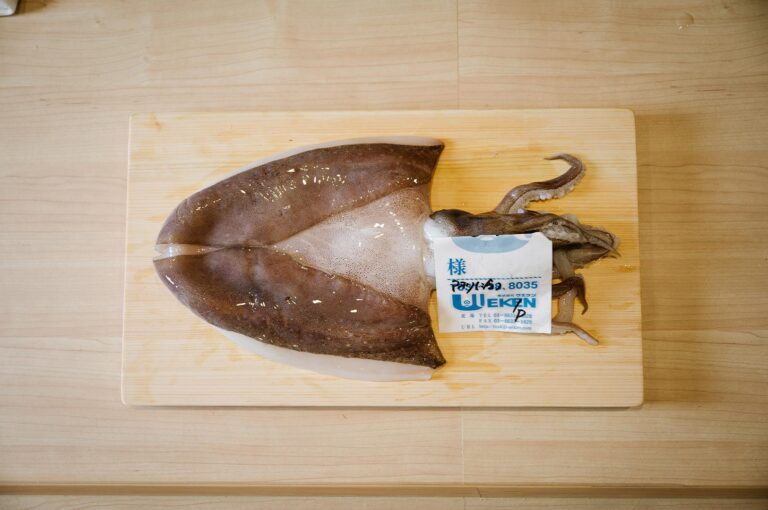
The aori ika (Bigfin Reef Squid) ranks as the most prized of all other species in the sushi world. Its large body size, thick mantle, and high moisture content define its luxury status. While the harvest often peaks in the spring, high-quality supply runs through much of the year. The texture of aori ika is unique, offering a soft, creamy resistance that melts into a lingering sweetness.
The Preparation Ritual
Manual Skinning: Removing the outer membrane by hand to avoid bruising.
Scoring: Creating intricate patterns across the fibers to increase surface area.
Relaxation: A short time of resting to allow the muscle tension to dissipate.
The Finish: A light sprinkle of salt to draw out surface umami.
Visual Cues and the Importance of Color
A master can find the quality of ika through sight alone. A pristine aori ika shows a translucent white tone with a faint, pearlescent sheen. Any cloudiness or opacity signals a breakdown in protein structure. Furthermore, the weight of the body is a tell-tale sign of hydration. A heavy mantle indicates superior water retention, a direct result of meticulous handling at the source.
Diversifying the Palate: Other Species and Cuttlefish
Beyond the kingly aori, Japanese cuisine utilizes a vast variety of other species, each demanding a unique culinary account.
Sumi Ika: Valued for a firm, “snappy” bite and its rich, dark ink.
Kensaki Ika: Features thinner flesh with a clean, sharp breakage.
Yari Ika: A smaller species prized in spring for its refined, light sweetness.
Cuttlefish: Known for a thicker muscle and a much stronger chew.
Cuttlefish differs from standard squid due to its internal calcified bone. Its flesh is denser, often requiring the chef to add more intricate knife work to make it palatable for sushi.
The Influence of Season on Quality and Shape
The season defines the texture more than the calendar year does. Water temperatures directly affect muscle density. Cold water produces tighter, more resilient fibers, while warmer waters yield a softer, more tender flesh. Skilled buyers at production facilities and markets track these runs weekly to account for the subtle changes in flavor and shape.
While ika is available year round, the general consensus among experts is that availability does not equal quality. Understanding the life cycle and behavior of the species is how top-tier establishments protect their standards.
A Legacy of Labor: History of Technique
During the Edo period, ika was primarily a preserved food. Salting allowed it to survive the journey to the city. Raw service only gained popularity as ice transport and refrigeration products improved. The intricate knife work we see today evolved alongside these technologies. Each generation of chefs has prepared the ika with small, iterative changes, refining the ability to serve it fresh and raw.
Hand Work and the Shokunin’s Training
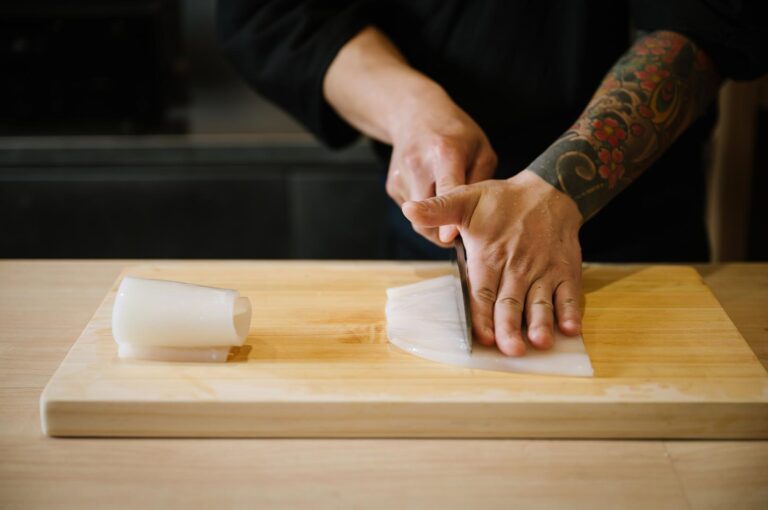
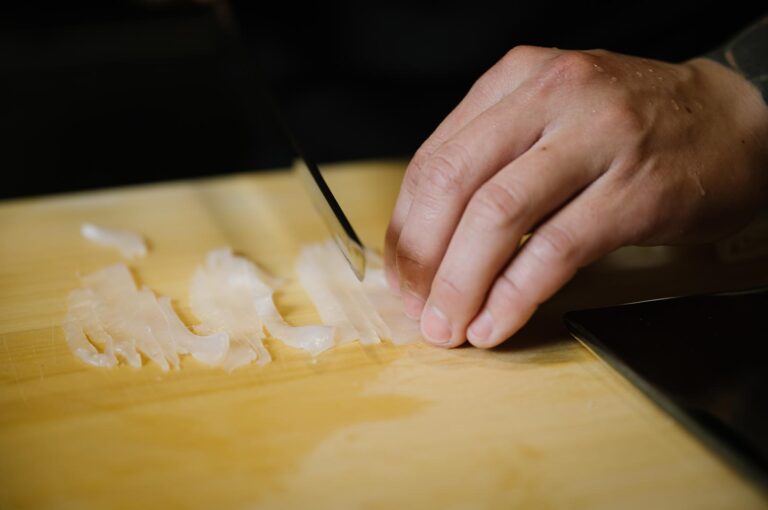
Learning to work with ika teaches the virtue of patience. Skinning requires a steady, firm pull without tearing the delicate flesh, and scoring requires an even depth. If the cuts are too shallow, the piece remains tough. If they are too deep, the shape of the sushi collapses.
Modern Standards: Food Safety and Quality Control
In the modern era, food safety is the foundation of the sushi business. Because squid spoils faster than most fish due to high enzyme levels, production facilities manage risk through extreme temperature control. From the moment the tentacles are iced on the boat to the final sprinkle of salt at the counter, the cold chain must remain unbroken.
Quality is, quite literally, a result of compliance with these rigorous standards, which are often benchmarked against international criteria such as The Pursuit of Purity: Sourcing, Science, and the Standards of Sashimi Singapore. These protocols ensure that every translucent slice is as safe for consumption as it is pristine in flavor.
The Sensory Experience: Texture as a Flavor Carrier
In the mouth, texture is what carries the flavor. The sweetness of the squid registers more clearly when the fibers are severed in a way that releases moisture slowly during chewing. If the flesh is overworked, it “dumps” its water and loses its taste. If underworked, it resists the bite and distracts the palate from the seasoned rice.
Timing the Perfect Bite
The window for peak quality is remarkably narrow. Some chefs choose to rest the ika briefly to relax the muscle, while others insist on serving it immediately after the final cut. This choice depends entirely on the species and the importance of the season.
Global Perspectives: The Importance of Respect for the Ingredient
Outside of Japan, many sushi restaurants struggle with the “architecture” of ika. Long supply chains and improper handling often lead to the rubbery, unappealing results that many diners associate with squid. However, as culinary knowledge spreads, people around the world are beginning to appreciate the volumes of skill required to grab the perfect piece of aori ika.
The importance of respect for the ingredient cannot be overstated. From the ocean to the final garnish, every decision weighs on the final taste. To master ika is to master the very soul of the craft.
The Quiet Mastery of Sushi Masa by Ki-setsu
At Sushi Masa by Ki-setsu, we view ika as a profound lesson in culinary restraint. We believe that true flavor is hidden within the structure of the ingredient, and only through disciplined technique can that truth be revealed. Our dinner service is an invitation to witness this importance firsthand. Our chef follows the rigorous tenets of Edomae tradition, personally selecting fresh, Toyosu-sourced species like aori ika to ensure the texture is nothing short of delicious.
By focusing on the omakase model, Chef Masa ensures that every piece, from the head to the meticulously scored mantle, reflects the season and the quiet beauty of Japanese craftsmanship. We invite you to experience the architecture of the perfect bite.