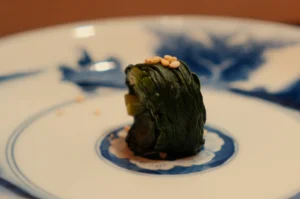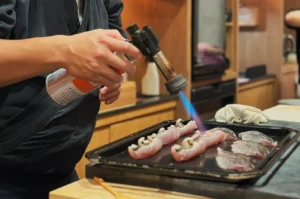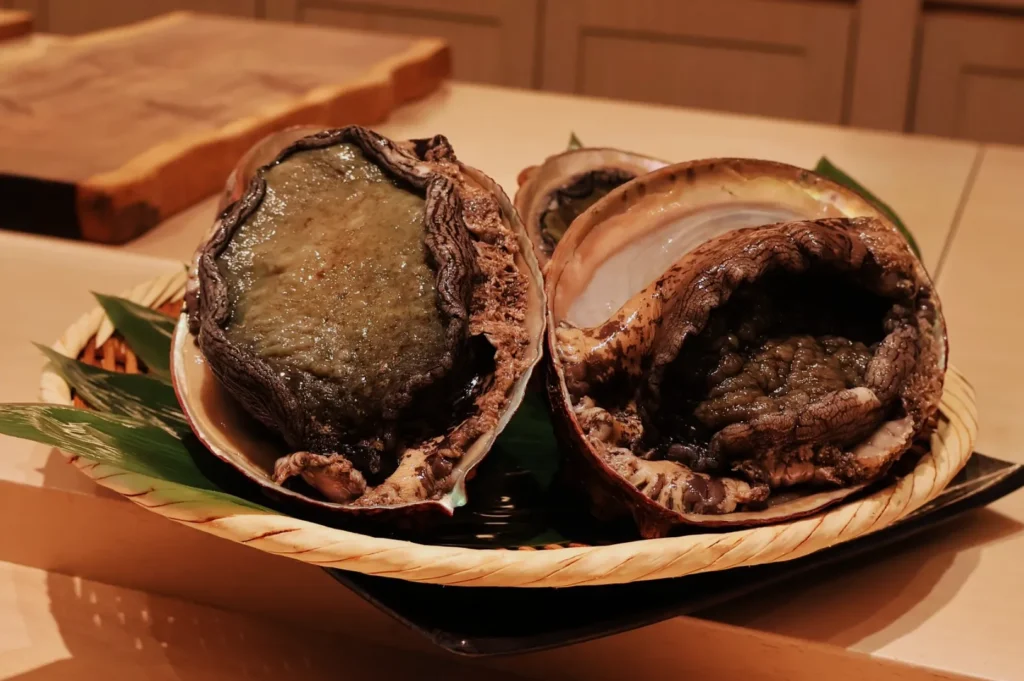
There is a shellfish that has shaped Japanese cuisine for more than a millennium, one that emperors once received as tribute, that ama divers risked their lives to collect from frigid ocean floors, and that today commands some of the highest prices in any Tokyo fish market. It is awabi, abalone, and it remains, without argument, one of the most revered ingredients in the entire canon of Japanese food culture.
To understand awabi is to understand something essential about Japan itself: the reverence for natural ingredients, the obsession with seasonal precision, and the belief that the finest flavors belong to those patient enough to wait for them. This dedication to quality and tradition is precisely what makes awabi a highlight in the best omakase Singapore experiences, where each piece is crafted to celebrate the ingredient’s unique character.
What Is Awabi? The Japanese Term Behind a Global Obsession
Awabi (鮑) is the Japanese term for abalone, a large marine gastropod shellfish belonging to the genus Haliotis. Found clinging to rocky underwater reefs, awabi feeds primarily on kelp and sea algae, a diet that directly shapes its extraordinary depth of flavor and its celebrated, firm texture. The shell’s interior is lined with iridescent mother of pearl, and for centuries, these shells were themselves considered precious, used in lacquerware, ceremonial objects, and decorative inlay work.
Unlike oysters or clams that open with ease, awabi must be carefully pried from rock surfaces using specialized tools. The flesh, once extracted, is a thick, muscular slab of ivory-white meat encircled by a frilled mantle and accompanied by the prized green liver, a soft, intensely flavored organ that many connoisseurs regard as the most complex part of the animal.
In Japanese culture, awabi carries symbolic weight far beyond its culinary identity. It is a symbol of longevity, good fortune, and endurance, qualities reflected in the very biology of the animal, which can live for decades and grows with deliberate, unhurried slowness. Dried awabi strips, known as noshi awabi, have been offered at Shinto shrines and attached to ceremonial gifts since the Heian period. To this day, awabi remains a prestigious gift exchanged during New Year’s and other auspicious occasions.
The Different Types of Awabi Found in Japanese Waters
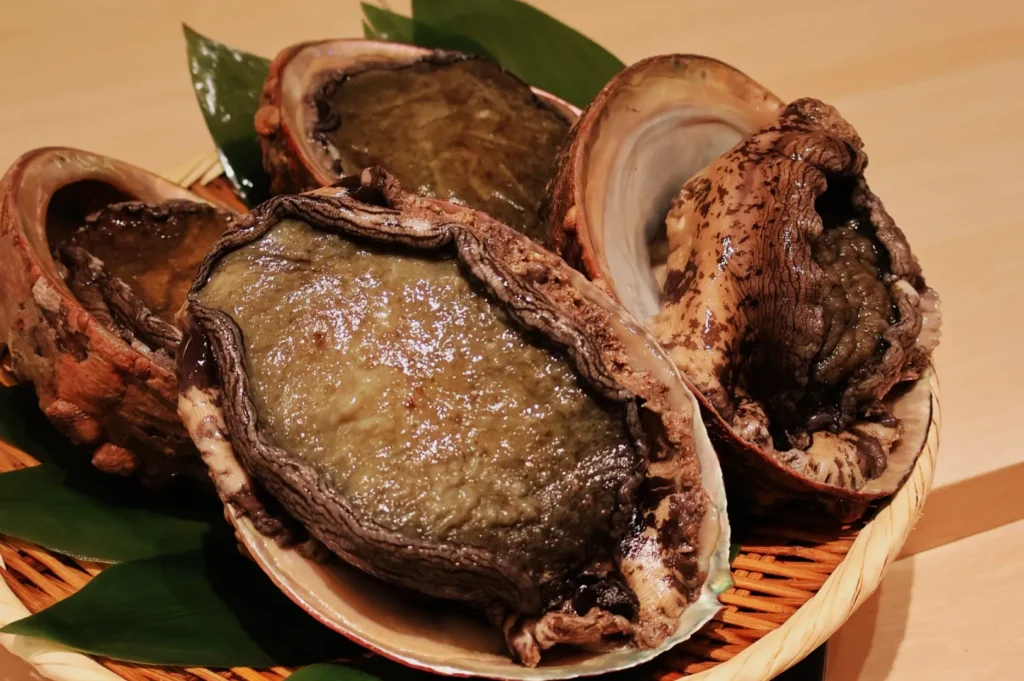
Japan is home to several distinct species of awabi, each prized for unique qualities. Understanding the different types is essential for anyone seeking to appreciate this ingredient at a serious culinary level.
Kuro Awabi — The Black Abalone
Kuro awabi (クロアワビ), or black abalone, is widely considered the pinnacle of the species in Japan. True to its Japanese name, kuro awabi has a distinctively dark-edged shell and flesh of remarkable density and umami depth. It is primarily caught along the Pacific coast of Honshu, particularly in the waters around Chiba, Mie, and Iwate prefectures. Among sushi masters and kaiseki chefs, kuro awabi is the benchmark species, the one most commonly featured in premium awabi sushi preparations and in high-level steamed or sake-simmered applications.
Its flavor profile is intensely savory and oceanic, with a natural sweetness that emerges more fully when the shellfish is cooked low and slow. The flesh remains firm but never rubbery when handled correctly, offering the signature crunchy texture that awabi enthusiasts seek in raw preparations.
Ezo Awabi — The Northern Prize
Ezo awabi (エゾアワビ), named for the old Japanese term for Hokkaido, is the dominant abalone species in Japan’s northern waters. Harvested from the cold, nutrient-rich seas surrounding Hokkaido and the Tohoku region, ezo awabi tends to be larger in size than kuro awabi, with a somewhat lighter, more delicate flavor.
The cold waters of Hokkaido produce awabi with particularly high iodine and mineral content, which translates into a clean, bracing oceanic flavor. Ezo awabi is highly valued in both raw and cooked preparations, and it is a cornerstone ingredient for many restaurants specializing in Hokkaido seafood traditions. Its best season runs from late spring through summer, when the surrounding kelp beds are at their most abundant.
Megai Awabi — The Red Abalone
Megai awabi (メガイアワビ), sometimes called the red abalone for the warm reddish hue of its shell, is the third major species found in Japanese markets. Softer and more tender than kuro awabi, megai awabi is particularly well-suited to raw preparations where its subtle, sweeter flavor can be appreciated directly. It is commonly caught along Japan’s Pacific coast and in the waters around Kyushu. While considered slightly less prestigious than kuro awabi in traditional culinary hierarchies, megai awabi is prized by those who prefer a more yielding texture in their sashimi and awabi sushi.
Madaka Awabi — The Largest of the Four
Madaka awabi (マダカアワビ) is the largest of Japan’s four primary abalone species and among the rarest in commercial markets. Its impressive size makes it visually striking, but its relative scarcity means it is seldom encountered outside highly specialized traditional establishments. When it does appear, madaka awabi is most often prepared cooked, its thick, firm flesh responding beautifully to extended sake simmering.
Awabi in Japanese Cuisine: A History Written in Tides
The relationship between awabi and Japanese cuisine stretches back to the Jomon period, with archaeological evidence of abalone consumption found in ancient shell midden sites along the Japanese coast. By the Nara period (710–794 CE), dried awabi was already listed among the tributary foods delivered to the imperial court from coastal provinces. It was and remains a food of ceremony, of occasion, and of profound cultural meaning.
The ama (海女), Japan’s legendary female free divers, have been the primary harvesters of awabi for at least two thousand years. These women, working without breathing apparatus, dive to depths of up to 20 meters in cold coastal waters to hand-collect awabi from the sea floor. The ama tradition is concentrated in the Ise-Shima peninsula of Mie Prefecture, as well as in parts of Kyushu and Hokkaido, and the practice has been recognized by UNESCO as an Intangible Cultural Heritage. Each awabi caught by ama divers is hand-selected, ensuring that undersized animals are returned to the sea, a natural form of conservation that has helped prevent overfishing in traditional harvesting grounds for generations.
How Awabi Is Prepared: From Sashimi to Mushi Awabi
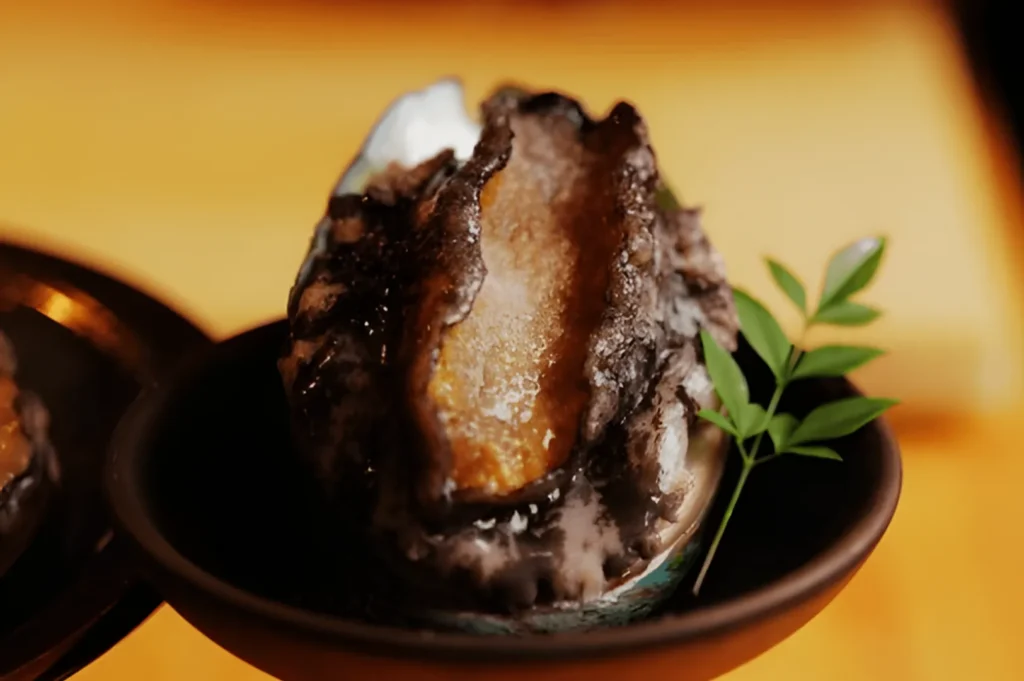
Few ingredients in Japanese cuisine demand as much skill in preparation as awabi. The transformation from live shellfish to plate-ready delicacy is a study in technique, timing, and restraint.
Served Raw (Ikizukuri and Sashimi)
The most elemental preparation is awabi served raw, sliced thinly and presented as sashimi or as the topping for awabi sushi. Raw awabi delivers the shellfish’s full crunchy texture and clean oceanic flavor in unmediated form. It is typically served with a light dipping sauce of soy sauce and wasabi, or occasionally with the animal’s own liver puréed into a dipping paste. The flesh must be sliced against the grain to maximize tenderness without losing the characteristic firmness.
Awabi Sushi — Nigiri at Its Most Demanding
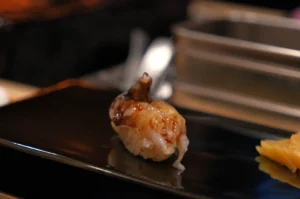
Awabi sushi, typically prepared as nigiri, is one of the most technically demanding items in the Edomae repertoire. The abalone must be scored precisely to break down muscle fibers while preserving structural integrity. Some traditional approaches call for the flesh to be lightly salted or briefly marinated before being draped over a precisely formed rice ball. When executed properly, awabi nigiri offers a layered experience: the cool, mineral-forward flesh against the subtly seasoned rice, finished with a brush of nikiri soy sauce.
Mushi Awabi — The Steamed Standard
Mushi awabi (蒸しアワビ), awabi steamed in sake, is one of the oldest cooked preparations in the Japanese repertoire. The shellfish is placed in its own shell, doused with sake and sometimes a touch of soy sauce, then covered and steamed for an extended period, often two to three hours for larger specimens. The result is flesh of extraordinary tenderness that retains its flavor depth while gaining a silky, yielding quality impossible to achieve through any other method. The sake-infused cooking liquid that collects in the shell becomes, in itself, a concentrated broth of exceptional quality.
Butter-Grilled and Simmered Preparations
More contemporary Japanese approaches include awabi grilled with butter and soy sauce, a preparation that highlights the ingredient’s natural sweetness while adding richness, as well as extended simmered preparations (nitsuke) in which awabi is slowly cooked in a broth of sake, mirin, and soy sauce until deeply lacquered and infused with savory depth. The liver, separated during preparation, is typically made into a sauce that accompanies both cooked and raw presentations, its vivid green color and intensely briny flavor serving as a counterpoint to the mild, clean flesh.
Seasonality, Scarcity, and the Ethics of Awabi
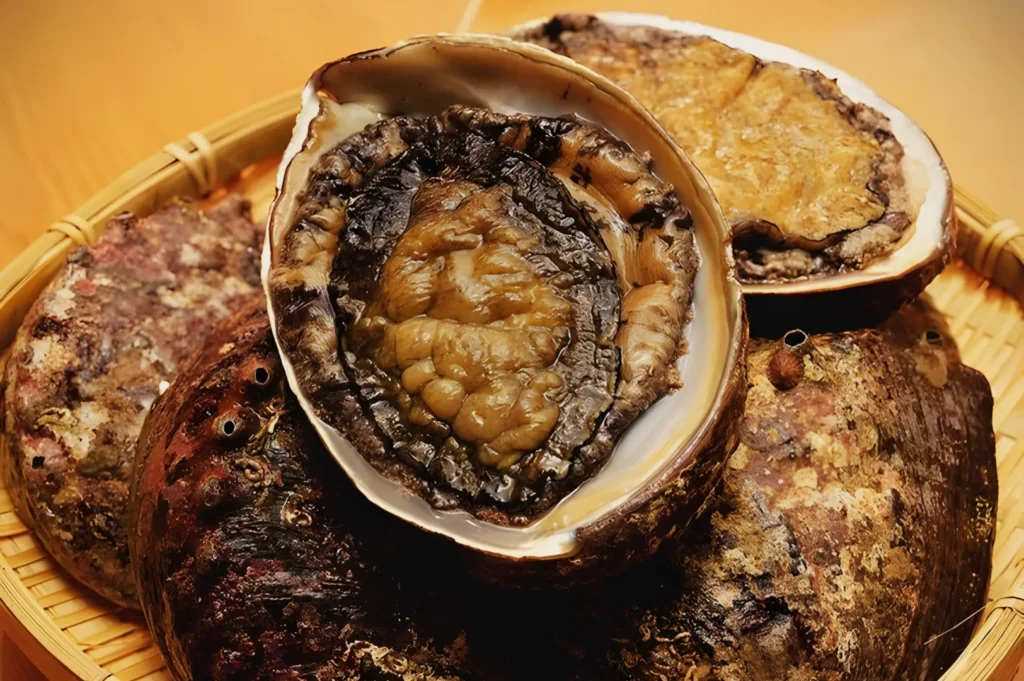
Awabi is unambiguously a seasonal ingredient. While specific harvest windows vary by species and region, kuro awabi from Honshu’s Pacific coast is generally at its finest in summer, while ezo awabi from Hokkaido peaks in late spring through early autumn. In winter, awabi is still harvested but is typically leaner, as the animals have consumed less kelp.
The slow growth rate of abalone, a full-sized kuro awabi may be eight to fifteen years old, combined with the historical pressures of commercial demand, has made sustainable management a critical concern in Japanese fisheries policy. Strict quotas, seasonal fishing restrictions, and minimum-size regulations govern awabi harvesting throughout Japan. Aquaculture programs, particularly in Mie, Iwate, and Miyagi prefectures, have developed significantly over recent decades, producing farmed awabi that, while more affordable and more consistently available than wild-caught specimens, is generally considered to fall short of the flavor complexity achieved by wild animals feeding on natural kelp beds.
The finest wild awabi, caught at peak season by ama divers and delivered live to Toyosu Market and other premium wholesale hubs, commands extraordinary prices, prices that reflect not merely the ingredient’s flavor, but the entire ecosystem of tradition, skill, and ecological stewardship required to bring it to the plate.
Awabi at Sushi Masa by Ki-setsu: An Invitation to the Irreplaceable
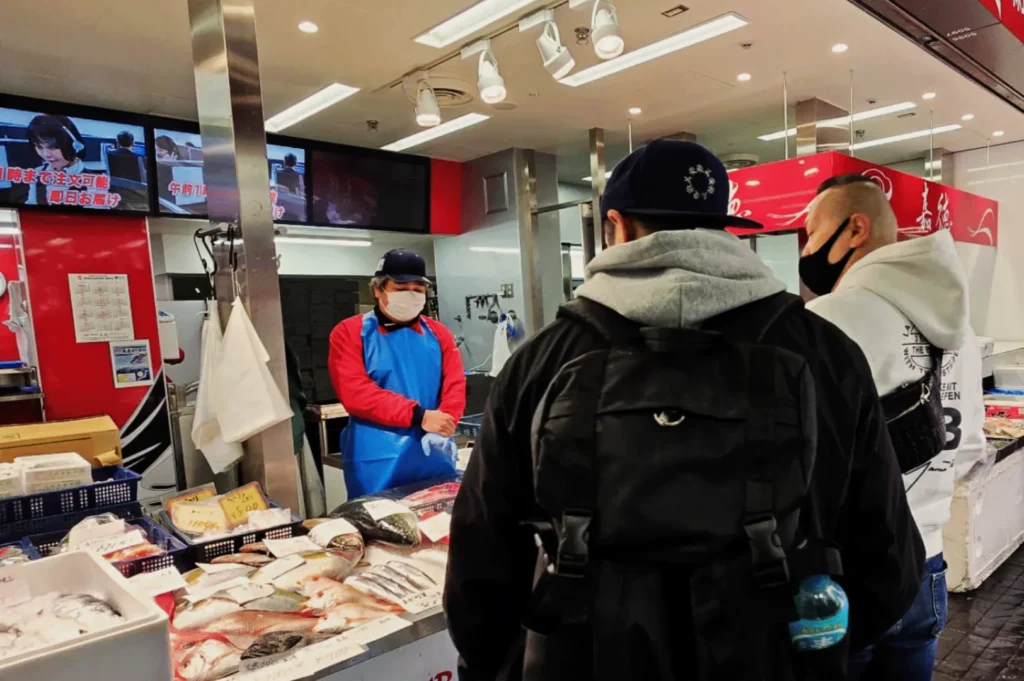
At Sushi Masa by Ki-setsu, we believe that awabi represents everything our Omakase model is designed to honor. Our chef, Chef Masa, sources awabi directly through Toyosu Market, selecting live specimens based on species, size, and seasonal peak, never simply availability.
Within our Edomae tradition, awabi appears in forms dictated entirely by what the shellfish itself demands on any given evening: served raw with its liver over hand-pressed shari, or steamed in sake until the flesh achieves that rare, luminous tenderness that no shortcut can produce. We invite you to experience awabi as it has always deserved to be experienced, unhurried, uncompromised, and unforgettable, at our dinner omakase.