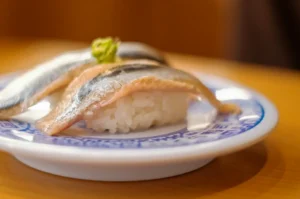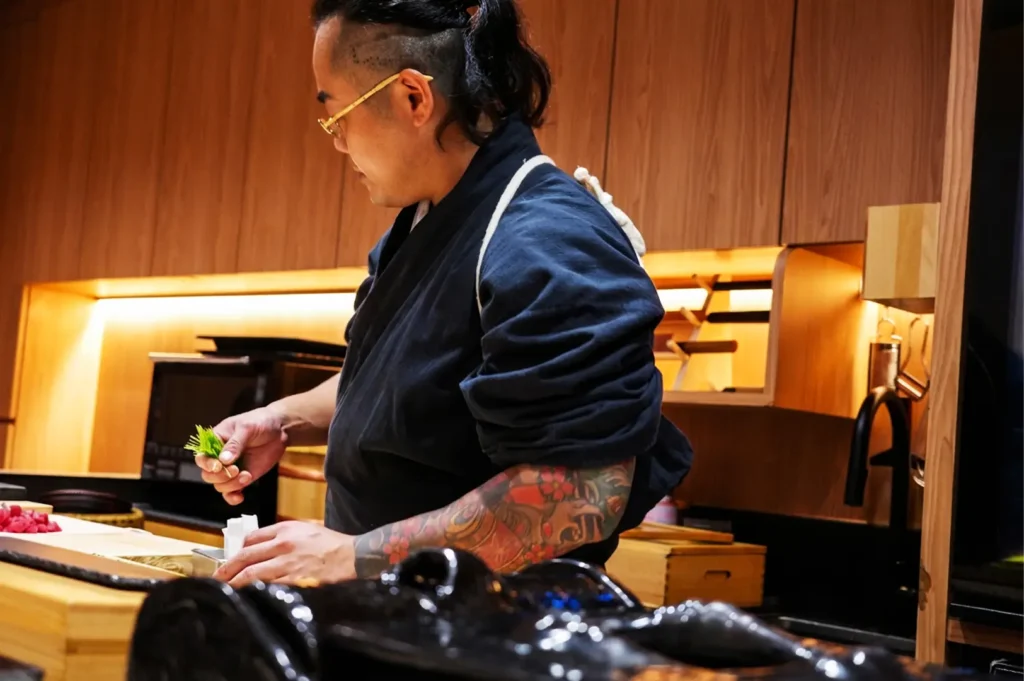
Before Singapore wakes, a market in Tokyo is already alive.
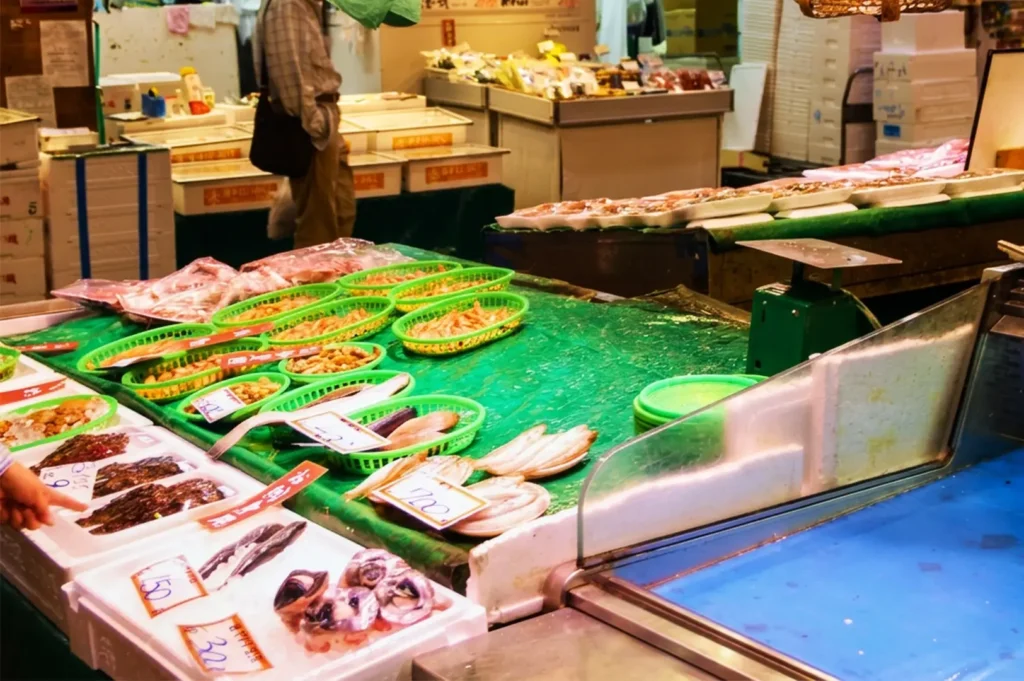
Toyosu stirs in the dark. Trolleys move. Buyers lean over crates of ice, reading each fish the way others read a page. This is where the day’s finest seafood is chosen, and where much of what reaches the counter at Sushi Masa begins its journey.
Toyosu: The Heart of Japanese Seafood
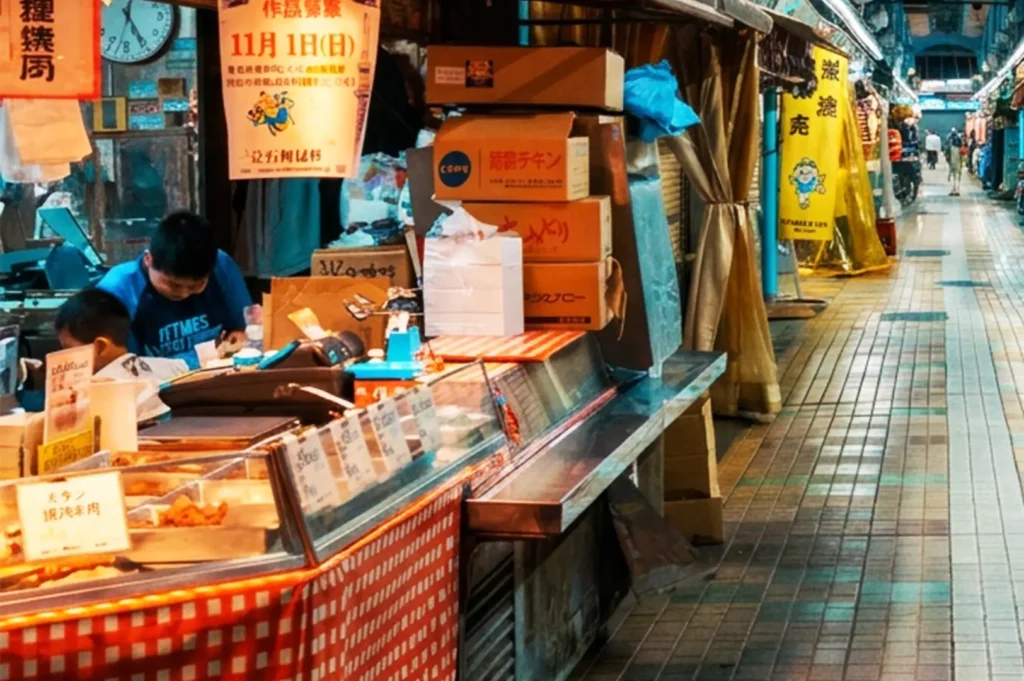
Toyosu Market is Japan’s premier wholesale fish market. It succeeded the famous Tsukiji, carrying forward a trade that has shaped how the world understands seafood.
Here, the best of Japan’s coastlines passes through in a single morning. Tuna from Ōma. Uni from Hokkaidō. Shellfish, white fish, silver-skinned fish. Each is brought in at its peak, each judged with a care that borders on reverence.
What makes Toyosu matter is not scale. It is standard.
Buyers assess condition with the eye and the hand. The clarity of a fish’s eye. The firmness of the flesh. The sheen across the skin. These are not casual glances. They are decisions made by people who have spent decades learning what a good fish looks like on a given morning, in a given season.
For omakase, this matters more than almost anything else.
Why Sourcing Shapes the Menu
Omakase lives and dies by the ingredient.
There is nowhere to hide. No heavy sauce, no long cooking to mask a fish past its moment. A single piece of nigiri is the fish, the rice, and little else. So the fish must be right. Right in quality, right in season, right in condition.
Toyosu-linked sourcing gives Sushi Masa access to that standard. Key ingredients are chosen through suppliers connected to the market, people who understand what the counter needs and select accordingly. Not everything on the menu travels the same path. The sea does not always agree, and the finest ingredient on a given day may come from elsewhere. But the principle holds. Seafood is chosen for its moment, not its convenience.
This is the idea of shun, the celebration of an ingredient at its natural peak. Early-summer aji, lean and clean. Winter buri, rich with fat. Each arrives when it is meant to, and the menu shifts with it.
You can taste the season if you pay attention. That is the point.
Ingredients Alone Are Not Omakase
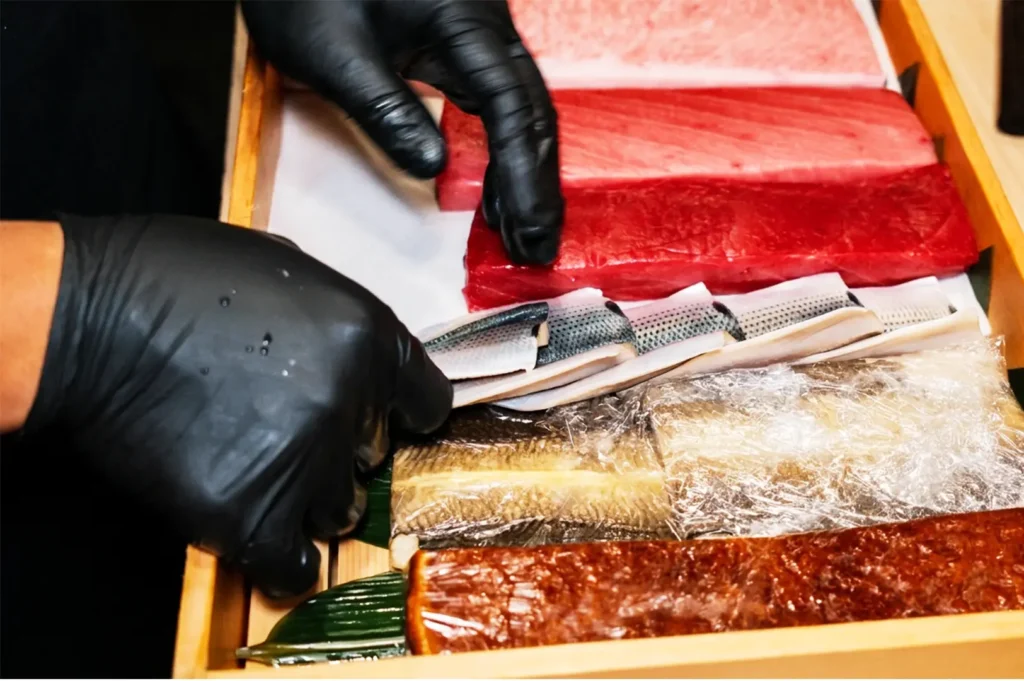
Here is the part often missed.
A perfect fish does not make a perfect piece of sushi. Sourcing opens the door. What happens next is the craft.
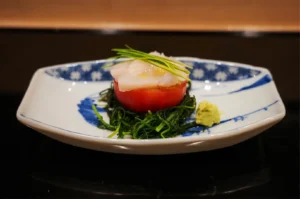
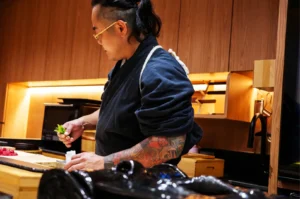
This is where Chef Masa at Sushi Masa earns his place behind the counter, turning omakase seasonal ingredients into something quietly considered.
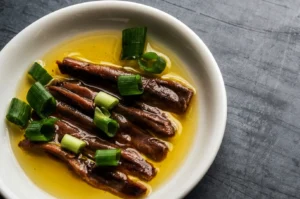
Consider a single fillet. How thick to slice it. Which way to cut against the grain. Whether to age it a day for deeper umami, or serve it that evening while the flesh is still taut. Whether to warm it briefly over binchotan, cure it lightly in salt, or leave it untouched, dressed with nothing but a breath of soy.
These are hundreds of small decisions, made quietly, each one shaping the final taste.
Then there is sequence. Omakase is not a pile of good things. It is a journey with rhythm: light before rich, cool before warm, delicate before bold. The order is deliberate. A meal that builds. A meal that breathes.
The rice matters too. Seasoned with a measured blend of vinegar, kept at the temperature of the hand, it carries the fish rather than competing with it. Warm rice. Cool fish. A balance held in a single bite.
None of this is written on a menu. It is felt.
Trust, Behind Eight Seats
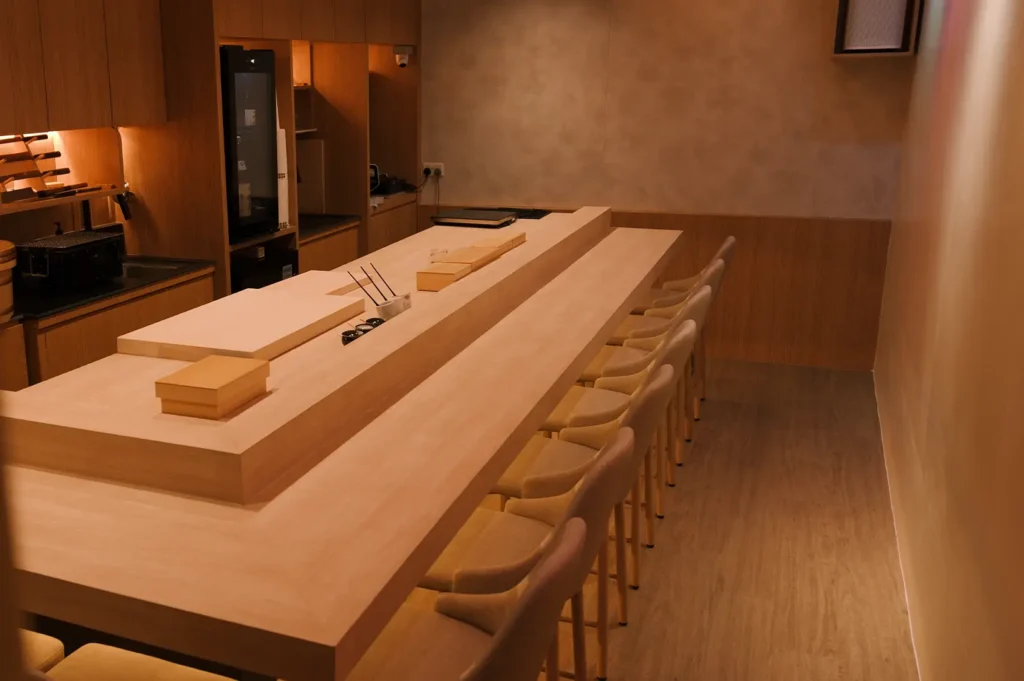
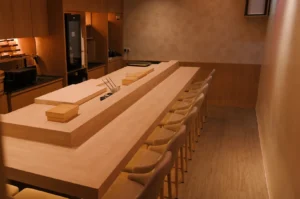
Sushi Masa by Ki-Setsu sits inside Cuppage Plaza, a short walk from Orchard Road. The building is unassuming. The room is quiet.
There are eight seats. Only eight.
Service is dinner-only, which allows the day to be given fully to preparation: receiving the seafood, inspecting it, letting each ingredient rest until its moment arrives. Nothing is rushed. Nothing is scaled up for volume.
At the counter, the meal unfolds as a conversation without many words. Chef Masa watches, gauges, responds. A piece placed before you. A pause. The next.
This is the meaning of omakase: “I leave it to you.” You do not choose the menu. You choose to trust. And that trust rests on two things working together: seafood selected to Toyosu’s standard, and the judgment to know exactly what to do with it.
One without the other is incomplete.
To sit at Sushi Masa in Cuppage Plaza is to see both meet in real time. The market’s discipline. The chef’s hand. A quiet room where the sea, chosen carefully that morning, becomes something worth slowing down for.
Every piece has purpose. Every move has stillness.