Walk into almost any Japanese restaurant and one of the first things a guest will notice, often before the menu even arrives, is the layout of the dining room. Some guests are guided towards a long counter facing the kitchen, what many still call a sushi bar. Others are shown to a table, chairs pulled out, ready for a more familiar restaurant setting. The counter versus table seating question rarely gets much thought, yet it shapes the entire evening ahead.
For those searching for the best omakase Singapore has to offer, this choice is often the difference between a good meal and a genuinely memorable one. At Sushi Masa by Ki-Setsu, we believe the seat a guest chooses is not a small detail. It is part of the experience itself.
The Great Dining Room Debate
Every dining room tells a story about how a restaurant wants its guests to eat. A room built around tables signals conversation, comfort and space to spread out with a party of friends. A room built around a counter signals something else entirely: proximity to the food, to the craft and to the person preparing it. Neither style is wrong. They simply serve different purposes, and understanding the difference helps guests choose the seat that actually matches what they want from the night.
In fine dining, especially in Japanese cuisine, the counter has taken on a particular meaning. It is where technique is on display and where the pace of the meal is set by the chef rather than the clock. Table seating, meanwhile, remains the standard for casual dinners, larger groups and relaxed evenings where the food is important but not necessarily the centre of attention.
What Counter Seating Really Offers
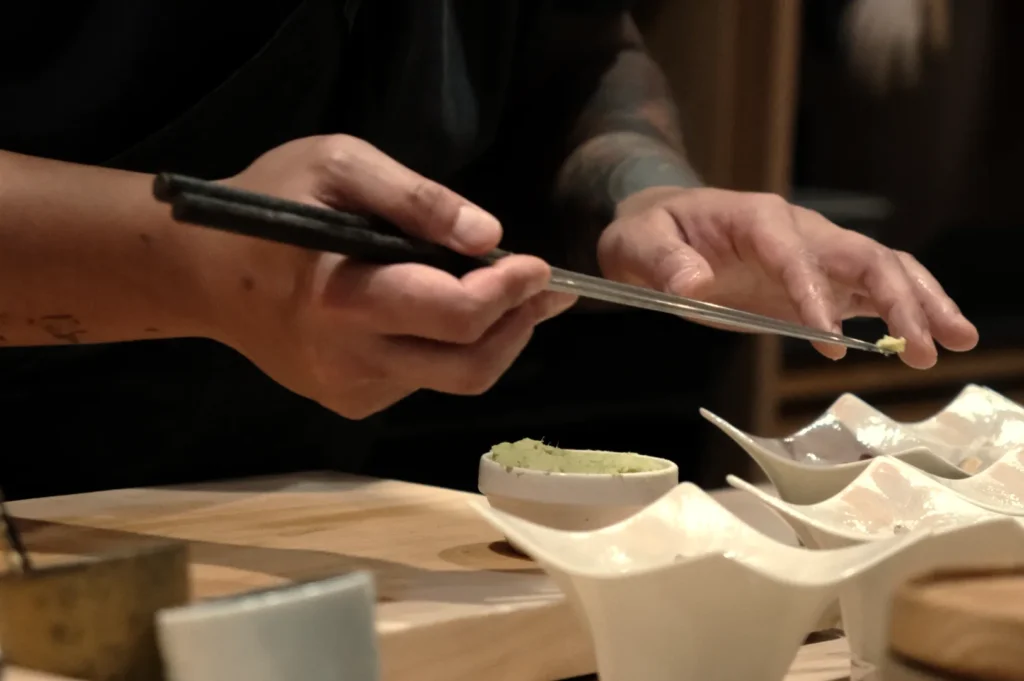
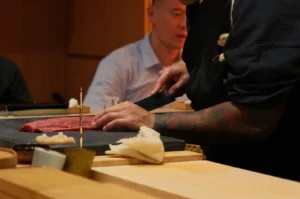
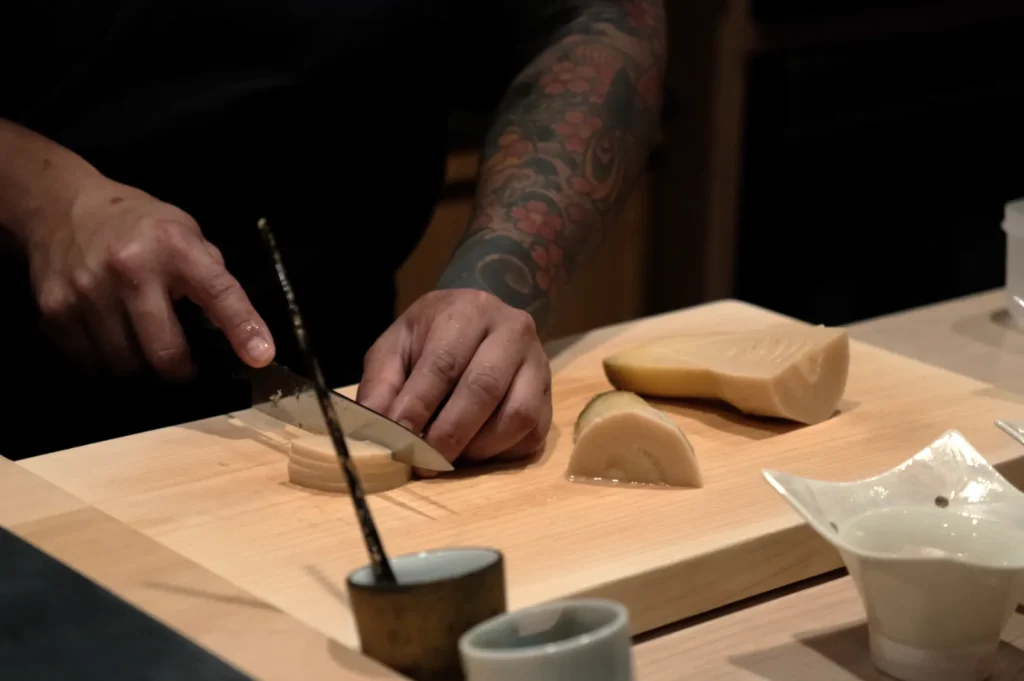
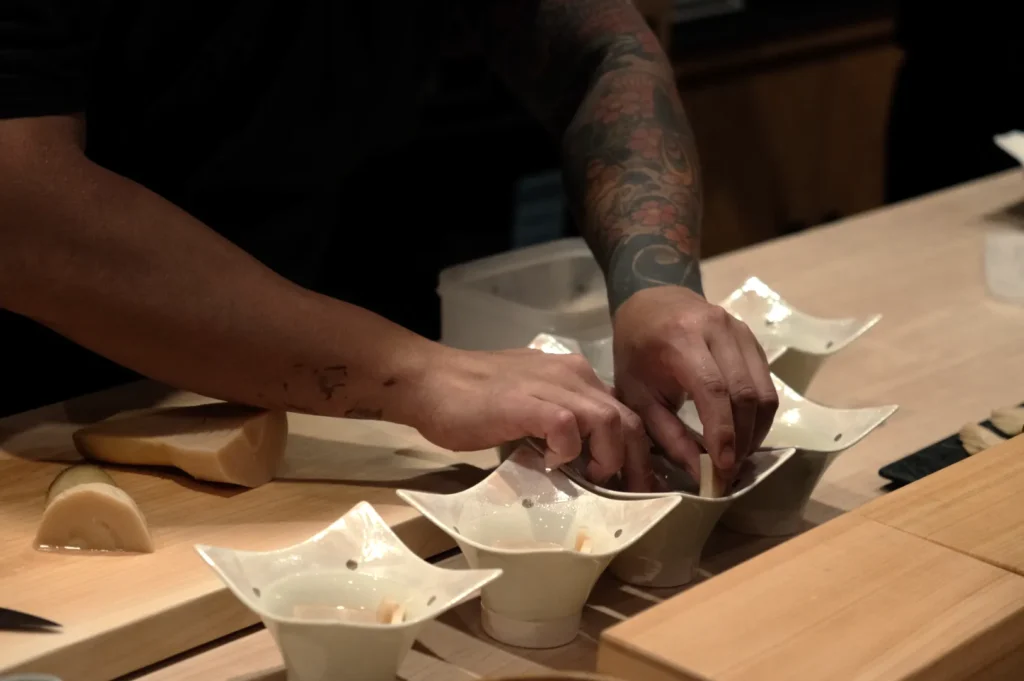
A counter seat puts a guest close enough to watch each cut, each portion of rice, each finishing touch before a plate arrives, often from just a few feet away. This is not simply about visibility. It changes how food is served and how a chef can respond to the guest in front of them, giving each diner far greater access to the person actually preparing their meal. Portions can be adjusted, pacing can shift, and small comments about the fish or the season can pass between chef and diner without either having to raise their voice across a room.
Sushi Masa by Ki-Setsu is designed entirely around this idea. Our dining room holds only eight seats, all of them at the counter, so that every guest has a direct line of sight to Chef Masa as he works. There is no pass, no distance between the kitchen and the table. What a guest sees is exactly what is about to be served.
Why Fewer Seats Can Mean More Room to Enjoy the Meal
It may seem that a small counter offers less room than a table, but the opposite is often true in terms of experience. A counter seat gives each guest their own space directly in front of the chef, free from the crowded feeling that can come with a larger dining room. There is enough room for plates, glassware and the quiet choreography of service, without the meal ever feeling rushed or impersonal.
Counter seating also tends to encourage a different kind of conversation. Guests often find themselves speaking with the chef as much as with their companion, asking questions about the ingredients, the sourcing or the technique behind a particular cut. It is a more intimate style of dining, one that suits guests who want to understand what they are eating rather than simply eat it.
This is one reason counter seating has become increasingly common across fine dining more broadly, not only in Japanese cuisine. As open kitchens have grown more popular, guests have shown a clear preference for watching a dish come together rather than having it arrive, fully finished, from somewhere out of sight. A short chat with the person cooking the meal, even a passing comment about the season’s catch, adds something a table on the far side of the room simply cannot offer.
Why Table Seating Still Has Its Place
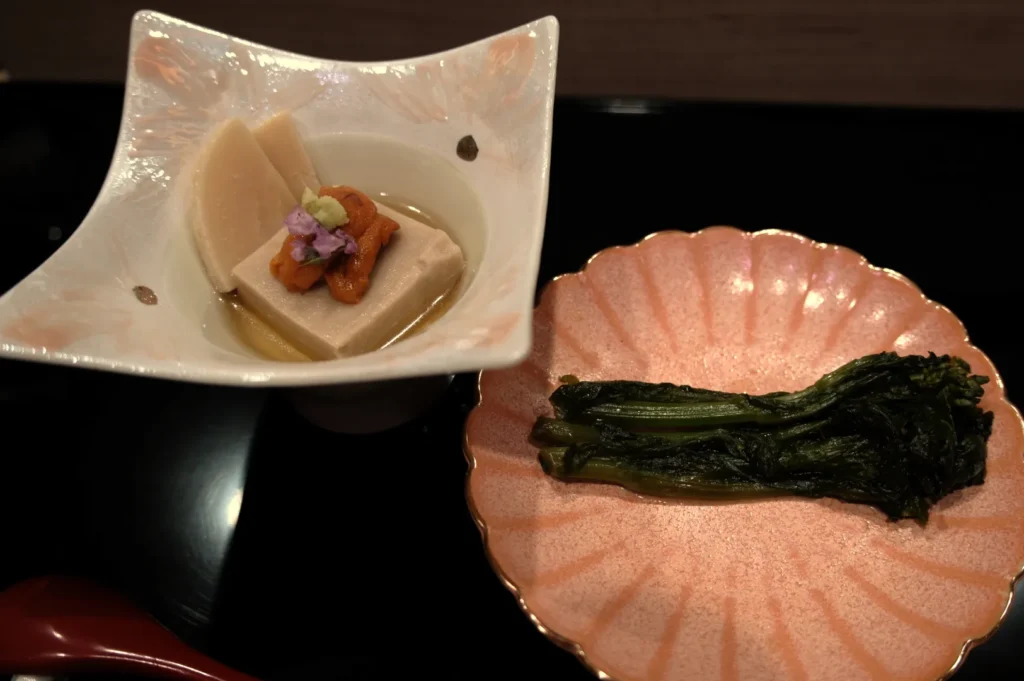
None of this means table seating lacks appeal. For larger groups, a table is often the more practical option. It allows more than two people to sit comfortably, face one another and share dishes at a pace that suits the whole group rather than one diner at a time. Many restaurants, particularly those serving a broader style of Japanese cuisine, rely on tables to accommodate parties, families and guests who prefer a more relaxed, casual evening.
Tables also give diners more freedom to move, to stand between courses or simply to sit back without being visible to the open kitchen. For some, that distance is exactly what they prefer. A meal built around conversation with friends, rather than around watching a chef work, often suits a table far better than a counter.
The truth is that the better choice depends entirely on what a guest wants from their evening. A romantic dinner or a solo visit to taste a chef’s craft up close tends to favour the counter. A celebration with a larger party, where the food is one part of a bigger occasion, often favours the table.
Counter Height Tables, Materials and Comfort: The Details That Matter
Once the layout is decided, the physical details of the counter itself start to matter. Counter height tables are typically taller than standard dining tables, built to match the working height of the kitchen so that food can be served directly without awkward reaching. Seat height is adjusted accordingly, with stools or high chairs designed to bring guests level with the counter surface rather than looking up at it.
Materials matter too. A counter used for sushi preparation needs to be durable enough for commercial use night after night, resistant to knife work, moisture and the constant movement of hands and plates across its surface. Many kitchens choose hinoki wood for exactly this reason. It is prized in Japanese cuisine not only for its appearance but for how it ages, developing a soft patina that reflects years of careful use.
| Feature | Counter seating | Table seating |
|---|---|---|
| Typical seat height | Higher, matched to counter height | Standard chair height |
| Best suited for | Solo diners, couples, small groups | Larger parties, families |
| Sightline | Direct view of chef and preparation | Limited or no kitchen view |
| Pace of service | Set by the chef, course by course | Set by table, more flexible |
| Atmosphere | Intimate, focused | Social, relaxed |
This is not simply a design preference. The height of a counter, the depth of the seat and the space allowed for each guest all affect comfort over the course of a long dinner. A counter that is too low forces guests to lean forward all night. One that is properly proportioned lets a diner sit naturally for hours without discomfort, which matters greatly during a multi course omakase meal.
Small details are easy to forget when a room is first designed, but they shape how a guest feels by the final course. The distance between one seat and the next, the size of the surface in front of each diner and even how close a chair sits to the floor all add up. A well proportioned counter gives every guest enough personal space to rest a glass, set down chopsticks and lean in to watch without ever feeling cramped beside the next seat.
The Sushi Masa by Ki-Setsu Approach
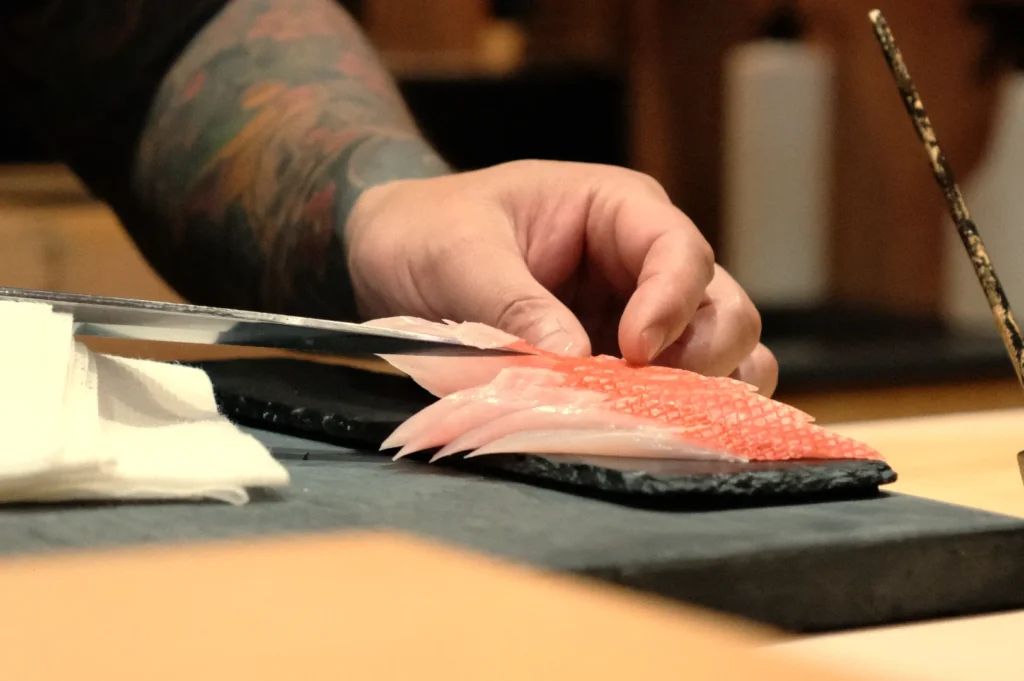
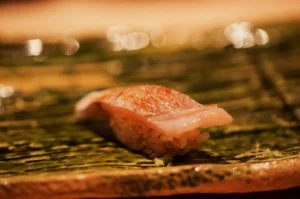
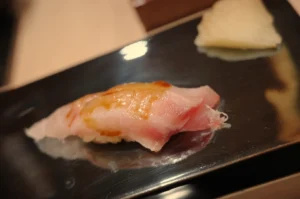
At Sushi Masa by Ki-Setsu, the counter is not an aesthetic choice layered on top of the menu. It is the foundation of how we serve omakase. With only eight seats in the entire dining room, every guest sits close enough to see the fish before it is cut, to watch rice being shaped by hand and to follow the quiet rhythm of a chef who has spent years refining this single craft.
Chef Masa sources ingredients from Toyosu Market daily, and much of what arrives finds its way to the counter within hours. Seated at the counter means guests can ask about that morning’s catch, understand why a particular cut was chosen for the season and taste dishes the moment they are ready, rather than after they have travelled across a room. This is the Edomae tradition at its core: proximity, freshness and trust between chef and guest.
Because there is no table service in the traditional sense, the counter also shapes the pace of the evening. Courses arrive when they are ready, not on a fixed schedule, and conversation with Chef Masa becomes as much a part of dinner as the food itself. For guests who have only known restaurants built around tables, this style of dining can feel like a genuine act of discovery.
Choosing What Matches the Evening
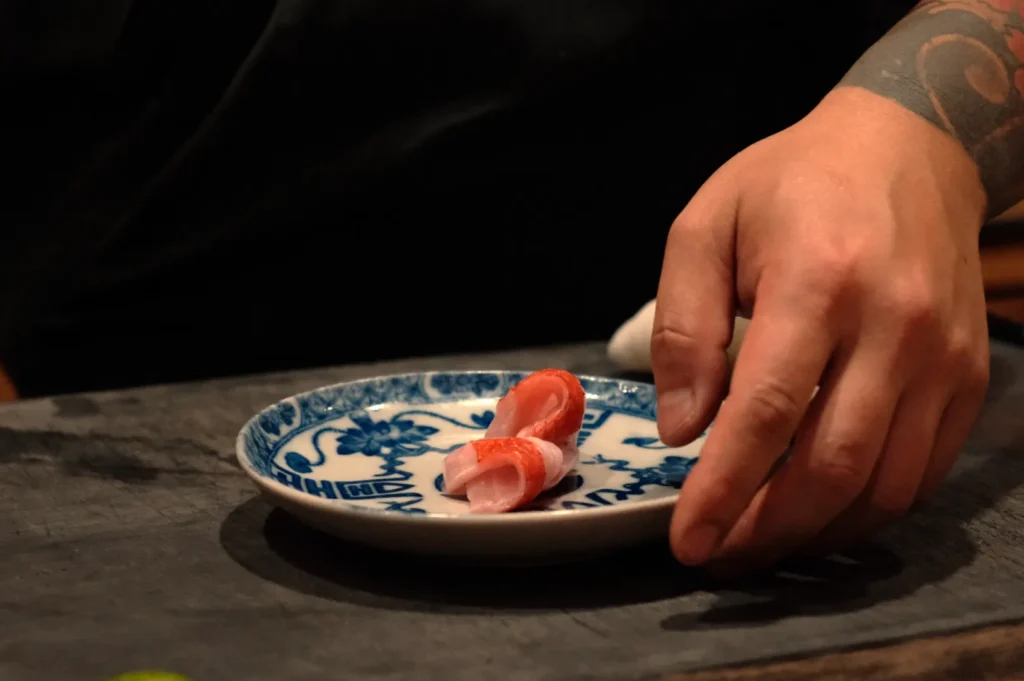
Deciding between counter and table seating ultimately comes down to what a guest hopes to take from the meal. Those who want to watch, ask questions and feel connected to the craft behind each course tend to prefer the counter. Those planning a larger celebration, where the room and the company matter as much as the food, often lean towards a table.
There is no single right answer, and most guests, once they understand the difference, find they naturally gravitate towards the style that suits their evening. Understanding this before booking helps set expectations, whether the goal is a quiet dinner for two or a wider gathering with friends.
An Invitation to Experience the Counter
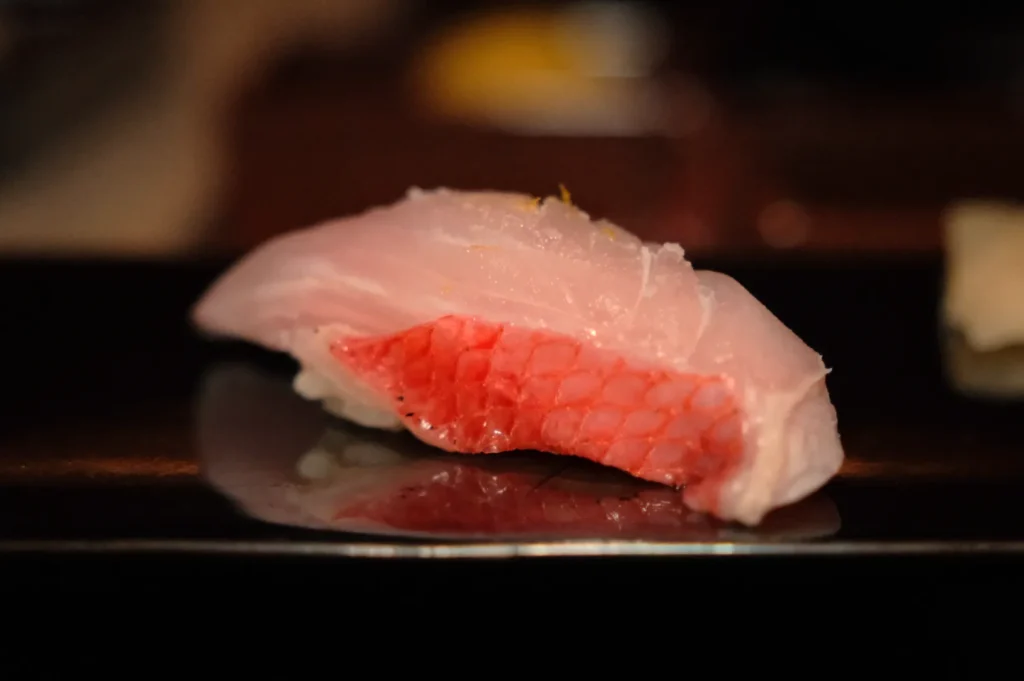
Sushi Masa by Ki-Setsu was built around a simple belief: that the best way to enjoy omakase is to sit close, watch closely and taste each course the moment it is ready. Our eight seat counter is not a limitation but a deliberate choice, creating a space that reflects the trust between chef and guest at the heart of Edomae sushi.
For guests who have never dined at a counter before, or for those who have not watched a chef work this closely in some time, we extend an invitation to visit Sushi Masa by Ki-Setsu and discover what that difference actually feels like over the course of an evening.