There is a quiet moment in every great Japanese meal before the first bite, before the chopsticks lift, when something registers on the palate almost subconsciously. A warmth. A depth. A kind of savory completeness that no single ingredient seems to explain. That invisible presence is dashi. It is the soul of Japanese cuisine, the liquid scaffolding upon which centuries of culinary tradition have been built, and yet most diners never once think to name it.
In Singapore’s growing omakase scene, where precision and provenance are everything, dashi is the silent differentiator between a meal that is technically correct and one that is genuinely transcendent. This subtle stock underpins every course in an authentic omakase experience, elevating each dish with its profound umami essence.
What Is Dashi? Understanding the Bedrock of Japanese Cuisine
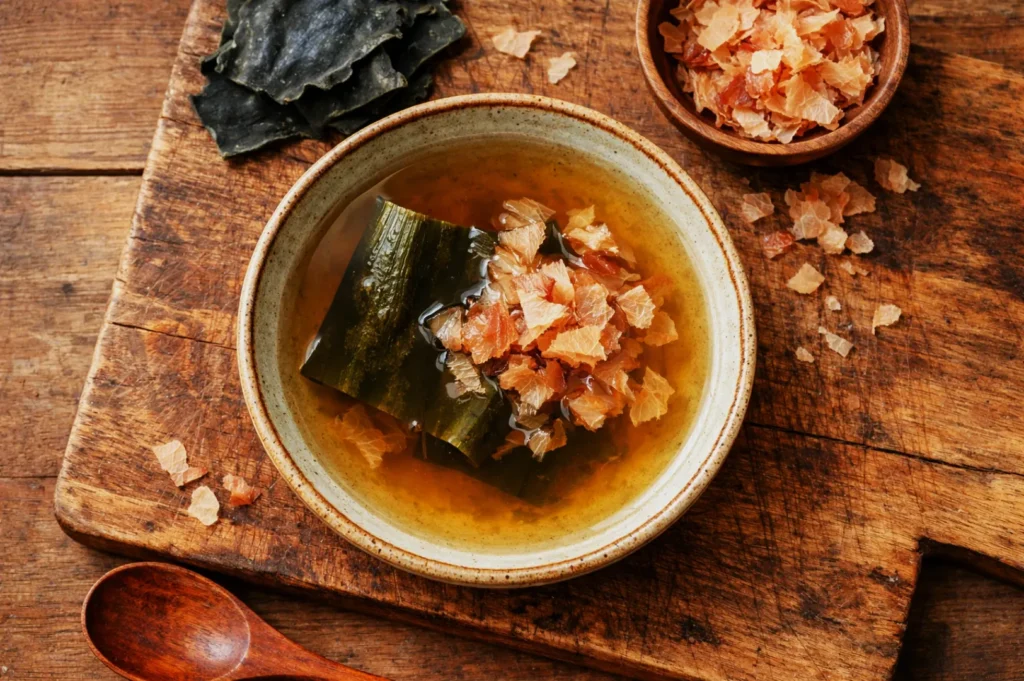
Dashi is a Japanese soup stock, deceptively simple in construction yet staggering in its culinary reach. Unlike Western stocks that simmer for hours, extracting body and richness from bones and aromatics, dashi is typically a brief, almost meditative process: cold water, a few key ingredients, gentle heat, and restraint.
The result is a broth of crystalline clarity that carries an extraordinary depth of umami, that elusive fifth taste identified by Japanese chemist Dr. Kikunae Ikeda at Tokyo Imperial University in 1908. Ikeda discovered that glutamate, an amino acid abundant in kombu (dried kelp), was responsible for a distinct savory sensation that could not be categorized under the four basic tastes of sweet, sour, salty, or bitter. He named it umami, loosely translated as “pleasant savory taste.” What Ikeda formalized in a laboratory, Japanese cooks had already been practicing intuitively for over a millennium.
The earliest records of kombu-based broths trace back to Japan’s Muromachi period (1336–1573), though culinary historians suggest that dried kelp was used in cooking as early as the Nara period (710–794). The refinement of katsuobushi, a fermented and smoke-dried skipjack tuna, as a dashi ingredient emerged later during the Edo period (1603–1868), when Japan’s culinary culture crystallized into much of what we recognize today. The combination of kombu and katsuobushi created a synergistic umami effect: glutamate from the kelp amplified by inosinate from the dried bonito, producing a broth greater than the sum of its parts.
The Core Dashi Ingredients: Anatomy of a Perfect Stock
Kombu: The Mineral Backbone
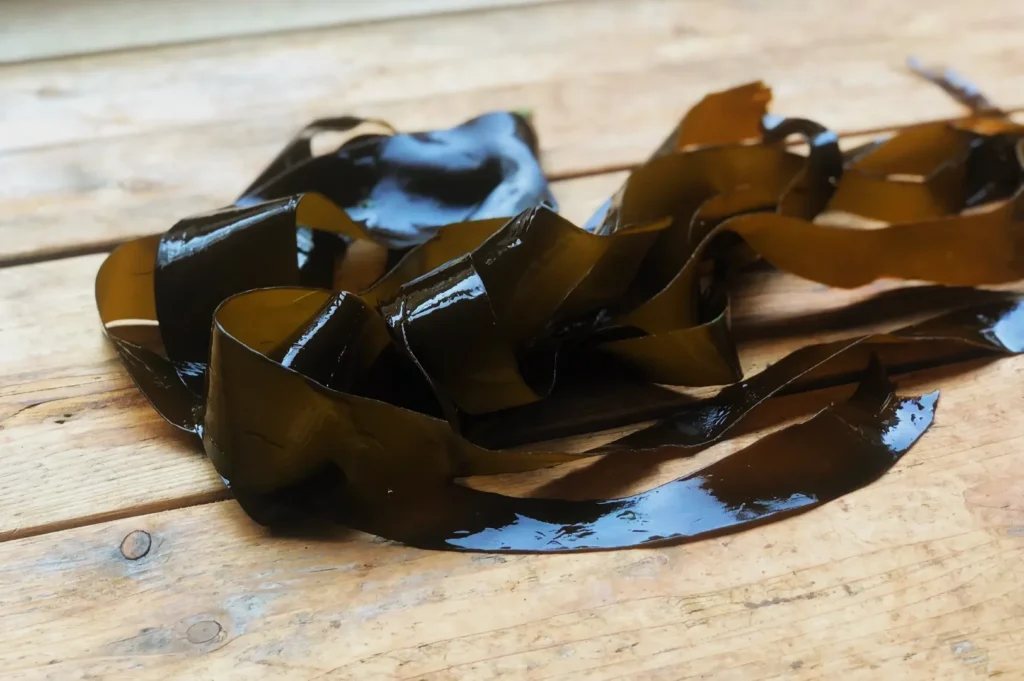
Kombu, the dried kelp harvested primarily from the cold waters of Hokkaido, is the foundational dashi ingredient in most traditional Japanese cooking. Its surface carries a fine white powder called mannitol, a naturally occurring umami substance that must never be washed away. Competent dashi making always begins with a gentle wipe using a dry cloth, not rinsing.
The kombu is cold-steeped or gently heated to just below boiling, around 60°C, where glutamate extraction is optimal. Allowing the water to reach a full boil releases bitter compounds from the kelp, muddying the subtle flavor profile that defines a well-made kombu dashi.
Katsuobushi: The Soul of Ichiban Dashi
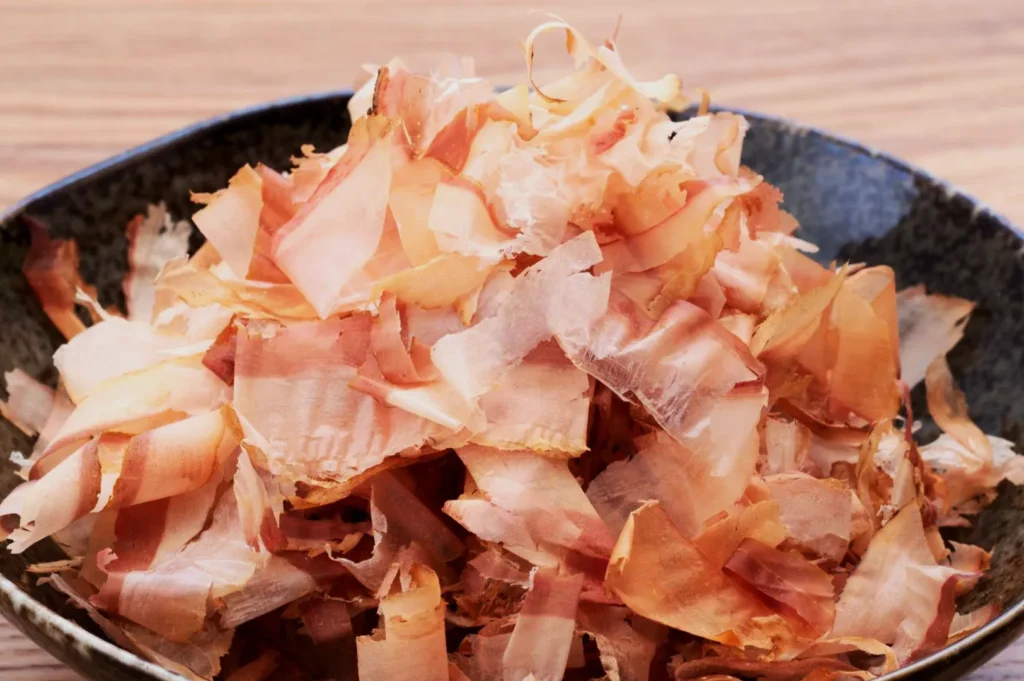
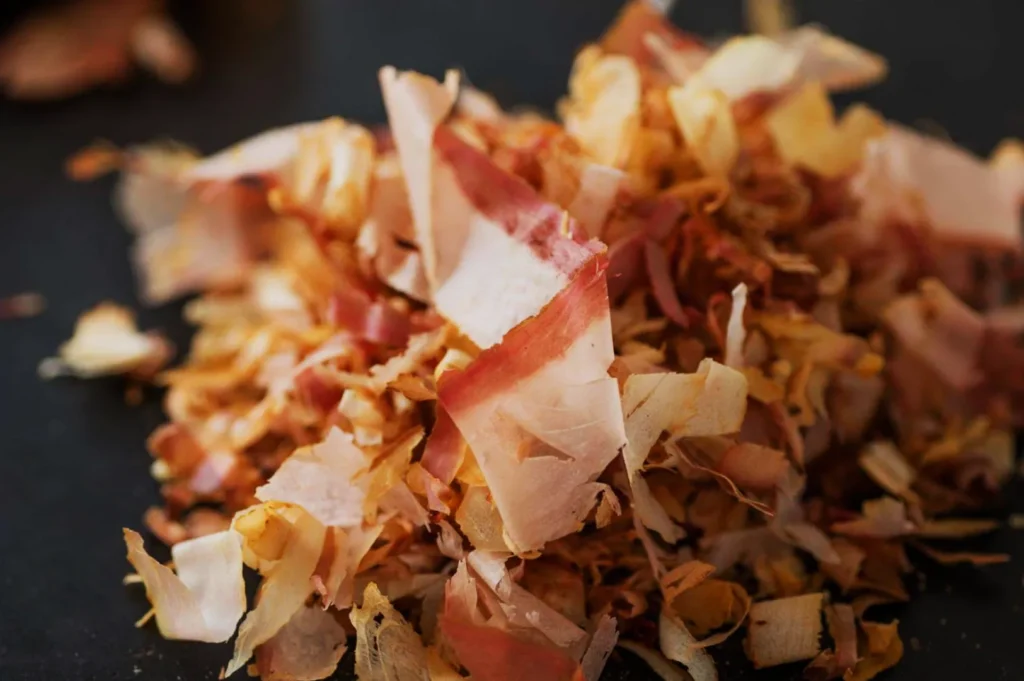
Katsuobushi, often referred to in English as bonito flakes or dried bonito, is the second pillar of classic dashi. These thin flakes are shaved from blocks of skipjack tuna that have been simmered, smoked, dried, and in premium preparations, aged with mold (Aspergillus glaucus) for months or even years. The result is a deeply savory, slightly smoky ingredient whose inosinate content synergizes powerfully with kombu’s glutamate.
In the preparation of ichiban dashi, literally “first dashi” and the highest-grade extraction, katsuobushi flakes are added to hot kombu water, steeped briefly for no more than two to three minutes, and then carefully strained. The result is a pale golden broth of extraordinary elegance: clean, aromatic, lightly smoky, with an umami depth that seems to expand on the palate. Ichiban dashi is reserved for clear soups and the most delicate Japanese dishes, where nothing can mask its refinement.
Dried Shiitake: The Vegetarian Umami Powerhouse
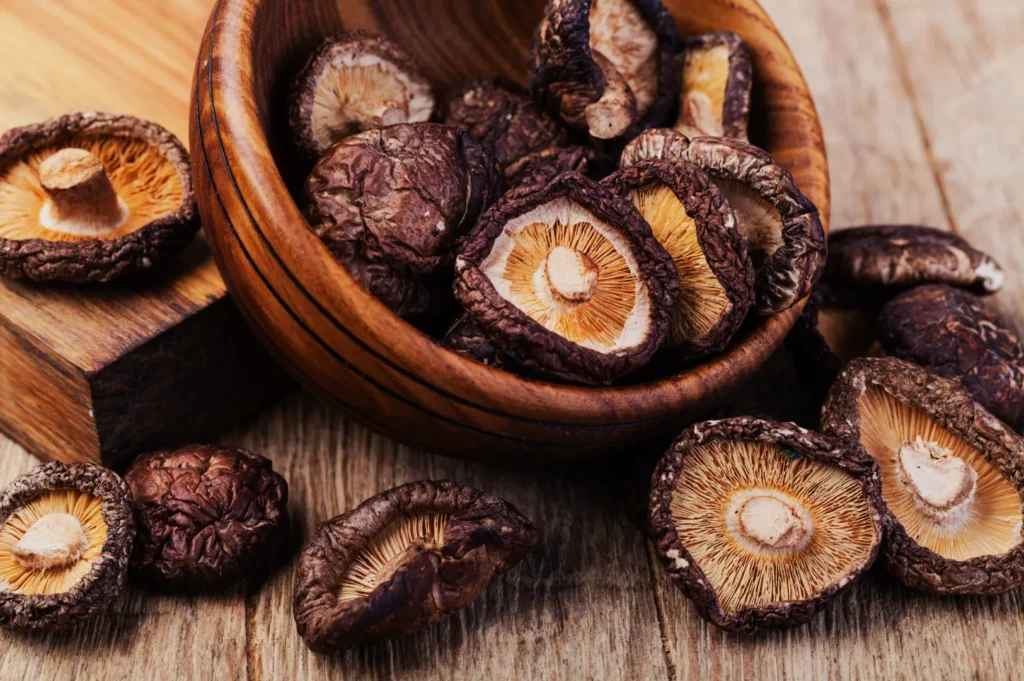
For a vegetarian dashi, one deeply rooted in the Buddhist vegetarian traditions of temple cuisine (shojin ryori), dried shiitake mushrooms serve as the primary umami source. Shiitake dashi is produced through cold water extraction: dried shiitake are submerged in cold water and left to steep overnight in a refrigerator.
This slow extraction draws out guanylate, yet another amino acid-derived umami compound, from the dried mushrooms. Like the inosinate in katsuobushi, guanylate acts synergistically with kombu’s glutamate, creating a vegetarian dashi of surprising intensity. The resulting broth is darker, earthier, and more robust than katsuo dashi, making it an excellent base for certain simmered dishes and deeply flavored Japanese recipes.
Types of Dashi: A Hierarchy of Purpose
| Dashi Type | Primary Ingredients | Flavor Profile | Best Used For |
|---|---|---|---|
| Ichiban Dashi | Kombu + katsuobushi | Delicate, clean, aromatic | Clear soups, refined broths |
| Niban Dashi | Spent kombu + additional katsuobushi | Robust, fuller body | Miso soup, simmered dishes, rice bowls |
| Kombu Dashi | Kombu only | Mild, mineral, clean | Vegetable dishes, light sauces |
| Shiitake Dashi | Dried shiitake mushrooms | Earthy, deep, rich | Braised dishes, vegan preparations |
| Katsuo Dashi | Katsuobushi only | Smoky, direct, savory | Dipping sauces, noodle broths |
| Niboshi Dashi | Dried anchovies (niboshi) | Bold, briny, rustic | Hearty miso soups, home-style cooking |
The distinction between ichiban dashi and niban dashi, the first and second dashi, is one that culinary students and food professionals must internalize. Where ichiban dashi is precious and refined, niban dashi is practical and hearty. After the first extraction, the spent kombu and katsuobushi flakes still hold considerable flavor. Returned to a pot with fresh water and gently simmered for a longer period, they yield a second dashi that is fuller and more assertive, ideal as a base for miso soup, braised proteins, and simmered vegetables. In traditional establishments, nothing is wasted: both extractions serve a defined role.
Japanese Dashi in Practice: From the Stock Pot to the Serving Bowl
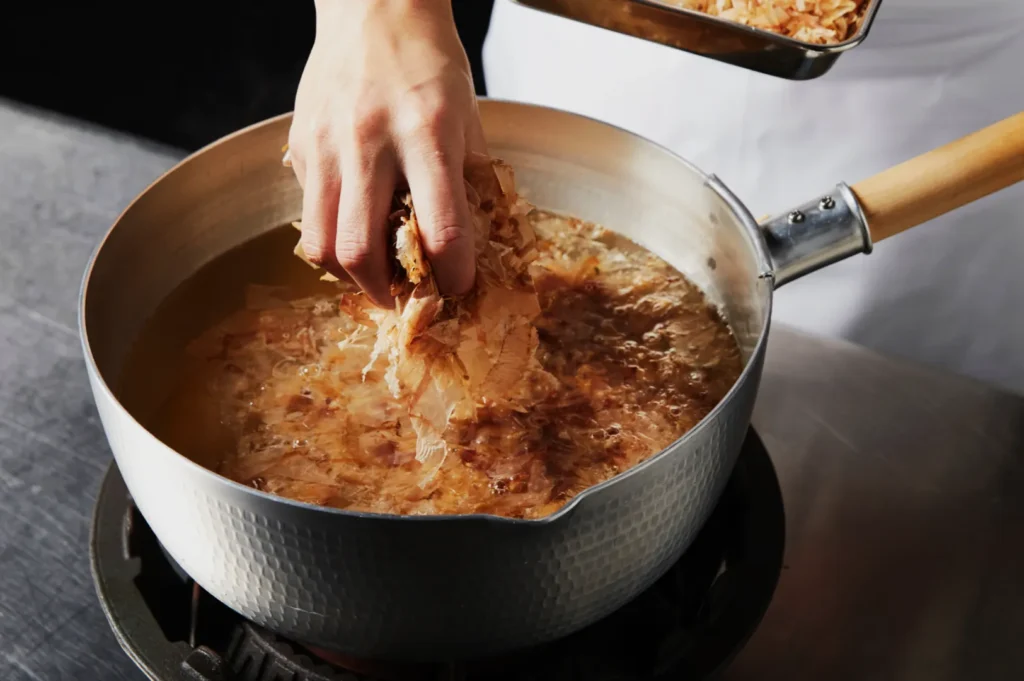
Understanding Japanese dashi on paper is one thing. Recognizing its presence across Japanese recipes is where the education becomes visceral.
Miso soup is perhaps the most ubiquitous application. The miso paste itself, salty, fermented, and complex, is dissolved into a base of warm dashi. Without that dashi foundation, miso soup collapses into a flat, salty liquid. The dashi provides the resonant depth that makes miso soup feel nourishing rather than merely seasoned.
Chawanmushi, the delicate savory egg custard, relies entirely on a precise ratio of egg to dashi. The dashi permeates the custard, giving it its characteristic savory silkiness. Too little dashi and the custard tastes eggy and dense; the right proportion produces something ethereal, barely set, trembling with umami.
Dashi-maki tamago, the rolled Japanese omelette, incorporates dashi directly into beaten egg, resulting in a subtly sweet, deeply savory preparation that bears almost no resemblance to its Western equivalents.
Soba and udon broths in traditional preparations are built on katsuo dashi or niboshi dashi, seasoned with soy sauce and mirin, creating the warm, amber-colored broth that carries the noodles. It is a testament to dashi’s versatility that the same core technique serves both the most rarefied omakase counter and the most humble street-side noodle stall.
Homemade Dashi vs. Instant Dashi: The Craft Behind the Broth
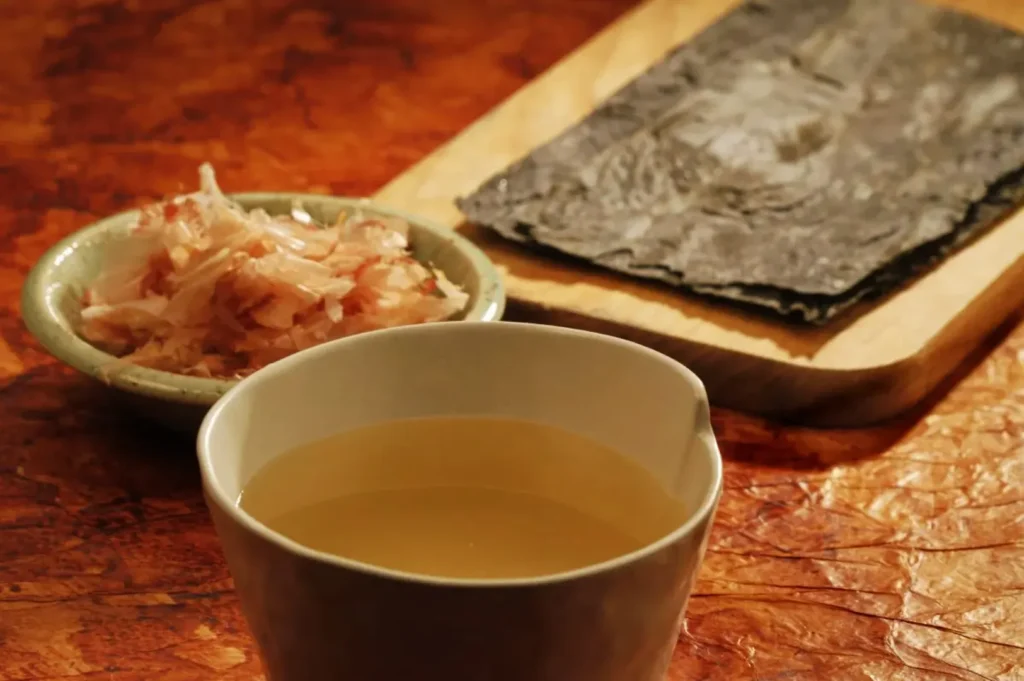
The modern market offers instant dashi, granulated or liquid concentrates that dissolve in hot water. These products, while convenient, represent a significant compromise. Instant dashi formulations frequently contain added salt, monosodium glutamate, and flavor enhancers that produce an approximation of umami rather than its authentic expression. The layered complexity of properly made homemade dashi, its mineral clarity, its aromatic delicacy, the way it changes subtly depending on water temperature and steeping time, cannot be replicated by a powder.
In Japanese cooking at the highest level, dashi making is a daily discipline, not an afterthought. The water quality matters. The grade of kombu matters; premium Rishiri or Rausu kombu from Hokkaido produces markedly different results from commodity-grade dried kelp. The age and shave thickness of the katsuobushi flakes matter. Even the mineral content of the local water supply, which affects how glutamates dissolve and interact, becomes a variable that seasoned cooks account for.
This is why the dashi served at a serious omakase counter is never sourced from a packet. It is made fresh, often daily, sometimes in multiple grades for different courses, and calibrated to the specific dishes it will carry that evening.
Japanese Cooking at the Highest Level: Dashi in the Omakase Context
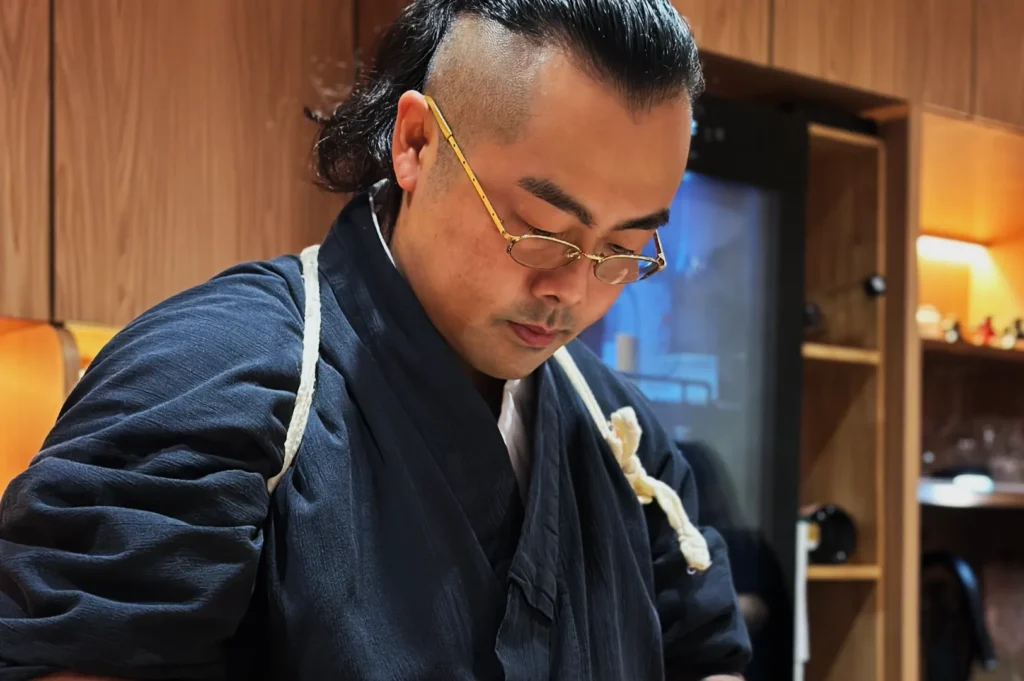
In Singapore’s omakase dining scene, dashi functions as a philosophical statement as much as a culinary one. A chef who commands their dashi commands the entire meal. Every sauce, every soup, every braised element, every carefully seasoned rice bowl passes through or alongside a dashi preparation. It is the common thread that gives a multi-course omakase its coherence, that sense that every dish, however different in texture or temperature or visual presentation, belongs to the same culinary universe.
Diners attuned to Japanese food will notice the quality of the dashi in the clarity of the suimono (clear soup), in the way a simmered dish carries its seasoning without heaviness, in the background resonance of a perfectly dressed piece of fish. It is never the loudest element. Its genius is precisely that it is almost imperceptible, present enough to elevate everything, restrained enough to never compete.
At Sushi Masa by Ki-setsu, we approach dashi not as a preparation but as a commitment. Our chef, Chef Masa, brings the Edomae tradition to every omakase dinner we offer, a tradition in which stock-making is treated with the same reverence as the selection of seafood sourced directly from Toyosu Market. The dashi that moves quietly through our courses is made fresh, calibrated to the season, and built from the finest kombu and katsuobushi available. We invite you to experience not just what is on the plate, but what makes the plate possible: that invisible, irreplaceable foundation that defines what Japanese dining at its most honest truly means.