There are few ingredients in Japanese cuisine that inspire as much reverence as uni. Silken, briny, and deeply complex, uni sea urchin occupies a singular place at the sushi counter, one that even experienced diners sometimes find difficult to fully articulate. It is the kind of ingredient that rewards curiosity. The more you understand about Japanese uni types, the more you come to appreciate every piece placed before you.
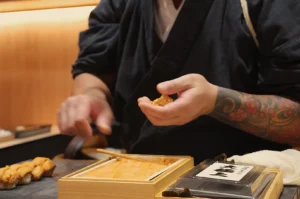
At Sushi Masa by Ki-Setsu, uni is never treated as a garnish or an afterthought. Chef Masa sources each variety directly from Toyosu Market in Japan, ensuring that what arrives at our eight-seat counter is at its absolute peak. Understanding which Japanese sea urchin is on the menu, and why, is part of what makes the omakase experience here so meaningful, truly reflecting why Sushi Masa is regarded among the best omakase Singapore has to offer.
What Makes Japanese Sea Urchin So Distinctive
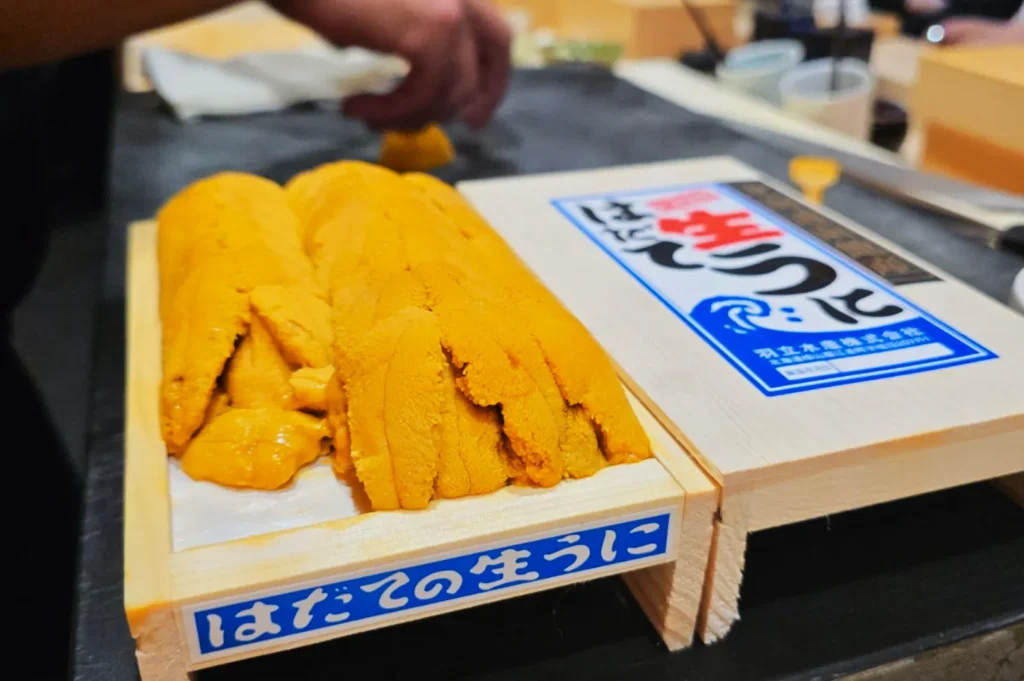
Sea urchin, or uni as it is known in Japanese, refers to the edible part of the urchin, specifically the gonads or reproductive organs, which are prized for their intensely flavorful, creamy texture and unmistakable sweetness. In Japan, uni is treated with extraordinary care from the moment it is harvested, and the quality difference between a well-handled piece and a poorly stored one is immediately apparent on the palate.
Japanese uni is generally graded by colour, freshness, and region of origin. The finest grades display a bright orange or deep golden hue, hold their shape without collapsing, and carry a clean, oceanic sweetness rather than any trace of bitterness. This is what separates high quality uni from the generic sea urchin found in lesser preparations.
The most commonly discussed Japanese uni types in omakase circles are murasaki uni, bafun uni, and aka uni. Each comes from a different species of sea urchin, thrives in different waters, and offers a distinctly different experience on the palate.
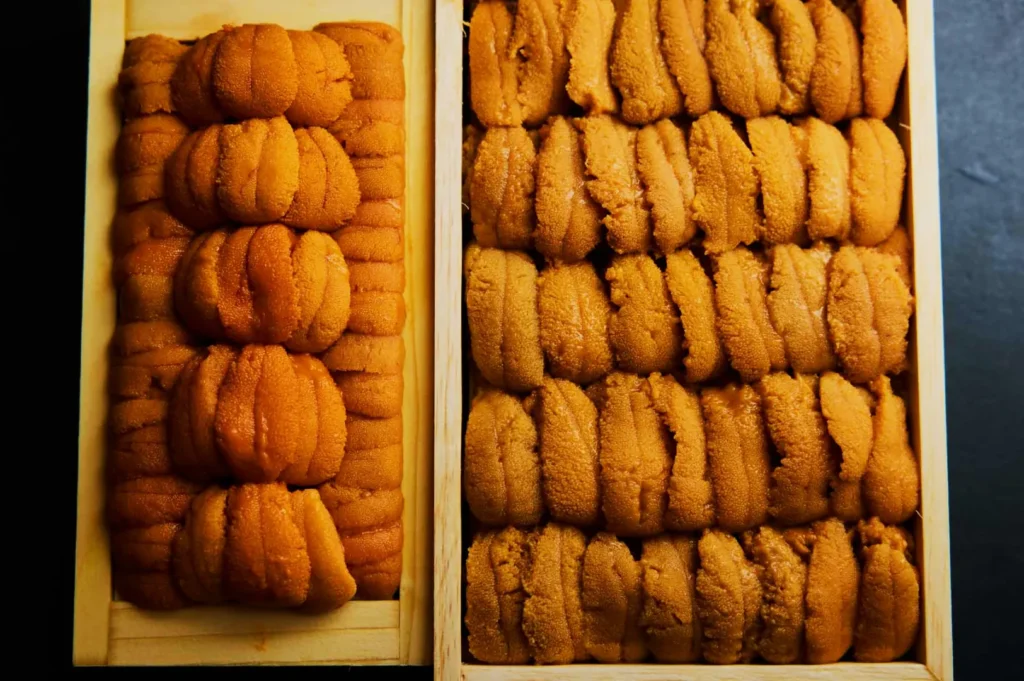
Murasaki uni, whose name translates to “purple sea urchin,” is arguably the most common sea urchin found at Japanese sushi restaurants across the country. Despite being widely available, it is far from ordinary. Kita murasaki uni, or kitamurasaki uni, is the variety harvested predominantly from the cold waters of Hokkaido in northern Japan. It is a large species, which makes it relatively easier to handle, and it yields generous, pale yellow pieces with a mild, mildly sweet flavour profile.
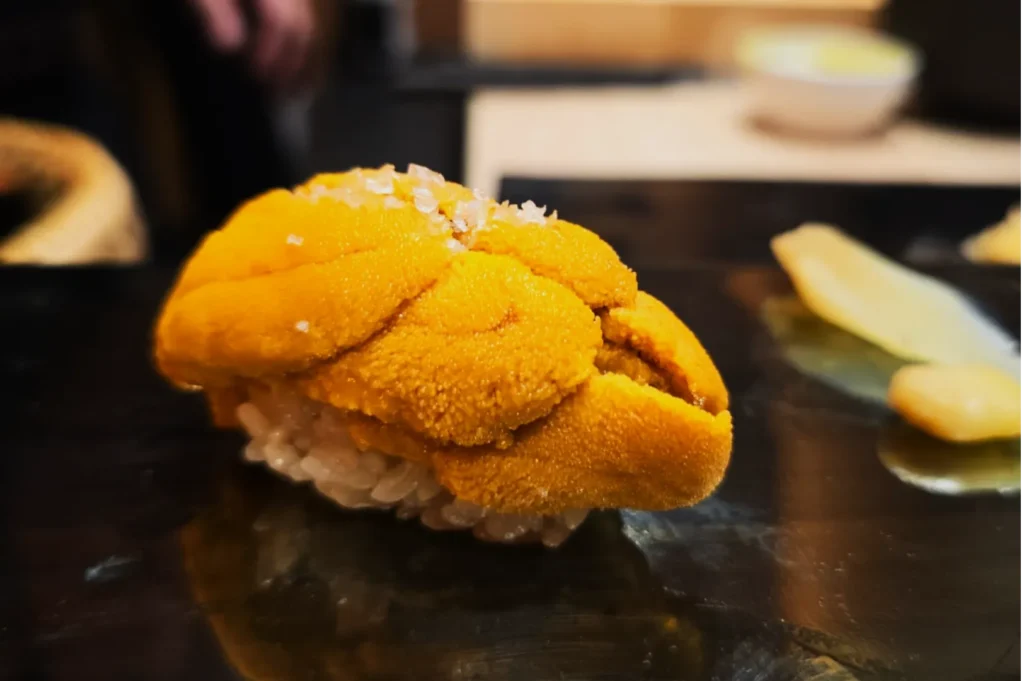
The kitamurasaki uni season typically peaks in late summer, when the sea urchin’s reproductive organs are most developed and most flavourful. During this peak season, the pieces develop a delicate sweetness and a clean finish that makes them exceptionally well-suited to nigiri sushi. Chef Masa prepares murasaki uni as a sushi topping placed gently over seasoned sushi rice, allowing the uni’s natural flavour to remain the focal point.
Kita Murasaki Uni in Omakase
For those encountering uni for the first time, kita murasaki uni is often the most approachable entry point. Its flavour is less assertive than other Japanese uni types, with a more delicate texture and a gentle sweetness that melts in your mouth without overwhelming the senses.
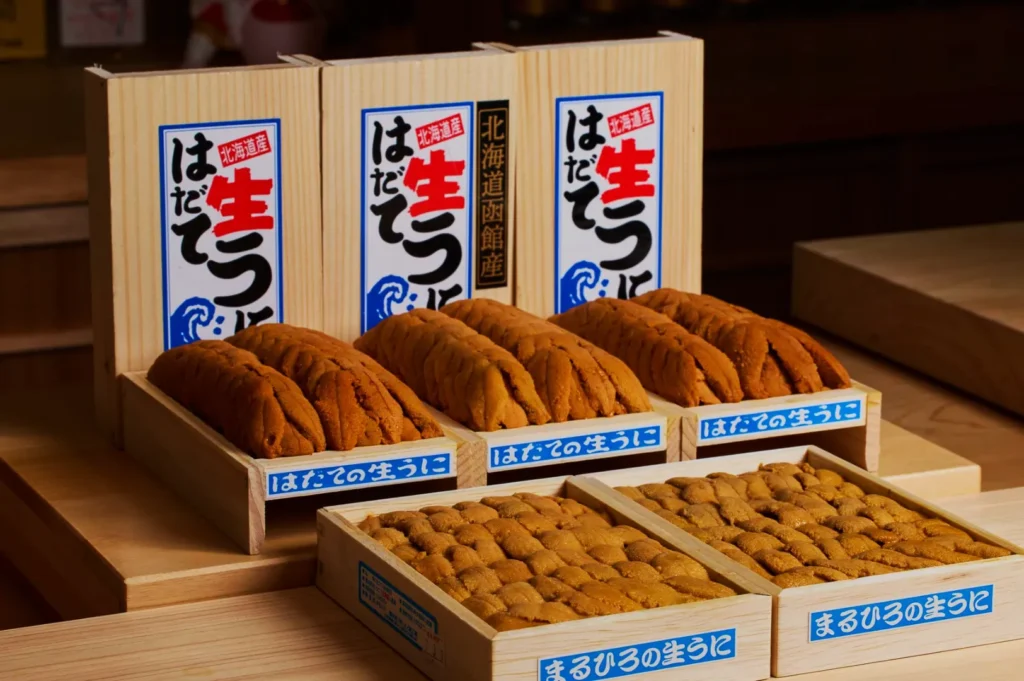
If murasaki uni is the approachable introduction, bafun uni is the centrepiece. The name, which translates loosely to “horse dung sea urchin” or horse poop uni, is somewhat unglamorous, but the sea urchin itself is anything but. Bafun uni is smaller and darker than murasaki uni, displaying a rich dark orange colour that signals its characteristic intensity.
The flavour of bafun uni is considerably more robust. It carries a strong umami flavour alongside its natural sweetness, and the creamy consistency lingers on the palate in a way that few ingredients can match. Its custard-like texture is dense and luscious, and it possesses what many sushi chefs describe as the quintessential uni taste.
Ezo bafun uni, harvested from the waters around Hokkaido, is widely considered the finest grade of bafun uni available. Cold water produces slower-growing sea urchins with more concentrated flavour, and ezo bafun uni exemplifies this. When Chef Masa selects ezo bafun uni from Toyosu Market, he is seeking pieces with a dark orange color, firm structure, and a sweetness that is balanced by deep, almost oceanic umami.
How Bafun Uni Differs from Murasaki Uni
The contrast between bafun uni and murasaki uni is immediately apparent when both are presented side by side. Where murasaki uni offers delicate flavours and a lighter creaminess, bafun uni delivers intensity and richness. The spawning season for both varieties affects flavour significantly. During spawning season, uni can become bitter and watery, which is why sourcing uni harvested outside of this window is essential. This is precisely why we rely on Toyosu, where the grading process ensures that only the best pieces reach our counter.
Aka Uni: The Red Sea Urchin of Western and Southern Japan
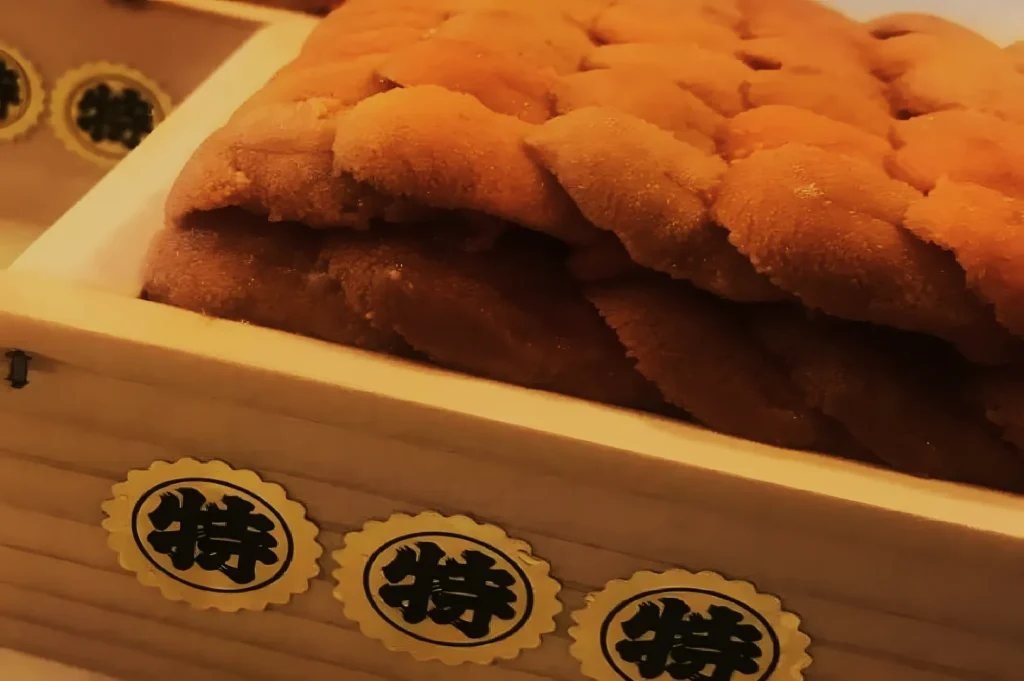
Aka uni, or red sea urchin, is less frequently encountered in Singapore’s omakase scene but is an important part of the broader Japanese uni landscape. Harvested primarily from the warmer waters along the western coast and southern Japan, aka uni is a larger species with a spiny exterior and a colour profile that trends toward a deeper orange.
The flavour of aka uni sits somewhere between the delicacy of murasaki uni and the assertiveness of bafun uni. It has a sweet flavour with moderate umami and a creamy texture, though its profile can vary considerably depending on the region and season in which it is harvested. In areas along the west coast of Japan, aka uni is a beloved local ingredient, often enjoyed simply, as a uni sushi piece wrapped in nori seaweed or presented in a gunkan maki, the battleship roll style of sushi that cups the uni within a border of nori seaweed wrapped around sushi rice.
How Uni Is Served at the Omakase Counter
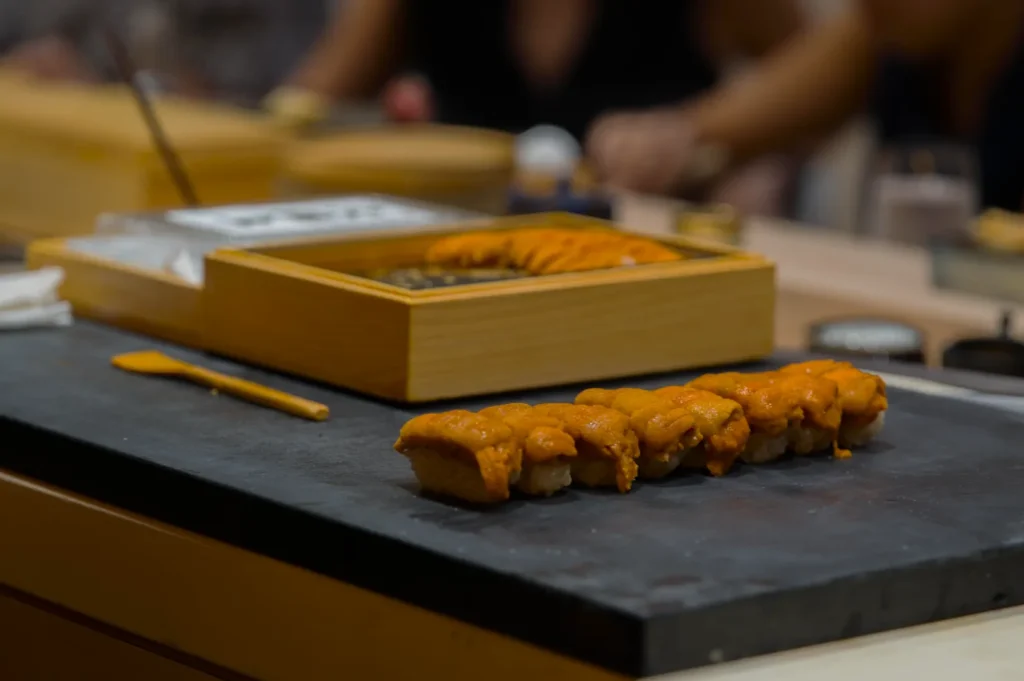
Understanding Japanese uni types is only part of the story. The manner in which uni is served is equally important. At most high end sushi restaurants practising the Edomae tradition, uni is presented in one of several classic forms.
Nigiri sushi remains the most refined presentation. A small mound of uni is placed atop a hand-pressed piece of sushi rice, sometimes with a dab of wasabi between the two. The warmth of the rice gently tempers the uni, encouraging its creamy sauce-like texture to soften further. It is typically served without soy sauce, as the natural salinity and sweet flavour of fresh uni need no additional seasoning.
Gunkan maki, or battleship roll, is the alternative that many guests encounter first. Here, sushi rice is shaped into an oval and encircled by a strip of nori seaweed, with uni piled generously within. An uni temaki, the hand-rolled cone of nori containing uni and rice, is another format that allows diners to enjoy uni with a slightly different textural contrast. Chef Masa selects the presentation based on the specific variety of uni available that evening, always with the goal of letting the ingredient express itself most honestly.
Uni also appears in cooked dishes and as a creamy sauce in uni pasta at many Japanese dining establishments, though at Sushi Masa by Ki-Setsu, our focus remains firmly on the omakase counter, where fresh uni in its most direct form takes precedence.
Shiro Uni and Shirahige Uni: Lesser-Known Varieties
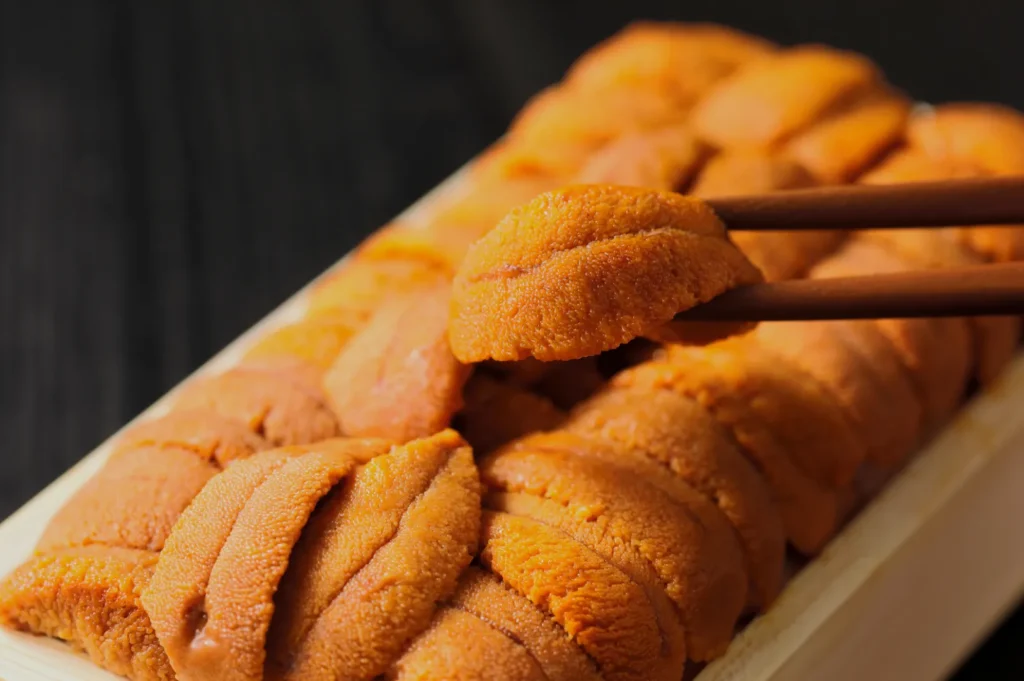
Beyond the well-known trio of murasaki, bafun, and aka uni, there are less commonly encountered varieties that occasionally appear at the omakase counter. Shiro uni, sometimes referred to as white uni, is a rarer variety prized for its pale colour and gentle flavour. Shirahige uni is another less widely discussed type, found in more limited regions and seasons.
When these varieties do appear at Toyosu and meet Chef Masa’s exacting standards, they may find their way onto the evening’s menu at Sushi Masa by Ki-Setsu. Part of the joy of omakase is precisely this element of discovery, placing trust in the chef to bring the finest seasonal ingredients to the counter, whether familiar or entirely new.
Finding Uni Worth the Experience
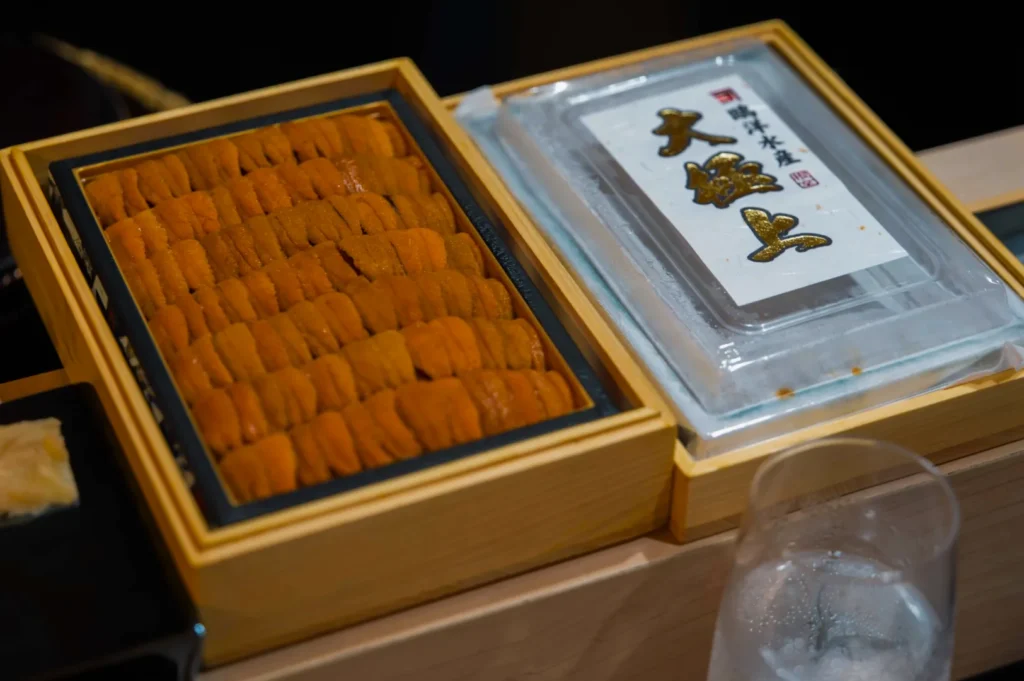
Not all uni is equal. The difference between poorly stored sea urchin and a piece of ezo bafun uni or kita murasaki uni at its seasonal peak is almost incomparable. Fresh uni should carry a clean, sweet oceanic scent, hold its shape without collapsing, and dissolve into a creamy richness the moment it meets the palate. It should never smell sharp or taste bitter.
This is why the sourcing and handling of uni matters as much as the species itself. At Sushi Masa by Ki-Setsu, ingredients are flown in from Toyosu Market daily, maintaining the cold chain integrity that keeps uni at its most vibrant. Each piece presented at our counter is selected by Chef Masa personally, with the kind of attention that only a singular chef working an intimate eight-seat counter can sustain.
If you have been curious about Japanese uni types but have not yet had the opportunity to enjoy uni in its finest form, the omakase counter is where that experience should begin. We warmly invite you to join us for dinner at Sushi Masa by Ki-Setsu, where every variety of uni that arrives is treated with the craft and reverence it deserves.