Why You Won’t Find Omakase Delivery Singapore at Sushi Masa by Ki-Setsu
The term omakase has become a global shorthand for luxury, yet its true essence remains one of the most misunderstood concepts in modern Japanese cuisine. Stemming from the verb makaseru, which translates to “to entrust,” this arrangement transcends the boundaries of a mere meal. It represents a profound spiritual and technical covenant forged between the chef and the diners.
In the bustling gastronomic landscape of Singapore, where islandwide delivery has become the default for convenience, the absence of an omakase delivery Singapore option at the city’s most uncompromising ateliers is not a failure of logistics, but a rigorous defense of culinary art.
To understand why a true omakase cannot be packed into a box, one must delve into the centuries-old philosophy of Edomae sushi, the physics of seafood degradation, and the ephemeral nature of the sushi experience. This raises a fundamental question for the discerning gourmet: What Defines a World-Class Meal? Navigating the Sushi Masa by Ki-Setsu Omakase Singapore Price reveals that the value lies not just in the ingredients, but in the immediate, fleeting perfection of the art that no islandwide delivery could ever preserve.
The Edomae Philosophy: A Race Against Time
The roots of the modern omakase are firmly planted in the Edomae tradition of Tokyo (formerly Edo). Historically, this style was built on the necessity of preservation. Before refrigeration, sushi was a street food where seafood was cured in salt, vinegar, or soy sauce to maintain its flavour.
Today, the art of Edomae sushi has evolved into a high-wire act of temperature control. A master chef manages three critical temperatures simultaneously:
The Shari (Rice): Maintained at body temperature to ensure the grains are light and separate.
The Neta (Toppings): Varied based on the fish. For example, toro might be served slightly cooler to allow the fat to melt upon contact with the tongue, while white fish is served at a crisp cellar temp.
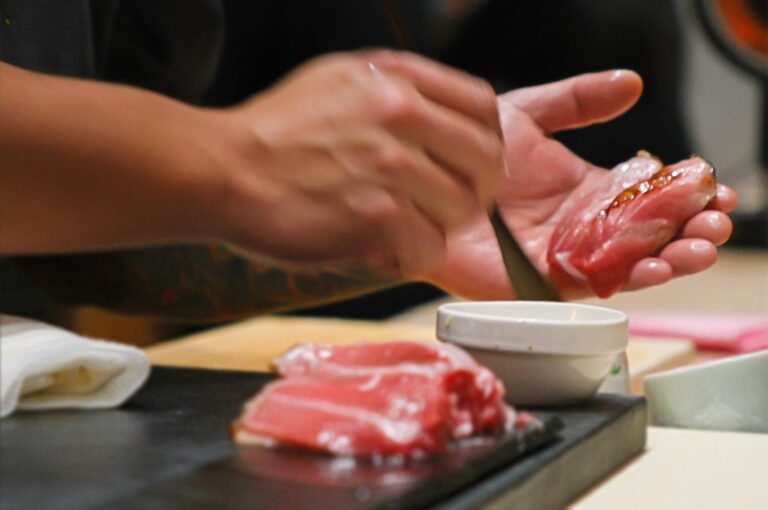
The Hands: The chef uses a specific working rhythm to ensure the heat from their palms does not “cook” the delicate oils of the fish.
The Science of "The Golden Window"
When sushi is served at a table, there is a “Golden Window” of approximately 30 seconds. During this time, the layered structural integrity of the shari is at its peak. As soon as a piece is present on the geta (wooden board), the moisture from the rice begins to migrate into the seafood, and the vinegar begins to evaporate. By the time a delivery driver navigates Singapore traffic, the sushi is no longer a masterpiece but a chemical shadow of its former self.
The Anatomy of Japanese Cuisine: Why It Defies the Box
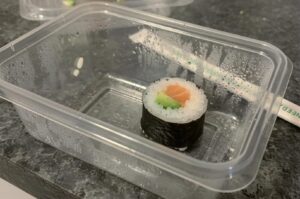
An omakase is a narrative feast choreographed in real-time. It is not a static meal but a conversation. Unlike a maki roll, which is structurally sound, a hand-pressed nigiri is a fragile equilibrium of air and pressure.
Element | The Omakase Standard | The Delivery Reality |
|---|---|---|
Rice Texture | Light, airy, and disintegrates on the palate. | Compressed and hardened by the cold or packed tightly for transport. |
Seafood State | Sliced seconds before consumption to prevent oxidation. | Oxidation begins immediately, dulling the flavour of uni and otoro. |
Seasoning | Brushed with nikiri (sweetened soy) by the chef for immediate balance. | Pre-applied sauce soaks into the fish, masking its natural sweetness. |
Temperature | Precisely calibrated to the season. | Reaches ambient temperature, causing fats to congeal. |
The Role of Shari in Omakase Delivery Singapore
The heart of sushi is the rice. Many diners mistakenly believe the fish is the most important element, but in Japan, a chef is judged first by their shari. The vinegar-seasoned rice is a living thing. When packed in a box for islandwide delivery, the lack of airflow causes the rice to “sweat,” leading to a soggy texture that destroys the interpretation of the dish.
From Toyosu to the Table: The Journey of Ingredients
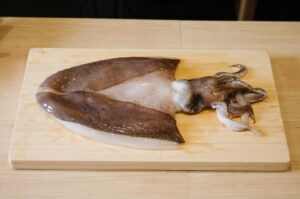
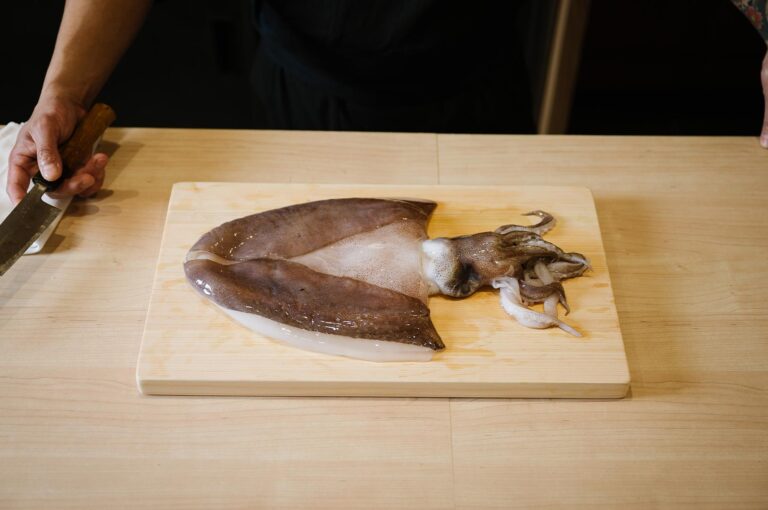
The fresh seafood used in a high-end omakase often originates from the Toyosu market in Tokyo. These ingredients are flown in several times a week, sometimes daily, representing the pinnacle of the year’s harvest.
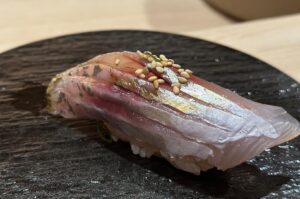
The chef’s passion lies in showcasing the season. In the spring, one might indulge in Sayori (Halfbeak); in the winter, the toro reaches its most decadent fat content. To order these items for home consumption is to strip them of their context. A chef observes the diners, noting if they are eating quickly or slowly, and adjusts the pace of the course accordingly. This human connection is the “soul” of the meal that cannot be replicated in a bottle of soy sauce or a plastic container.
The Luxury of Extremes: Uni and Caviar
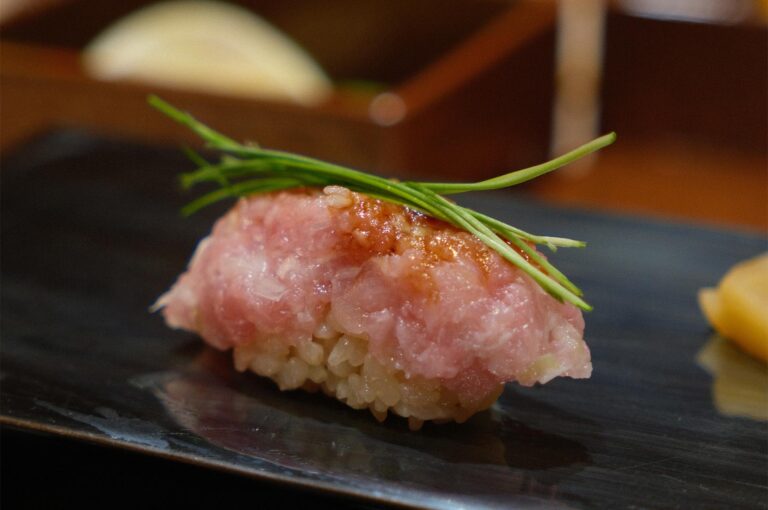
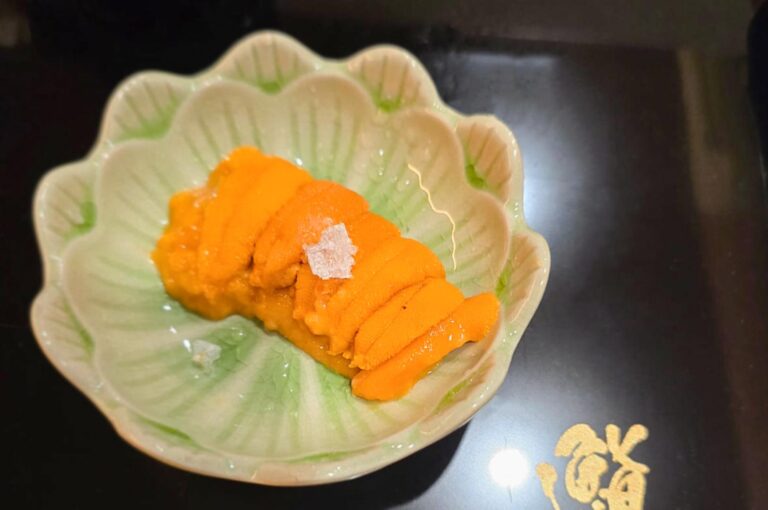
Consider the uni (sea urchin). High-grade uni is incredibly volatile. When topped onto a piece of sushi, it begins to lose its shape within minutes. In a restaurant setting, it is a creamy delight. In a delivery box, it often collapses, losing its structural art and becoming a singular, flat flavour. Similarly, caviar or otoro require specific thermal environments to showcase their complex, layered notes.
The Risks of Islandwide Delivery for Delicate Textures
Consider the uni (sea urchin). High-grade uni is incredibly volatile. When topped onto a piece of sushi, it begins to lose its shape within minutes. In a restaurant setting, it is a creamy delight. In an islandwide delivery box, it often collapses, losing its structural art and becoming a singular, flat flavour. Similarly, caviar or otoro require specific thermal environments to showcase their complex, layered notes.
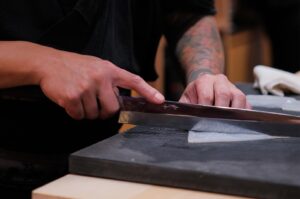
In traditional Japan, the sushi counter is a stage. The chef uses age-old techniques to bring out the hidden depths of a fish through jukusei (aging). For instance, certain white fish are closed in kelp (the kobujime technique) for days to concentrate glutamate levels. To find this level of detail in a pick-up order is statistically impossible.
“True omakase is a performance where the audience and the performer are in constant flux. To remove the chef from the diner is to remove the heartbeat from the sushi.”
Why "Sushi Masa by Ki-Setsu" Remains On-Site Only
While multiple outlets and delivery apps have made food more accessible, they have also diluted the standard of what constitutes a treat. For those who love the art of the sushi meal, the journey to the restaurant is a necessary pilgrimage. It is an indulgement that requires one’s full attention, away from the distractions of home.
At the highest level of Japanese cuisine, the chef transcends the role of a mere cook. They serve as a vital guardian of a tradition that has flourished for centuries. Every find from the ocean is treated with a passion that borders on the sacred. By refusing to offer omakase delivery Singapore, certain establishments are making a statement: some things are too precious to be moved.
The Vision of Chef Masa
At Sushi Masa by Ki-Setsu, we believe that the true art of the omakase can only be realized when the chef and the diners share the same space. This is why our chef, Chef Masa, meticulously prepares every course for dinner only, ensuring that each of the pieces (from the silken uni to the marbled otoro) is served at the exact moment of perfection. Our chef’s philosophy is rooted in the Edomae tradition, utilizing ingredients sourced directly from Toyosu to bring the authentic flavour of Japan to your table.
We invite you to dine with us and enjoy a sushi experience that is built on passion, where every note of fresh seafood and every grain of shari is a delight meant to be experienced in the moment, never packed for a later time.