Hamachi is the young Japanese amberjack, Seriola quinqueradiata. It is one stage in the life of a single fish, and that fish matures into buri.
At 30 to 60cm, and typically one to two years old, hamachi sits at a gentle midpoint. It is rich and buttery enough to satisfy, yet milder and more tender than the mature buri it will become.
Because hamachi is the most widely farmed yellowtail stage in the world, it is often a guest’s first meeting with Japanese amberjack. That makes sake pairing with hamachi a natural place to begin. Its moderate fat and soft texture show the core sake pairing principles for seafood clearly, and they open the way to bolder matches later on.
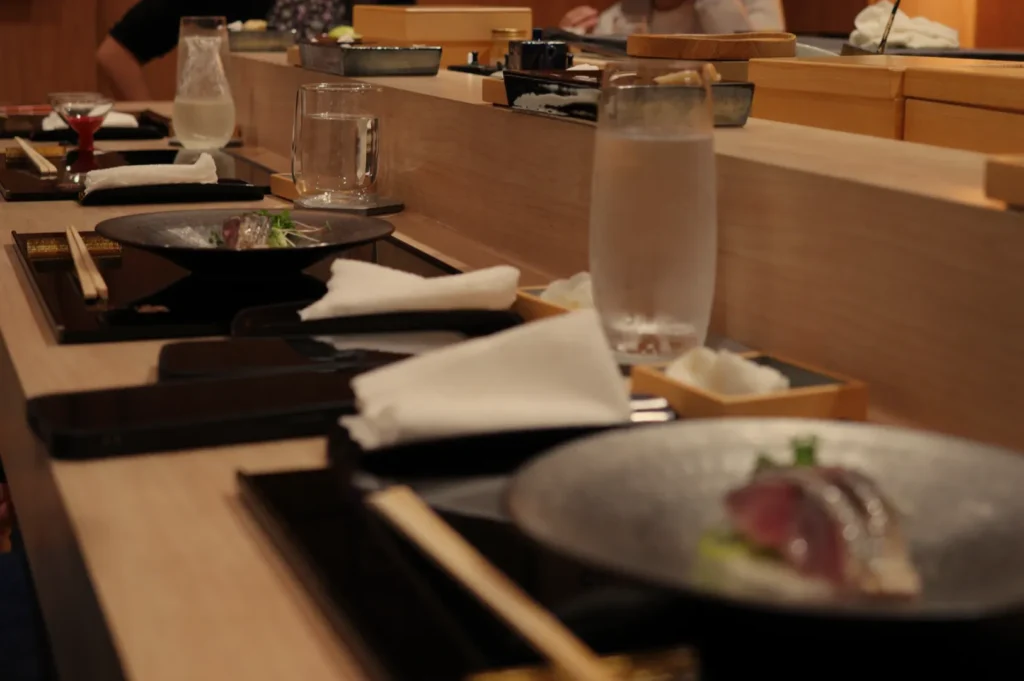
At Sushi Masa at Cuppage Plaza, hamachi arrives as part of an omakase journey. Each piece is placed with intention, and a carefully chosen sake follows it.
What Is Hamachi? The Young Yellowtail Defined
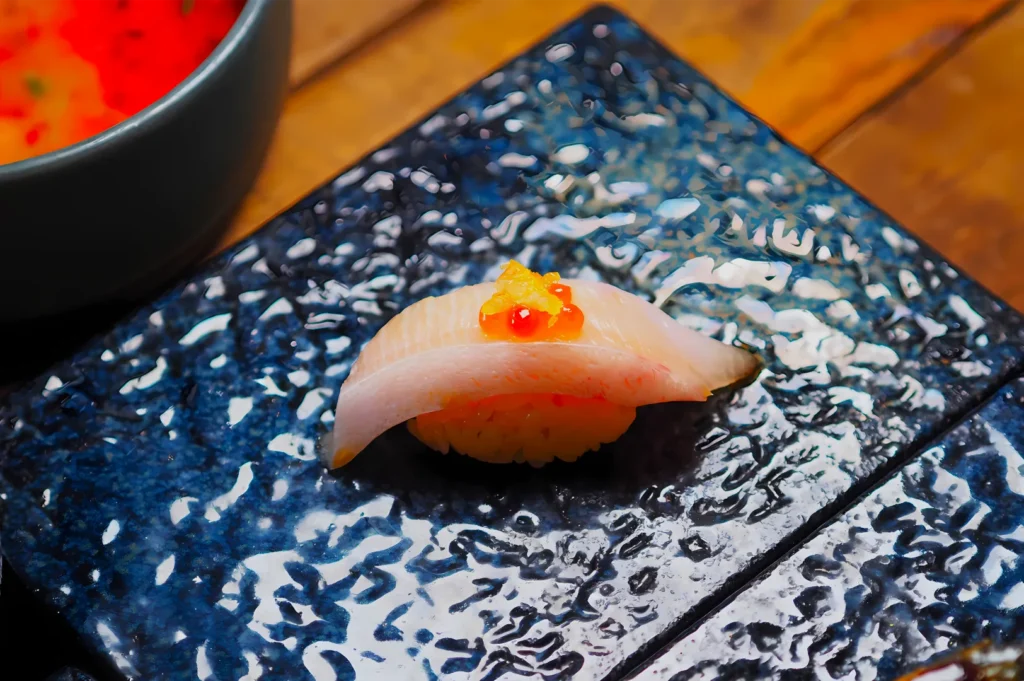
Hamachi is not a separate species from buri. It is a life stage of Seriola quinqueradiata, named under the Japanese tradition of shusse-uo, or “promotion fish”. These are fish that take a new name as they grow.
The progression runs:
Tsubasu (under 10cm) → Inada (10 to 20cm) → Hamachi (30 to 60cm) → Mejiro (60 to 80cm) → Buri (80cm and above)
Regional names vary across Japan, but the principle holds. Hamachi is the young adult. It is old enough to have built real flavour and fat, yet young enough to keep a tender, almost buttery texture.
Farmed Hamachi and Why It Matters
Most hamachi is farmed. Controlled feed and calm aquaculture waters produce a softer, more consistently fatty fish than wild specimens. This is the key to its character. Wild fish change with the seasons and the sea. Farmed hamachi stays steady.
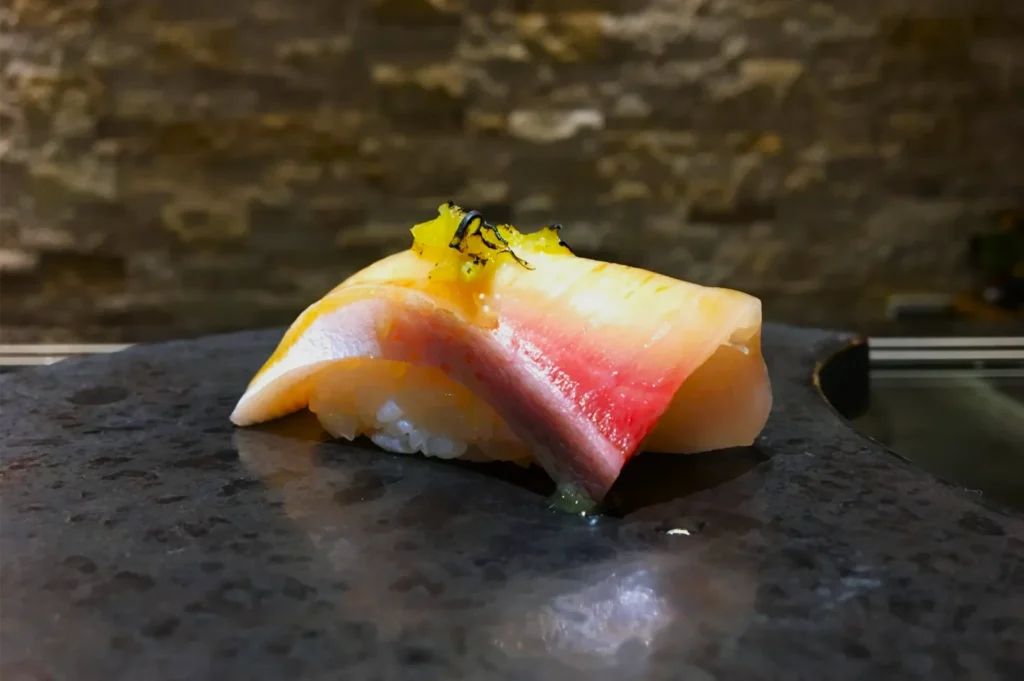
The flesh is a rich yellow-gold, with moderate marbling. It melts smoothly, without the density of mature buri. The flavour is sweet and rounded, but never as bold or layered as wild winter buri.
Because it is farmed, hamachi is available all year. It is a reliable presence at the counter, whatever the month.
Common Preparations
- Sashimi: the most popular way to enjoy young yellowtail around the world
- Nigiri: often finished with scallion, grated ginger or ponzu
- Aburi: lightly seared, so the fat softens and gently warms
- Hamachi kama: the grilled collar, a prized cut with deep richness
The global love for young yellowtail sashimi makes this one of the most approachable fish and sake pairings for anyone new to Japanese cuisine.
Hamachi's Flavour Profile and Pairing Chemistry
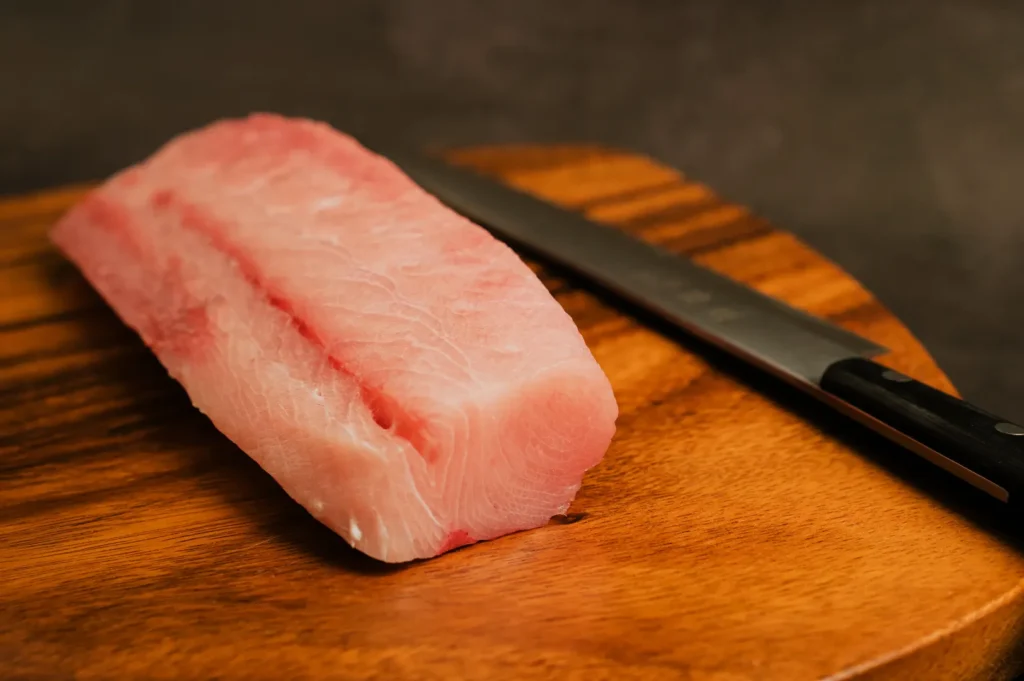
Hamachi is soft, clean, and gently rich. Its character lives in the fat, and the right sake answers with acidity and restraint. To understand the pairing, begin with how that fat sits beside its closest relatives.
Fat: Hamachi vs. Buri and Hamachi vs. Kanpachi
Hamachi’s fat content is moderate to high. It holds less fat than mature buri, and more than kanpachi.
Kanpachi, the greater amberjack (Seriola dumerili), is a different species altogether. It is leaner and firmer, with a cleaner finish. Hamachi is softer and richer. Buri, at full maturity, is richer still.
This middle position defines the pairing. Hamachi’s fat coats the palate gently, so the sake needs enough acidity to refresh. Yet it must not carry so much structure that it overwhelms the fish’s milder character.
Umami Synergy
Hamachi’s umami comes largely from inosinic acid, and its level is moderate to high. When inosinic acid meets the glutamates in sake, the two amplify each other. The savoury depth on the palate grows rounder and longer.
With hamachi, this synergy is real but gentler than with tuna or mature buri. It rewards a sake that supports rather than competes.
Tenderness: The Deciding Factor
The most important consideration is texture. Hamachi is so soft that an assertive sake can easily take over. You lose the fish’s quiet sweetness.
The aim is complementarity. Match the richness. Leave the sweetness untouched.
Farmed Consistency
Because farmed hamachi tastes much the same from one month to the next, the pairing approach can stay consistent too. What works in spring will still work in autumn. That is rare with seafood, and it makes hamachi an ideal teacher.
Recommended Sake Styles for Hamachi
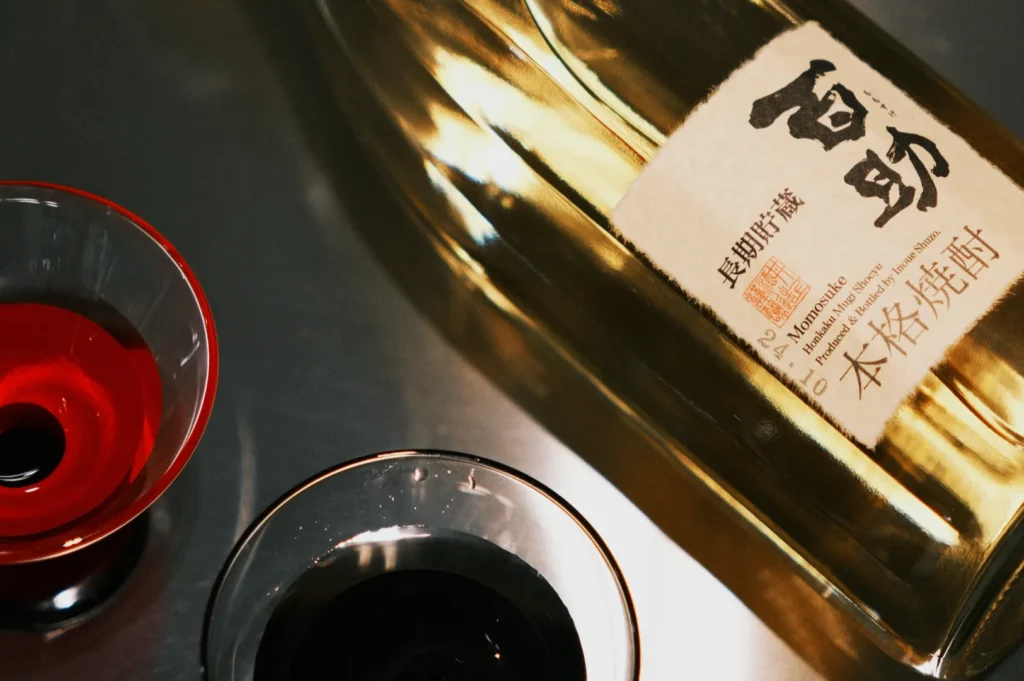
Junmai Ginjo: The Ideal Match
Junmai ginjo holds a natural balance. The junmai base gives body. The ginjo polishing brings aromatic lift. Together, they mirror hamachi’s own balance of richness and refinement.
- Serve at: 12 to 15°C, lightly chilled, for sashimi; room temperature for nigiri
- Look for: SMV of +1 to +5 (dry to medium-dry)
- Acidity (San-do): 1.2 to 1.5, enough to cut through fat without turning sharp
Chilled slightly, the sake lifts the sweetness of sashimi. At room temperature, it softens and meets the warmth of the shari, the seasoned rice beneath the nigiri.
Expressive Junmai
A standard junmai with moderate umami, around 1.3 to 1.6 on the amino acid scale, offers a straightforward and satisfying match. Its rice character echoes hamachi’s sweetness. Its fuller body keeps the sake from fading against the fish’s fat.
Room temperature service suits it best. Here, the hamachi nigiri pairing feels grounded and complete.
Genshu
Genshu is undiluted sake, bottled without the water usually added before release. It carries more body and a firmer alcohol presence.
Choose it when hamachi arrives with richer accompaniments: ponzu with a touch of oil, yuzu kosho, or a scallion and ginger topping. A gentler, lower-strength genshu works best here. It holds its own against these stronger garnishes without overwhelming the tender flesh beneath.
Ginjo With Subtle Sweetness
Hamachi’s mild nature welcomes a little more sweetness than bolder fish such as buri or tuna. A slightly off-dry ginjo, with an SMV of around -1 to +2, creates a soft sweetness-to-sweetness harmony.
Many diners find this match especially appealing. It is a kind, easy first step for those newer to sake.
A Note on Warmed Sake
Warmed sake is generally less successful with hamachi than with buri. The fish is too mild, and warmth can draw out a faint oiliness in farmed specimens.
If you prefer warmth, keep it lukewarm, at 30 to 35°C at most. Lightly chilled or room temperature remains the better choice.
Styles to Avoid
- High-acid kimoto or yamahai: too forceful for mild, tender hamachi
- Very dry honjozo served hot: creates harshness against soft fat
- Nigori: its cloudy, creamy texture clashes with the fish’s silken flesh
Practical Pairing Tips for Diners
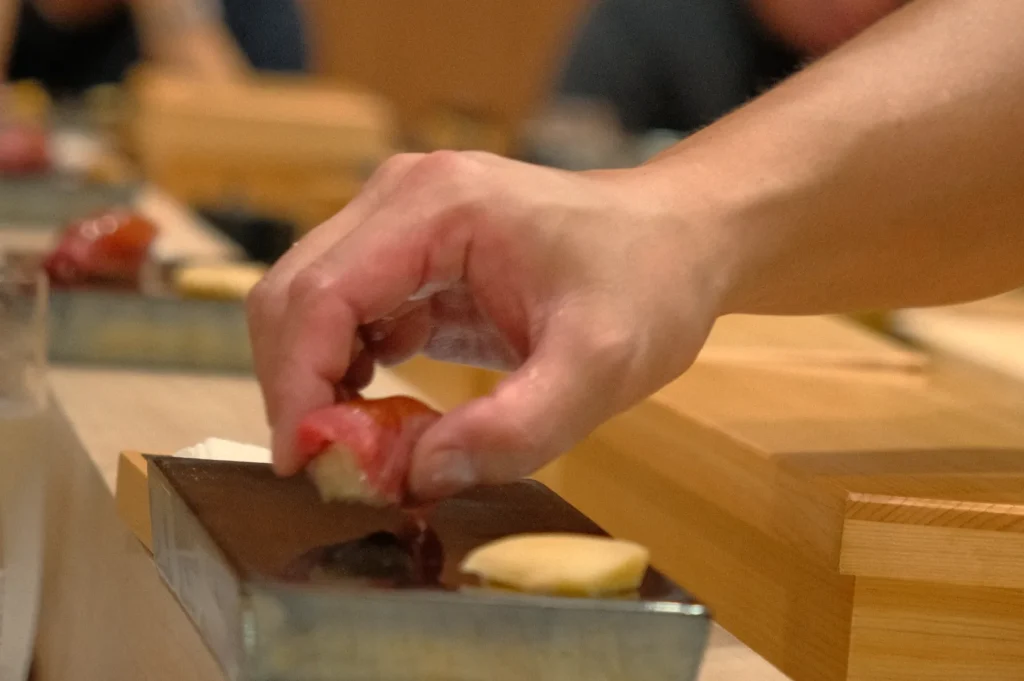
A few quiet habits help each pairing reveal itself.
- Taste the fish first. Let the hamachi rest on the palate. Notice its sweetness and how the fat softens. Then sip.
- Mind the garnish. Plain sashimi suits a delicate junmai ginjo. Yuzu kosho or ponzu invites something fuller, such as genshu or an expressive junmai.
- Let temperature follow the form. Lightly chilled sake for sashimi. Room temperature for nigiri, where the rice carries its own gentle warmth.
- Use small sips. Hamachi is tender. A small sip refreshes without washing the flavour away.
- Compare across the season. Wild buri appears in winter. Tasting the two side by side shows how one species changes with age, and how the sake must change with it.
- Ask behind the counter. The chef sees the fish that morning. A brief word often leads to the most fitting pour.
- Note what you enjoy. Your preferred SMV range and serving temperature for hamachi make a useful reference point for future omakase evenings.
Pairing is not a test. It is a conversation, and hamachi is a patient partner.
Conclusion
Hamachi is the approachable, consistent face of Japanese amberjack. It is tender, rich and forgiving in pairing.
Its moderate fat and mild flavour make it an ideal introduction to sake and seafood pairing. There is enough depth to hold your interest, without the specialist knowledge that wild seasonal fish can demand.
Begin with a junmai ginjo, lightly chilled. Notice how the acidity lifts the fat. Then let the journey continue.
At Sushi Masa by Ki-Setsu, hamachi is a gateway. It is a first, quiet step towards deeper exploration.
Eight seats. One counter. A young yellowtail, and the sake that suits it.
We invite you to explore these pairings with us at Sushi Masa by Ki-setsu in Cuppage Plaza.