Sake Pairing with Kanpachi: Greater Amberjack
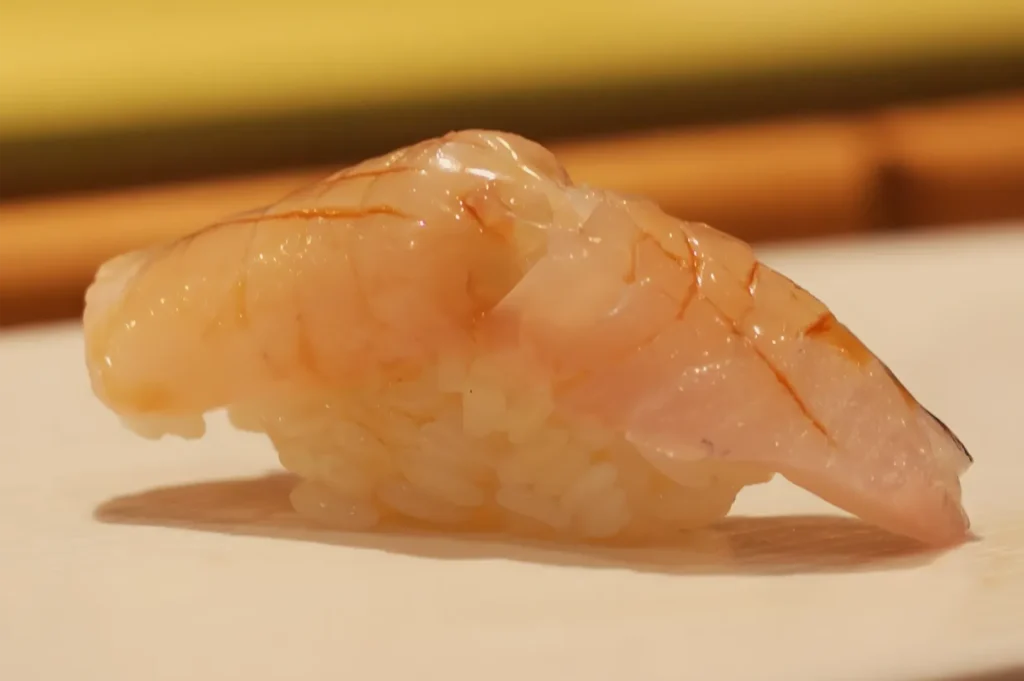
Kanpachi, the greater amberjack, occupies a distinctive position between the delicate white fish and the rich oily fish of the omakase progression, offering a pairing profile that rewards careful sake selection. It sits quietly in the middle of the meal, neither shy nor loud. To understand sake pairing kanpachi is to understand balance, that fine point where clean minerality meets gentle richness.
In this guide, you will meet the fish itself, learn how it differs from its cousins, and discover which sakes let it speak clearly.
A Fish Often Mistaken for Its Cousins
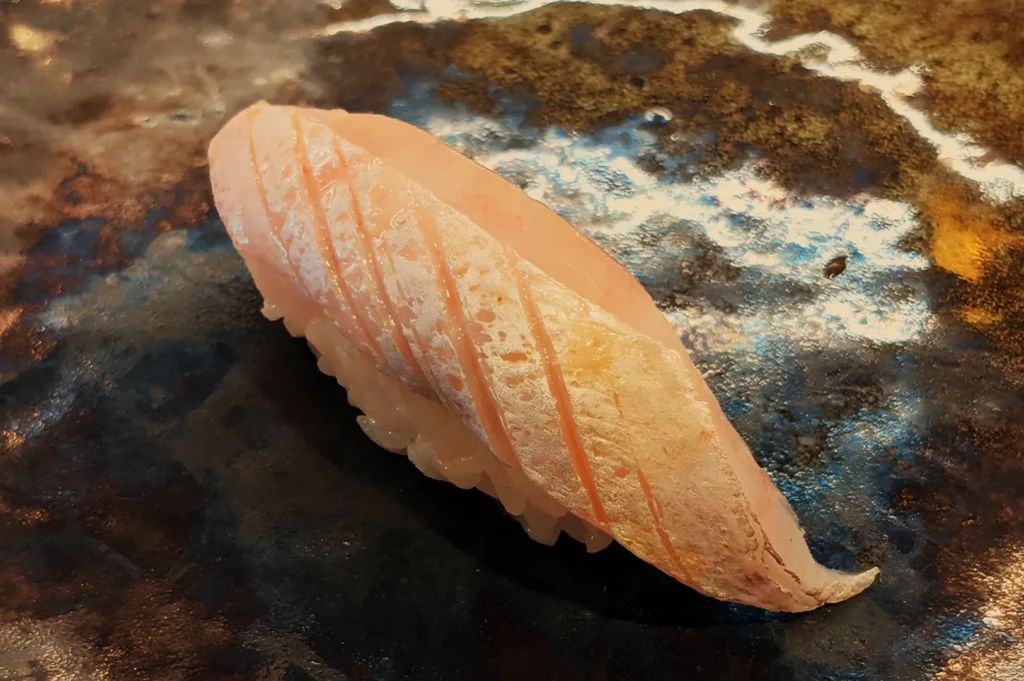
Kanpachi is Seriola dumerili, a species with its own character and its own season. It is easy to confuse with hamachi and buri, yet these belong to a separate branch, Seriola quinqueradiata. The names sound alike. The fish do not.
Where hamachi and buri lean into buttery weight, kanpachi holds back. It is lighter, cleaner, more restrained. This is not a lesser quality but a different one entirely. The greater amberjack sake conversation begins with this simple truth: you are pairing with a fish that prizes clarity over richness.
Understanding this distinction changes everything about how you approach the pour.
Kanpachi vs Hamachi: Reading the Differences
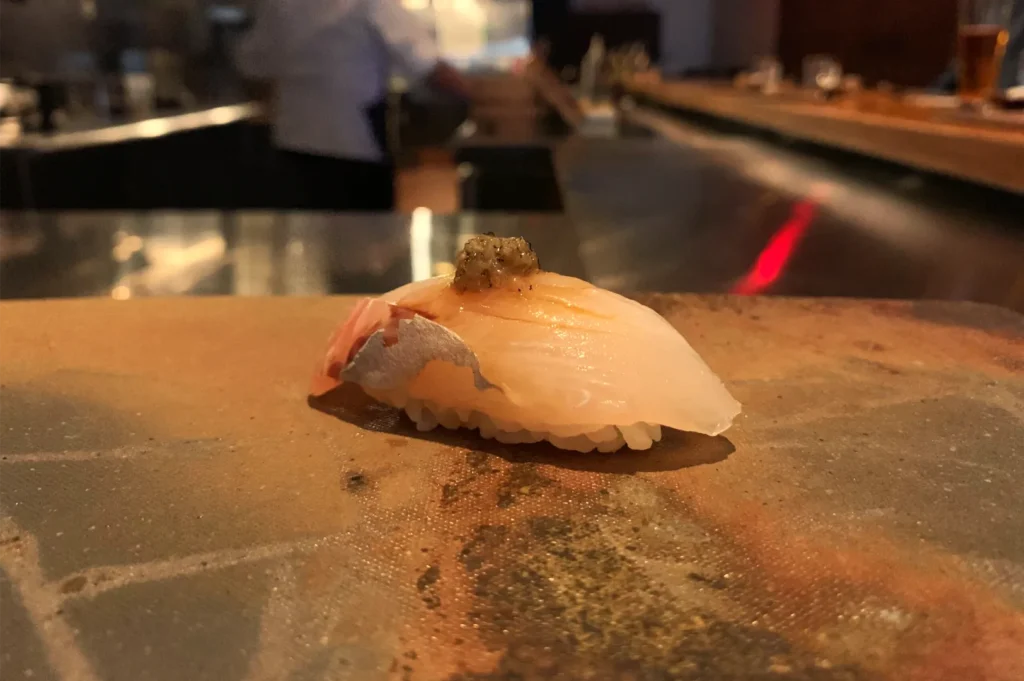
The kanpachi vs hamachi question comes up often, and the answer lives in colour, texture, and season.
- Colour: Kanpachi is paler, its flesh a soft, translucent hue. Hamachi runs deeper, and buri deeper still.
- Texture: Kanpachi is firmer and crisper, with a clean bite. Hamachi feels buttery and yielding. Buri carries bold, dense richness.
- Flavour: Kanpachi is mild and mineral, with a quiet sweetness. Hamachi is rounder and richer. Buri is the most powerful of the three.
- Season: Kanpachi peaks in summer, especially June and July. Hamachi and buri reach their best in the cold of winter.
This seasonal opposition matters. When the counter turns warm and the year leans toward summer, kanpachi arrives at its finest. It is a fish for lighter days, for chilled cups and open windows.
Wild and farmed kanpachi both appear on menus, and the two can differ in fat and firmness. A good chef reads each piece on its own terms.
The Sensory Profile of Summer Amberjack Sushi
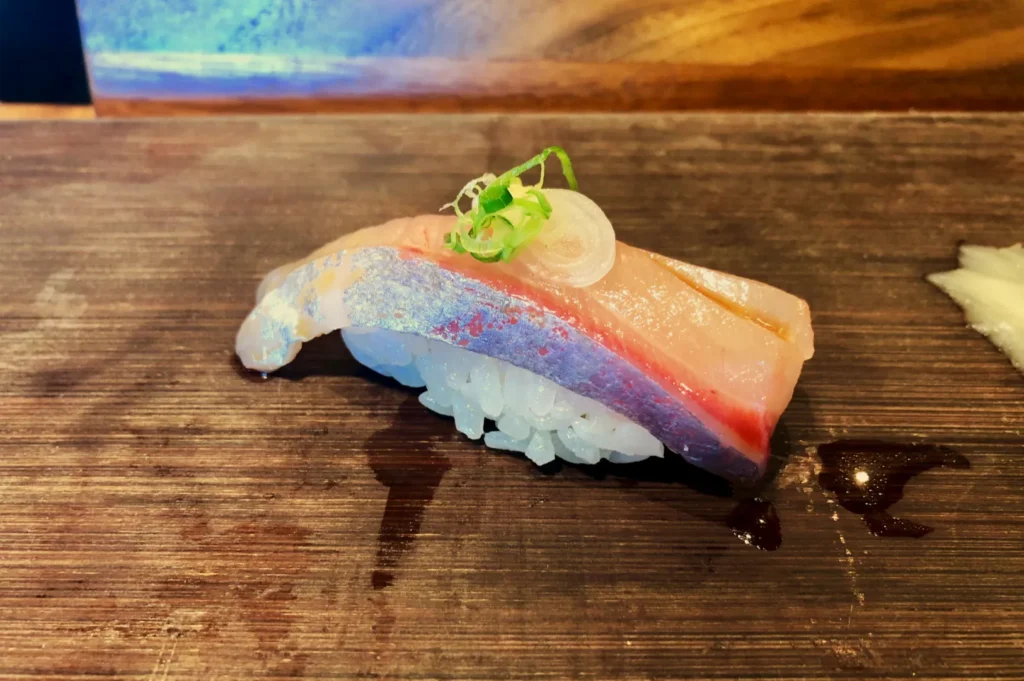
Kanpachi carries low to moderate fat, higher than shima aji yet less than hamachi or buri. This middle position gives it a texture that is supple and tender, faintly creamy, medium-firm beneath the tooth. There is a mild sweetness and a steady, moderate umami.
Beyond flavour, the fish is nourishing. It holds omega-3 fatty acids, both DHA and EPA, along with Vitamin D and niacin. It is also rich in minerals, and that mineral quality is central to summer amberjack sushi and to the way sake meets it.
Much of the finest kanpachi comes from Kagoshima's Kinko Bay, where clean waters shape a fish of clarity and poise. That sense of place carries through to the plate, a quiet reminder that season and origin are never far apart.
How Kanpachi Is Prepared
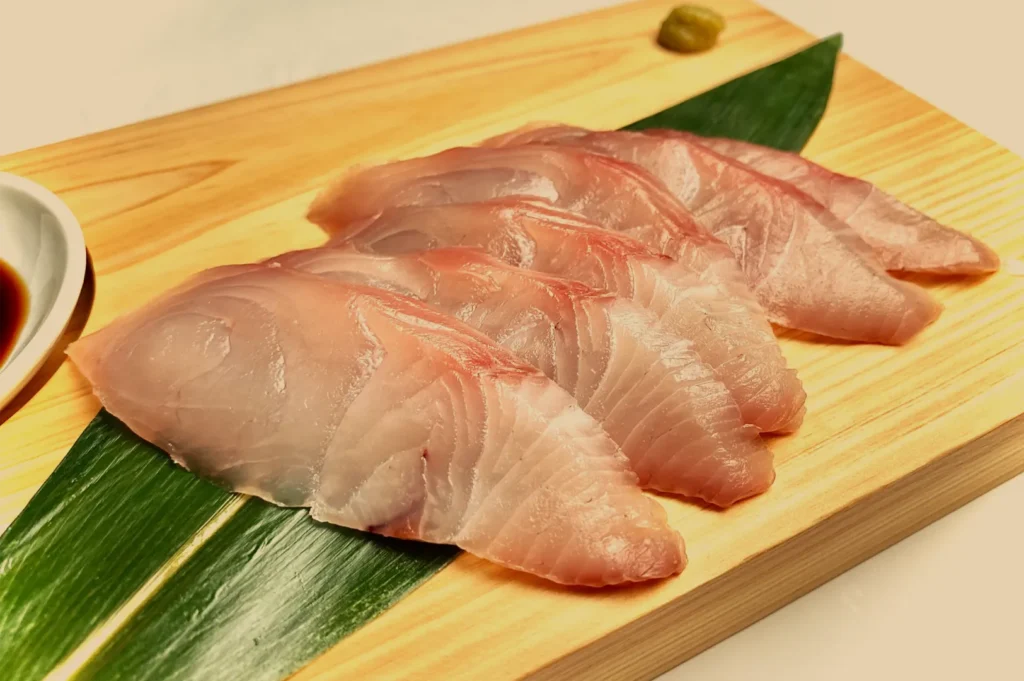
Kanpachi lends itself to preparations that honour its clean line. Styles vary from counter to counter, and no single method is the only right way.
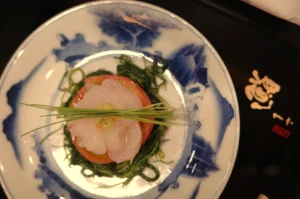
- Sashimi: Cut in thin slices, the fish shows its firm, crisp texture and pale sheen. Nothing hides it.
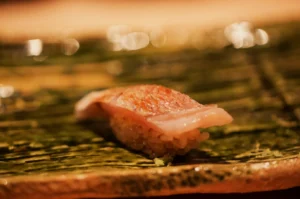
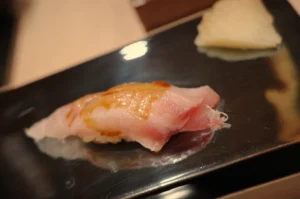
- Nigiri: Draped over warm shari with minimal seasoning, letting the mild sweetness lead. A brush of soy, a whisper of wasabi, and little more.
- Carpaccio: Dressed with olive oil and sea salt, a lighter, more Western touch that draws out the fish's mineral edge. This is where carpaccio sake pairing becomes a pleasure worth exploring.
- Brief Ageing: A short rest can deepen flavour and coax out umami, adding gentle complexity without weight.
Because kanpachi is so clean, its preparation leaves nowhere to hide. It rewards a steady hand and honest seasoning, which is why it pairs so naturally with the broader art of sake and sushi pairing, where restraint often speaks loudest.
Finding the Right Sake for Kanpachi
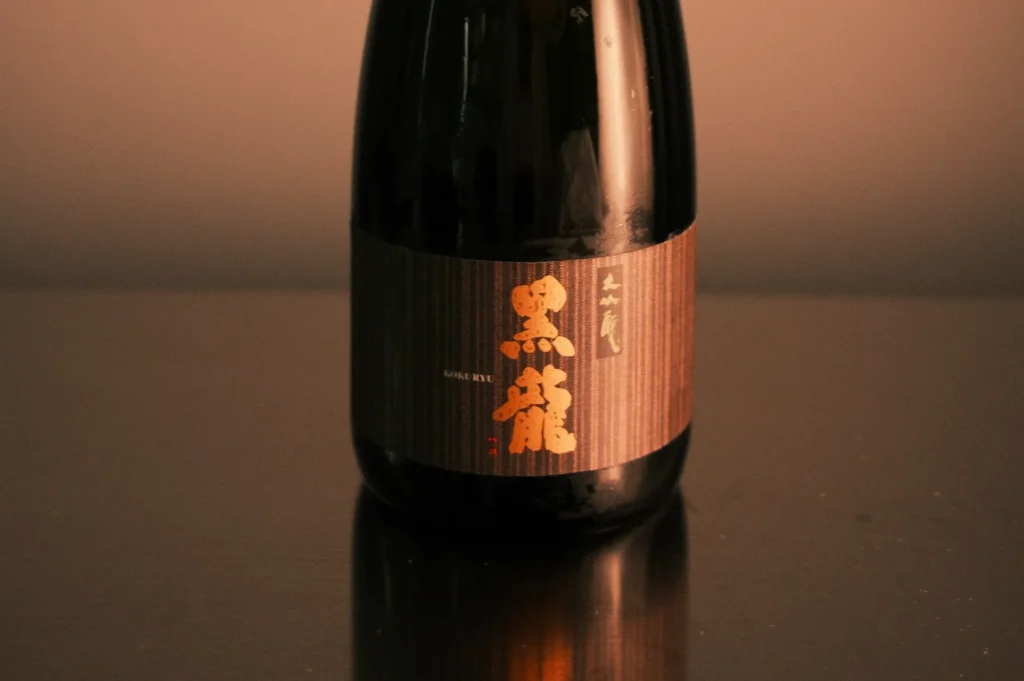
The heart of sake pairing kanpachi lies in matching a lean, mineral fish with a sake that shares its clarity. Boldness overwhelms it. Subtlety lets it sing.
- Clean Junmai: A mineral-driven junmai meets the fish on level ground. Its structure and quiet depth echo the mineral quality of the flesh, especially fish from clean waters like Kinko Bay.
- Ginjo: A chilled ginjo summer pour brings gentle aromatics and a light, cool touch, perfect for the warmer months when kanpachi is at its peak.
- Subtle Complexity: Reach for sakes with layered nuance rather than force. A lean amberjack sake match works best when the sake whispers alongside the fish rather than shouting over it.
There is a natural affinity between kanpachi and sakes brewed from soft, mineral-rich water sources. Like calls to like. The mineral thread runs through both fish and cup, drawing them into quiet agreement.
If you would like to explore the wider spectrum of styles, from crisp to full-bodied, this look at Japanese sake styles offers a useful starting point. For summer, favour the chilled and the clean. A firm white fish sake pairing rarely calls for heat or heaviness; it asks for coolness and calm.
Where Kanpachi Sits in the Omakase

The omakase progression moves with intention, from light to rich, delicate to bold. Kanpachi finds its place in the middle. It comes after the lightest shiromi, the palest white fish, yet before the deeply oily pieces that arrive later in the meal.
This transitional position shapes the pairing. Here, sake acts as a bridge. A clean, mineral pour carries the palate forward from the whisper of white fish toward the fuller flavours ahead. It is a moment of quiet transition, a breath between lighter and richer.
A kanpachi sashimi pairing at this point in the meal sets the tone for what follows. Choose too heavy a sake and you rush the journey. Choose well and the progression unfolds with grace, each piece leading naturally to the next.
Conclusion
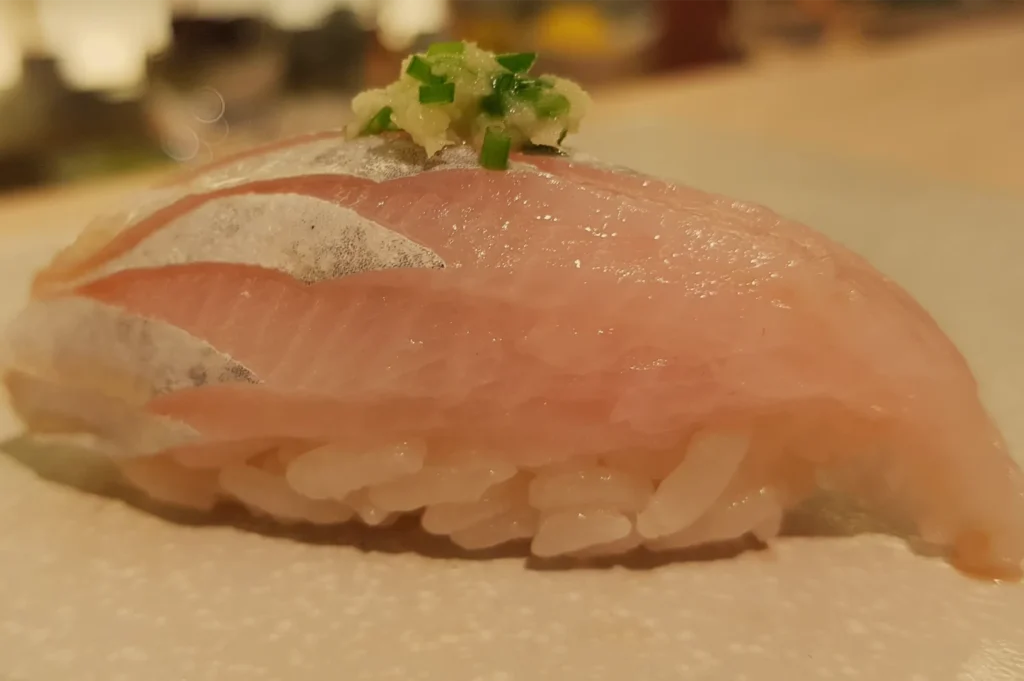
Kanpachi is a fish of clarity and quiet strength. It arrives in summer, cool and clean, carrying the minerals of Kinko Bay and a gentle sweetness all its own. Distinct from hamachi and buri, it asks for a different kind of attention and a different kind of pour.
The art of sake pairing kanpachi rests at the clean, mineral-driven end of the spectrum. A mineral junmai, a chilled ginjo, a sake of subtle complexity: these are the companions that let the fish speak. Pour with restraint. Serve it cool. Let the mineral thread connect the fish to the cup, and the moment will find its own balance.
Frequently Asked Questions
Is Kanpachi the Same as Hamachi?
No. Kanpachi is Seriola dumerili, while hamachi and buri are Seriola quinqueradiata. Kanpachi is paler, firmer, leaner, and milder, and it peaks in summer rather than winter.
What Sake Pairs Best with Kanpachi?
A clean, mineral-driven junmai or a chilled ginjo suits kanpachi well. Its lean, mineral character calls for sakes with subtle complexity rather than bold richness, especially in the warmer months when the fish is at its best.
When Is Kanpachi in Season?
Kanpachi is at its finest in summer, particularly June and July. This sets it apart from hamachi and buri, which reach their peak in the cold of winter.