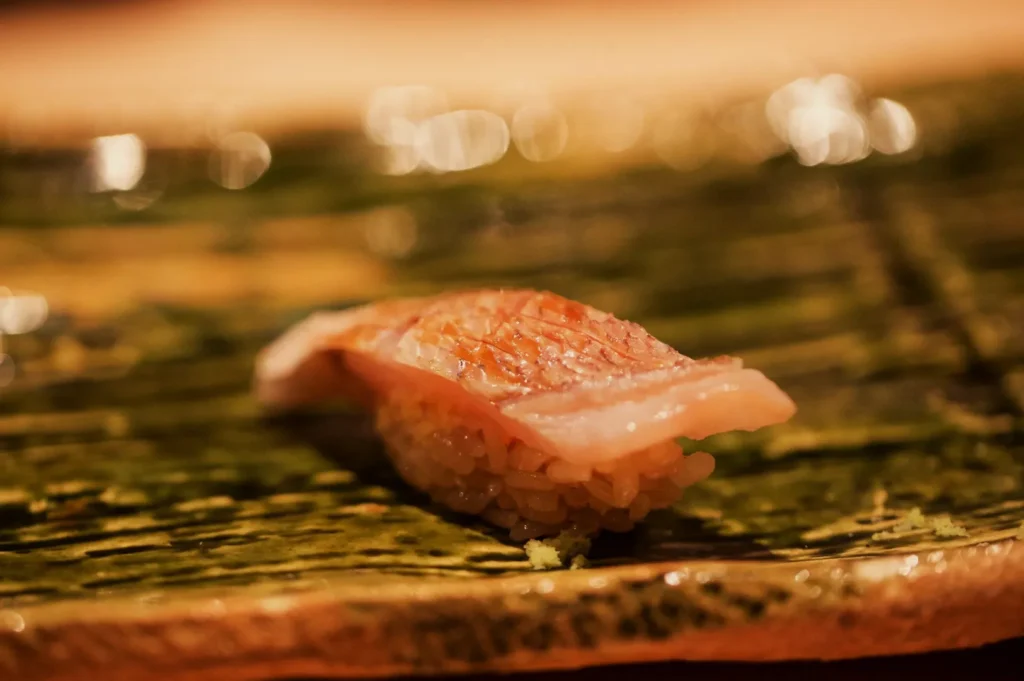
Kasugo, the young sea bream, is one of spring’s most eagerly anticipated arrivals on the omakase counter, a delicate silver-skinned fish whose fleeting season makes it all the more precious. It arrives quietly, around the time the first cherry blossoms open, carrying the promise of a new season in every slender fillet. To explore sake pairing kasugo is to taste spring itself, gentle, sweet, and brief.
In this guide, you will be introduced to this spring child, learn how it differs from its grown form, and discover which cups let its soft character shine.
A Spring Child, Born of the Sea Bream
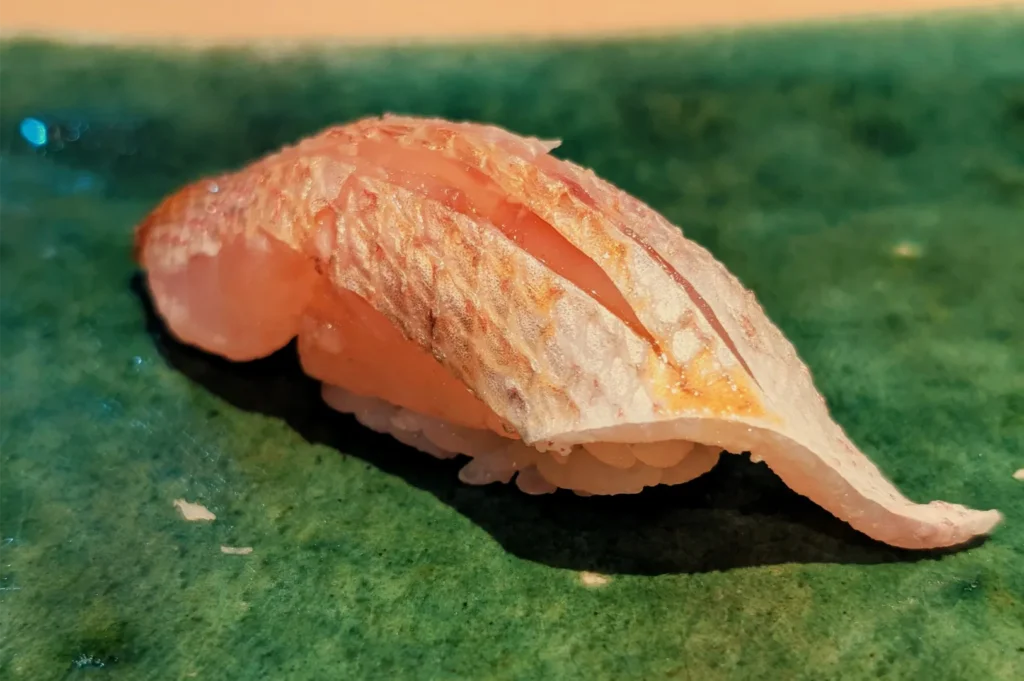
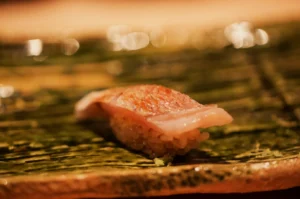
Kasugo is the juvenile form of Pagrus major, the very same species as the prized adult madai. Yet at this early age ****it wears a different guise. While mature madai sits among the shiromi, the white fish, kasugo is classified as hikarimono, the silver-skinned fish, prized for the bright sheen along its skin.
Its name carries meaning too. “Kasugo” means spring child, and the fish has long stood as a small symbol of spring’s beginning. When it appears at the counter, cherry blossom season is near. The two arrive together, fleeting and fresh, a quiet reminder that the finest things do not linger.
This is a hikarimono spring fish in the truest sense: light, silver, and tied to a single, precious moment in the year.
Kasugo and Madai: One Fish, Two Chapters
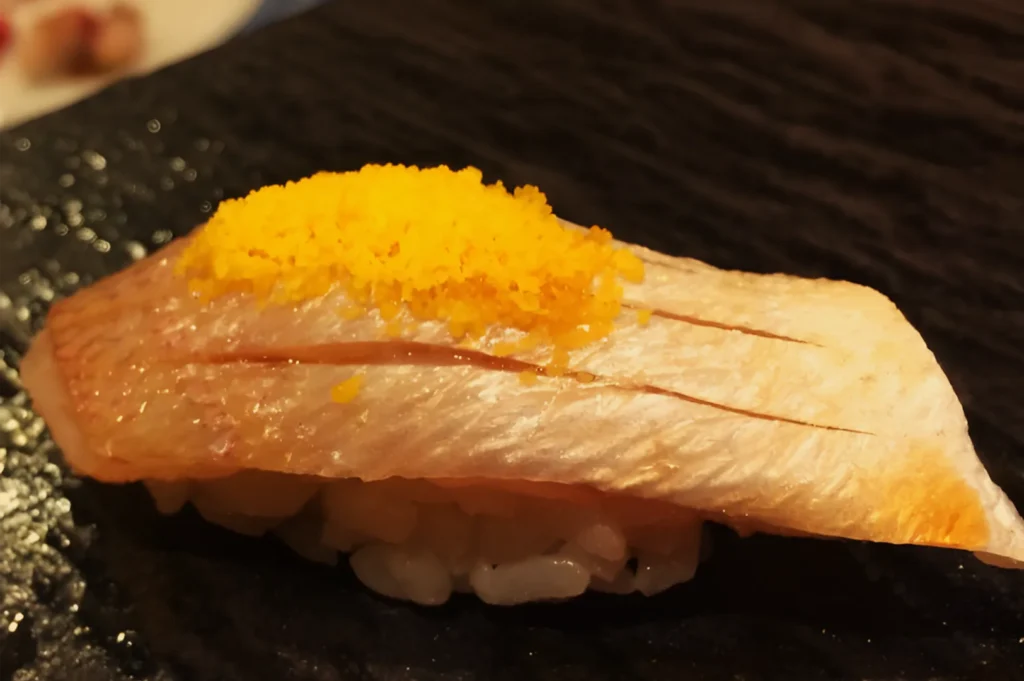
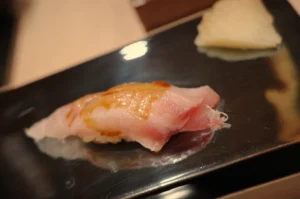
Close-up of salmon nigiri topped with bright orange fish roe on a dark plate, highlighting its glossy texture and vibrant color in warm light.
The same species, yet the young fish and the adult tell very different stories. Understanding the difference is the first step toward a thoughtful kasugo nigiri pairing.
- Age and size: Kasugo is roughly one year old and about six inches long. Madai grows far larger and older.
- Classification: Kasugo is hikarimono, the silver-skinned fish. Adult madai is shiromi, a white fish.
- Fat: Kasugo is leaner. It has not yet had time to gather the fat that gives the adult its fuller richness.
- Texture: Kasugo is firmer, tighter in the bite. Think of the difference between veal and beef, one youthful and delicate, the other deeper and more developed.
- Flavour: Kasugo is sweeter than the adult tai, yet less fatty and less rich overall. Its sweetness leads; its richness holds back.
This is why the young fish is treasured on its own terms. It is not a lesser madai. It is a different pleasure entirely, a baby madai sake match built on clarity rather than weight.
The Sensory Profile of Kasugo
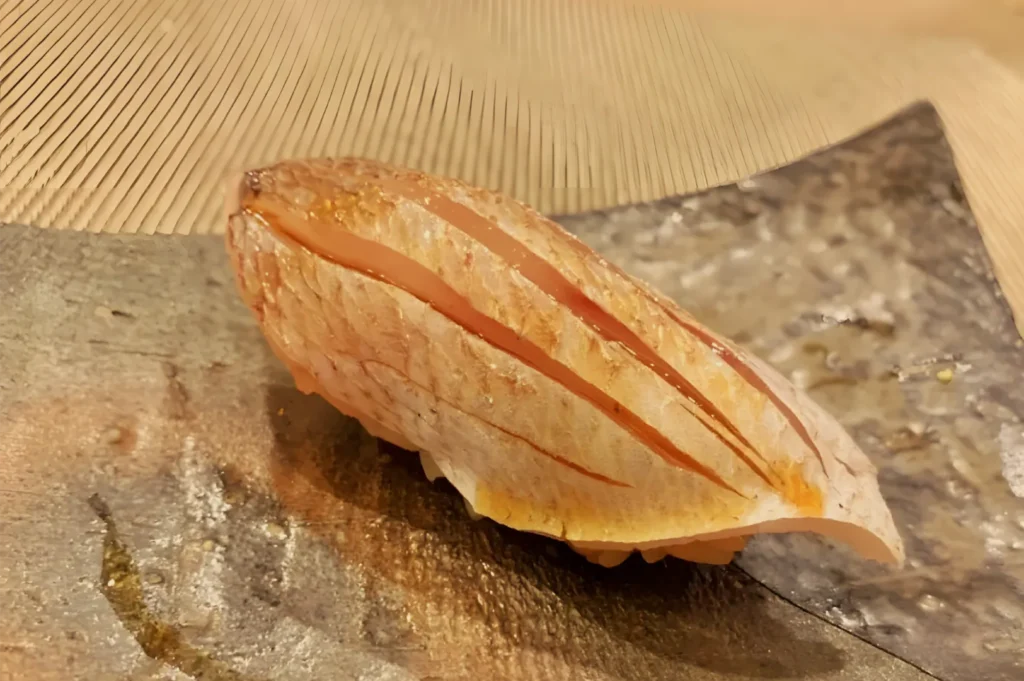
Kasugo speaks softly. Its fat is low, so nothing sits heavy on the palate. The texture is firm and clean, with a gentle resistance that gives way to a tender centre. Beneath this lies a mild sweetness and a moderate umami, neither bold nor shy.
Then there is the skin. Left on, it carries the silver sheen that defines the hikarimono classification, a bright ribbon of colour along each piece. It is beautiful to see, and it tells you at a glance that this is a fish of the silver-skinned family.
Wild and farmed kasugo can differ in fat and firmness, and a careful chef reads each fillet on its own merits. But at heart, kasugo remains a fish of restraint and quiet sweetness, a delicate silver fish that asks to be tasted with attention.
The Edomae Hand: Preparing Kasugo
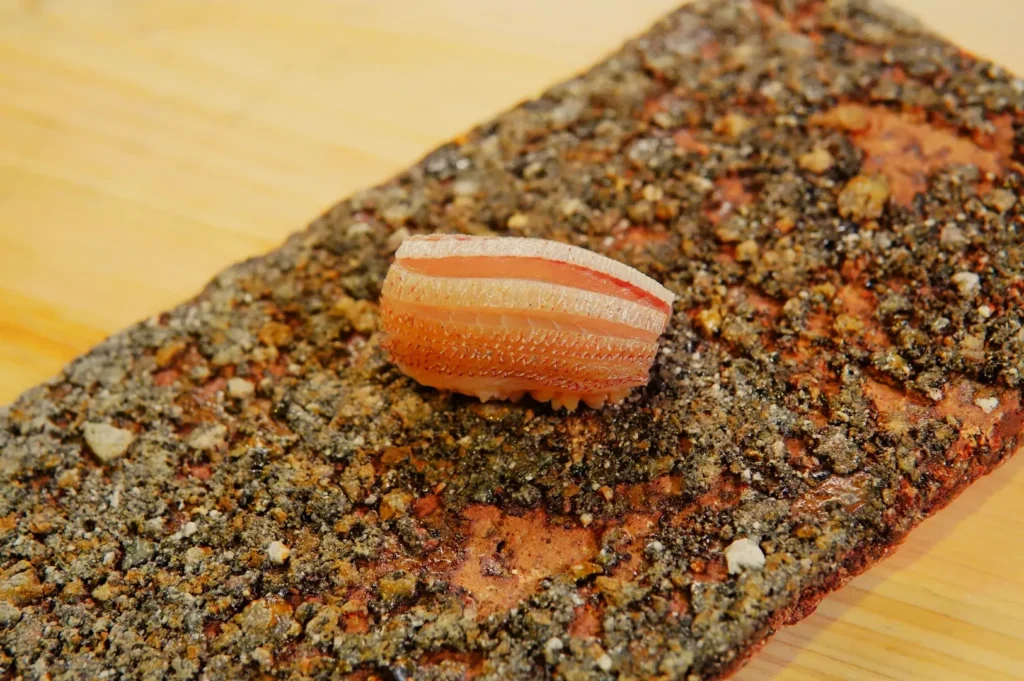
Kasugo is a fish for vinegar, prepared in the Edomae way. Methods vary between chefs and regions, and no single approach is the only right one. Still, the shape of the work is shared and precise.
- Scaling and deboning: The small fish is cleaned, scaled, and its fine bones removed with care.
- Salting: The fillet rests under salt for around thirty minutes. This firms the flesh and draws out moisture.
- Vinegar rinse: The salt is washed away with vinegar, cleansing and brightening the surface.
- Fresh vinegar soak: The fish sits briefly in fresh vinegar, only a few minutes. Too long and the flesh dries out, losing its gentle moisture. The touch of kasugodai vinegar is meant to season, not to overwhelm.
- Skin left on: The silver skin stays, both for beauty and for character.
At the counter, kasugo is often paired with oboro, sweet shrimp flakes tucked beneath the fish, and shari seasoned with aka-su, a red vinegar made from sake lees. The red vinegar brings a mellow, rounded tang that meets the fish’s sweetness with grace. Each of these choices is a living decision, shaped by the chef’s own hand.
A Fish of the Fleeting Season
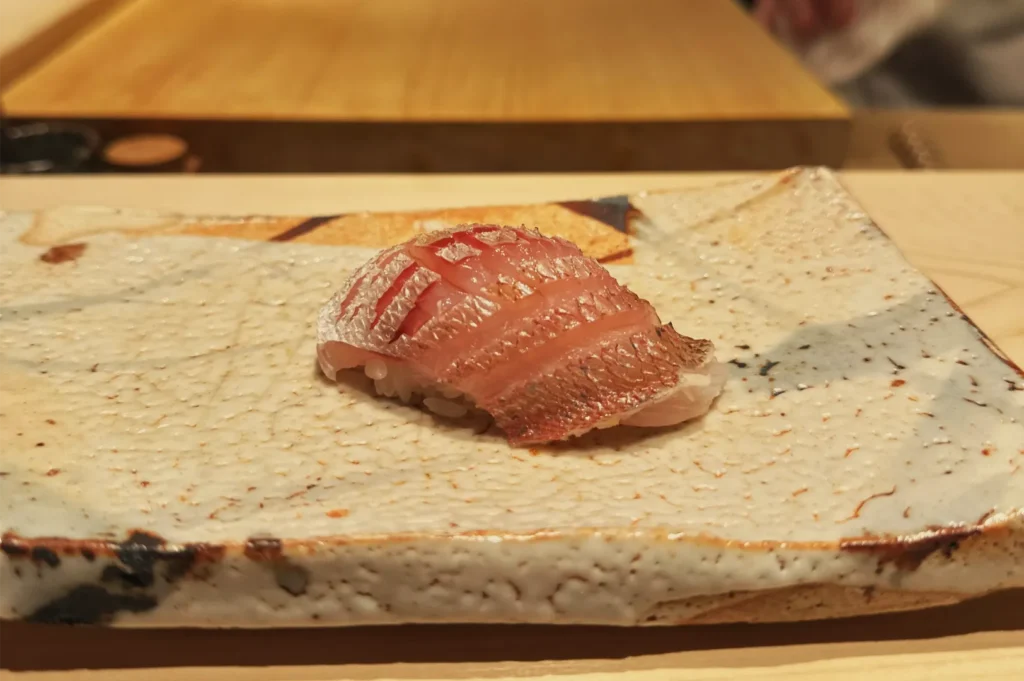
Kasugo belongs to a narrow window. It is at its best from late winter into spring, appearing around cherry blossom season, when the year turns soft and green. To eat it is to mark the passing of one season into the next, a small ritual of timing and place.
In Osaka, the fish takes another form. There it becomes “chariko,” known in styles such as kodai suzushi or suzume sushi, a regional expression that shows how one fish can wear many faces across Japan. For anyone drawn to this kind of kodai sushi pairing, these variations are part of the pleasure, a reminder that tradition breathes and shifts from place to place.
Because kasugo is so tied to its moment, the way you pair it matters. A little grounding in the craft goes a long way, and this guide to understanding sake pairing is a gentle place to begin, especially when the fish before you is as seasonal and delicate as this one.
Finding the Right Sake for Kasugo
The heart of sake pairing kasugo lies in matching a light, vinegar-cured fish with a sake that shares its clarity. Weight and heaviness would drown it. Brightness lets it breathe.
- Clean, acidic sakes: The vinegar cure calls for a crisp, clean pour. A sake with fresh acidity meets the tang of the cure and refreshes the palate between pieces.
- Junmai with bright acidity: A junmai carrying lively acidity complements both the sweetness and the vinegar notes. It has enough body to hold the fish, enough brightness to answer the cure, and enough restraint to let the natural sweetness through.
- Shinshu, the newly released sake: Spring brings shinshu spring sake, freshly pressed and lively, full of youthful energy. There is a quiet poetry in this pairing, a spring fish beside a spring sake, both new, both fleeting, both born of the same turning season.
This seasonal harmony is the joy of a true spring omakase sake match. When the fish and the cup share a moment in the year, the pairing feels less like a choice and more like a conversation. Serve the sake cool, let the acidity lead, and allow the young sea bream sake pairing to unfold with the same lightness the fish itself carries.
Conclusion
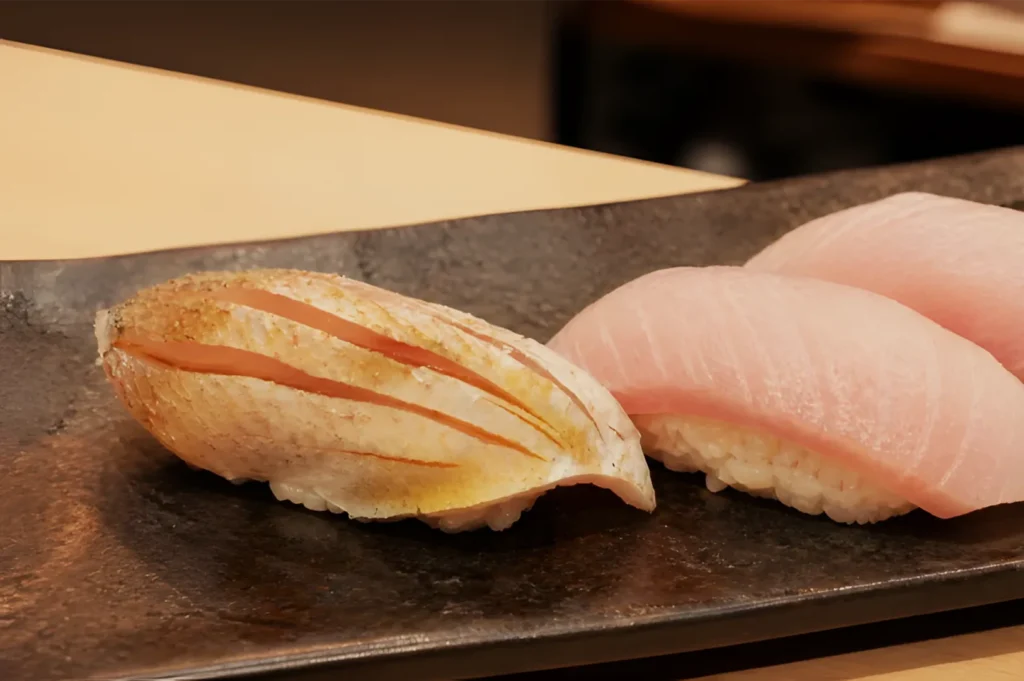
Kasugo is a fish of a single, precious moment. It arrives with the blossoms, sweet and silver, firm and clean, then it is gone, waiting for another spring to return. To taste it is to taste the season at its very beginning.
This is why sake pairing kasugo is such a quiet celebration of seasonal eating. A crisp junmai, a freshly pressed shinshu, a cup that carries the same spring the fish was born into: these are the companions that let the young sea bream speak. To experience it prepared with true care, sit with Sushi Masa in Cuppage Plaza, and let the fish and the cup mark spring’s arrival together, in stillness.
Frequently Asked Questions
Is Kasugo the Same Fish as Madai?
Yes and no. Kasugo is the juvenile form of Pagrus major, the same species as adult madai. But the young fish is classified as hikarimono, a silver-skinned fish, while the adult is shiromi, a white fish. Kasugo is leaner, firmer, and sweeter, with less fat and less overall richness.
What Sake Pairs Best with Kasugo?
A clean, acidic sake suits the vinegar cure well, and a junmai with bright acidity complements the fish’s sweetness. In spring, a freshly released shinshu makes for a lovely seasonal match, pairing a spring fish with a spring sake.
When Is Kasugo in Season?
Kasugo is at its finest from late winter into spring, appearing around cherry blossom season. Its short window is part of what makes it so treasured on the omakase counter.