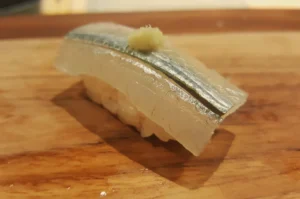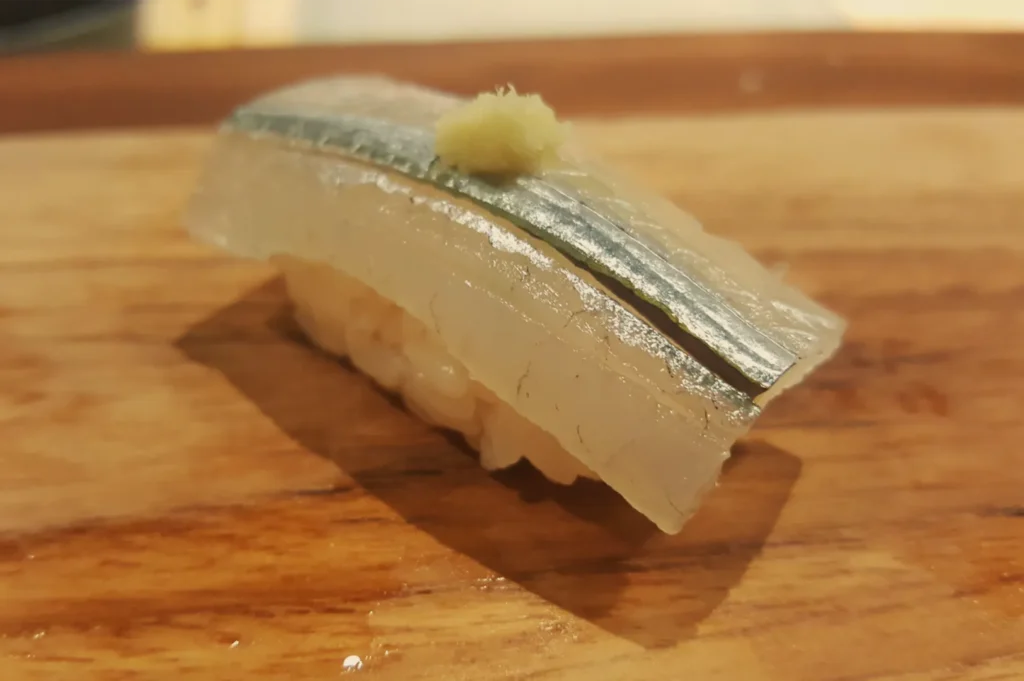
Sayori, the Japanese halfbeak, is one of the most visually striking and flavour-delicate fish in the entire sushi canon, and its pairing with sake demands the utmost subtlety.
Known scientifically as Hyporhamphus sajori, this fish belongs to the family of hikarimono, the silver-skinned fish prized for their shine and their fleeting, gentle flavour. Its body is long and slender, tapering to a distinctive elongated lower jaw that gives it an almost sculptural grace on the plate.
Among all the fish a sushi lover might encounter, sake pairing sayori sits at the extreme end of delicacy. There is little fat to lean on, little richness to cover. What remains is quiet, clean, and easily lost. To match it well is to understand restraint. This is a fish that rewards those who pause, and a pairing that reveals itself only when nothing overwhelms it.
A Sensory Profile Built on Quiet
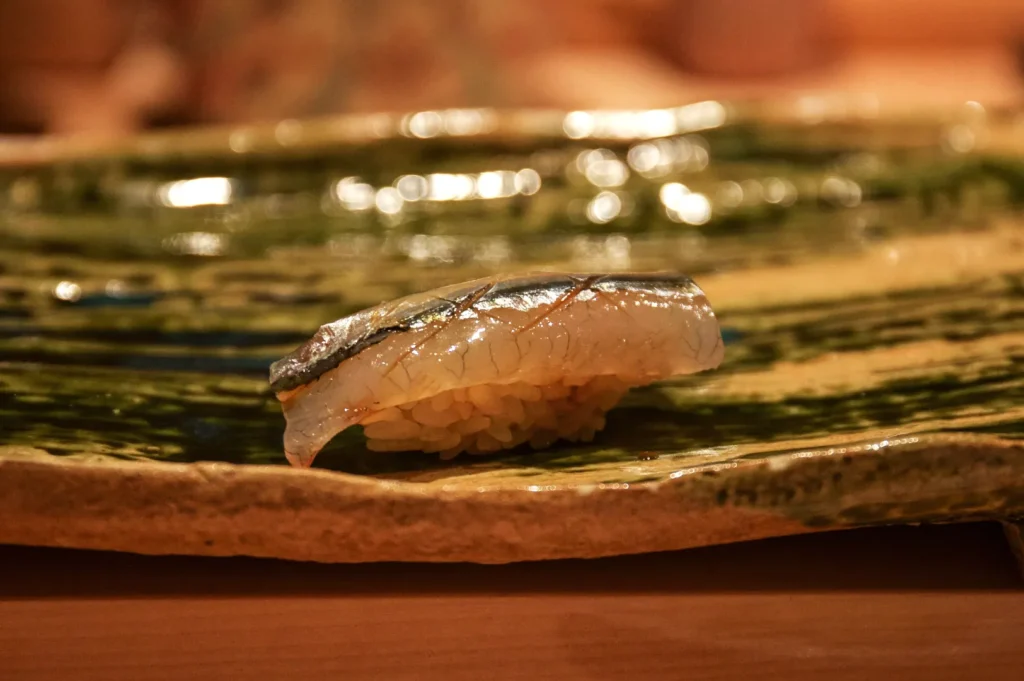
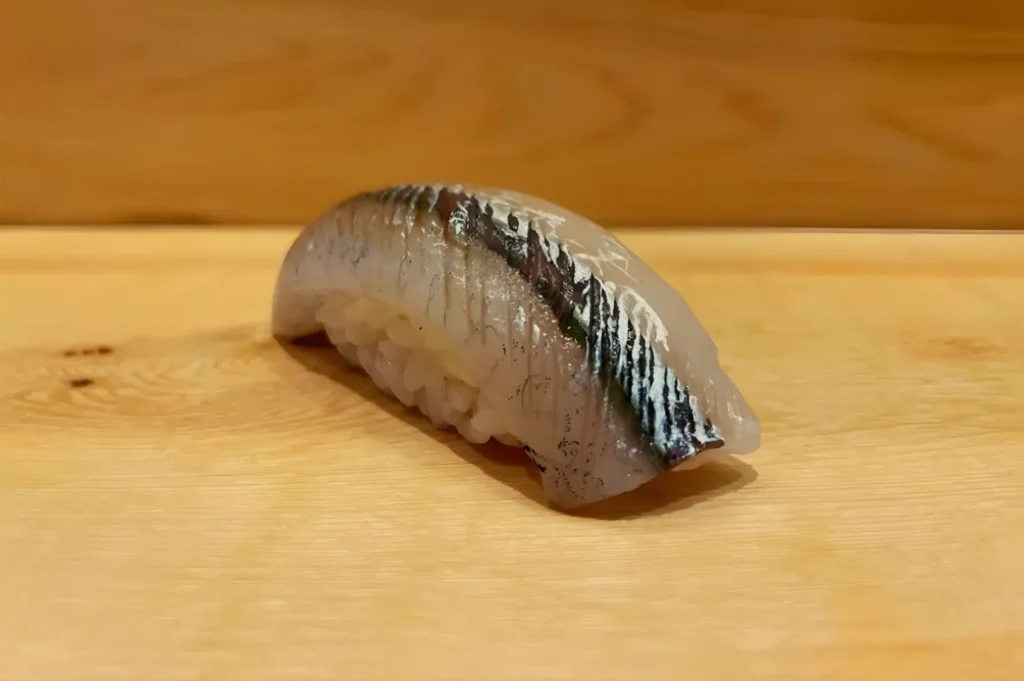
Sayori offers one of the most delicate eating experiences in Japanese cuisine. Its fat content is very low, which sets it apart from the richer hikarimono many people know. The flesh is almost translucent, so pale and clear that light seems to pass through it. This is the essence of transparent flesh sushi, where beauty and fragility arrive together.
The texture is soft, yielding gently to the bite. The taste is clean, carrying a delicate sweetness rather than bold flavour, and only a mild whisper of umami beneath. It does not shout. It settles.
This purity comes at a cost. Sayori degrades extremely quickly after the catch and does not keep for more than a day or two. Freshness is not a preference here. It is the whole point. A sayori served at its peak is a moment; a day late, and that moment is gone.
Seasonality: A Fish of the Cold Months
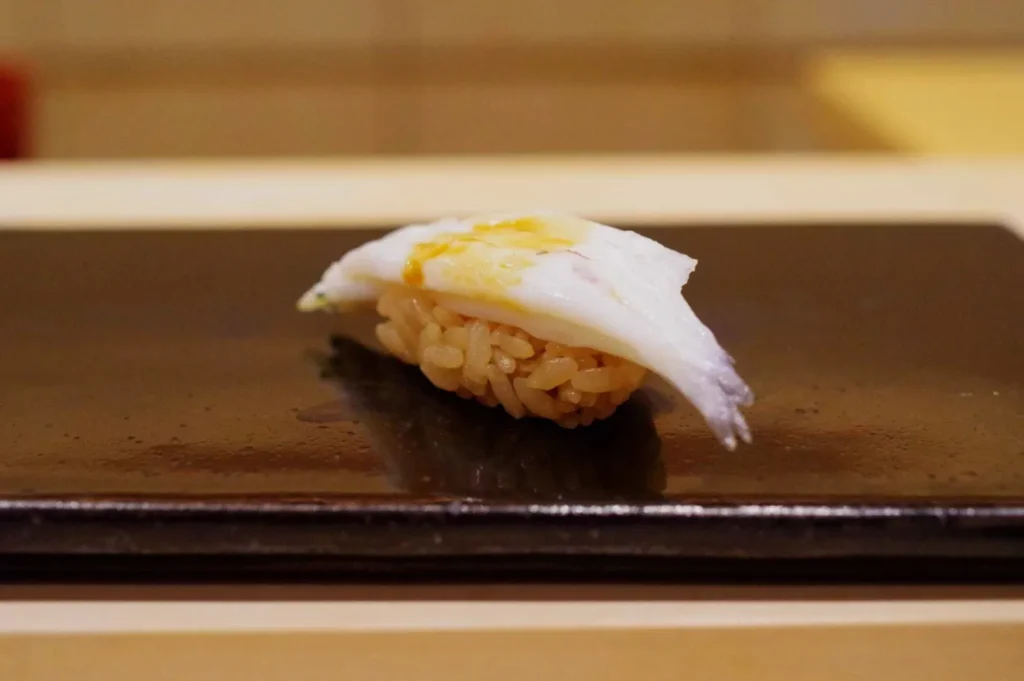
Sayori follows the calendar closely. It is at its best from late autumn through to early spring, when the waters are cool and the fish carries its cleanest expression. Quality peaks in early spring, making it a treasured marker of the changing season.
This makes sayori a natural highlight of spring fish pairing menus, arriving just as diners begin to crave lighter, brighter flavours after winter. For those who follow the rhythm of seasonal seafood, its appearance is a quiet signal that the year is turning. Eating it in its window is part of the pleasure.
Preparation Methods: Precision on the Plate
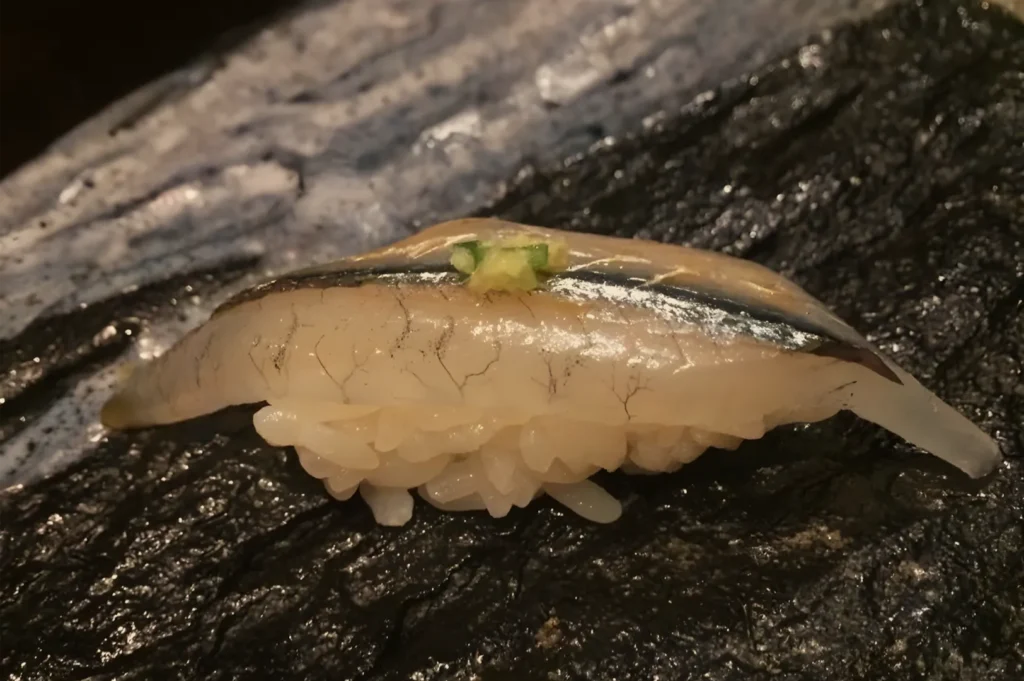
Few fish demand as much skill from the hands that prepare them. Sayori wazukuri is the signature preparation, a thin horizontal cut made along the length of the fish. These delicate strips are then artistically intertwined on top of the shari, creating a nigiri that is as visually striking as it is fragile. The presentation looks almost woven, a small piece of edible craft.
Served raw as nigiri, sayori is often finished with a touch of wasabi and, ideally, a dab of oboro, the sweet shrimp flakes that echo the fish’s gentle character. As with much of sushi tradition, styles vary between regions and between chefs, and each brings a slightly different hand to the fish.
There is history in every slice. During the Edo period, sayori was almost always salted and lightly marinated in vinegar, a necessity born from how quickly it spoiled. Modern refrigeration has changed this, allowing the fish to be served raw and pristine. Yet the older methods have not disappeared. They remain a living part of how sayori is understood.
Shime: The Gentle Cure
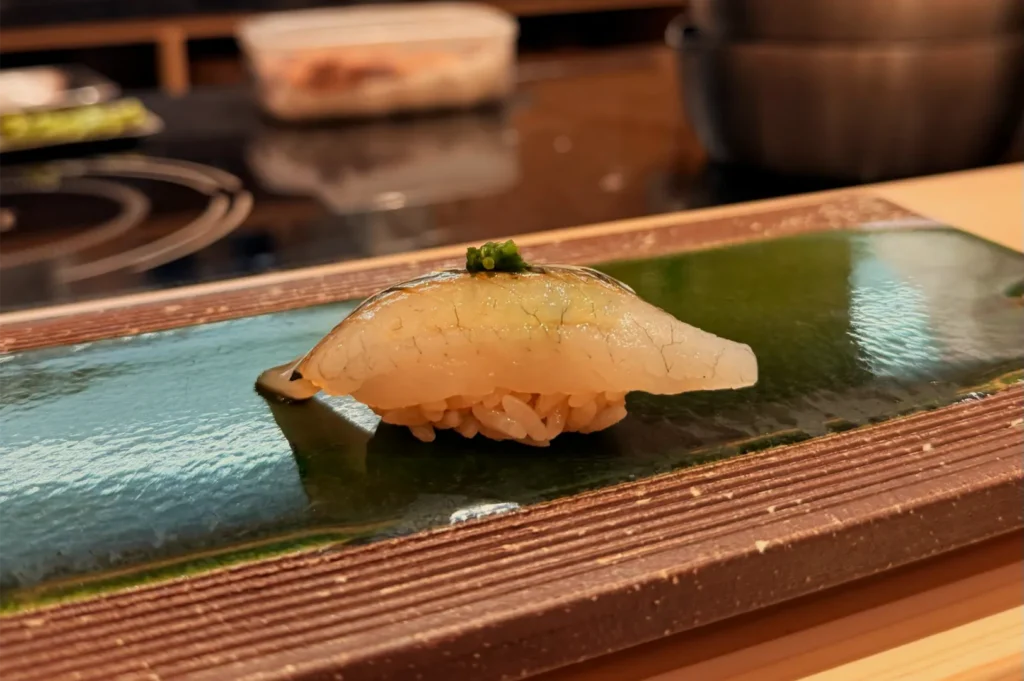
The curing process, known as shime, remains a meaningful option for this fish. A brief cure with salt and rice vinegar firms the delicate flesh and introduces subtle acidic notes. It is a light touch, never heavy, designed to support rather than mask.
This matters enormously for the table. Shime fish sake pairings behave differently from those built around raw, untreated flesh. The faint acidity of the cure shifts the balance on the palate and opens a slightly different set of possibilities. Understanding this is central to the wider sake pairing principles that guide any thoughtful match, where the treatment of the fish shapes the drink beside it. A cured sayori and a raw one are, in a sense, two different pairings.
Sake Pairing with Sayori: The Art of Restraint
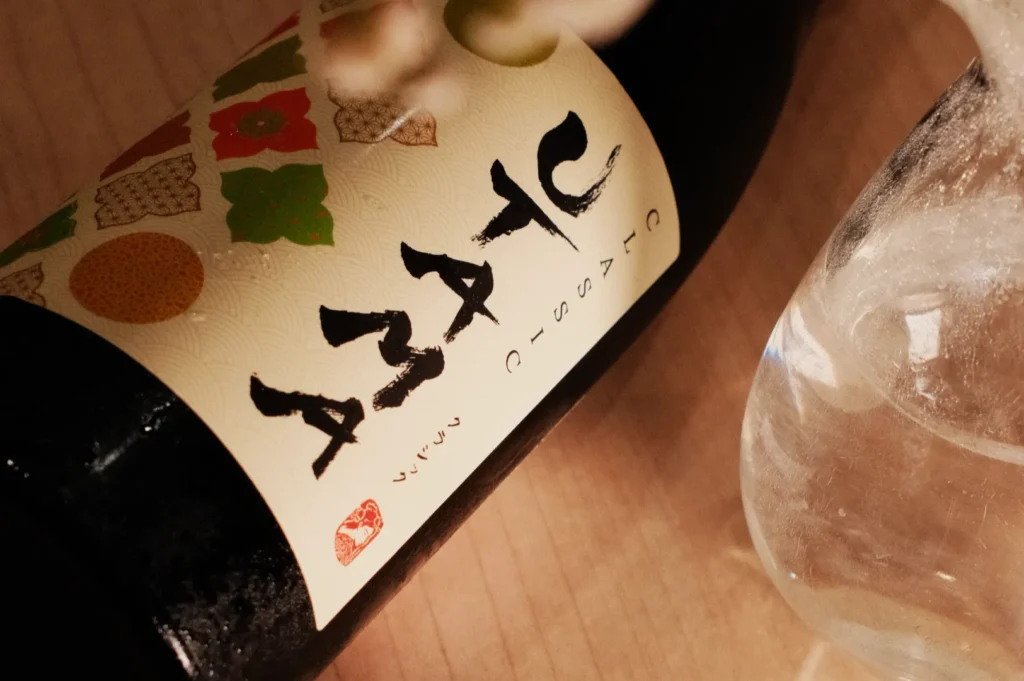
Here the challenge becomes clear. Because sayori sits at the far edge of delicacy, it calls for the most subtle sake of all. The goal is not to complement with strength but to match with gentleness. This is hikarimono sake pairing at its most demanding.
The finest partners tend to be the lightest junmai daiginjo or an elegant daiginjo carrying soft floral notes. These sakes move quietly. They lift the fish without covering it, letting the clean sweetness and mild umami remain in view. A well chosen glass feels less like an accompaniment and more like a continuation of the fish itself.
The warnings are just as important. Bold, sweet, or heavy sakes will completely overpower this fish, erasing everything that makes it special. A low-fat fish sake match cannot rely on richness to hold its ground, so weight becomes the enemy. Subtlety is not optional.
When the fish has been cured, the picture shifts again. The brief vinegar cure creates a natural bridge to sakes with gentle acidity, which can meet those soft sour notes and bring harmony rather than contrast. For those exploring quality bottles of Sake Singapore has become a rewarding place to seek out these delicate, floral styles suited to such refined work. The pairing rewards patience and a light hand at every step.
To summarise, keep the sake light, floral, and quiet for raw sayori, and reach for gentle acidity when the fish has been through shime.
Conclusion: A Benchmark for Delicacy
Sayori teaches a lesson that extends far beyond a single fish. If you can master sake pairing sayori, you understand the delicacy-matching principle at its purest, the idea that the most fragile flavours deserve the most careful partners. It is a benchmark against which many other pairings can be measured.
Approach it with respect. Choose freshness above all, honour the season, and let restraint guide the glass. Start with a light daiginjo, taste slowly, and adjust. In that quiet space between fish and sake, sayori reveals exactly why it holds such a treasured place at the counter.
Frequently Asked Questions
What Sake Pairs Best with Sayori?
The lightest junmai daiginjo or an elegant daiginjo with soft floral notes suits sayori best. These gentle sakes support its delicate sweetness without overpowering the fish. Avoid bold, sweet, or heavy styles entirely.
Why Does Sayori Need to Be So Fresh?
Sayori degrades extremely quickly and does not keep for more than a day or two. Its very low fat and near-translucent flesh depend on freshness for their clean taste and soft texture, so it is best enjoyed at its peak.
When Is Sayori in Season?
Sayori is best from late autumn through to early spring, with quality peaking in early spring. This makes it a prized fish for lighter, brighter seasonal menus as winter gives way to spring.