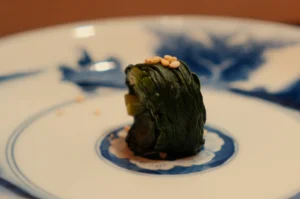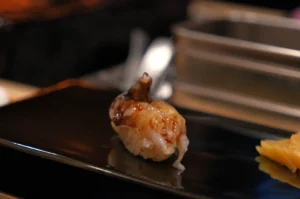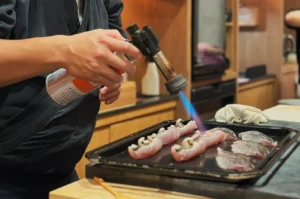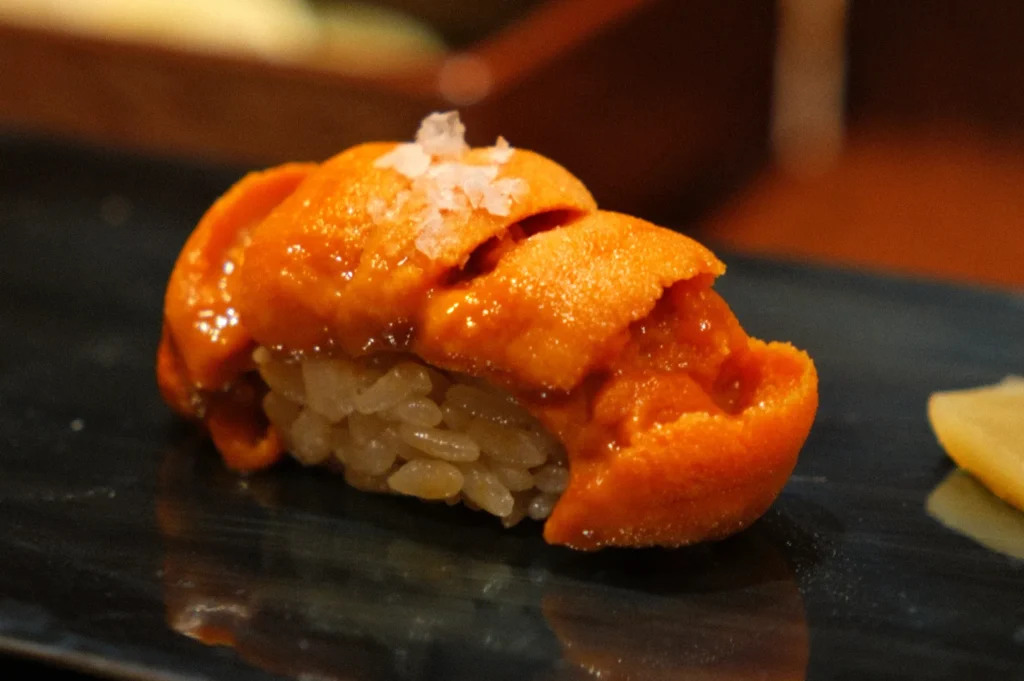
Sushi is not just fish.
Ask most people what makes a piece of nigiri sing, and they will point to the topping. The gleam of tuna. The blush of sea bream. Yet behind every piece sits the rice, and the rice matters as much as anything laid across it. If the sake in your glass clashes with the rice, the whole thing feels slightly off, even when the fish and the bottle are each excellent alone.
This is the quiet truth of a good sake and sushi pairing. You are never pairing sake with fish. You are pairing it with the complete bite.
The Rice Sets the Baseline
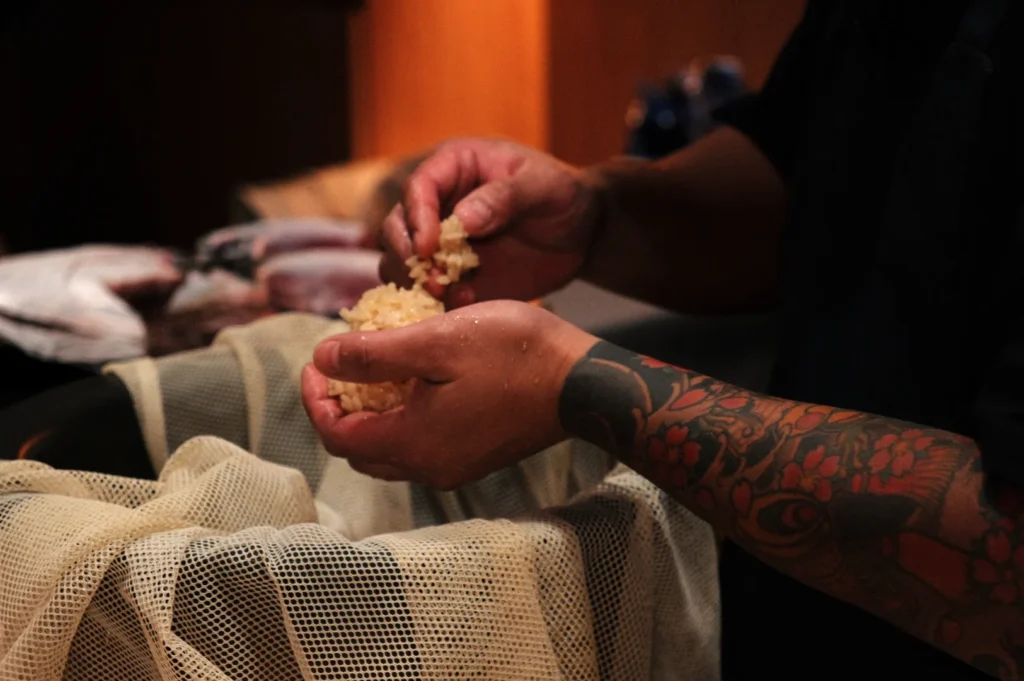
Sushi rice, or shari, is seasoned before it ever meets the fish. A typical measure runs to around 20 mL of rice vinegar, 2 teaspoons of sugar, and 1 teaspoon of salt per 200g of cooked rice. That gives you three forces at once: acidic, sweet, salty. This baseline shapes how sake tastes long before the topping arrives.
Each element pulls the sake in its own direction.
Rice vinegar acidity. The vinegar softens how acidic the sake feels. A dry sake, tasted against seasoned rice, can read as noticeably sweeter than it would on its own. The rice, in a sense, rounds the edges.
Sugar. The small amount of sugar in shari amplifies your perception of sweetness in the sake. This is why very sweet sake is usually kept away from sushi. Sweetness stacked on sweetness quickly tips into cloying, and the clarity of the bite is lost.
Salt. Salt is the gentle diplomat. It suppresses bitterness, lifts the sense of sweetness and fruitiness, and helps the sake settle into the rice rather than sit apart from it.
Starch texture. Cooked rice coats the palate. That soft film asks for sake with enough crispness and a clean finish to cut through, so each mouthful resets rather than lingers.
Soy Sauce Shifts the Direction
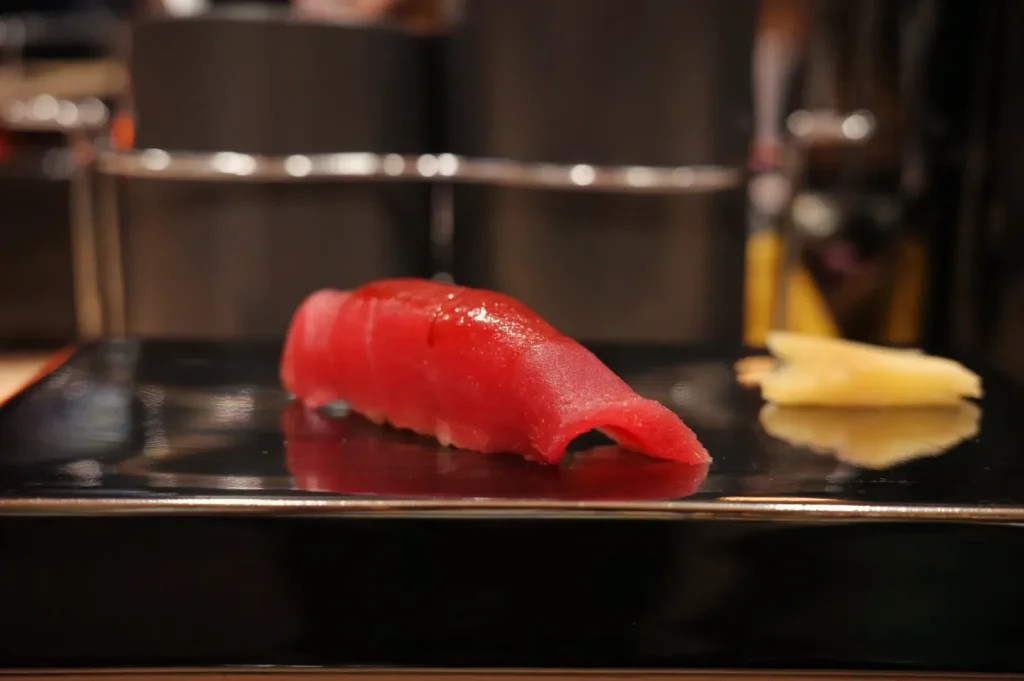
Soy sauce brings serious intensity. It carries sodium in the region of 900 to 1,300 mg per 100 mL and glutamate between 412 and 1,264 mg per 100g. That salt does familiar work on the sake, quietening bitterness and acidity while nudging it towards sweeter, fruitier notes. The glutamate adds savoury depth that the sake then has to stand beside.
Not all soy is the same, and the type you reach for changes the pairing.
- Koikuchi, the dark, common soy, has deep umami and asks for sake with more structure to hold its ground.
- Usukuchi, lighter in colour yet often saltier, sits more gently and suits cleaner styles.
- Saishikomi, twice-brewed, is rich and thick, leaning towards fuller sake.
- Shiroshoyu, pale and delicate, favours subtler pours.
- Tamari, thick and largely wheat-free, brings concentrated umami that wants a sake with presence.
A restrained hand matters. A brush of soy behaves very differently from a piece dipped and dripping.
Wasabi and Its Brief Heat
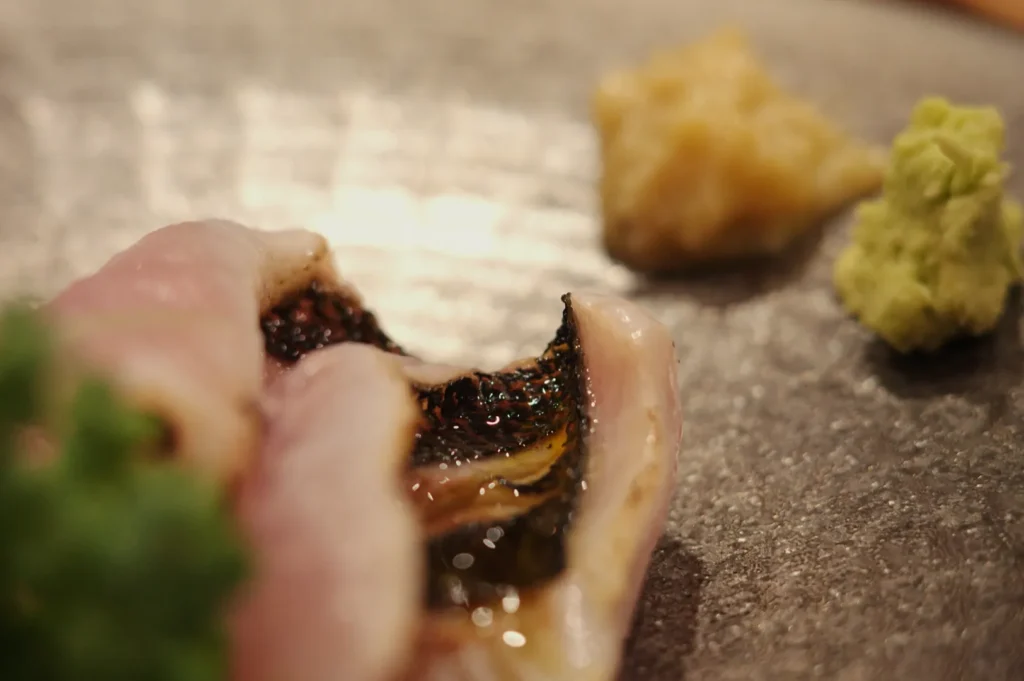
Real wasabi works through a compound called allyl isothiocyanate, or AITC. It activates the TRPA1 receptor, which produces that sharp rush up through the nose. The sensation is water-soluble and short-lived, arriving fast and fading fast.
Chilled sake soothes that burn well, and its moderate alcohol keeps irritation in check rather than fanning it. Chefs read the fish when applying it. Fattier cuts such as toro can carry more wasabi, since the richness needs the lift. Delicate white fish take far less, so the heat never overruns the flavour.
Citrus, Nori, and Gari
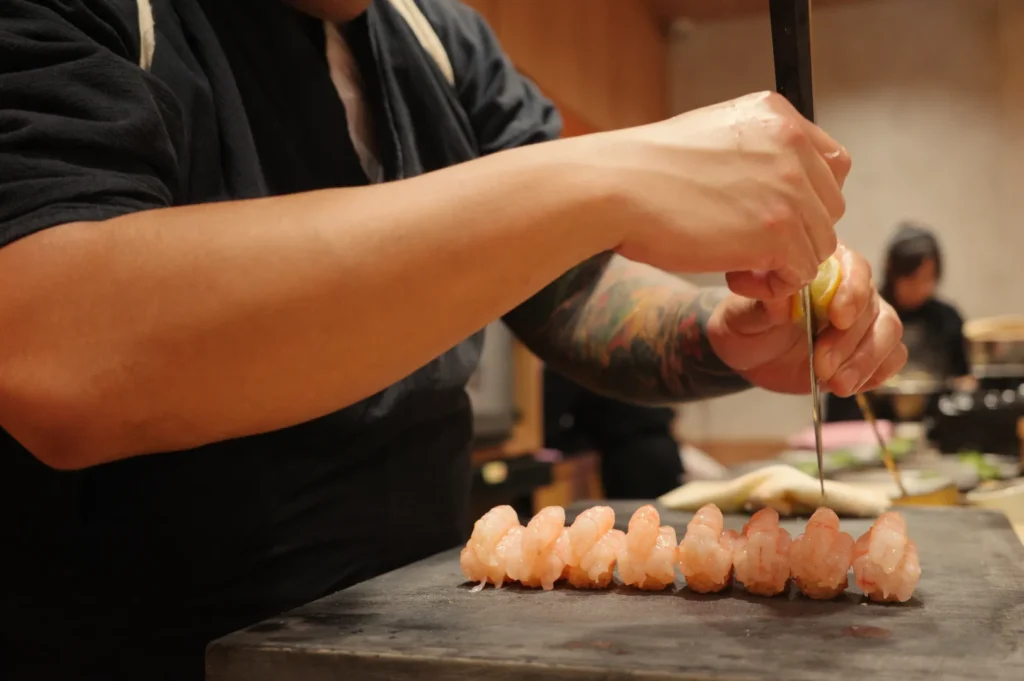
A squeeze of yuzu or sudachi adds citric acid, raising the overall acidity on the palate. This calls for sake with its own intrinsic brightness, though not so much acid that the two compete and turn sharp.
Nori brings something else again. Seaweed carries glutamate from 170 to 1,350 mg per 100g, along with inosinate and guanylate. Together they give a toasted, briny umami. This tends to favour a moderate-umami Junmai, which meets the seaweed on equal terms, rather than a delicate Daiginjo that can be overwhelmed.
Then there is gari, the pickled ginger. It is not a topping. Its vinegar base and ginger compounds cleanse the palate between pieces, so each bite is met fresh. A slice of gari resets the mouth, and with it, the way the next sip of sake lands.
The Complete Bite Decides Everything
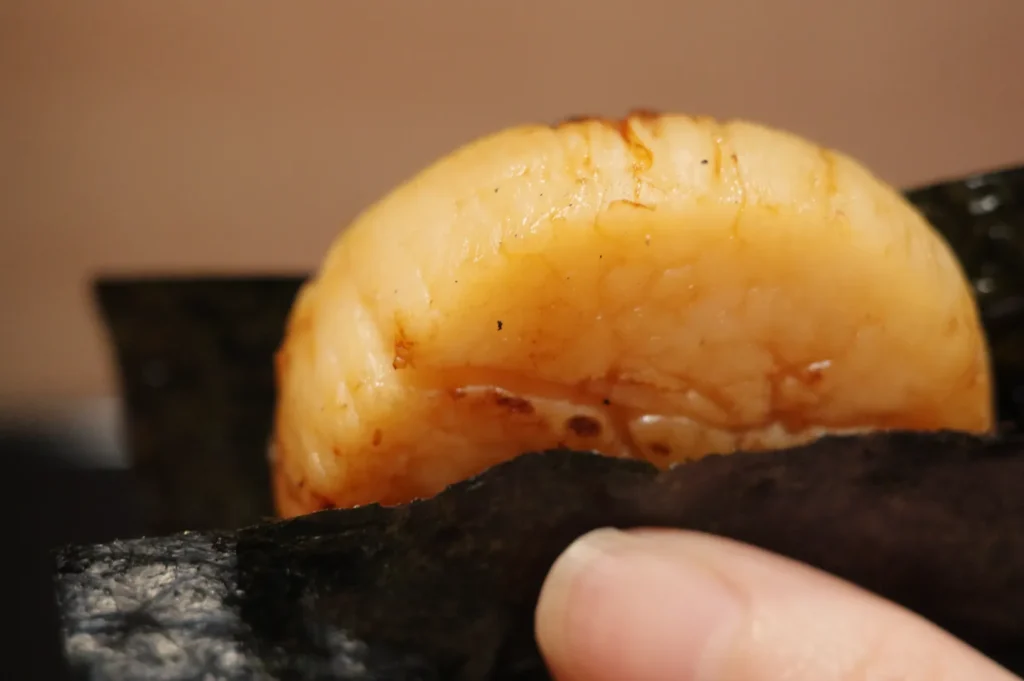
Step back and the pattern is clear. Rice, fish, soy, and wasabi do not act alone. They combine into a single mouthful, and it is that whole that your sake must sit alongside. A good Japanese sake pairing is built around this reality, not around the fish in isolation.
Much of this is informed culinary interpretation rather than fixed law. Preparation shifts things. So does seasoning, serving temperature, and your own preference. Sake served chilled behaves differently from the same bottle poured warm. Two sake within the same category may taste worlds apart. No single pairing is objectively perfect for everyone.
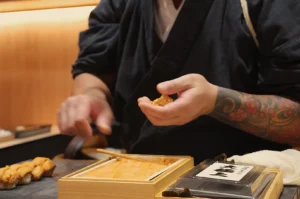
At Sushi Masa by Ki-Setsu, an intimate eight-seat omakase counter at 5 Koek Road, #06-03 Cuppage Plaza, near Orchard Road, the pairing is considered against the whole bite. Seasoned rice, fish, soy, wasabi. Each piece placed with intention, each sip meant to meet it.
Understanding the rice is where the pairing begins. The rest follows quietly from there.