There is a kind of trust that exists between a guest and a sushi chef that no printed menu can replicate. It is built slowly, course by course, in the quiet language of seasonal ingredients and deliberate craft. This is the spirit of omakase in Japan: a fine dining tradition rooted not in choice, but in a willingness to place your evening entirely in the hands of someone who has spent years, sometimes decades, learning how to honour the sea.
At Sushi Masa by Ki-Setsu, we carry that spirit into Singapore every night, offering diners a sushi omakase experience shaped by Edomae tradition, Toyosu-sourced seafood, and the singular vision of Chef Masa.
What Japanese Omakase Really Means

The word “omakase” translates roughly as “I leave it to you,” but within the context of Japanese dining, it carries far greater weight. To sit at a sushi counter and say omakase is to acknowledge that the chef understands the ingredients better than you do on that particular evening. It is an act of respect, and in the finest omakase restaurants across Japan, that respect is returned in full through food that is seasonal, considered, and deeply personal.
In Japan, omakase dining evolved from the Edomae style of sushi-making, which originated in the Edo period along the shores of Tokyo Bay. Chefs worked with the catch of the day, applying techniques like curing, ageing, and marinating to preserve and elevate each piece.
The sushi counter became a stage, and the chef became not just a cook but a storyteller. Guests who visited these sushi restaurants night after night began to trust that whatever arrived before them would reflect the best of what the sea and the season had to offer. Over time, that culture of trust shaped not only Tokyo, but the broader Japanese dining world, influencing omakase restaurants from Kyoto to Osaka and far beyond.
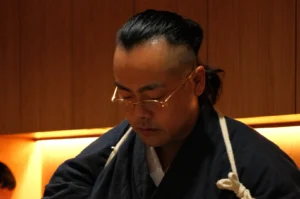
This is the lineage we draw from at Sushi Masa by Ki-Setsu. Chef Masa trained within this tradition, and it informs every decision he makes, from the selection of fish to the temperature of the shari (sushi rice) and the precise moment each nigiri is served.
The Sushi Counter as Sacred Space

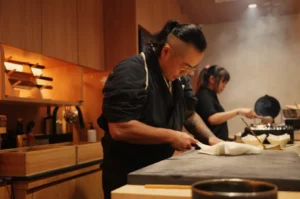
There is something about counter seating that changes the nature of dining entirely. Unlike a table in the middle of a busy restaurant, a sushi counter places you in direct conversation with the chef. You watch the knife work. You observe the care with which each piece of fish is selected and sliced. You become part of the creative process, even as a guest.
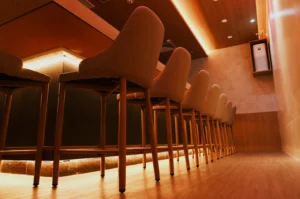
In Japan, the best sushi experiences almost always happen at the counter, and this is no accident. The counter is designed to close the distance between chef and diner, to make the omakase course feel intimate rather than performative. At Sushi Masa by Ki-Setsu, we seat only eight guests at our counter. This is intentional. It allows Chef Masa to give each diner his full attention, adjusting the pace of the meal, the balance of the courses, and the style of service in response to the people sitting before him.
Why Fewer Seats Create an Exceptional Experience
Good omakase is never about volume. In Japan, the most respected sushi restaurants are small, often seating fewer than a dozen guests per service. This is because omakase dining demands focus, both from the chef and from the diners. When the room is intimate and the counter seats are limited, every course carries more weight. There is no noise to distract, no crowd to compete with. You are simply present with the food, the chef, and the evening.
Our eight-seat format reflects this philosophy directly. The restaurant is located within Cuppage Plaza in Singapore’s Orchard belt, central yet deliberately discreet. It is the kind of place you find when you walk away from the obvious and look for something outstanding, a sushi restaurant where the experience itself is the destination.
Toyosu and the Pursuit of the Finest Seafood

No conversation about omakase dining can be complete without discussing sourcing. In Japan, the finest sushi chefs have long maintained close relationships with the fish markets that supply them, and no market holds more significance than Toyosu in Tokyo. Located in the Minato-ku area of the city, Toyosu handles thousands of tonnes of fish, shellfish, and marine produce every day. The tuna auctions alone draw buyers from the most prestigious sushi restaurants in Japan and around the world, and the standard of grading and inspection there is exceptional by any measure.
It is worth noting that some of the most celebrated omakase restaurants in Japan, including those recognised by the Michelin Guide and those holding a Michelin star, built their reputations in part on direct relationships with Toyosu suppliers. A set course built on such sourcing is not simply a meal. It is a statement of intent.
At Sushi Masa by Ki-Setsu, our ingredients are flown in from Toyosu daily. This is not a marketing claim. It is the foundation of everything we do. When Chef Masa designs each omakase course, he begins with what has arrived that morning, allowing the market to guide the menu rather than the other way around. The result is a dining experience that changes with the seasons and shifts with the tides, as any true sushi omakase should.
What to Expect from an Omakase Course

For guests who are new to omakase dining, arriving without a fixed menu can feel a bit unfamiliar. In Japan, this uncertainty is considered part of the experience. The omakase course is not a mystery to be solved but a journey to be followed. Each dish builds upon the last, moving through textures, temperatures, and flavours in a sequence the chef has carefully composed.
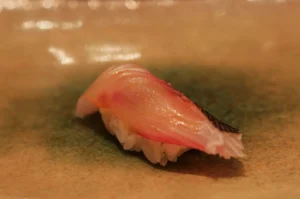
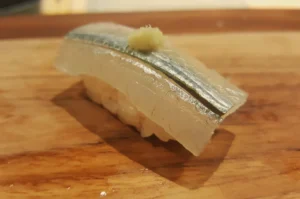
A typical sushi omakase might begin with a light dashi soup to settle the palate, followed by sashimi to highlight the quality of the day’s fish. The chef takes full command from this point, guiding diners through nigiri courses with intention: fatty tuna placed before delicate white fish so that the flavour does not overwhelm, sea urchin offered when its sweetness can be fully appreciated. Vegetables may appear in refined preparations to offer balance between courses, and the meal often closes with a warm miso soup cooked with clams before dessert finishes the evening.
We honor this structure entirely within a dinner-only format. No lunchtime service is offered, and this is deliberate. Our finest ingredients arrive each morning, and the hours before dinner begin are reserved entirely for Chef Masa’s preparation. Lunch time, for us, is preparation time. Dinner is the result of that full day’s commitment, and every dish is served at its absolute peak because of it.
Sake, Prices, and What Reasonable Omakase Looks Like
A question we often hear from guests concerns budget. Many people suppose that omakase dining in Singapore must be prohibitively expensive, but this is not always the case. Thoughtfully priced courses can be both affordable and outstanding, provided the restaurant is willing to cater to different needs without compromising on quality.
Our prices are reasonable for the calibre of ingredients and the intimacy of the experience. We also offer sake pairings for those who wish to complement their meal with a well-chosen Japanese rice wine. A good sake can elevate the flavours of the seafood in ways that are genuinely amazing, and Chef Masa is happy to offer guidance on what works best with each part of the course.
Finding Good Omakase Restaurants in Singapore

Singapore has seen significant growth in omakase restaurants over the past decade, and the options available to diners today reflect a wide range of styles and philosophies. Some establishments lean towards modern fusion interpretations. Others follow a more traditional Japanese structure. For those seeking an experience that is genuinely rooted in Edomae tradition, the key is to look for restaurants where the sourcing, the counter format, and the singular focus of the chef are all aligned. There are other places in Singapore that do good work, but the experience will vary considerably depending on how seriously a restaurant approaches its sourcing and its craft.
At Sushi Masa by Ki-Setsu, we do not chase trends. Our menu is purely seafood-based, and we do not serve meat or incorporate gimmicks that dilute the integrity of the omakase course. Every dish exists to honour the ingredient at its centre. Whether it is a slice of sashimi aged to deepen its umami, or a piece of nigiri pressed with just enough care to hold without compressing, every detail reflects a standard we account for on every single service.
Reservations can be made through our online booking platform. We recommend booking well in advance, as our eight seats fill quickly. For special occasions, private room bookings are available on Sundays through our concierge. Guests are also welcome to walk in and enquire, though we cannot guarantee availability without a reservation.
An Invitation to Eat Well and Trust the Chef

The spirit of omakase is not about luxury for its own sake. It is about the particular pleasure of being looked after by someone who cares deeply about what they create. It is about sitting at a sushi counter, eating dishes that speak of the season, and feeling, without needing to say it aloud, that this meal was made for you. That is the life of a good omakase restaurant: built on trust, maintained through quality, and renewed with every service.
At Sushi Masa by Ki-Setsu, we extend that invitation every evening to the eight guests who join us at our counter in Singapore. Whether you are returning to a tradition you know well or discovering omakase dining for the first time, we hope each course reminds you of why Japan’s approach to sushi has endured for centuries. When a chef truly takes care, the food speaks for itself.
We look forward to welcoming you.