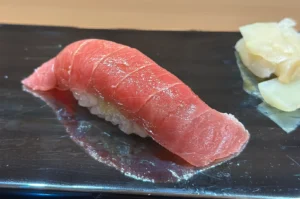
In the grand theater of Japanese gastronomy, where seasonal cycles dictate the rhythm of the kitchen, few ingredients carry the weight of both spiritual significance and technical challenge like tai.
Known in the West as red sea bream, this fish is far more than a staple of the white fish category. It is a cultural icon, a symbol of good fortune, and the ultimate benchmark for a craftsman’s precision. To understand the complexity of tai sashimi is to delve into a world where biology meets divinity, and where the simple act of slicing flesh becomes a celebratory rite of passage.
The Biological Blueprint: Pagrus Major and the True Sea Bream
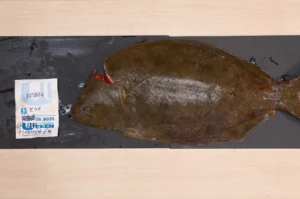
To appreciate the flavor of the Japanese sea bream, it is essential to distinguish the true sea bream from its many relatives. While various websites and online sources often group different species under names like red snapper or silver seabream, the gold standard in Japan is specifically Pagrus major. This species belongs to the family Sparidae and is biologically distinct from Pagrus auratus, which is found in the Atlantic Ocean and near Australia.
The Japanese name “Tai” is a broad term, but the red seabream is the undisputed king of the family. It is highly prized for its firm texture and the high amino acid content that creates its signature subtle sweetness. Unlike other popular fish that rely on a high fat content for appeal, the tai offers a sophisticated, lean profile. Its meat is translucent, with a beautiful white flesh rimmed with a delicate pink hue, a visual representation of its elegance.
Wild-caught primarily in the coastal waters around Japan, especially in the Pacific Ocean, the finest specimens often make their way to renowned seafood hubs in Tokyo. This premier marketplace plays a crucial role in supplying top-quality tai sashimi to chefs and connoisseurs who demand the freshest and most flavorful fish available.
The Iconography of Japanese Sea Bream in Culture
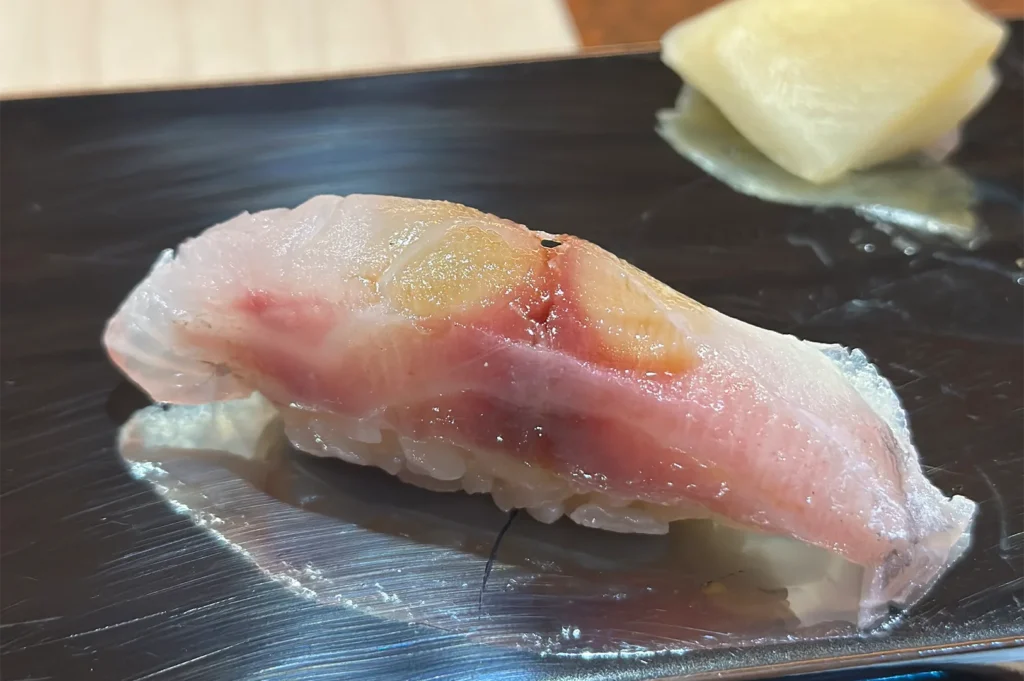
The phrase ‘medetai’, meaning “auspicious” or “celebratory,” ends with the same phonetic sound as the fish itself. This linguistic coincidence has cemented the tai as the ultimate harbinger of fortune in Japanese culture. It is the fish clutched under the arm of Ebisu, the god of fishermen and luck, and it is the centerpiece of weddings, births, and New Year festivities.
There is a famous proverb, ‘Ebi de tai o tsuru’ (fishing for a tai with a shrimp), which describes the act of gaining a large reward from a small amount of investment. This speaks to the value placed on the fish; a shrimp is a worthy sacrifice for a creature so tasty and highly prized. Historically, it was consumed by the samurai class as a symbol of resilience, and it continues to be the most popular fish for celebratory dishes across the country.
The Seasonal Peak: Understanding the Season Tai
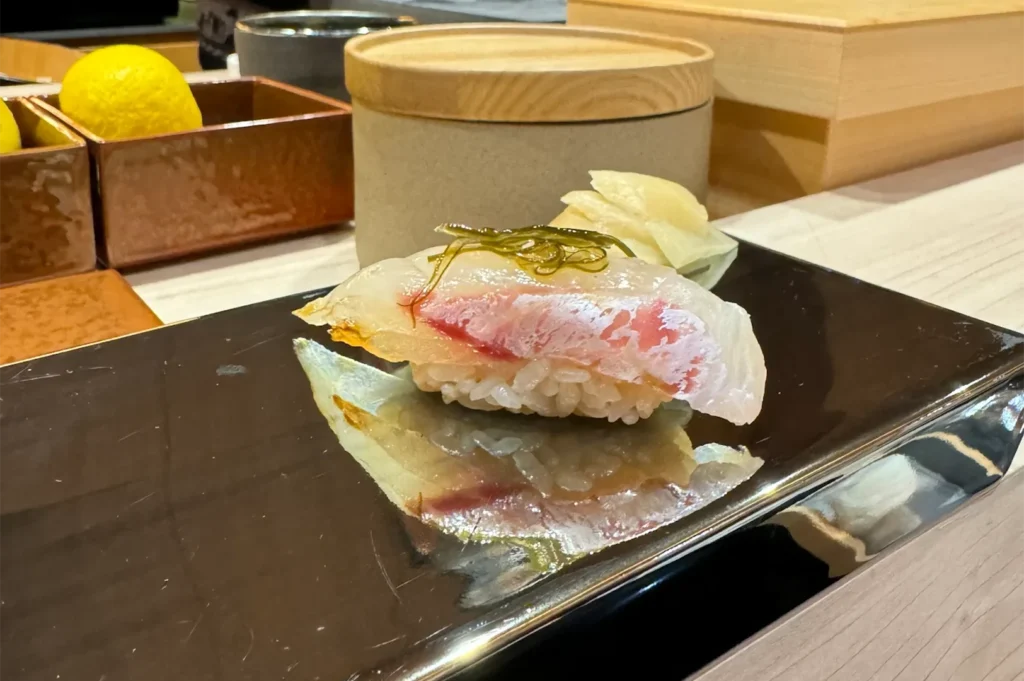
The quality of tai sashimi is inextricably linked to the season. While tai can be found year round, the season tai of spring is considered a culinary peak.
Sakura-dai (Cherry Blossom Bream): Caught in April and May, these fish are migrating to spawn. Their skin takes on a vibrant, blushing color, and the flesh is at its most tasty.
Mugimeshi-dai: In the autumn, the flavor changes again, offering a different but equally rewarding taste.
During the spring, the fat content is balanced perfectly with the lean muscle, making it the ideal time for tai sushi. A chef must understand these shifts in age and season to adjust the preparation method accordingly.
Technical Mastery: The Pagrus Major Preparation Method
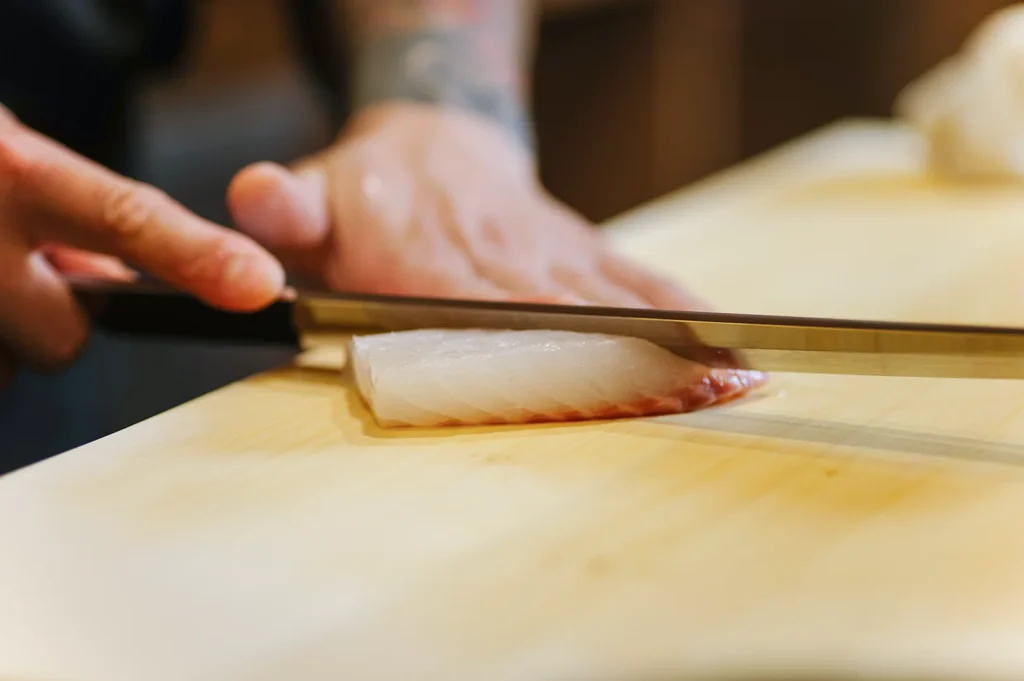
Preparing tai sashimi or tai sushi is an exercise in restraint and chemical manipulation. Because the bones of the red sea bream are exceptionally hard and the scales are thick, the initial cleaning requires a steady hand. However, the true technique lies in the treatment of the skin and the aging of the fillet.
The Yubiki and Matsukawa-zukuri Techniques
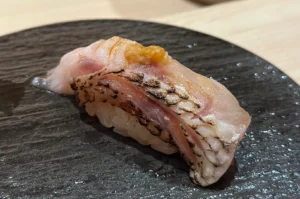
One of the most common names for a specific tai preparation is Matsukawa-zukuri (Pine Bark Finish). Because the area between the skin and the flesh contains a large group of flavorful fats, the skin is often left on.
The fillet is placed on a slanted board.
A cloth is draped over the meat to protect it.
Boiling water is poured quickly over the skin, causing it to contract and soften.
The fish is immediately plunged into ice water to stop the cooking process.
This preparation method ensures the skin is edible while the flesh remains fresh and raw. It is a rare balance that only an experienced chef can achieve without making a mistake that toughens the slices.
The Science of Aging
Unlike some seafood that must be eaten raw immediately after being caught, tai benefits from a small amount of aging. When stored at precise temperatures (never frozen), the enzymes in the meat break down proteins into glutamic acids. This process enhances the umami and softens the texture, making it more compatible with seasoned sushi rice.
The Architecture of Tai Sushi and Sashimi
When tai is served as sushi, it often requires a “bridge” to connect the lean flesh to the rice. This is frequently achieved through a light brushing of shoyu or a dusting of salt and a squeeze of sudachi citrus.
| Style | Characteristics | Seasoning Pairing |
|---|---|---|
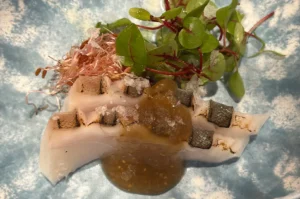
| Tai Sashimi | Thinly sliced (usu-zukuri) | Ponzu or light shoyu |
| Tai Sushi | Often features a hidden leaf of shiso | Sea salt and citrus |
| Kunsei Tai | Lightly smoked for a deeper flavor | Minimal seasoning |
| Grilled Tai | Usually the head or collar (kama) | Salt only |
The flesh of the tai is firm and resilient. If it is too fresh, it can be chewy; if it is handled poorly, it loses its translucent luster. A master chef looks for a fillet that is clear, not cloudy, and avoids any specimen that has been mistreated during the large group harvests in the Pacific or Atlantic waters.
Comparative Tasting: Tai vs. Other White Fish
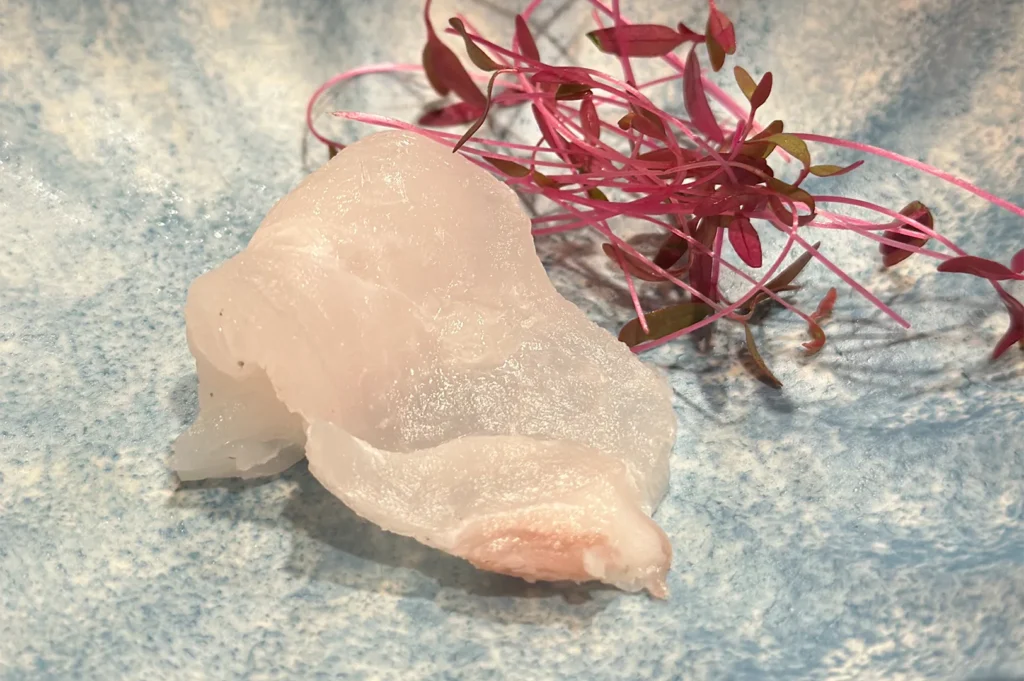
While many common names like red snapper are used interchangeably with tai in some web contexts, the flavor profile is distinct. The Japanese sea bream is less oily than nodoguro but more complex than hirame (fluke). It has a “clean” finish that prepares the palate for the heavier, oily fish that usually follow in a traditional large group of sushi courses.
The meat should never be described as “fishy.” Instead, critics describe it using terms like “elegant,” “floral,” and “sweet.” The bones and head are never wasted in traditional establishments; they are used to create a clear broth (ushio-jiru) that captures the essence of the sea without the need for heavy fats.
The Ritual of the Counter: A Sensory Experience
To eat tai at a professional sushi counter is to participate in a centuries-old culture. The chef selects a slice, perhaps performs a quick yubiki on the skin, and places it before the guest. There is no need for a lot of garnish. The shrimp-fed sweetness of the fish speaks for itself. Whether it is grilled over charcoal or served in delicate slices as sashimi, the red sea bream remains the soul of the Japanese kitchen.
It is a fish that demands the diner’s full attention. Because the flavor is so subtle, it is easily overwhelmed by excessive soy sauce or wasabi. To truly taste the tai, one must appreciate the marriage of the flesh and the craftsmanship behind it.
At Sushi Masa by Ki-setsu, we honor the legacy of the Japanese sea bream as a cornerstone of our Edomae tradition. Our chef, Chef Masa, sources only the finest true sea bream from Toyosu, ensuring that every slice reflects the peak of the season.
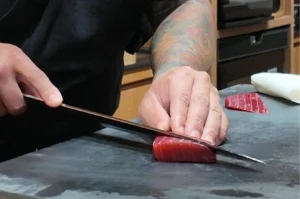
Within our intimate dinner omakase, Chef Masa demonstrates the precise technique of Matsukawa-zukuri, utilizing boiling water and ice water to perfect the texture of the skin while preserving the integrity of the flesh.
We invite you to witness the artistry of our counter craft, where the subtle sweetness of the tai is elevated through decades of expertise and a deep respect for the seafood of Japan.