From Toyosu Market to Table: The Art and Sourcing of Sushi Masa by Ki-Setsu
The transition from the cool, salt-misted air of Tokyo Bay to the hushed, intimate counter of a premium sushi establishment is a journey defined by time, precision, and an unwavering commitment to provenance. To understand the soul of true Edomae sushi, one must look beyond the final presentation and toward the source: the Toyosu Market. This sprawling facility, managed by the Tokyo Metropolitan Government, serves as the beating heart of the global seafood trade and the primary origin of the seasonal treasures we serve.
At Sushi Masa by Ki-Setsu, we believe that the artistry of the meal begins long before the first piece of nigiri is formed. It starts in the early morning hours, amidst the lively atmosphere of the world’s most sophisticated fish market. Our philosophy is rooted in the belief that a singular chef’s intuition is the most vital bridge between the ocean and the guest. For Chef Masa, the selection of ingredients is not a mere chore; it is a sacred ritual of the Omakase experience.
The Legacy of the Tides: From the Old Tsukiji Market to the New Era
For decades, the Tsukiji Fish Market was the undisputed mecca of seafood. It was a place of history and grit, divided between the inner market, where the high-stakes auctions took place, and the outer market, a bustling labyrinth of shops and popular restaurants. The Tsukiji Outer Market still exists today as a vibrant shopping street filled with food stalls, restaurants, and specialty stores, offering visitors a taste of authentic Japanese market culture. However, as the needs of the city evolved, the old Tsukiji market made way for a modern marvel on reclaimed land.
The new Toyosu Market, situated on a man-made island in the Toyosu area, represents a leap forward in food safety and temperature control. The Toyosu Fish Market consists of three main buildings: two dedicated to seafood and one for fruits and vegetables. The auction and wholesale halls feature state-of-the-art facilities for seafood and produce, with designated public viewing areas for tourists and industry professionals to observe the action.

While some miss the rustic charm of the inner market, the new market offers a sanitised, climate-controlled environment that preserves the integrity of fresh seafood with unparalleled efficiency. The atmosphere at Toyosu Market is notably sterile and organised, in contrast to the lively and chaotic environment of Tsukiji Market. Whether arriving via the Yurikamome Line or traversing the Toyosu Station hub, visitors find a facility divided into three main zones: the fish wholesale market building, the intermediate wholesale market building, and the fruit and vegetable market.
A Modern Marvel Accessible from Shimbashi Station
Located just a short distance from Tokyo Station and Shimbashi Station, Toyosu is more than a commercial hub; it is a testament to Japanese engineering. Accessible via Shijo-mae Station, the market is designed with dedicated routes for market workers and tourists alike. For the public, a long corridor and glass windows allow for a view into the frantic energy of the wholesale halls without disrupting the delicate flow of commerce.

The Ritual of the Tuna Auction in the Fish Wholesale Market Building
Perhaps the most iconic event at the fish wholesale site is the famous tuna auction. Long before the sun rises, licensed buyers gather in the seafood auction hall of the fish wholesale market building to inspect the day’s catch. These frozen giants, often lined up in neat rows on green floors, represent the pinnacle of the ocean’s bounty.
In the early morning, the sound of bells signals the start of the first auction. It is a language of hand signals and rapid-fire shouts, specifically a high-pressure environment where a single lapse in concentration could mean missing out on the finest Bluefin of the season. At Sushi Masa by Ki-Setsu, we value this intensity. While some other restaurants might rely on broad selections, our omakase focus means Chef Masa is looking for that one specific cut that meets his exacting standards.
The Art of Selection from the Observation Deck
Observing the tuna auction from the observation deck or the viewing deck gives one a sense of the scale of this operation. However, the true magic happens on the market floor. Here, the intermediate wholesale specialists utilise their generations of knowledge to identify the best fish for their clients. These specialists are the gatekeepers of quality, ensuring that only the most pristine specimens move to the hands of sushi restaurants.
Navigating the Intermediate Wholesale Market Building and its Specialists
While the seafood auction hall provides the spectacle, the intermediate wholesale market building is where the nuanced work of a sushi chef truly finds its wings. This building houses hundreds of small stalls where market workers break down massive catches into manageable portions. In addition to fresh seafood, processed foods such as tea, pickles, and packaged seafood are also available in retail sizes for customers.
When Chef Masa considers the seasonal ingredients for our evening service, he looks for items that reflect the micro-seasons of Japan. This is the essence of Edomae, involving the treating and ageing fish to bring out its peak flavour. In this building, one sees the ubiquitous styrofoam boxes filled with ice and the treasures of the deep: Uni from Hokkaido, Anago from Tokyo Bay, and silver-skinned Kohada.

For a deeper look into the technical standards we uphold for these ingredients, you may refer to our detailed analysis in The Pursuit of Purity: Sourcing, Science, and the Standards of Sashimi Singapore. There, we explore the rigorous biological and safety standards, such as the Ikejime method, that ensure our selections are truly pristine.
Beyond Seafood: Sourcing from the Fruit and Vegetable Market
Just across the way lies the fruit and vegetable market and the vegetable market building. While seafood is our primary focus, the subtle accents of a meal, such as the sharp bite of authentic wasabi or the sweetness of a seasonal garnish, are sourced with equal care from the fruit and vegetable market. These seasonal ingredients are what allow Chef Masa to craft a narrative through the omakase menu, ensuring that no two evenings at Sushi Masa by Ki-Setsu are exactly alike.
The Community of Intermediate Wholesale and Uogashi Yokocho
For those visiting the market, the fourth floor of the intermediate wholesale market building houses the Uogashi Yokocho market. This area is a treasure trove of non-perishable goods, professional kitchen tools, and specialised condiments. From high-carbon steel knives to the specific vinegars used in seasoning sushi rice, Uogashi Yokocho is where the infrastructure of Japanese gastronomy is sold.
Above this, Toyosu Market features a spacious rooftop garden, offering visitors a relaxing space with a lawn and scenic views of Tokyo Bay.
A Community of Craft in the Restaurant Area
The market workers and regular visitors create a unique ecosystem. Even the coffee shop on the third floor serves a purpose, providing a brief moment of respite. While many tourists flock to the restaurant area to find sushi dai or ryu sushi, the true pulse of the market is found in the exchange of expertise between the suppliers and the chefs.
Unlike many other establishments that may offer a buffet breakfast or lunch to cater to the tourist crowds, Sushi Masa by Ki-Setsu remains focused exclusively on the evening meal. We believe that the transition from the frantic energy of the morning market to the serene atmosphere of our dinner service requires time; specifically, time for the fish to rest and for Chef Masa to harmonise the day’s acquisitions.

The Journey to Your Plate: The Sushi Masa Philosophy
At Sushi Masa by Ki-Setsu, our commitment to the Toyosu Market is not just about logistics; it is about a philosophy of “Ki-Setsu” (the seasons). We do not serve a fixed menu of meat or poultry; our dedication is purely to the sea. You will not find chicken, pork, beef, or lamb in our kitchen, nor do we dilute the purity of the seafood experience.
Our focus is singular. By specialising exclusively in seafood-based omakase, Chef Masa can dedicate his entire craft to the nuances of the catch. This dedication mirrors the specialised nature of the fish wholesale industry, where expertise is deep rather than broad.
For guests visiting from out of town to experience the best of Toyosu Market-sourced cuisine, some nearby accommodations offer rooms with city views, enhancing the overall experience of your culinary journey.
The Quiet Mastery of Chef Masa
In an industry where many restaurants boast large teams, Sushi Masa by Ki-Setsu prides itself on the intimacy of a singular vision. Chef Masa oversees every aspect of the meal. There are no “teams of chefs” here; there is only the relationship between the chef, the ingredient, and the guest.
This singular focus allows for a level of quality control that is rare. When Chef Masa selects a piece of fish from the wholesale market building, he is already envisioning the exact moment it will be served to you. He considers the ambient temperature, the moisture of the rice, and the specific palate of the evening’s guests. This is the heart of omakase: to “entrust” oneself to the chef.

An Invitation to the Counter
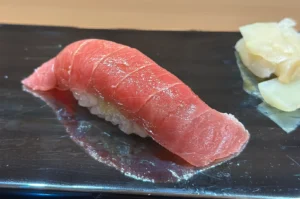
The story of sushi is a story of the fish market. From the tuna auction at 5:00 AM to the final brush of soy on a piece of Otoro at 8:00 PM, the journey is one of relentless dedication. The Toyosu market provides the raw materials, but it is the hand of the chef that transforms those materials into a memory.
We invite you to experience this journey firsthand. At Sushi Masa by Ki-Setsu, we bring the best of the New Toyosu Market to an intimate setting where the craft of Edomae sushi is honoured every evening. There are no distractions: no meat, no cooked appetisers, just the purest expression of the ocean’s bounty, curated by Chef Masa.