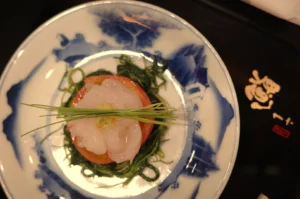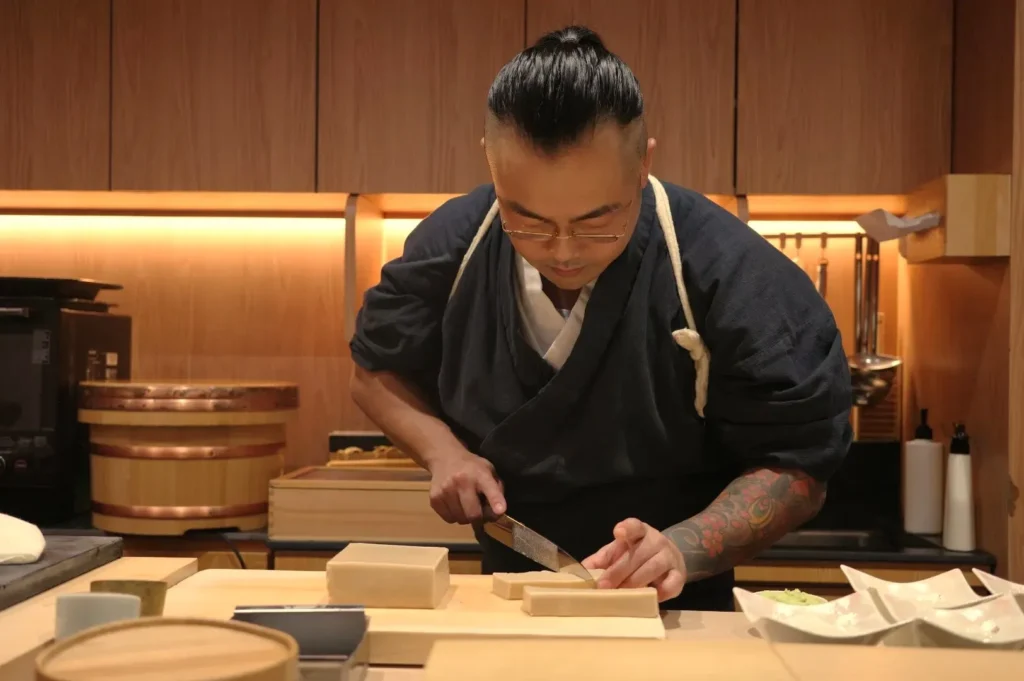
A restaurant can be defined by its address, its menu, or its reputation. Sushi Masa by Ki-Setsu is defined by a person.
Step off the lift on the sixth floor of Cuppage Plaza, and the name above the door tells you exactly what to expect. Not a concept. Not a franchise. A chef. Sushi Masa exists because Chef Masa stands behind its eight-seat counter, night after night, shaping every meal with his own hands.
This is what it means to be chef-led. The experience does not run on a fixed script. It runs on judgment, his judgment.
The Counter Is the Restaurant
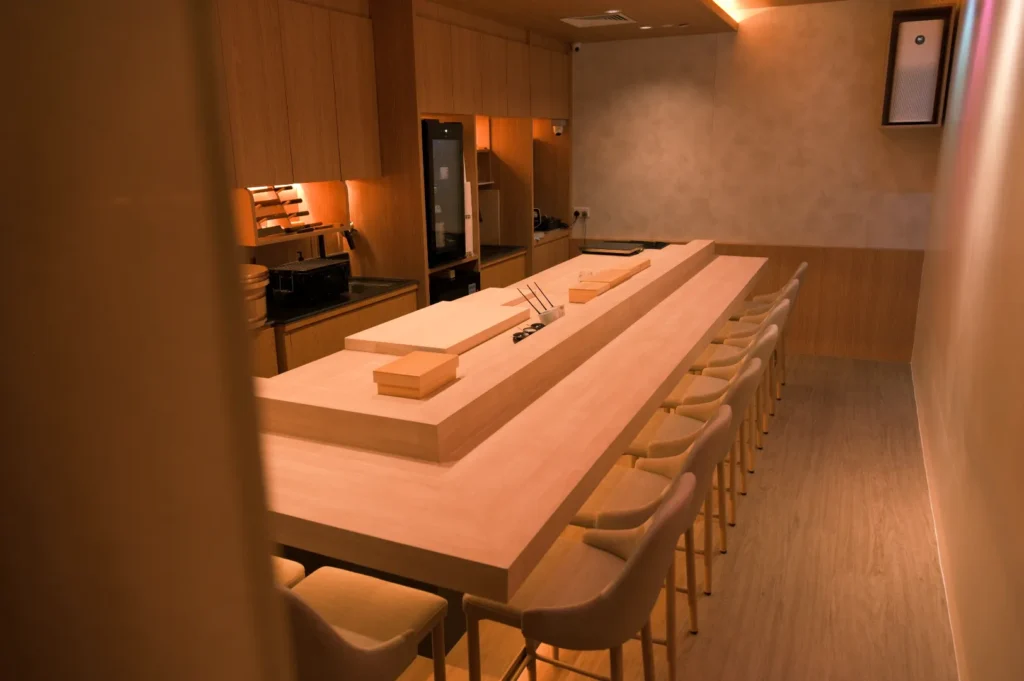
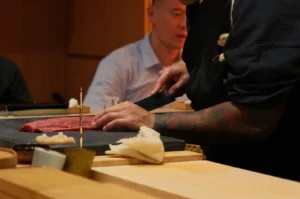
Find your seat at the hinoki counter and you are close enough to watch every movement. The slide of the knife. The press of rice. The quiet pause before a piece is set before you.
There are only eight seats. That number is not a marketing choice. It is a limit set by attention. Chef Masa can read eight guests. He can gauge appetite, pace, and mood. He can adjust.
At a larger restaurant, the chef becomes distant, a name on the wall, a signature on a dish. Here, the chef is present. He watches how you eat. He notices when you slow down. The meal bends around you because he is there to see it happen.
That closeness is the whole point. Remove the counter and you remove the relationship. Remove Chef Masa, and Sushi Masa is simply a room.
Seasonality, Read by One Person
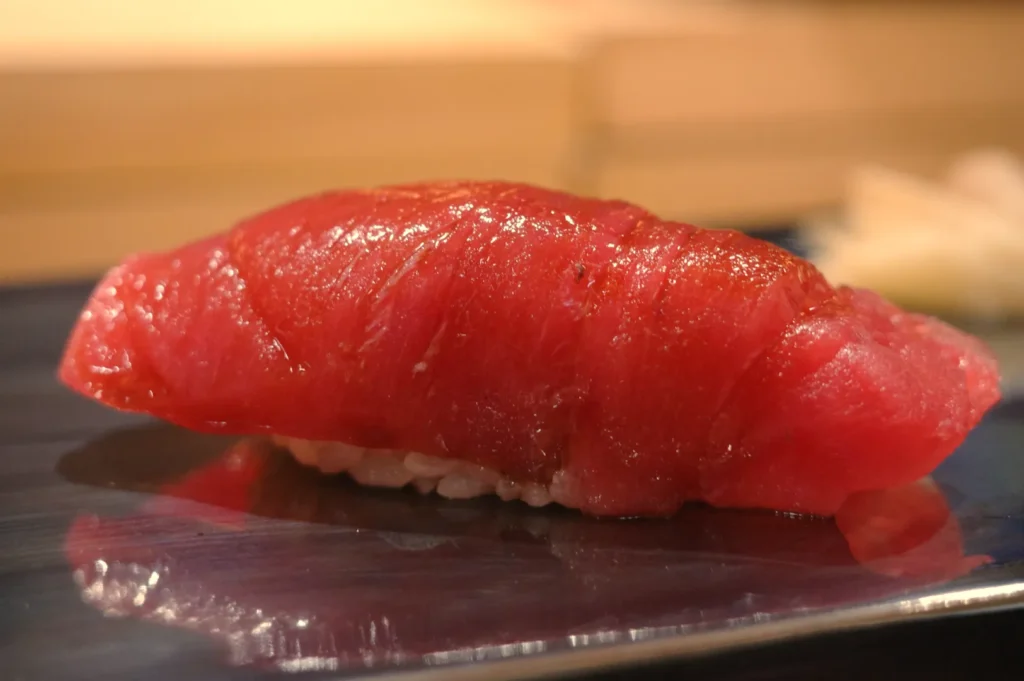
Sushi Masa serves dinner-only omakase, built around seasonal seafood and Japanese ingredients. But seasonality is not a claim printed on a menu. It is a decision made fresh each day.
The Japanese call it shun, the moment an ingredient reaches its peak. A fish is at its best for a narrow window. So is a vegetable, a shellfish, a cut. Knowing that window takes years. Acting on it takes conviction.
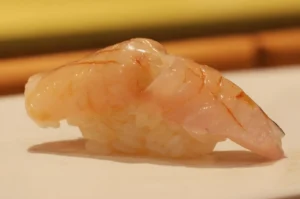
Chef Masa reads shun the way others read a familiar page. He knows when the scallop is sweetest, when the mackerel carries the right fat, when a fish should rest a day and when it should be served that evening. These are not rules. They are choices, and they change with the season.
This is why the menu is not written in advance. It cannot be. What arrives shapes what he serves. What he serves shapes your night.
Trust, Offered Both Ways
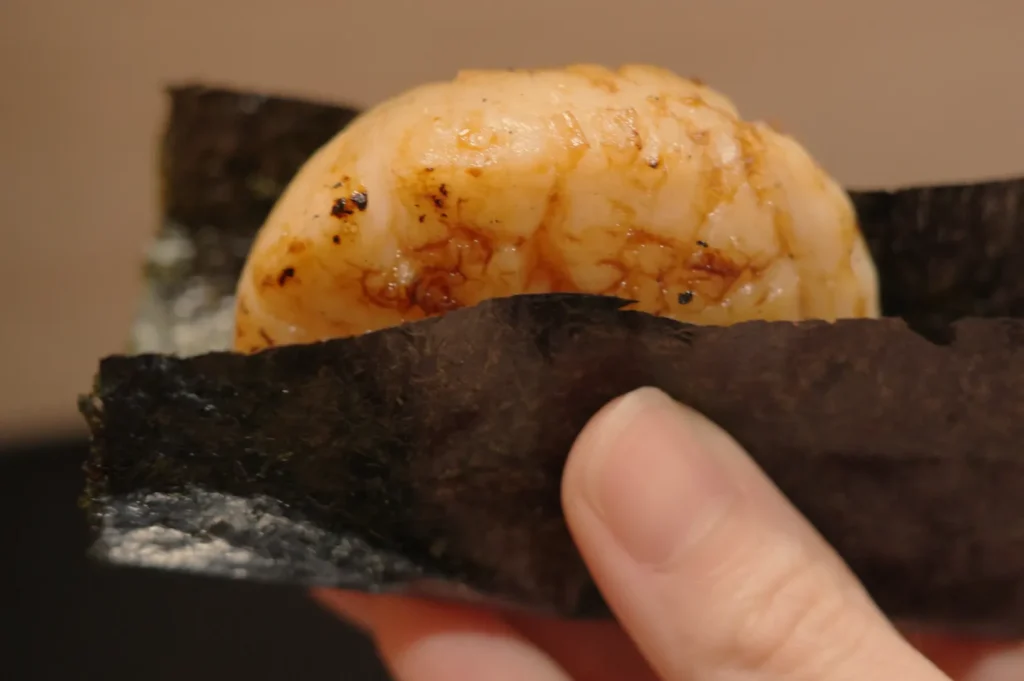
Omakase means “I leave it up to you.” Guests hand over the decision. In return, the chef gives his full attention.
At Sushi Masa by Ki-setsu, that exchange is direct. You are not trusting a brand or a kitchen you cannot see. You are trusting the person in front of you: his sourcing, his sequencing, his sense of when a meal is complete.
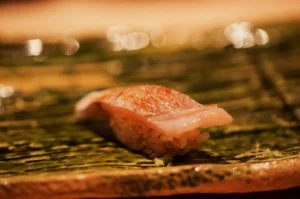
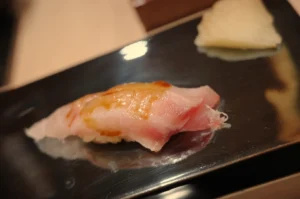
Chef Masa returns that trust through technique. Fish sliced with intention. Rice held at body warmth. A piece grilled over binchotan until the skin gives slight smoke and the flesh turns firm yet yielding. Each move is considered. None is rushed.
Pacing matters as much as flavour. A meal that moves too fast loses its shape. Chef Masa controls the rhythm: cool sashimi, then warmth, then a return to something clean. He decides when to linger and when to move on. That control belongs to him alone.
Why the Name Is a Promise
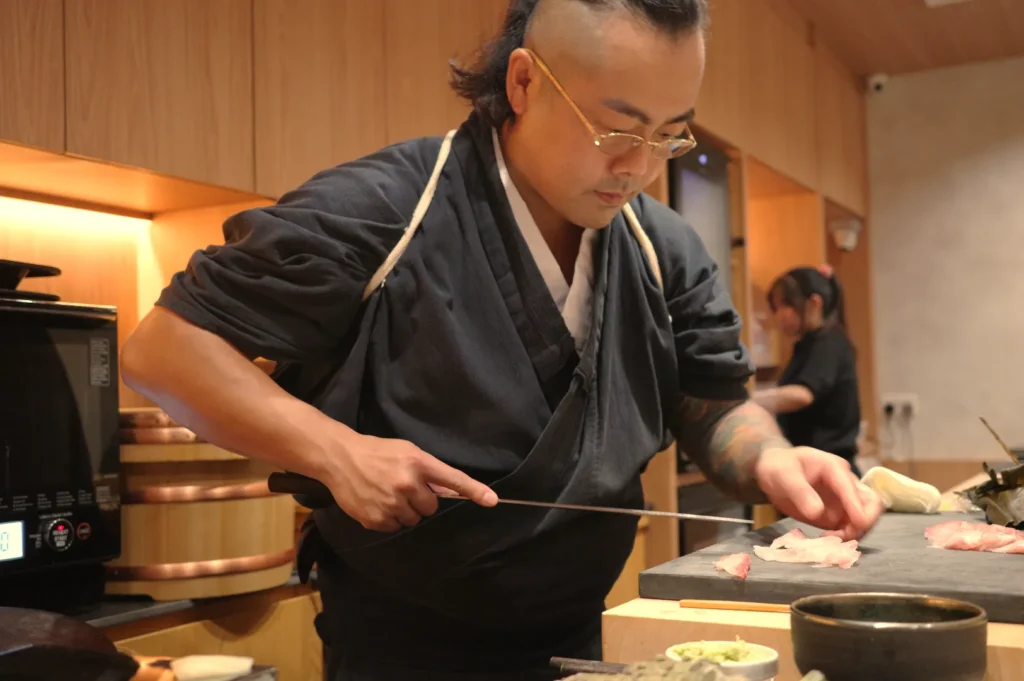
There is a reason the chef’s name sits in the restaurant’s name.
Many places borrow the language of tradition without the substance behind it. Sushi Masa does the opposite. The identity is not borrowed. It is personal. When you book a seat, you are booking time with Chef Masa. His hands, his eye, his reading of the season.
This is the difference between a restaurant that serves omakase and one that is genuinely built around a chef. The first can run on a system. The second runs on a person. Take that person away, and the promise no longer holds.
Sushi Masa keeps its promise because Chef Masa is always there. Eight seats. One counter. One chef guiding the whole evening.
Where to Find It
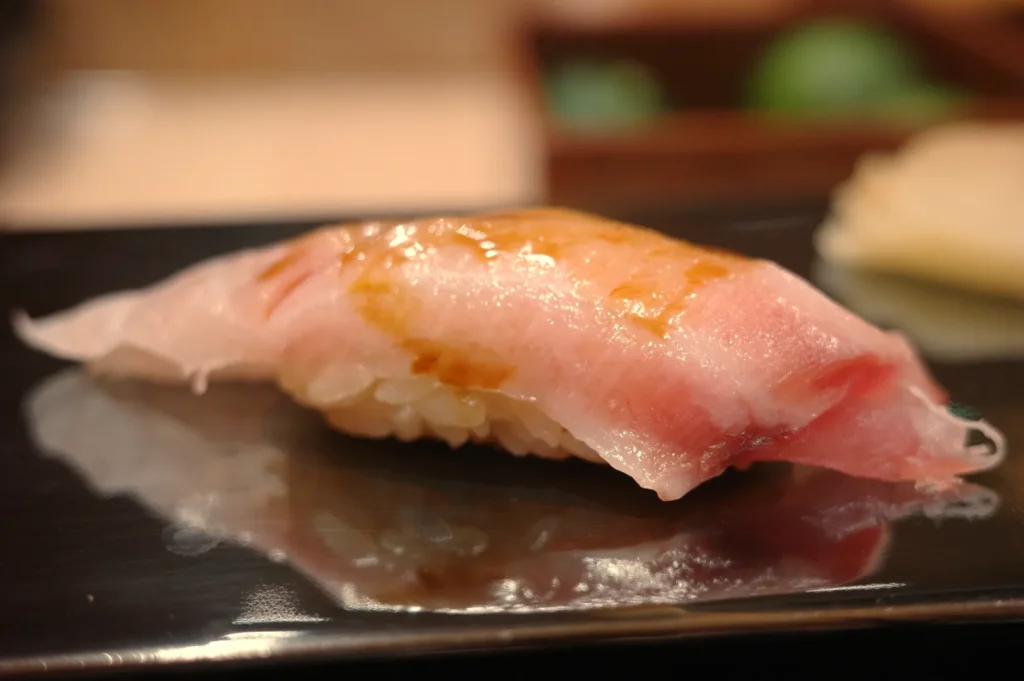
Sushi Masa by Ki-Setsu sits at 5 Koek Road, #06-03 Cuppage Plaza, Singapore 228796, a short walk from Orchard Road. Cuppage Plaza has long drawn those looking for honest Japanese food, tucked away from the noise of the main street. Sushi Masa fits that spirit: quiet, considered, easy to miss unless you know to look.
Dinner only. Seasonal seafood. A counter of eight. And behind it, the reason the name means anything at all.
These are not just meals. They are Chef Stories told course by course, in silence and intention.
You do not choose the menu here. You choose to trust the chef. That is the whole invitation.